


Reborn and Corvette-powered
Fourth Generation
LT1, then LS1: Corvette power to the end of the F-body.

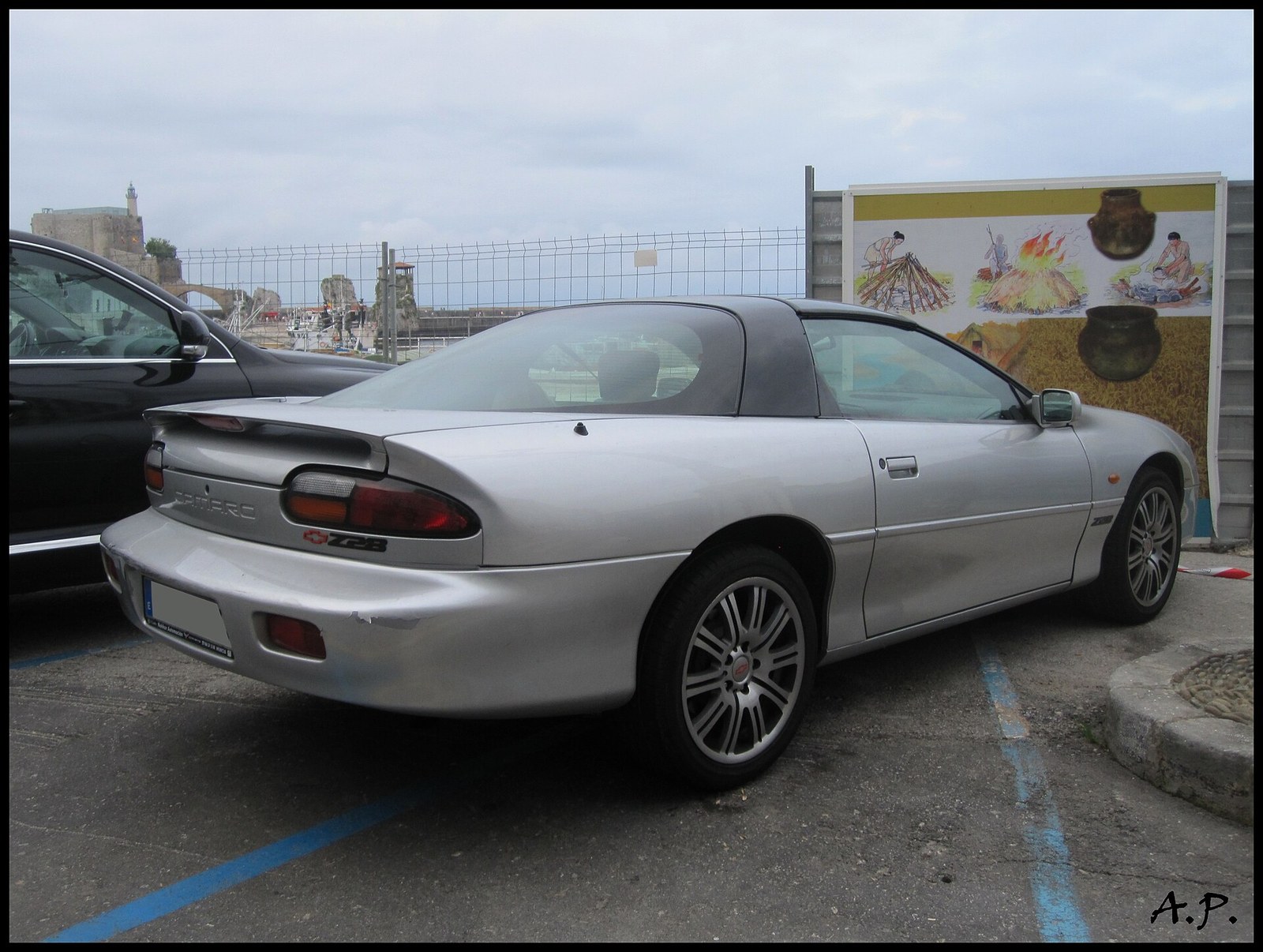
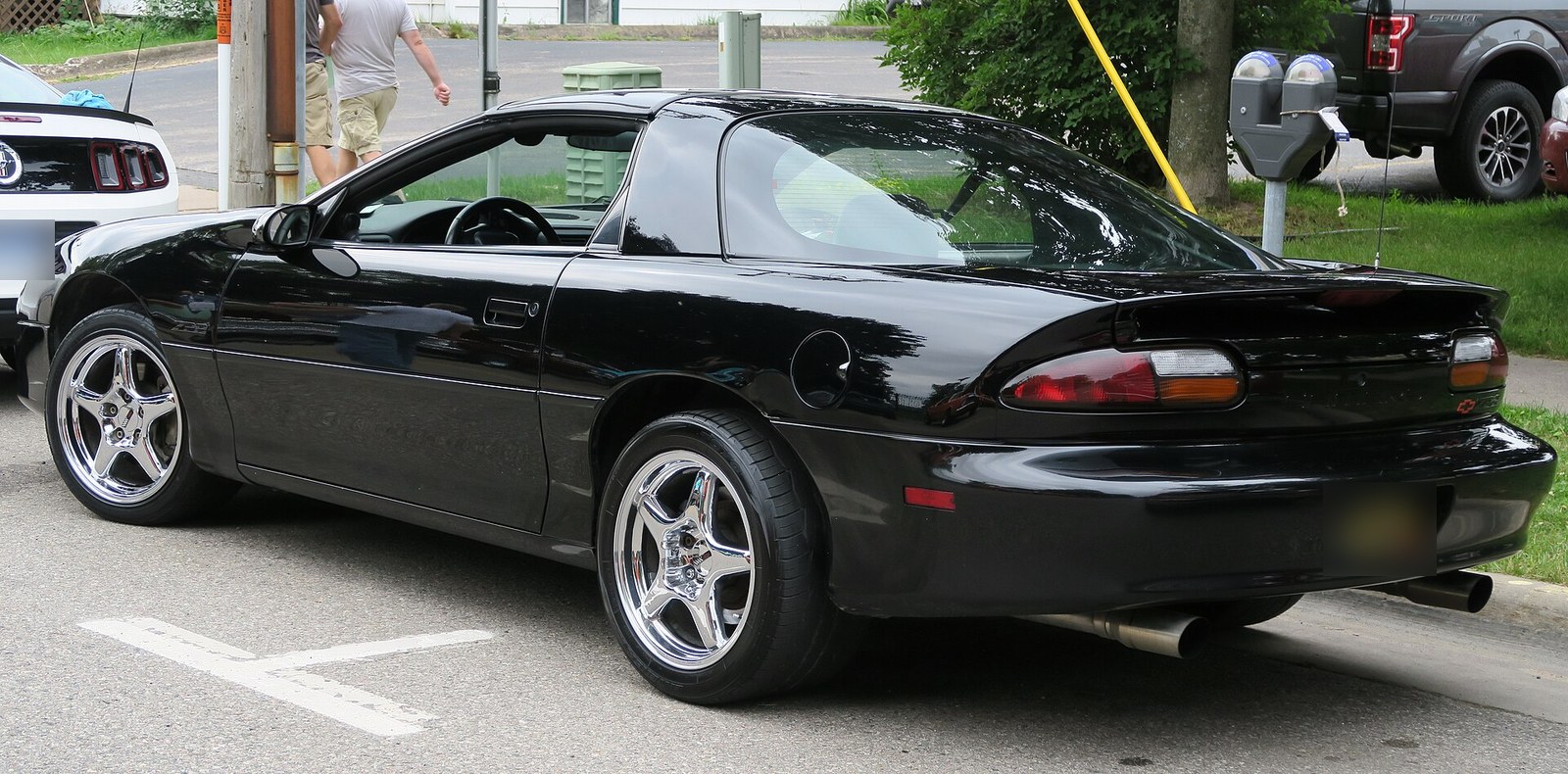
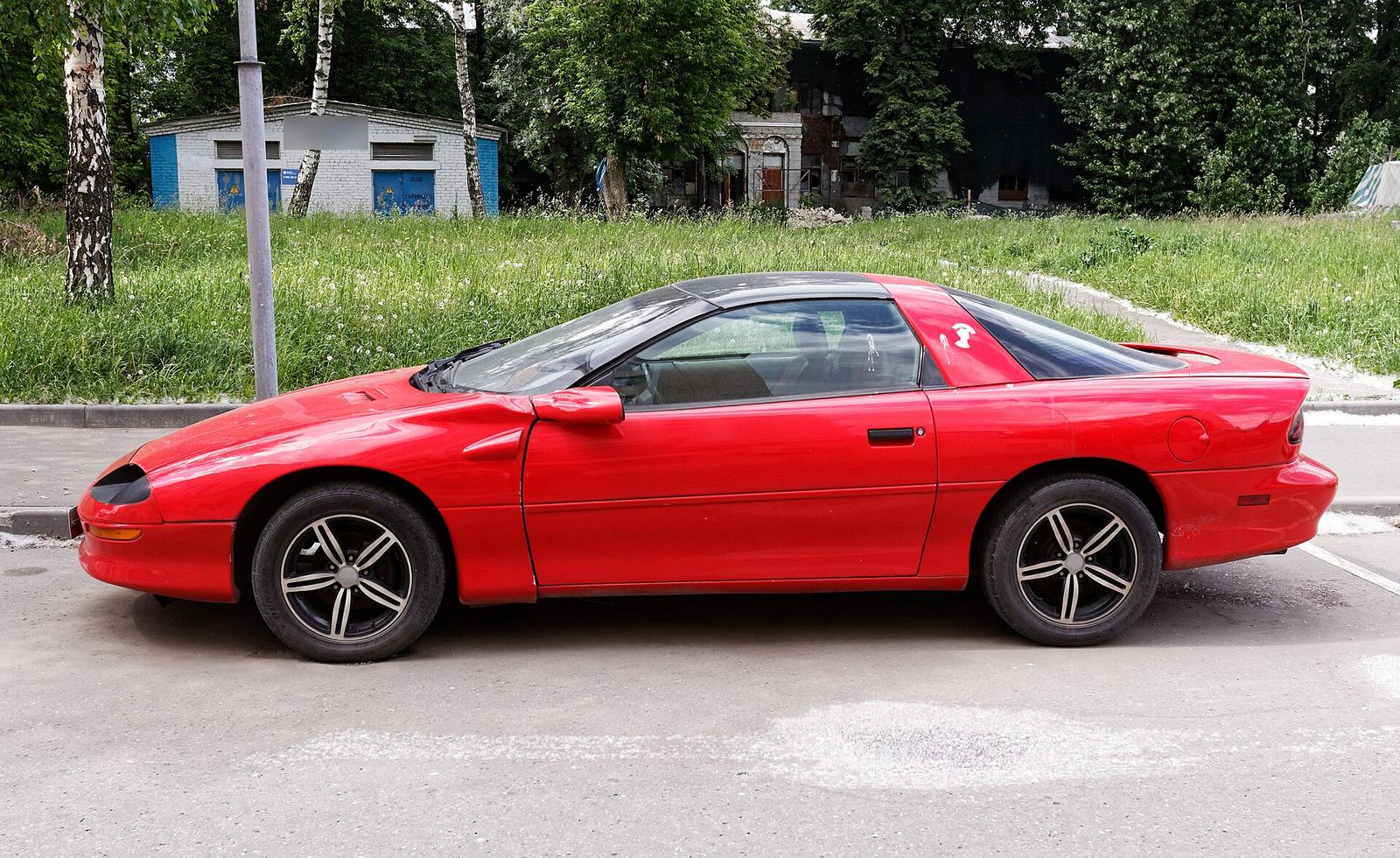
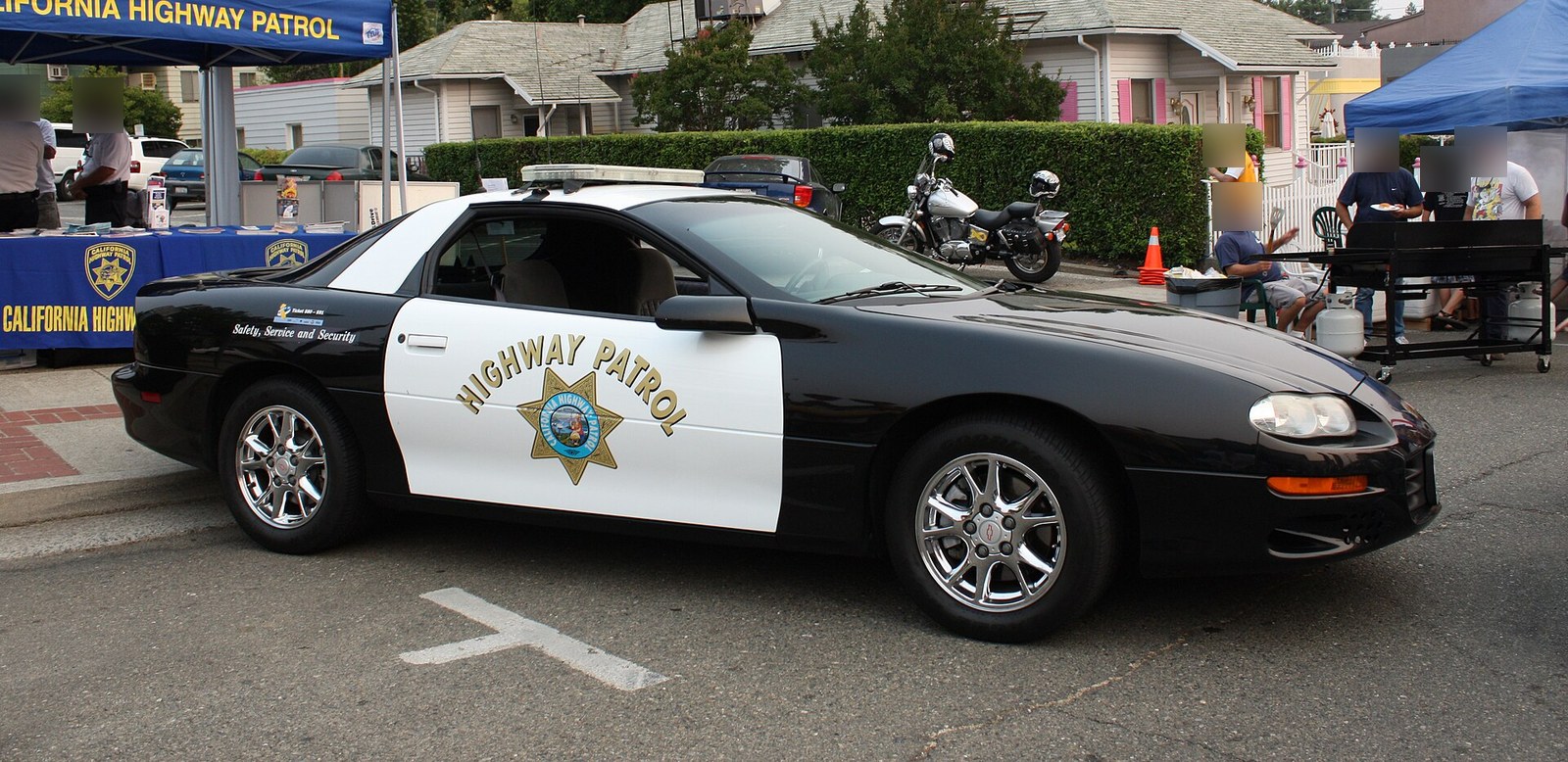
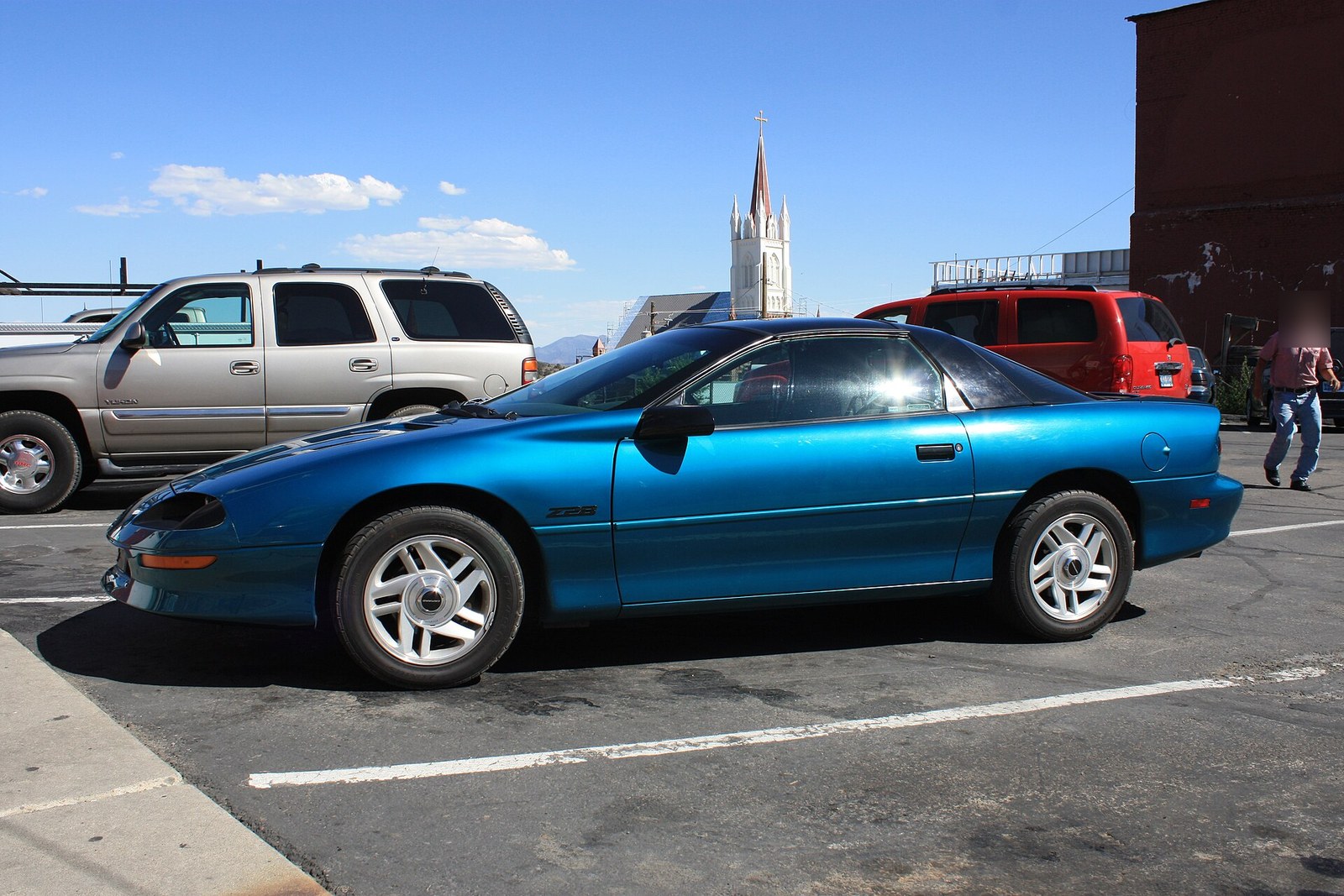
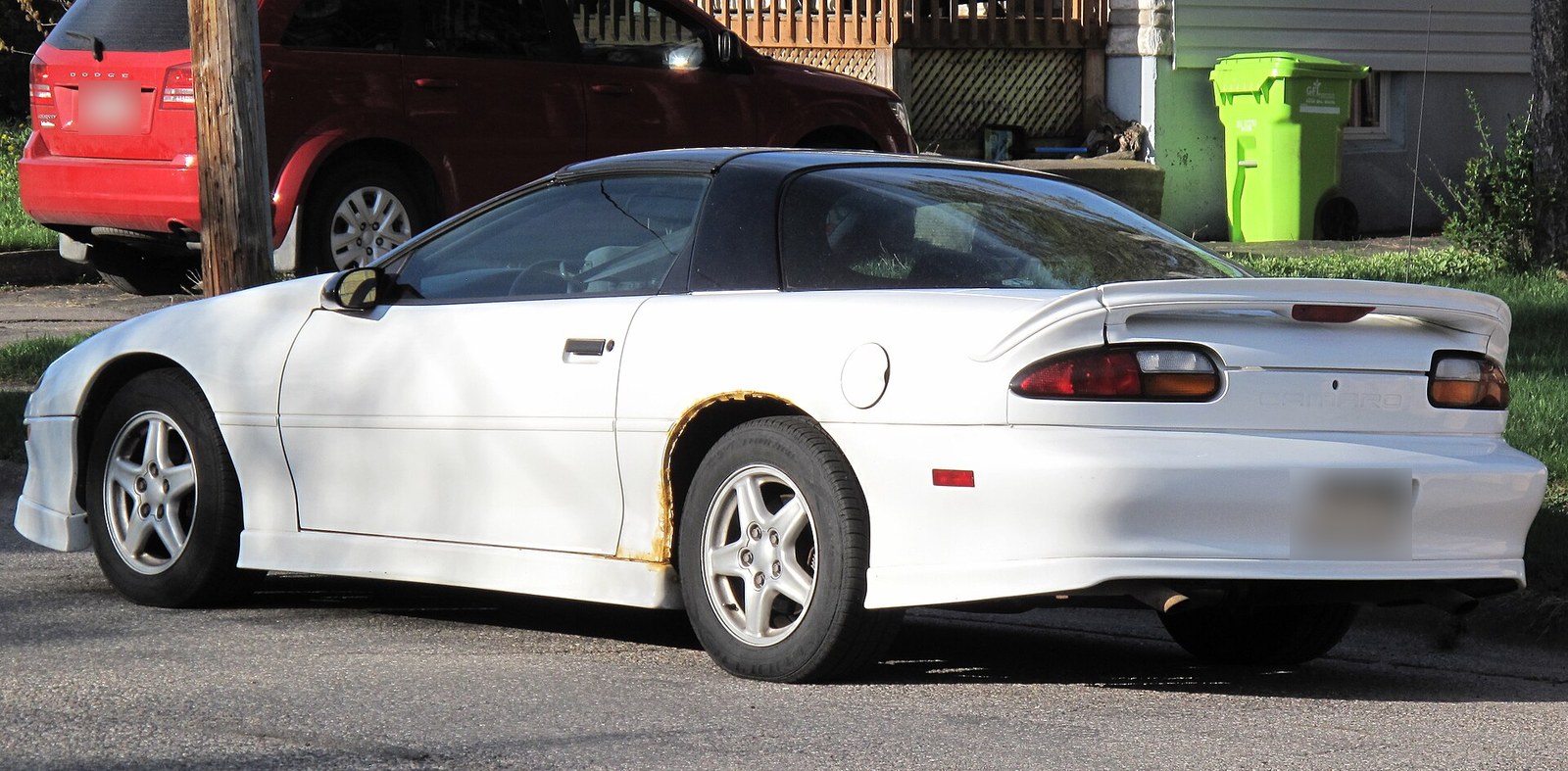
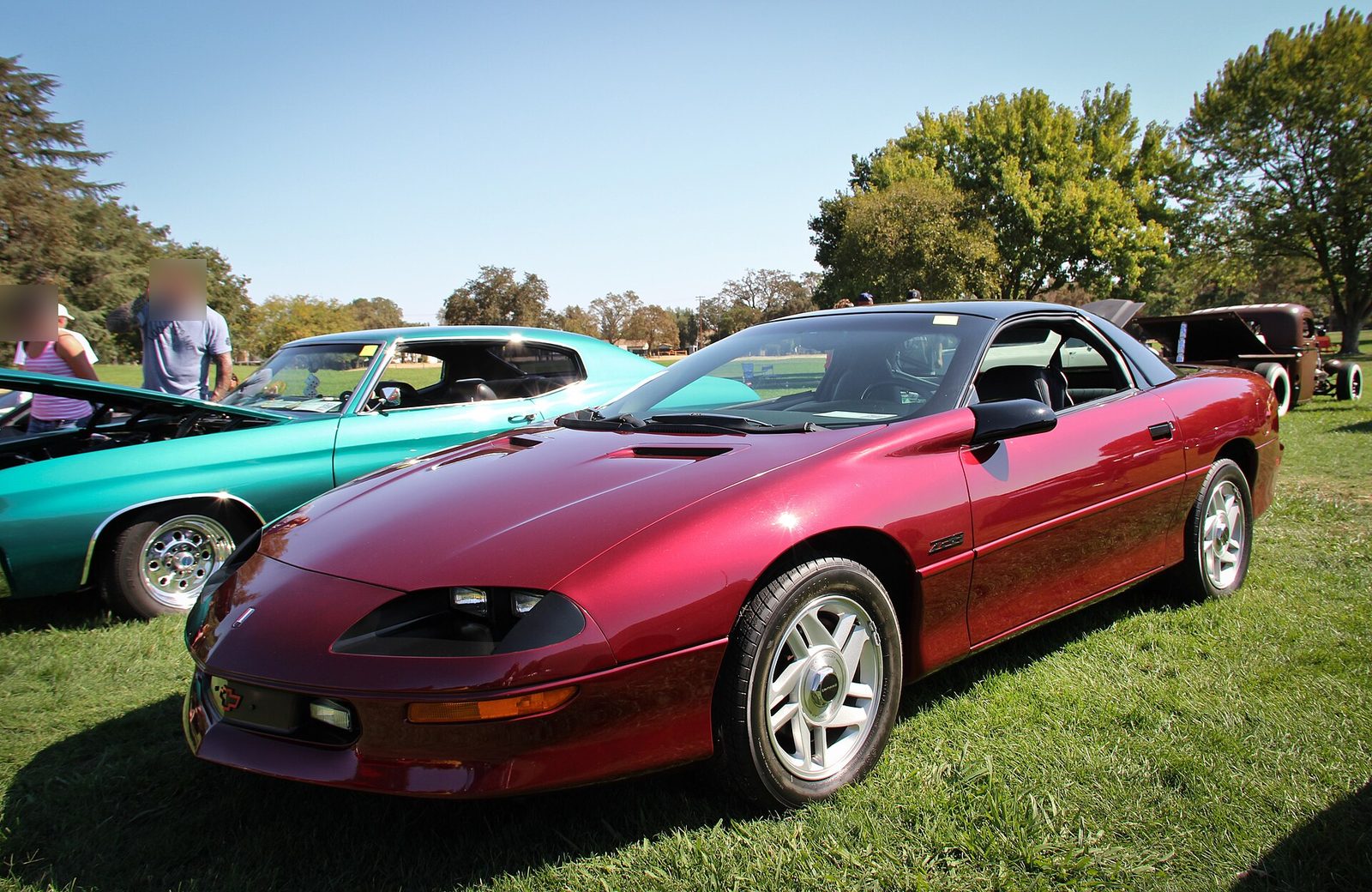
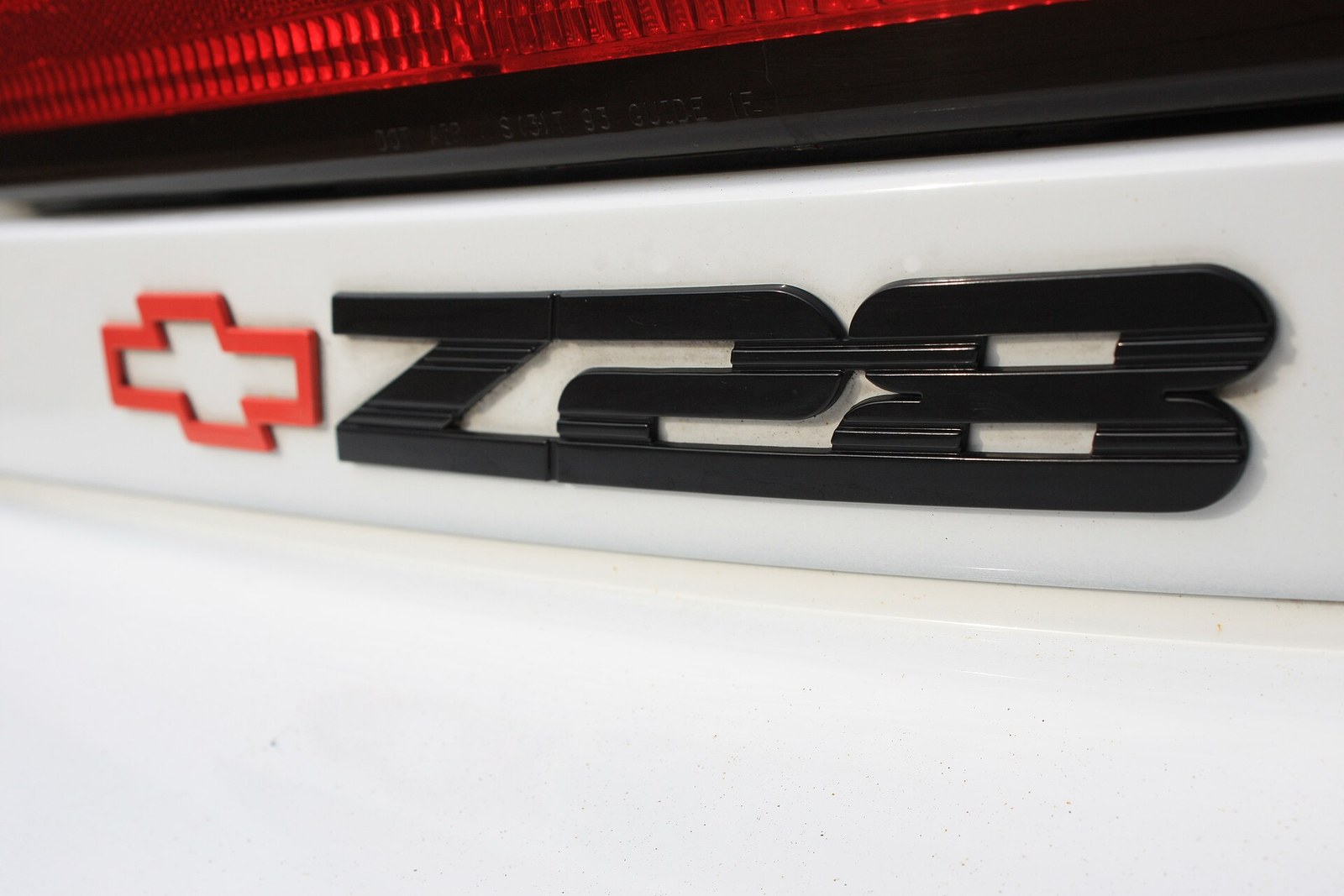
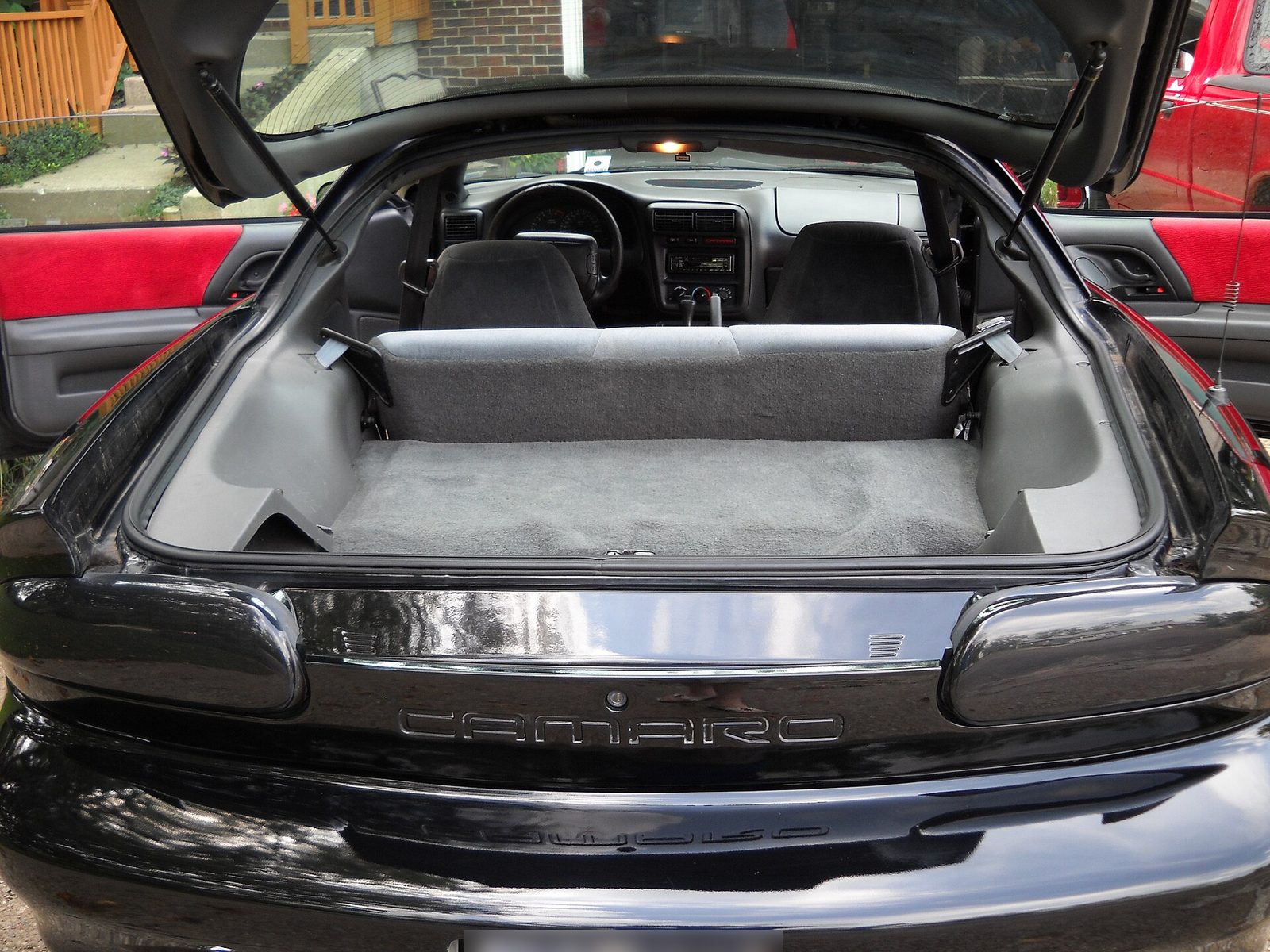
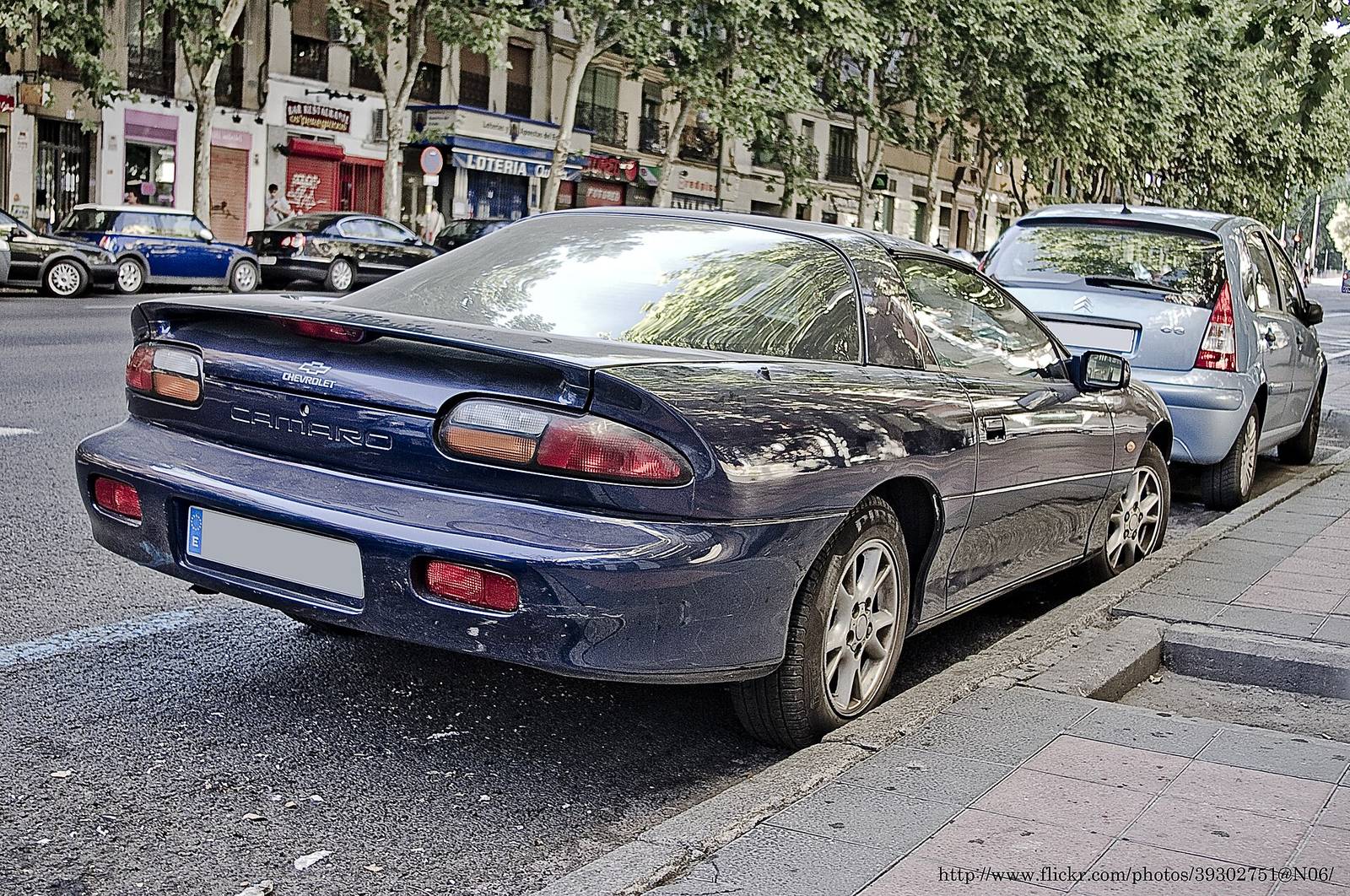
An all-new body over a revised F-body, built entirely at the Sainte-Thérèse, Quebec, plant, which dated from 1965 and was refitted for the car. The Z28 launched with the Corvette's LT1 and moved to the all-aluminum LS1 in 1998, and the SS name came back in 1996 as a dealer-delivered conversion by SLP Engineering.
The F-body, Camaro and Firebird alike, ended in 2002. The Camaro returned seven years later.
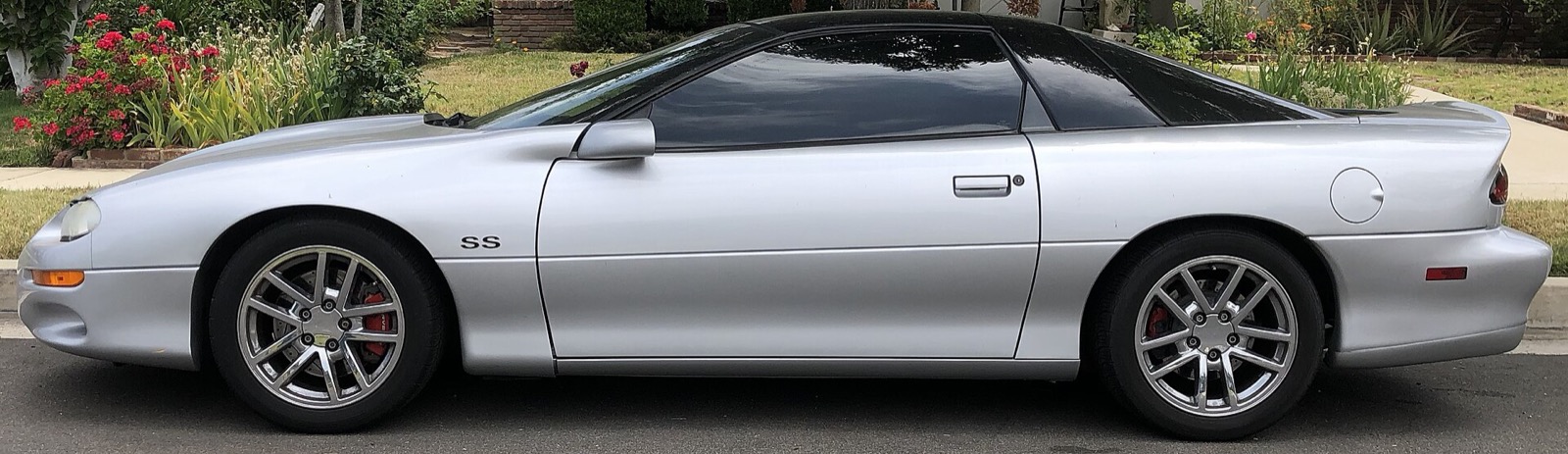
1993: A Late, All-New Start
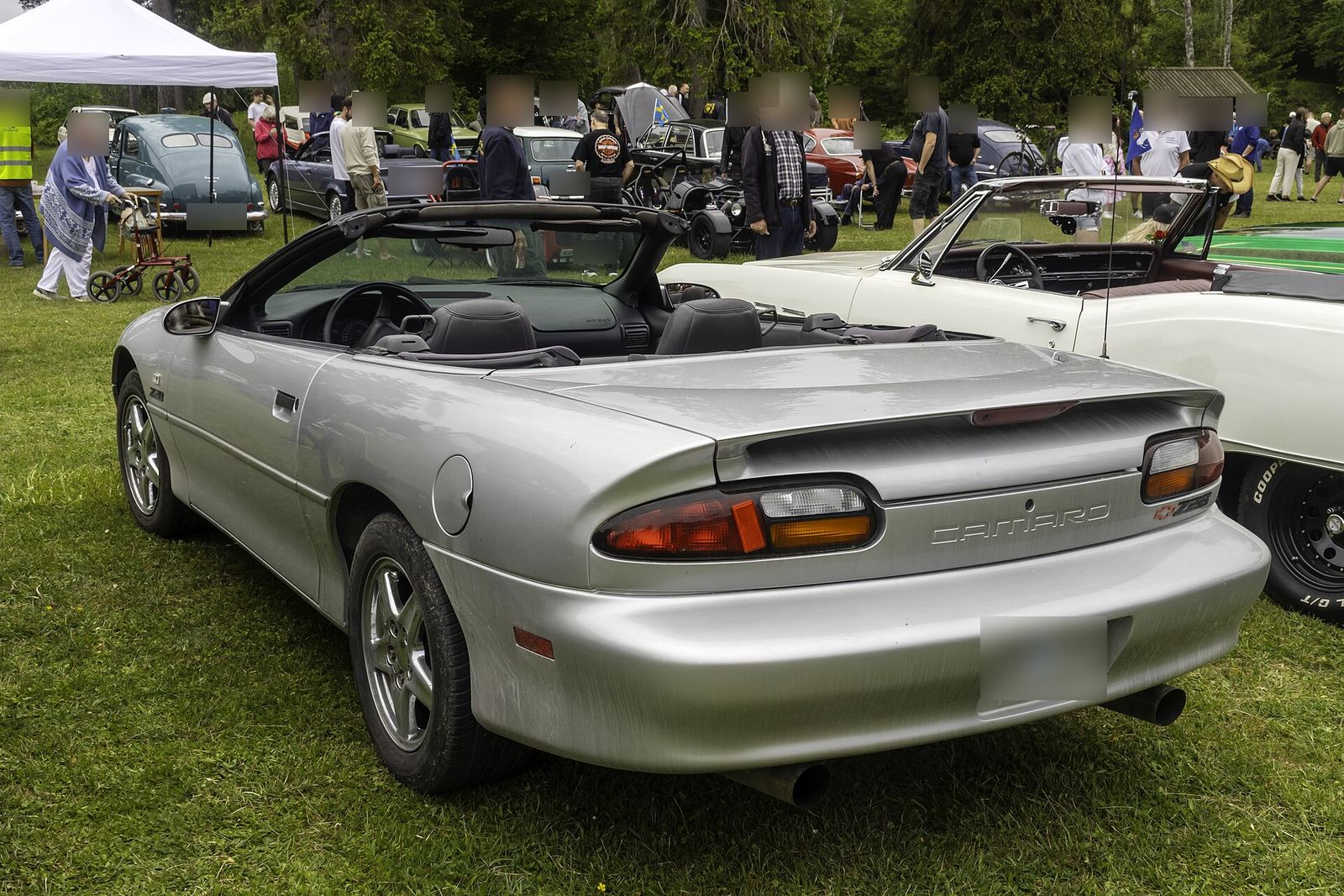
Production moved to Sainte-Thérèse, Quebec, in November 1992, and the new car went on sale in January 1993, well into the model year, which is why 1993's total was only 39,103. The Z28 launched with the LT1 5.7-liter V8 from the 1992 Corvette, rated at 275 hp and 325 lb-ft. The base car used a 3.4-liter V6 at 160 hp. A convertible followed for 1994, built on the same line, in modest numbers (see the 1994 split below).
LT1, Then LS1
Both of the generation's V8s came from the Corvette. The cast-iron LT1 ran from 1993 to 1997. The T56 six-speed manual was the Z28's standard transmission through 1997, with the 4L60 automatic an extra-cost option, and period Z28s ran 0–60 in the high five-second range.

Inside the LS1’s aluminum-block description
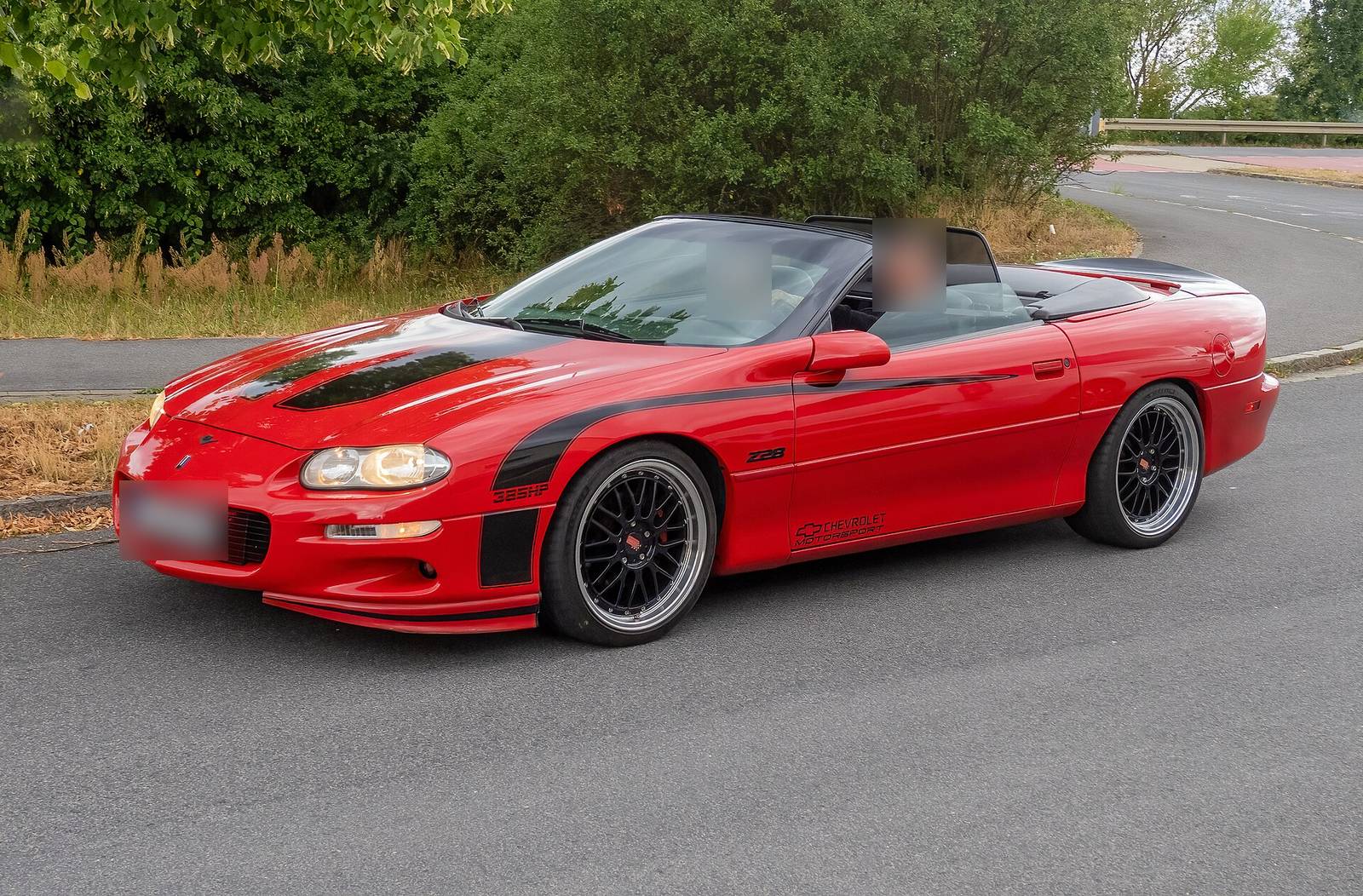
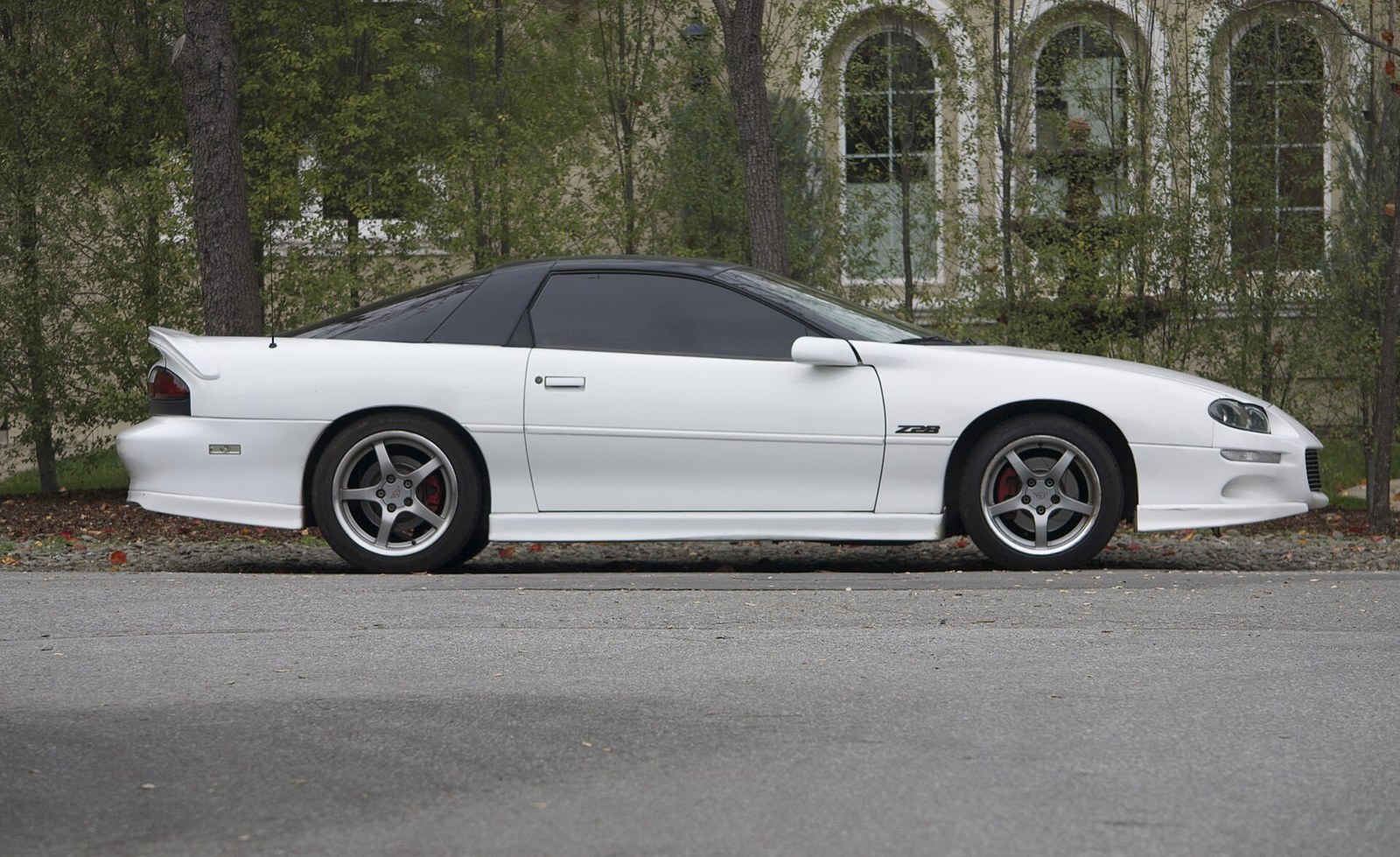
For 1998 the all-aluminum LS1 replaced it. GM put it at 305 hp at 5,200 rpm and 335 lb-ft at 4,000, 20 hp and 10 lb-ft more than the LT1, and it rose to 310 hp and 340 lb-ft for 2001. It is widely regarded as underrated, and it is the reason late fourth-generation cars stay popular with tuners and drag racers.
Original CamaroFacts figure. Sources:
1993 reference table
2002 reference table
The SS That Chevrolet Didn't Build
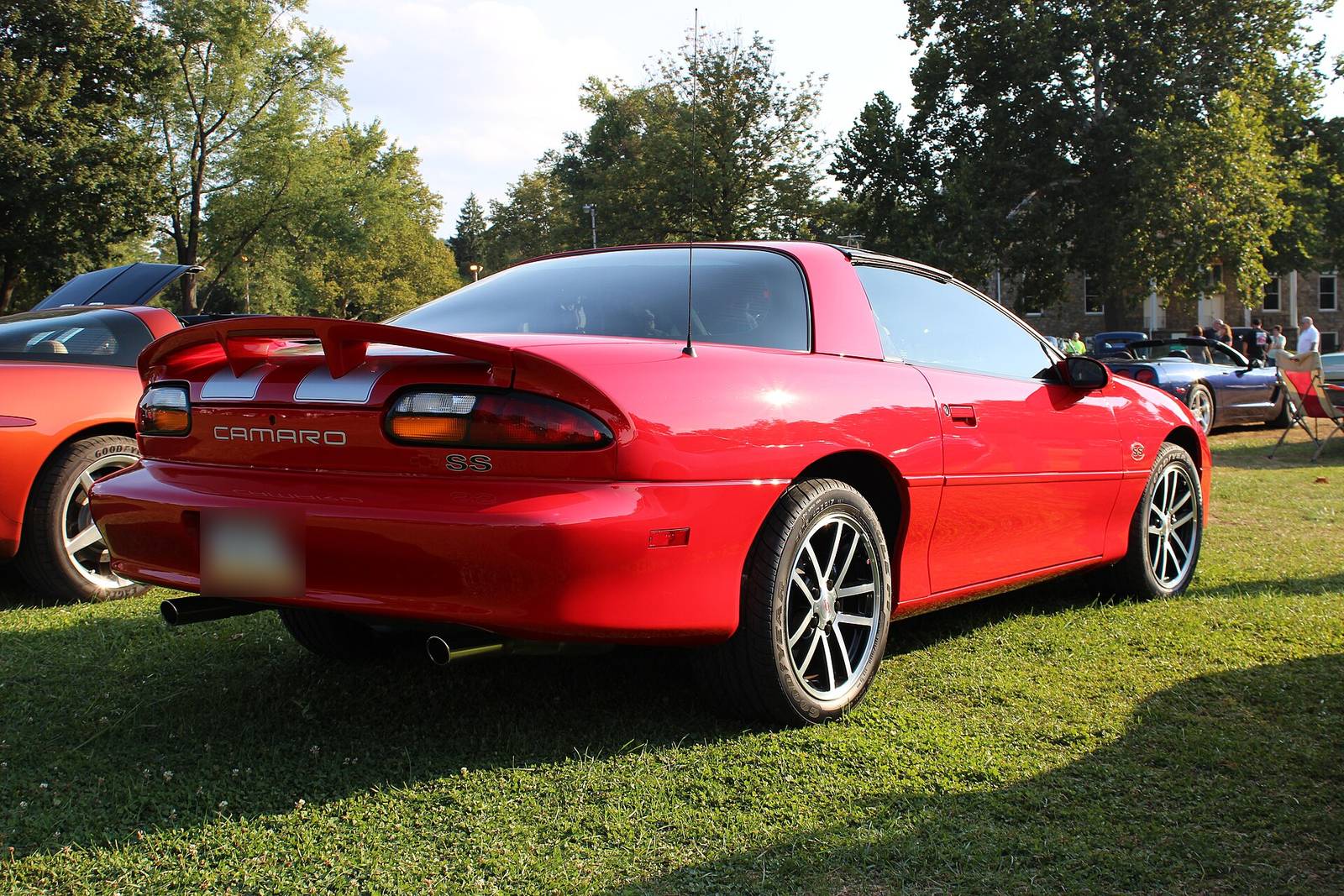
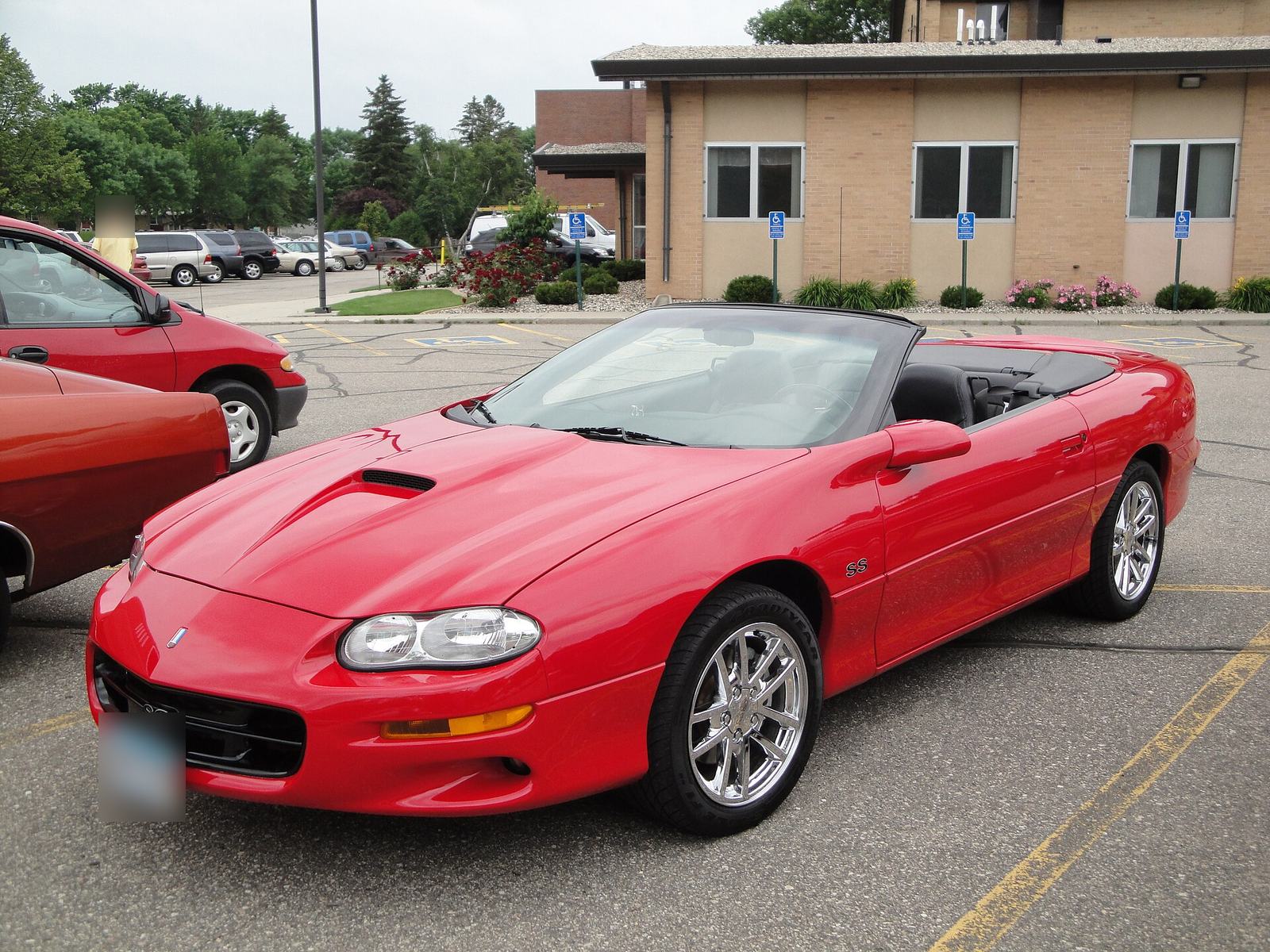
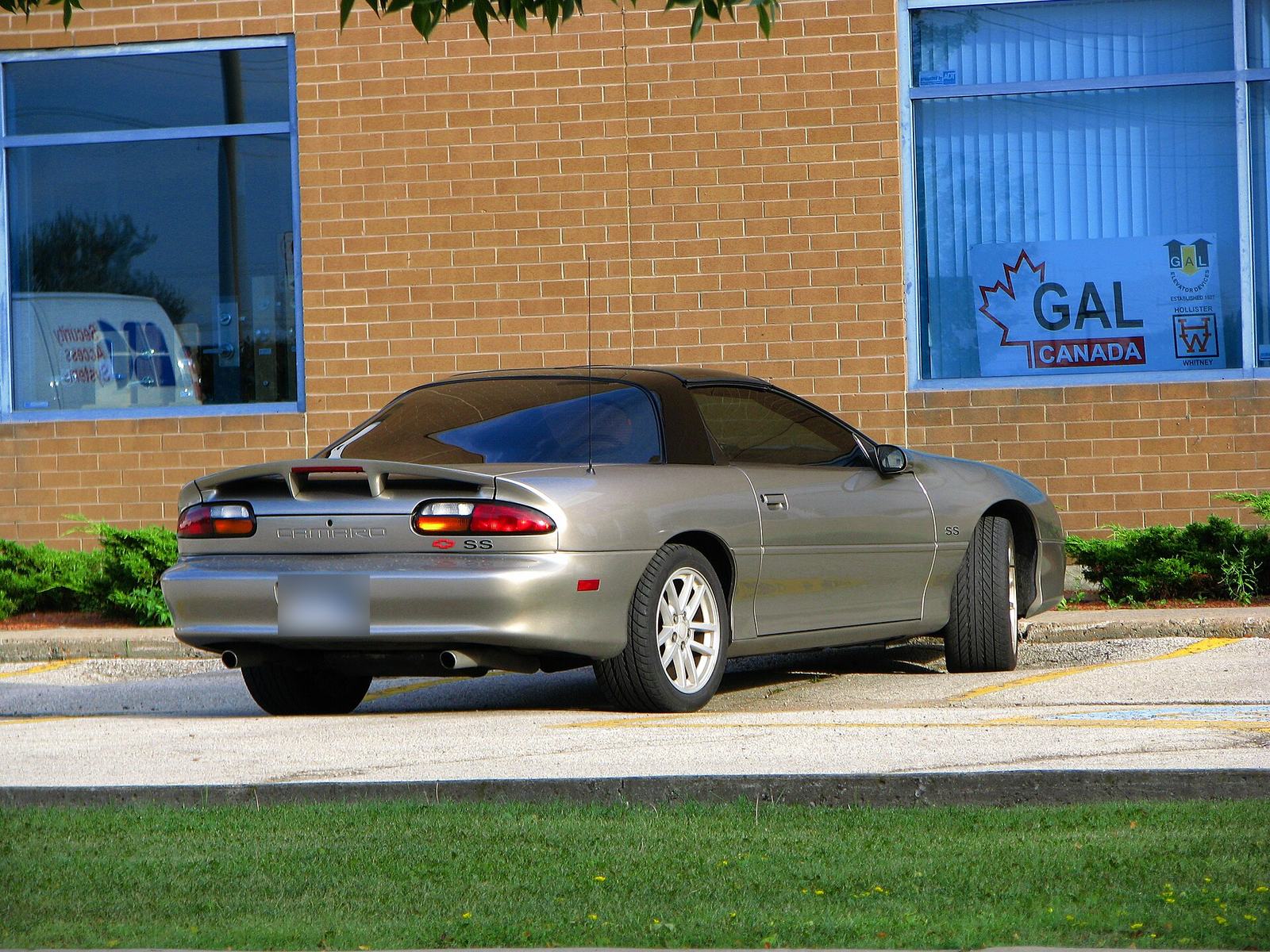
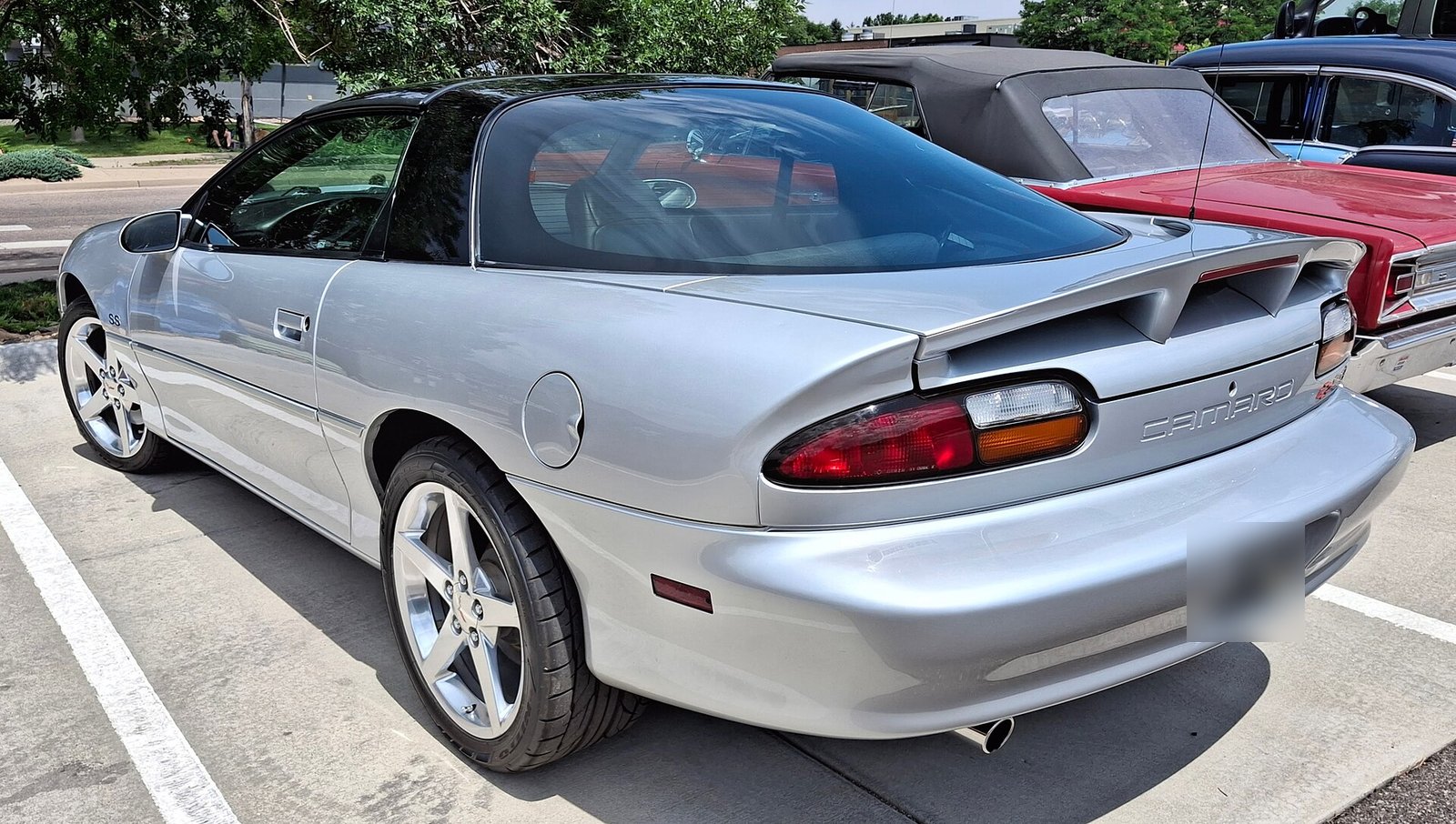
Every earlier SS had been a Chevrolet option. The fourth-generation SS was built by SLP Engineering of Troy, Michigan, Ed Hamburger's company, already known for the Firebird Firehawk. From 1996 Chevrolet supplied LT1 Z28s and SLP converted them before they reached dealers, with its own hood, wheels and suspension and, in some years, exhaust and engine work. It ended a 24-year gap in the SS name.
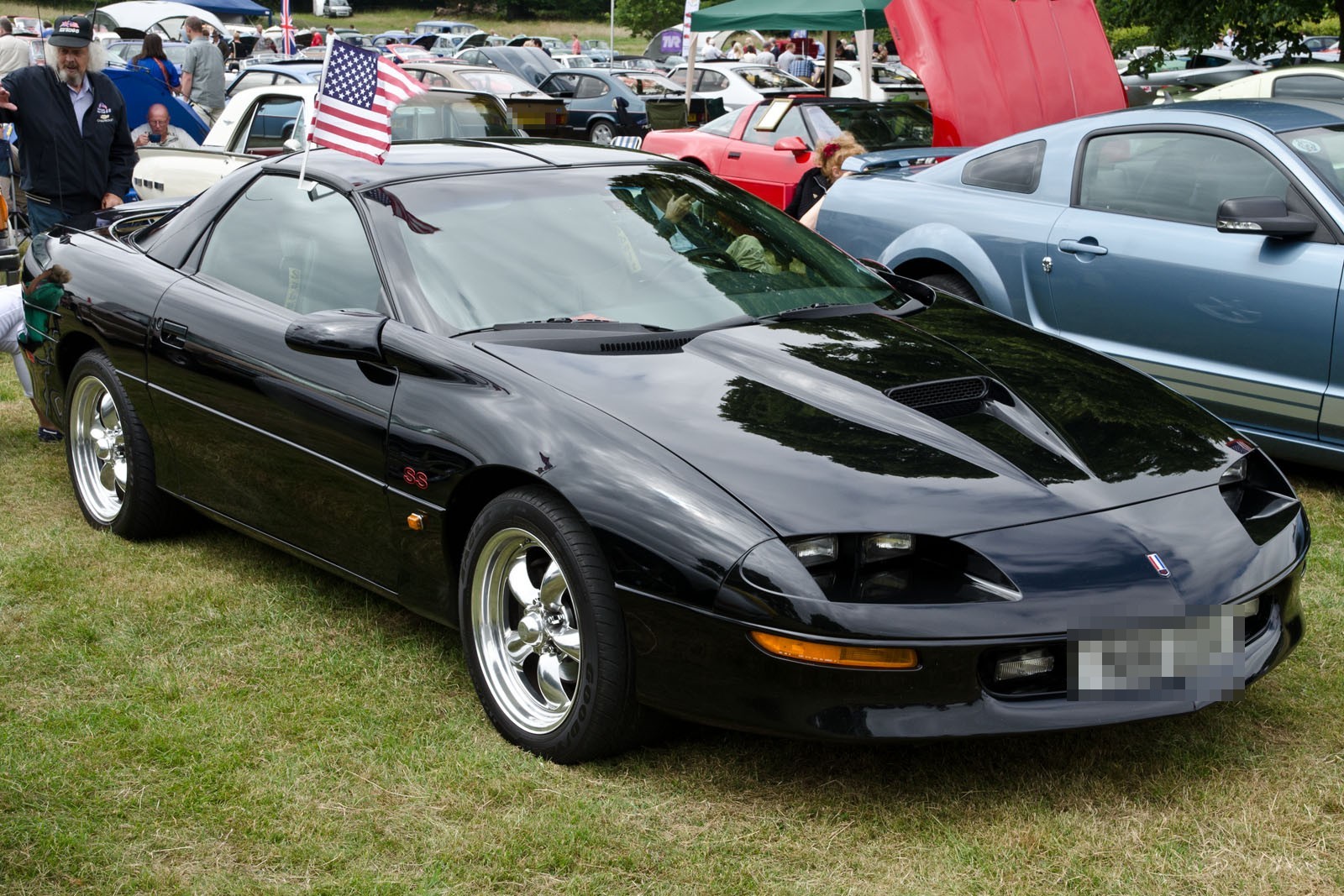
By 2001–02 the SS's ram-air hood and exhaust gave it 325 hp and 350 lb-ft against the Z28's 310, and SLP offered further catalog steps, including a 335 hp version and, for 2002, a 345 hp version with a Blackwing air lid. So a "2002 SS" can be any of several output levels, and the paperwork decides which.
The 30th Anniversary and the LT4 Cars
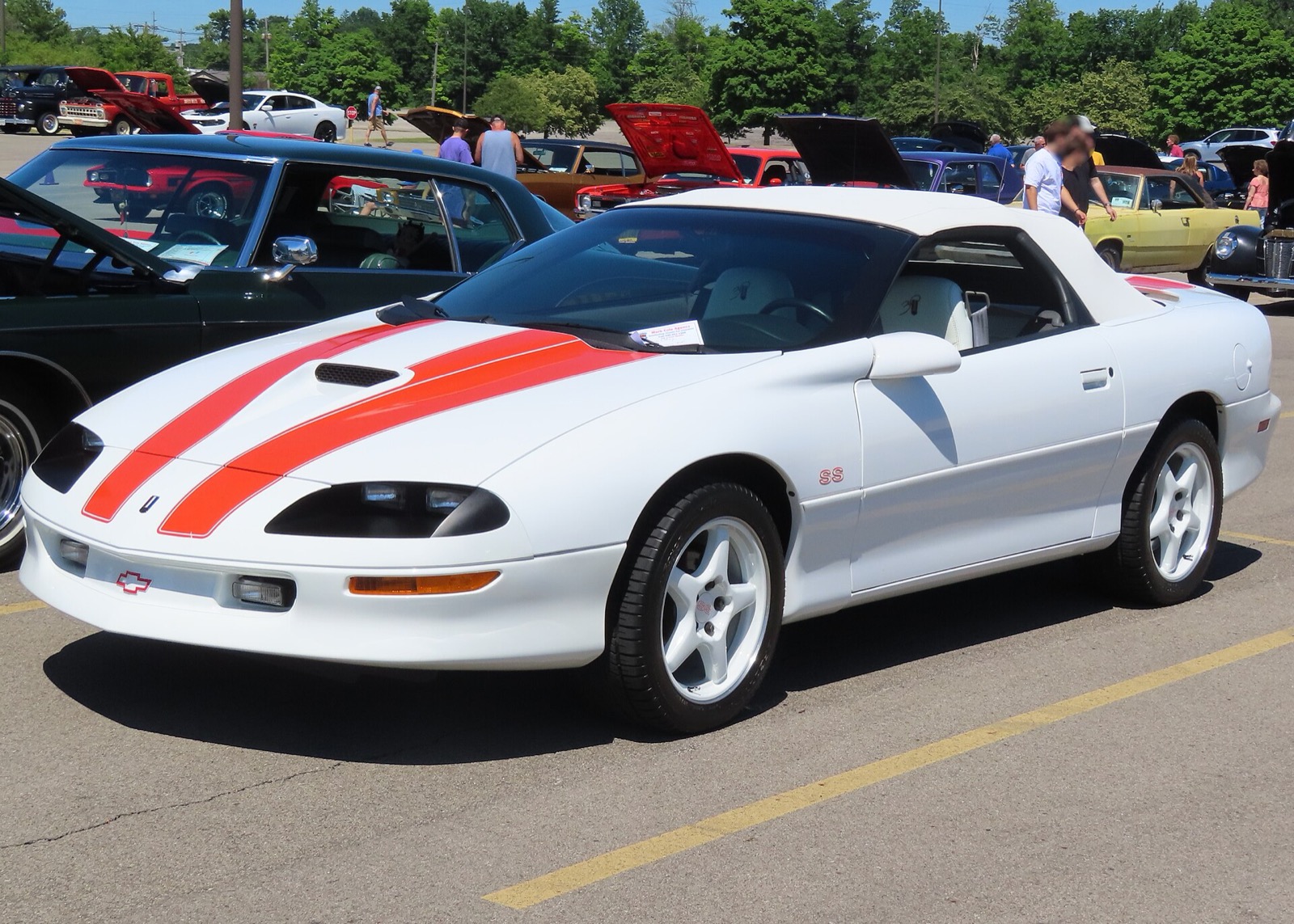
The 1997 30th Anniversary package dressed the Z28 or SS in Arctic White with Hugger Orange stripes, white wheels and a white interior with optional houndstooth inserts, a deliberate echo of the 1969 pace car. Among them SLP built 106 SS cars with the 330 hp LT4 from the 1996 Corvette Grand Sport, and they are among the most valuable fourth-generation Camaros.
1998 and the Long Goodbye
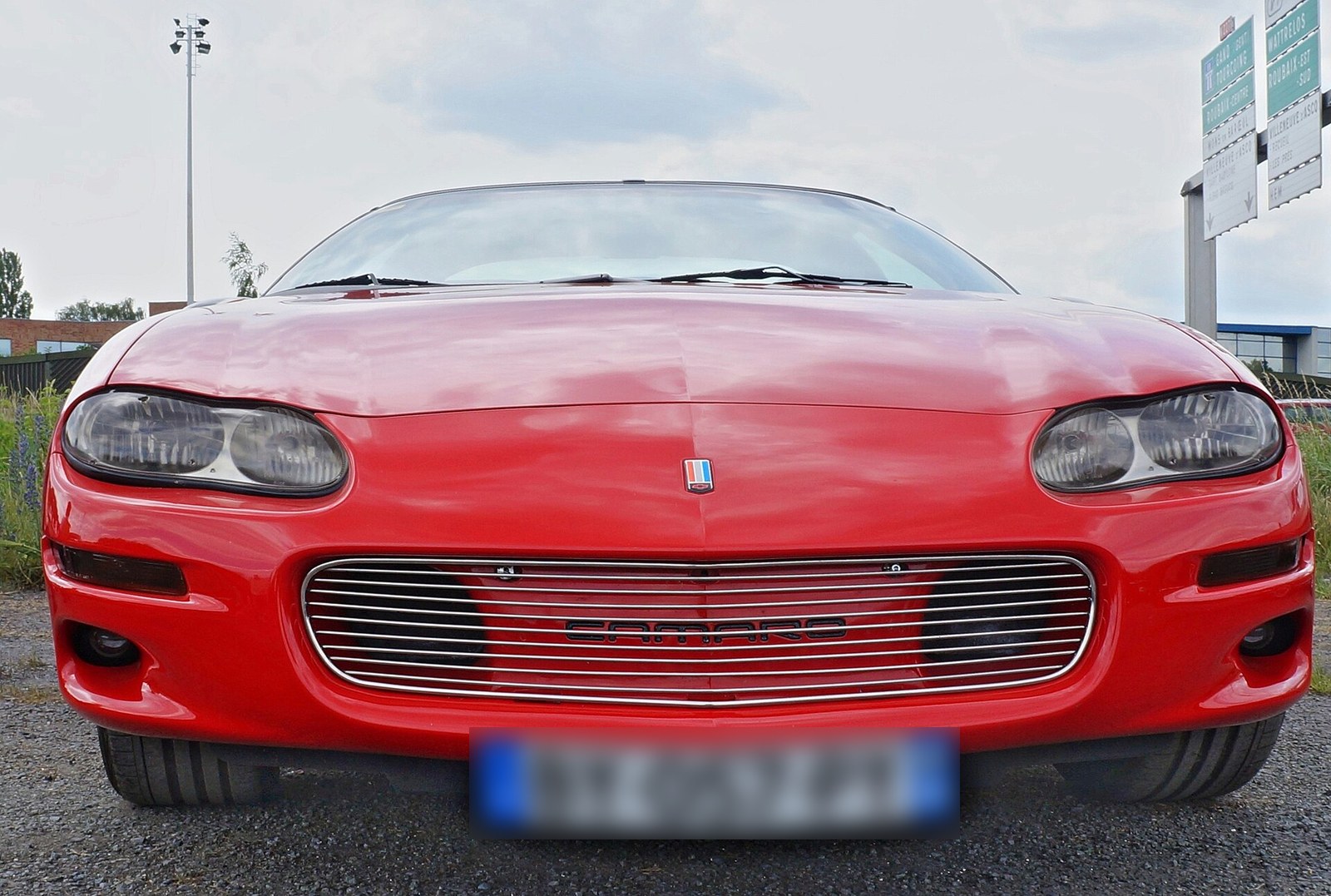
The 1998 refresh brought new front sheet metal and composite headlamps along with the LS1. From there production fell every year, to 29,009 in 2001, the lowest of the generation, as an aging platform ran out its time and GM began to signal the end of the F-body.
2002: The End of the F-Body
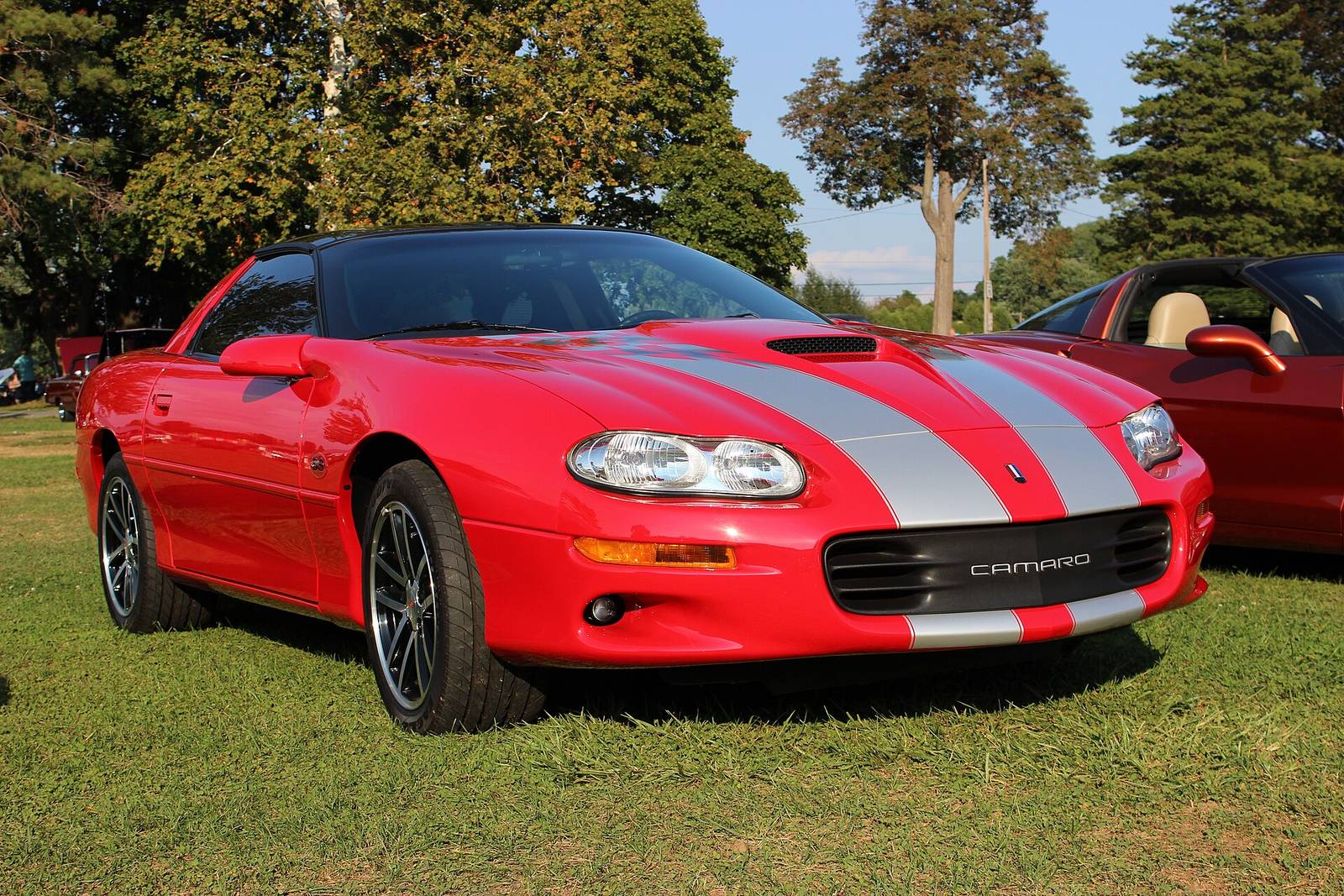
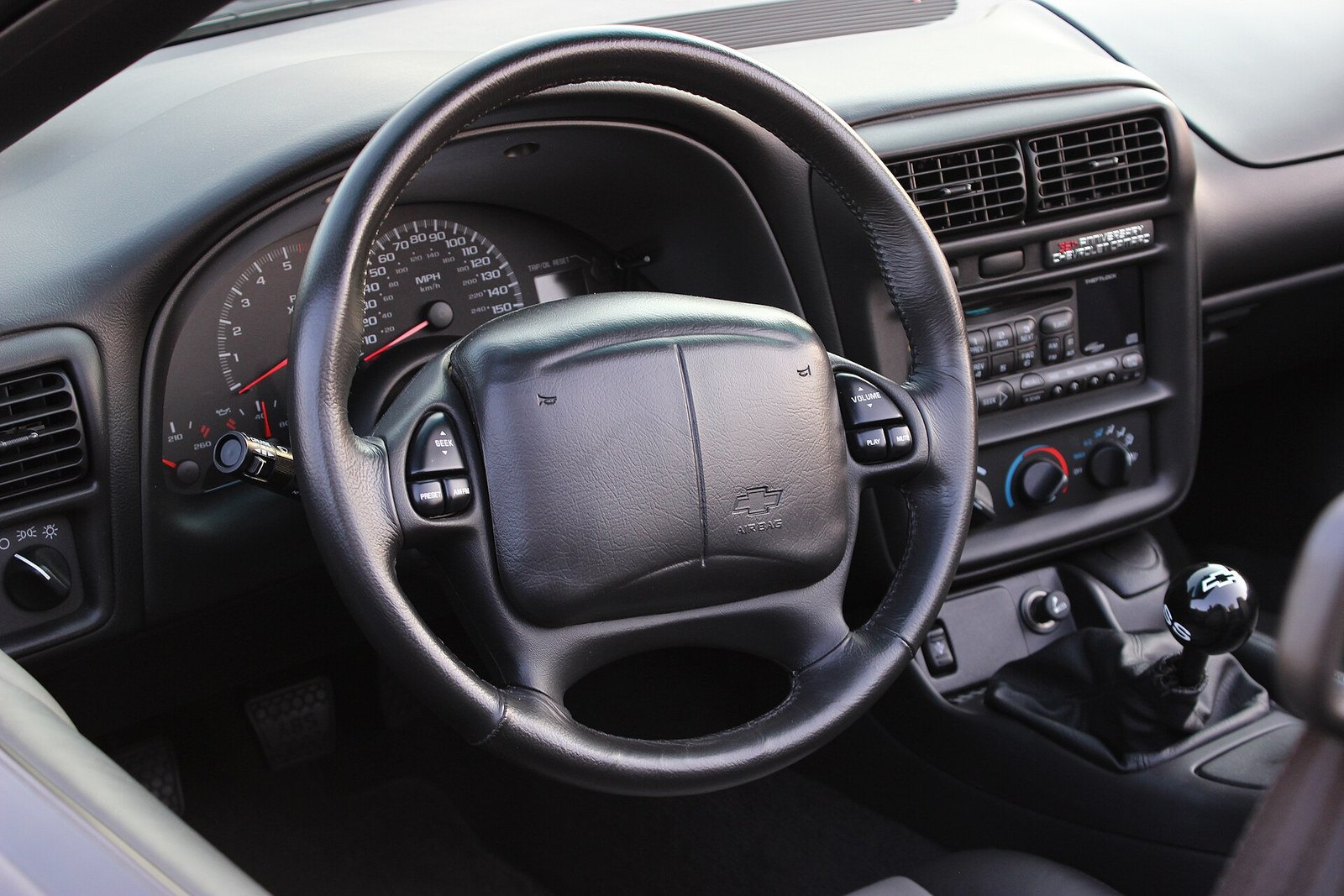
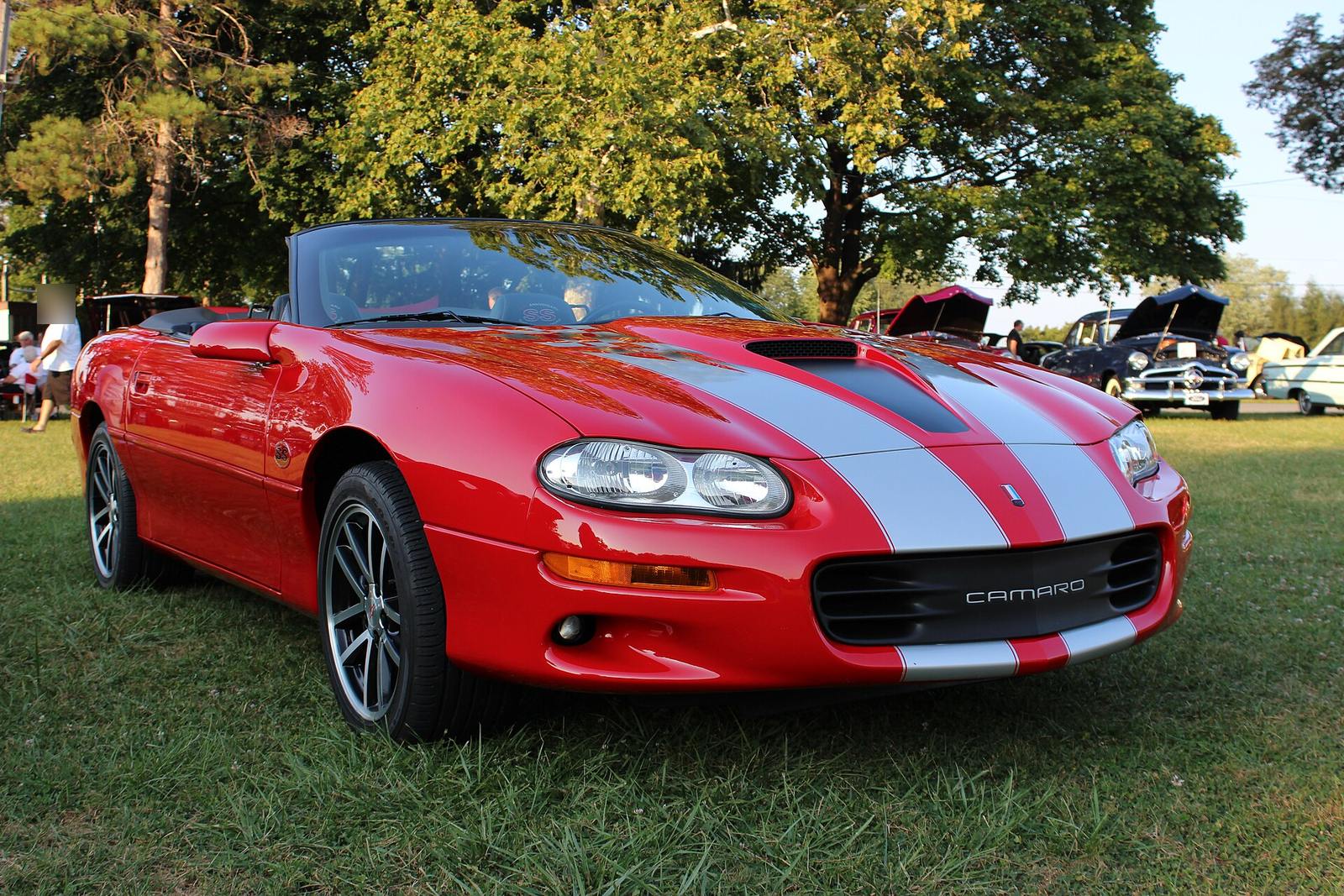
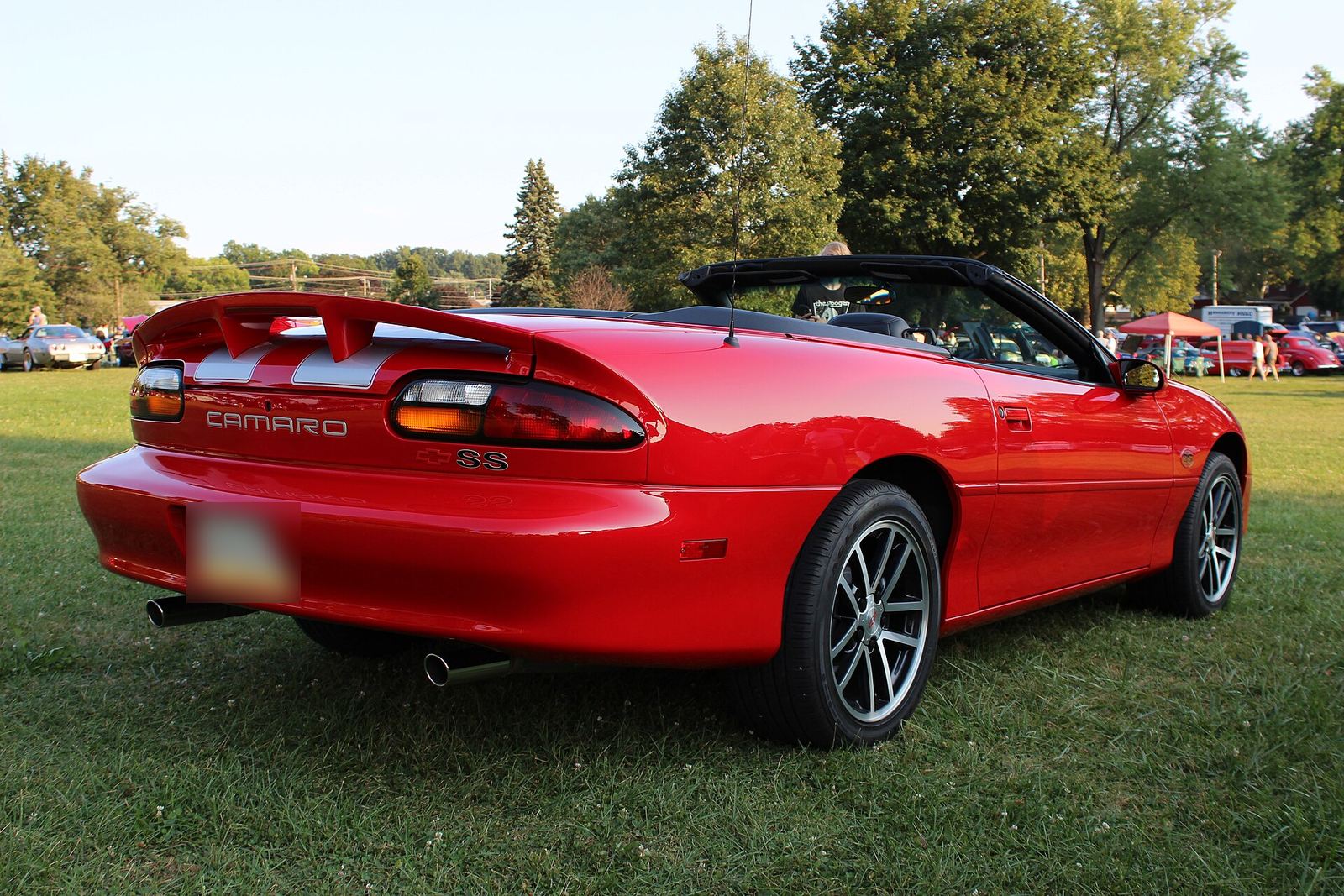
GM Canada's September 25, 2001 release announced that Camaro and Firebird production would cease in 2002 and that the plant would close that September. Read through The Auto Channel's reproduction, it attributes the decision to a shrinking sports-car segment, excess industry capacity and the lack of an economically viable alternative for the plant. The send-off was the 35th Anniversary package on SS coupes and convertibles: Bright Rally Red with silver stripes fading into a checkered flag.
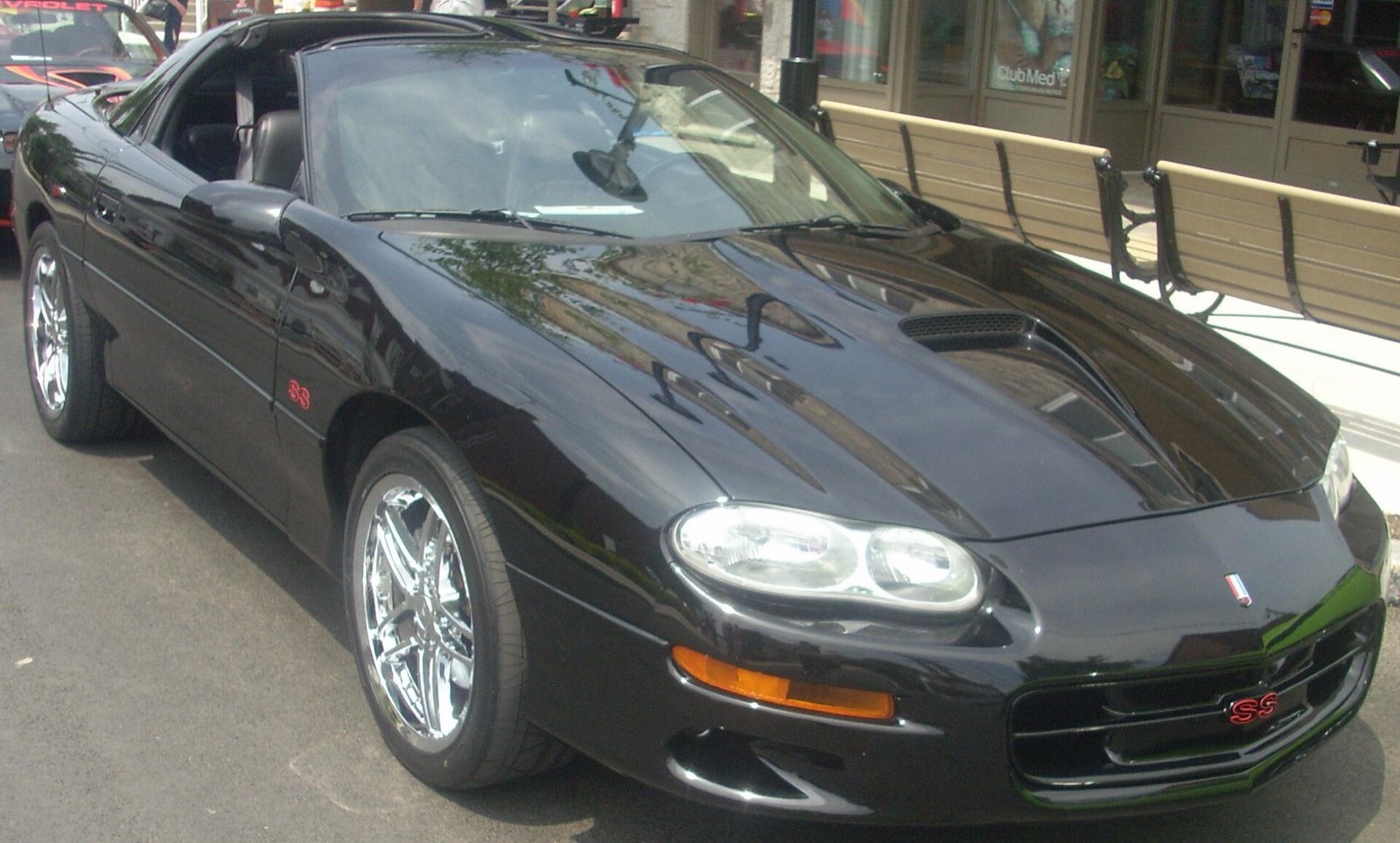
Camaro production stopped on August 27, 2002. The last car was a red Z28 convertible, now in GM's Heritage Collection. The Sainte-Thérèse plant closed that fall and was demolished in 2004.
Fans campaigned for a revival through the mid-2000s, and a retro concept appeared at the Detroit show in January 2006; the car that followed is on the fifth-generation page.
Did you know
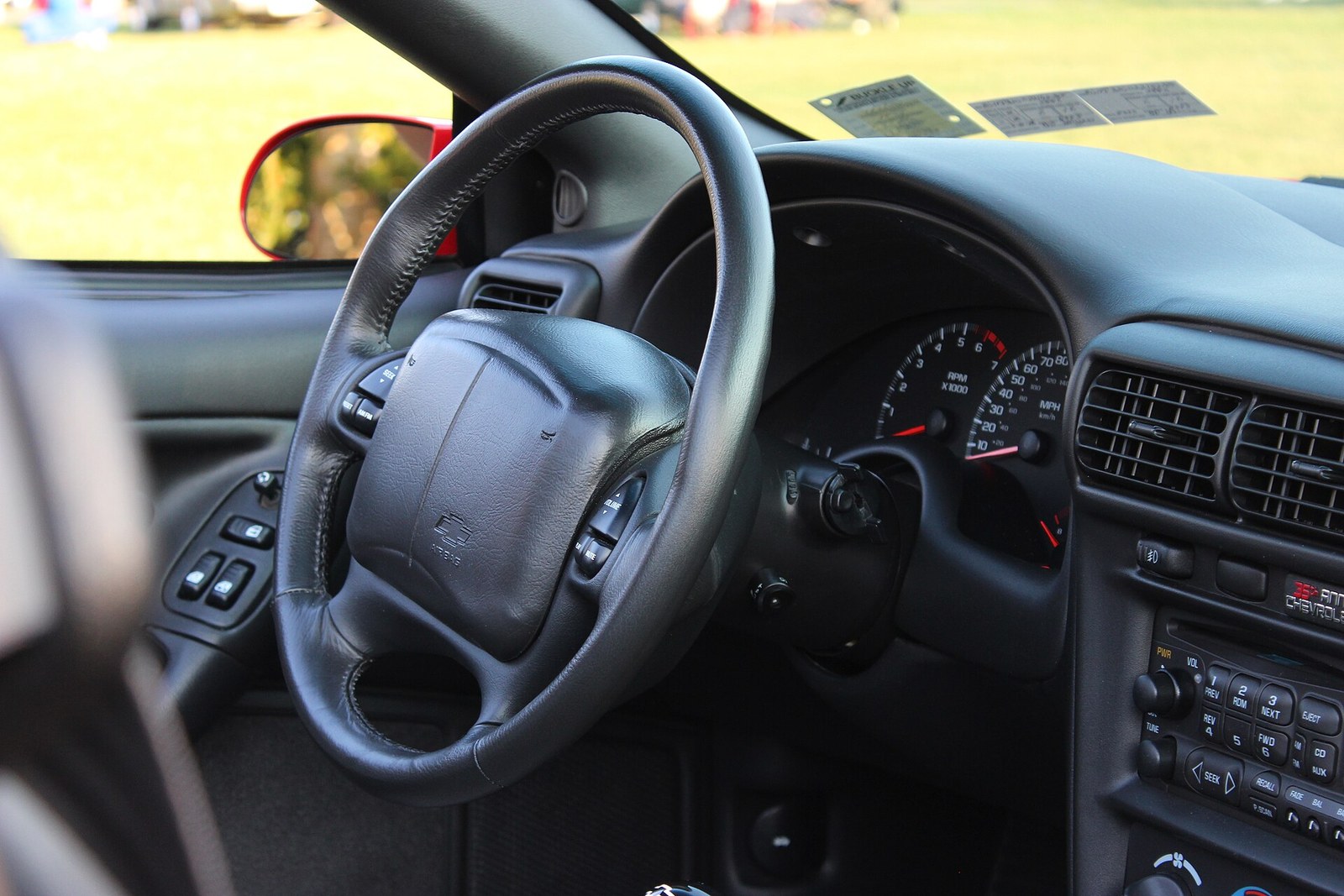
- GM pitched the 1993 body as rustproof and dent-resistant: composite front fenders, doors, roof and hatch, with two-side galvanized steel only for the rear fenders. The front end moved to a new short/long-arm suspension.
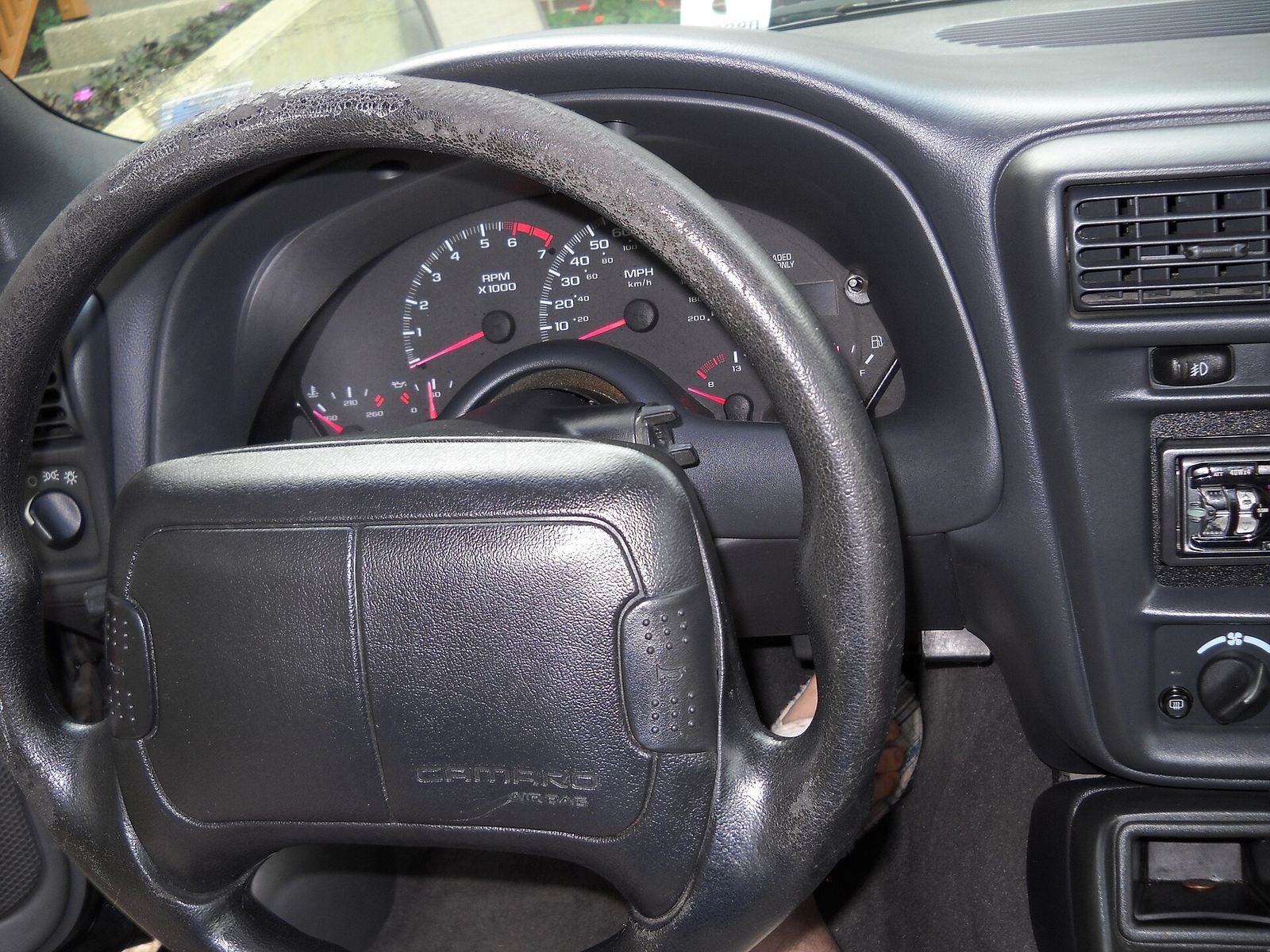
- Every 1993 Camaro came with driver and passenger air bags and four-wheel antilock brakes as standard equipment, and GM's order guide gives the base V6 coupe a five-speed.
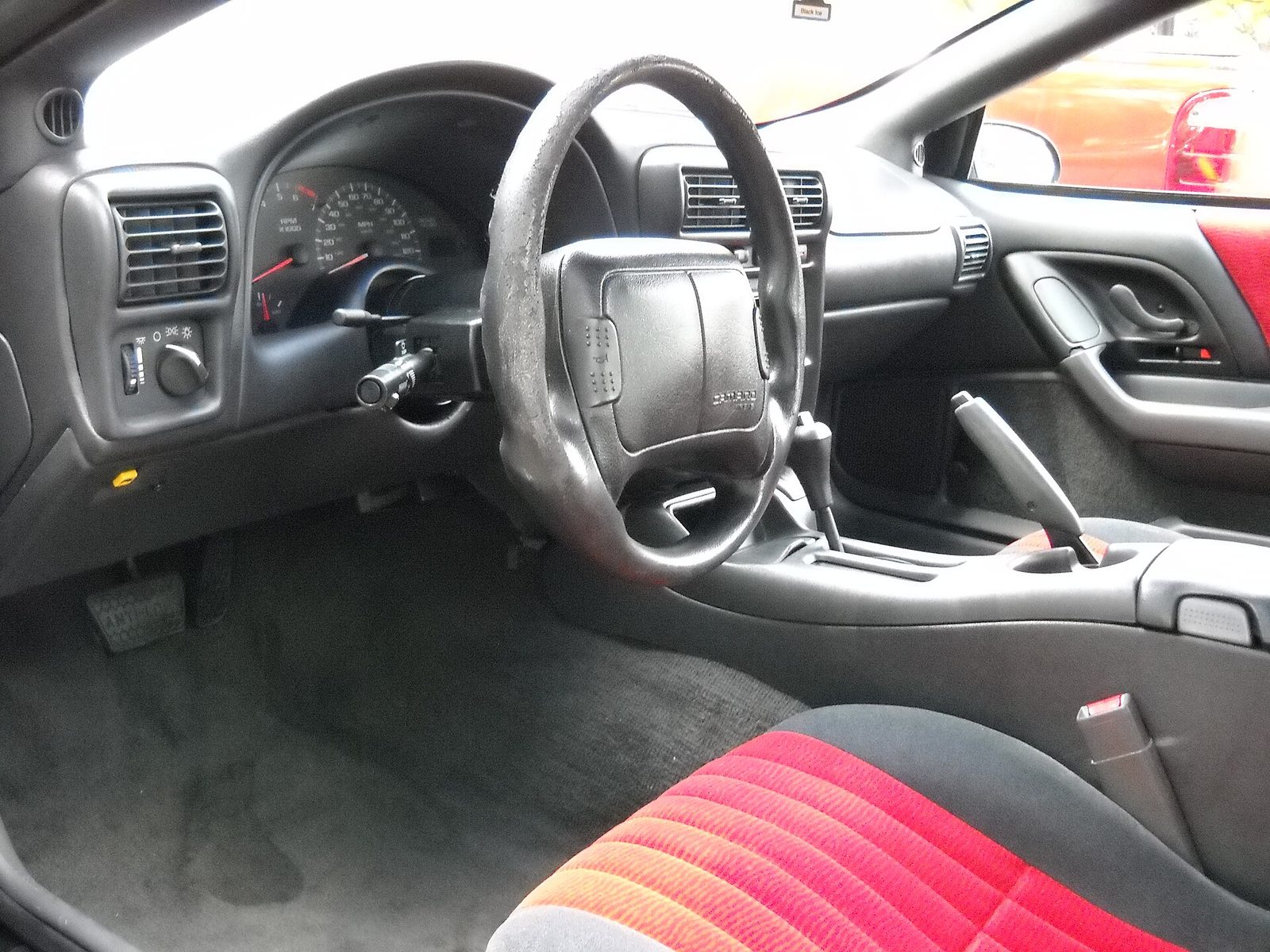
- On GM's sheets the 1993 Camaro measured 193.2 inches long, 74.1 wide and 51.3 tall on a 101.1-inch wheelbase, and weighed 3,241 lb as a V6 coupe and 3,373 as a six-speed Z28. By 2002 it was 193.5 inches long, 3,323 to 3,433 lb, with a drag coefficient of 0.33 (0.34 for the Z28) and 55/45 front/rear weight distribution.
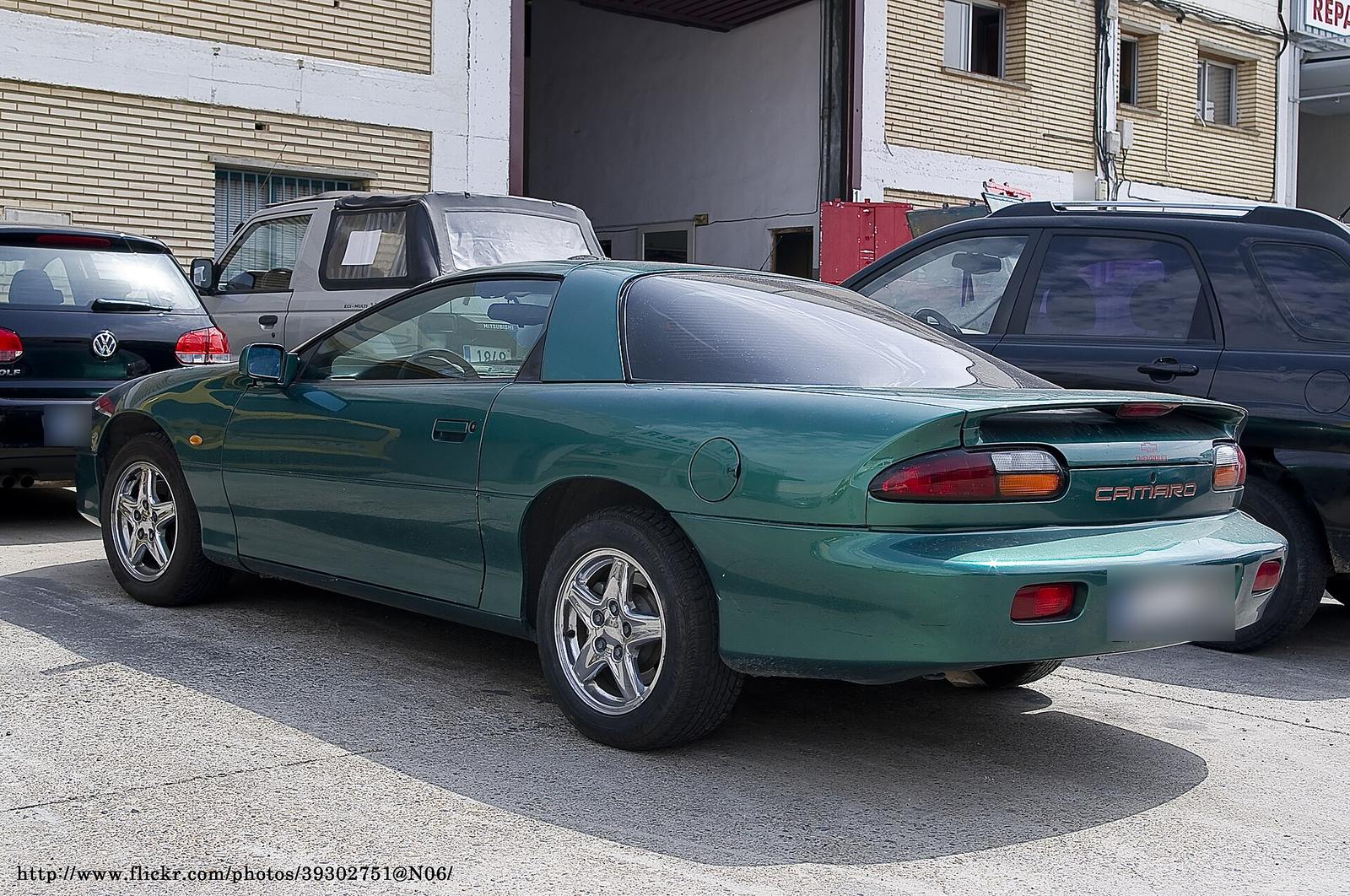
- Kirk Bennion, Chevrolet's Camaro exterior design manager, credits the fourth generation with a 68-degree windshield, "one of the most radical of its day," a bottom-breathing cooling layout that let the nose sit low, smooth body sides with integrated wheel flares (a first for Camaro) and an integrated wraparound rear wing shaped in the wind tunnel.
- The fourth-generation Camaro was an extensive revision of the third-generation F-body rather than a clean-sheet design, and from 1993 both it and the Firebird offered just one V-6 and one V-8 in each model year: the 3.4-liter V-6 and 5.7-liter LT1 to start, the 3.8-liter V-6 (from 1996) and LS1 after.
Sources for these details
- 1993 Chevrolet Camaro vehicle information kit (GM Heritage Center) GM Heritage factory archive
- 2002 Chevrolet Camaro vehicle information kit (GM Heritage Center) GM Heritage factory archive
- A Generational Thing: Camaro Design through the Years (Chevrolet press release, Feb. 26, 2015) GM press release
- GM F platform (Wikipedia) Reference
- GM Canada, September 25, 2001 closure release (The Auto Channel reproduction) Manufacturer release, archived reproduction
- NHTSA, August 18, 1995 final rule, upper-interior head-protection phase-in (60 FR 43031–43061) Official period Federal Register rule
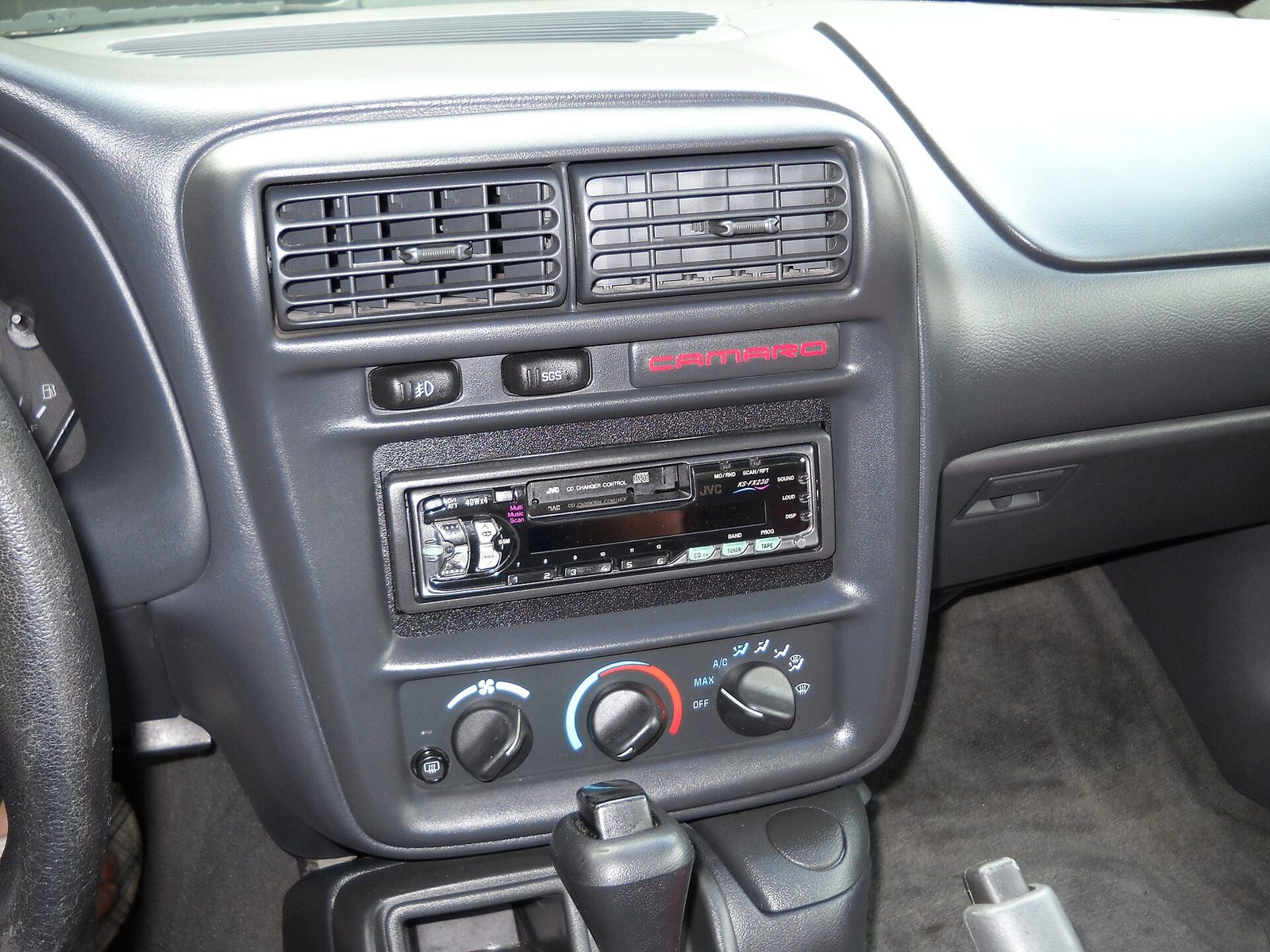
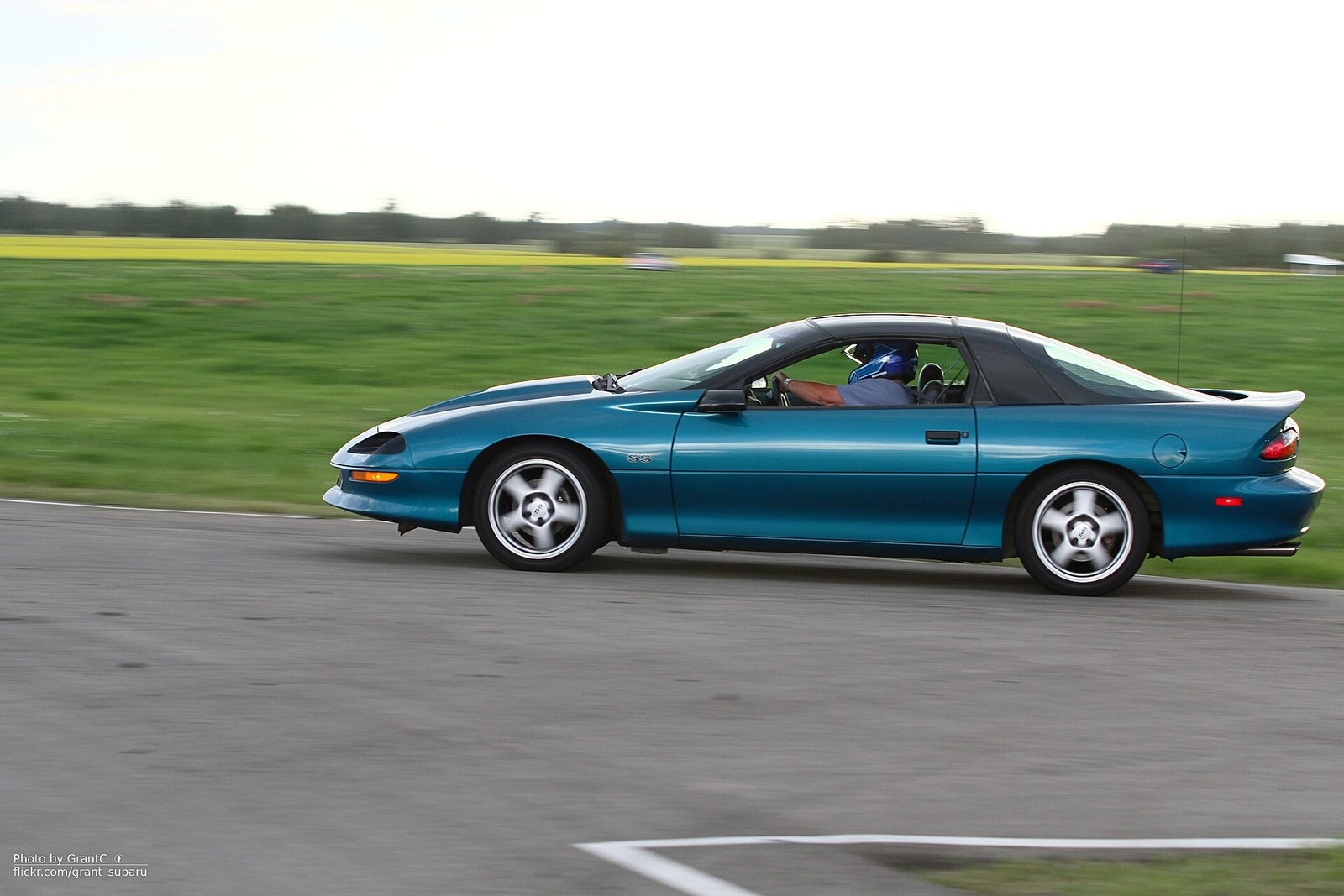
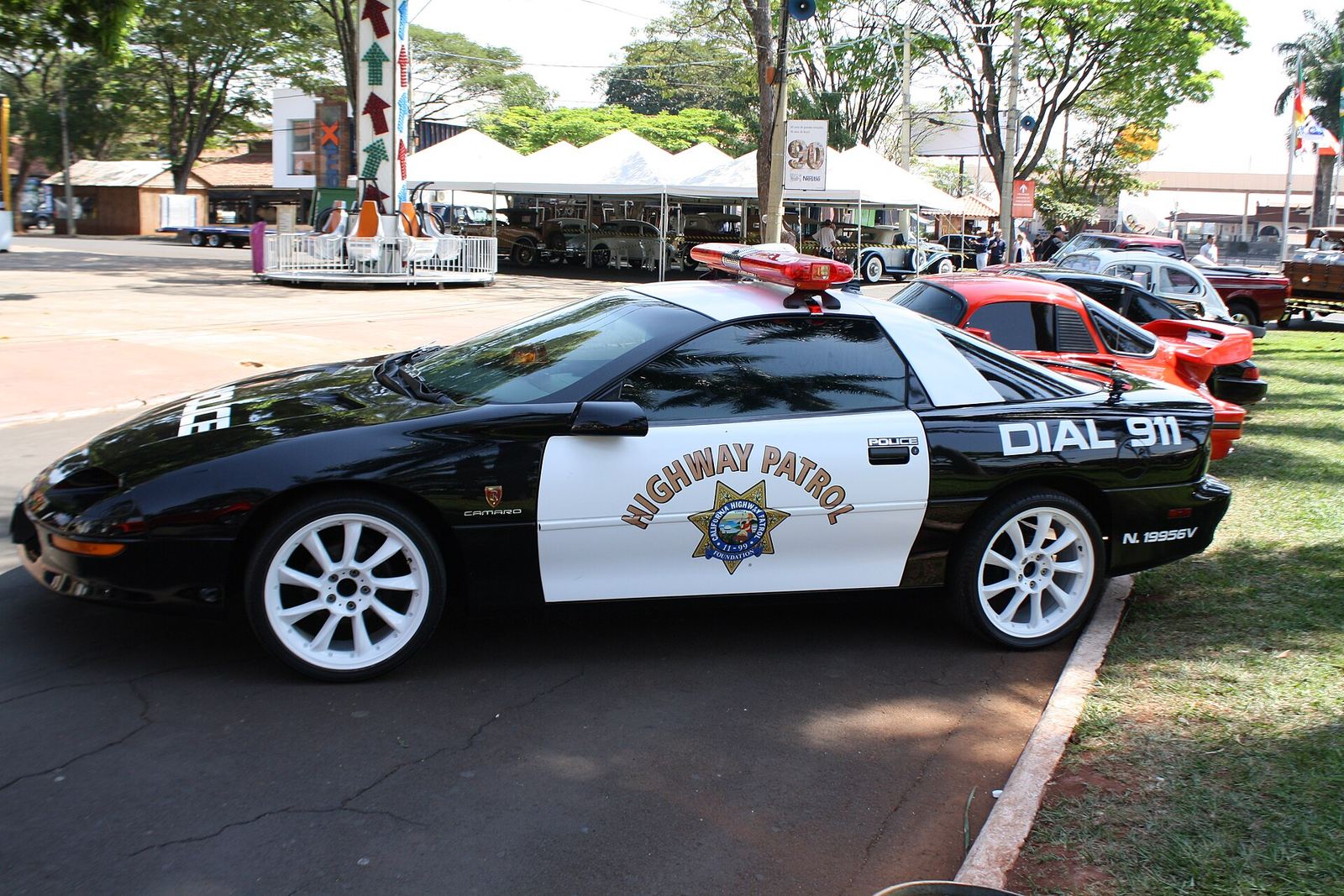
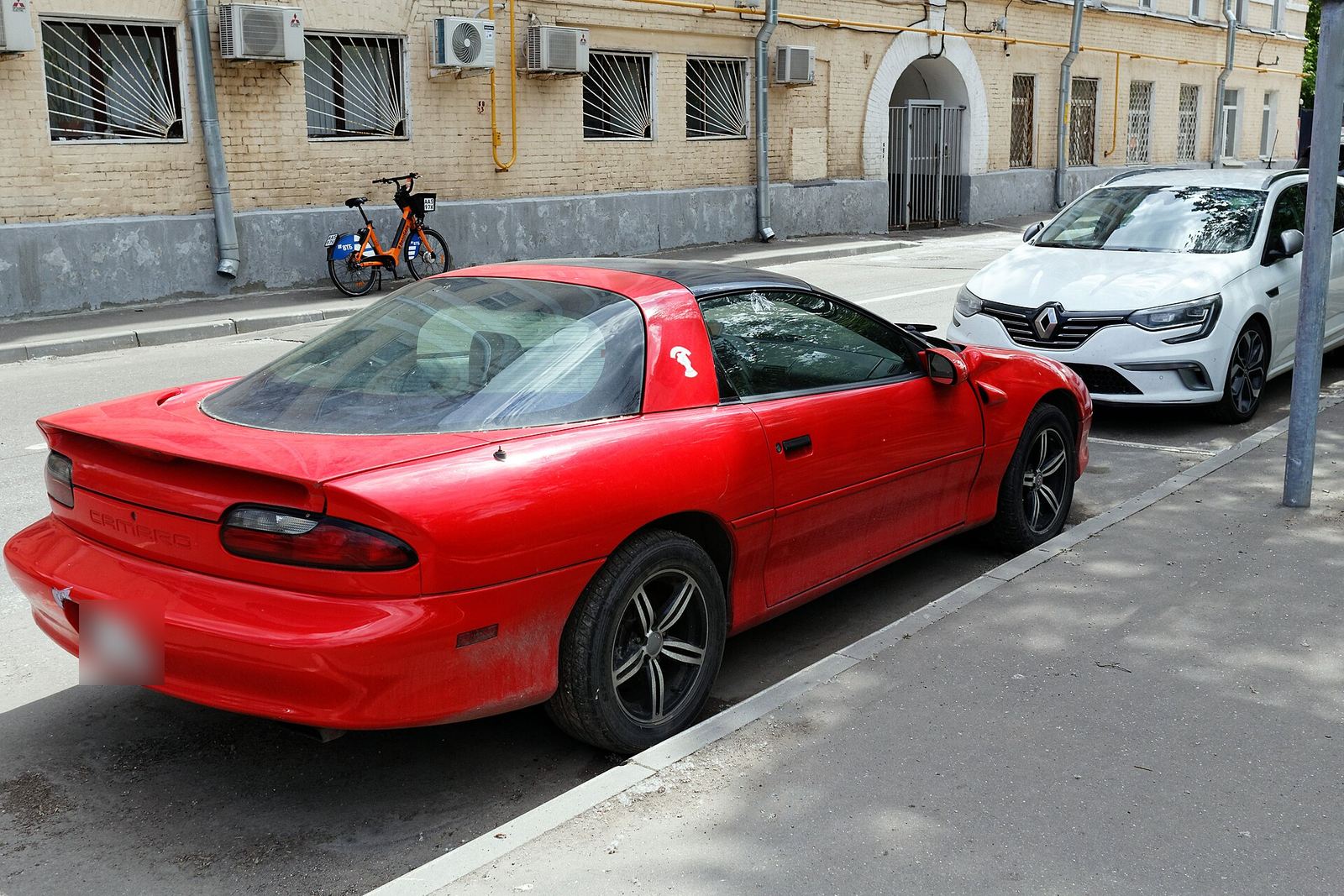
Year by year
| Year | The year in brief | Production / sales | Highest listed engine ratings |
|---|---|---|---|
| 1993 | Reborn and Corvette-powered | 39,103 Total production |
5.7 L LT1 V8, 275 hp at 5,000 rpm
Code: P. Z28; SAE J1349 net ratings from the MVMA automatic power-team sheet, January 1993 kit
|
| 1994 | The convertible returns to the fourth gen | 125,244 Total production |
5.7 L LT1 V8, 275 hp at 5,000 rpm
Code: P. Z28; SAE J1349 net ratings, MVMA sheet issued September 1993
|
| 1995 | Traction control for the Z28, and a new 3800 V6 late in the year. | 122,725 Total production |
5.7 L LT1 V8, 275 hp at 5,000 rpm
Code: P. Z28; SAE J1349 net, MVMA issued September 1994
|
| 1996 | SS returns, built by SLP rather than Chevrolet | 61,362 Total production |
5.7 L LT1 V8, 285 hp at 5,200 rpm; 280 hp at 5,000 rpm; 275 hp at 5,000 rpm
Code: P. Z28; respectively MVMA power teams, GM Powertrain F-car sheet, and dealer introduction; conflicting factory figures, not three selectable engine packages
|
| 1997 | 30th Anniversary, and 106 LT4 cars | 54,972 Total production |
5.7 L LT4 V8, 330 hp
106 SLP 30th Anniversary SS cars
|
| 1998 | LS1 and the new nose | 49,218 Total production |
5.7 L LS1 V8, 305 hp at 5,200 rpm
Code: G. Z28; aluminum block and heads, cast-iron cylinder liners
|
| 1999 | The long goodbye begins: LS1 power in a shrinking market. | 42,098 Total production |
5.7 L LS1 V8, 320 hp at 5,200 rpm
Code: G. SS (WU8, SLP); factory specification table separates SS horsepower but does not separately label SS torque
|
| 2000 | The LS1 era's quiet middle year, with volume well below the 1998 level. | 45,461 Total production |
5.7 L LS1 V8, 320 hp at 5,200 rpm
Code: G. SS (WU8, SLP); directly listed in the 2000 factory specifications
|
| 2001 | The generation's low-water mark | 29,009 Total production |
5.7 L LS1 V8, 325 hp at 5,200 rpm
Code: G. SS (WU8, SLP)
|
| 2002 | 35th Anniversary, and the end of the F-body | 41,776 Total production |
5.7 L LS1 V8, 325 hp at 5,200 rpm
Code: G. SS (WU8, SLP)
|
V8 ratings
| Years | Engine | Model | Power | Torque |
|---|---|---|---|---|
| 1993–95 | 5.7 L LT1 | Z28 | 275 hp | 325 lb-ft |
| 1996–97 | 5.7 L LT1 | Z28 | 285 hp | 325 lb-ft |
| 1997 | 5.7 L LT4 | 30th Anniversary SS (106 cars) | 330 hp | — |
| 1998–2000 | 5.7 L LS1 | Z28 | 305 hp | 335 lb-ft |
| 2001–02 | 5.7 L LS1 | Z28 | 310 hp | 340 lb-ft |
| 2001–02 | 5.7 L LS1 | SS (SLP) | 325 hp | 350 lb-ft |
The 1996–97 LT1 rating is implied by GM's statement that the 1998 LS1 made 20 hp and 10 lb-ft more than the LT1.
SS and anniversary editions
| Year | Edition | Built | Note |
|---|---|---|---|
| 1996 | SS (SLP) | 2,263 | First SS since 1972 |
| 1997 | 30th Anniversary | 4,533 | $575; Arctic White with Hugger Orange stripes |
| 1997 | 30th Anniversary SS with LT4 | 106 | 100 US, 6 Canada |
| 2002 | 35th Anniversary (Z4C) | 3,369 | 1,971 T-top coupes, 1,398 convertibles |
1994 body-style split
| Model | Coupe | Convertible |
|---|---|---|
| Base | 76,531 | 2,328 |
| Z28 | 36,008 | 4,932 |
Model years
The convertible returns to the fourth gen
The first fourth-generation convertible, now an uncommon car.
SS returns, built by SLP rather than Chevrolet
The SS badge comes back after 24 years, as a dealer-delivered SLP conversion.
30th Anniversary, and 106 LT4 cars
Arctic White and Hugger Orange for the 30th, and 106 LT4 cars from SLP.
LS1 and the new nose
The all-aluminum LS1 replaces the LT1, and the nose is reshaped.
The generation's low-water mark
The fourth generation's weakest year, even as the LS1 gains power.
35th Anniversary, and the end of the F-body