1967–1969
Trans-Am: Penske, Donohue, and “Team Unfair Advantage”
The Z/28 exists because Chevrolet wanted to race in SCCA Trans-Am. Roger Penske's Sunoco team, with Mark Donohue driving, turned it into a championship car, winning the manufacturers' title for Chevrolet in 1968 and 1969. Penske and Donohue left for AMC in 1970, and Chevrolet handed the program to Jim Hall's Chaparral.
- 1968: Donohue won 10 of 13 races; Chevrolet took the manufacturers' title
- The acid-dipped 1967 “Lightweight” Z/28
- Sub-two-minute pit stops, per Donohue's The Unfair Advantage
- 1970: Jim Hall's Chaparral built three Camaros; Vic Elford won at Watkins Glen
Where the Z/28 came from, 1967–1969
The SCCA Trans-American Sedan Championship capped engines at five liters (305 cubic inches) in its over-two-liter class, and Chevrolet built the Z/28 to fit; the 302 engine story is on the first-generation page.
In 1967 the Penske team ran an acid-dipped, drastically lightened Z/28 known as "The Lightweight," and Donohue took his first Trans-Am wins. In 1968 he won 10 of 13 races and Chevrolet took the manufacturers' championship. In 1969 Chevrolet won it again. The period title was the manufacturers' championship. The series' retrospective history explains that driver points for 1966–1971 were reconstructed after 1980 and the early winners were later recognized; that is a different basis from an award made during those seasons.
Donohue's book The Unfair Advantage describes how the team worked: full pit stops (fuel, four tires and front brake pads) in under two minutes, roughly half the time of the rival Ford team, and preparation that read the rulebook as closely as the racing line. The team came to call itself "Team Unfair Advantage."
Chaparral, 1970
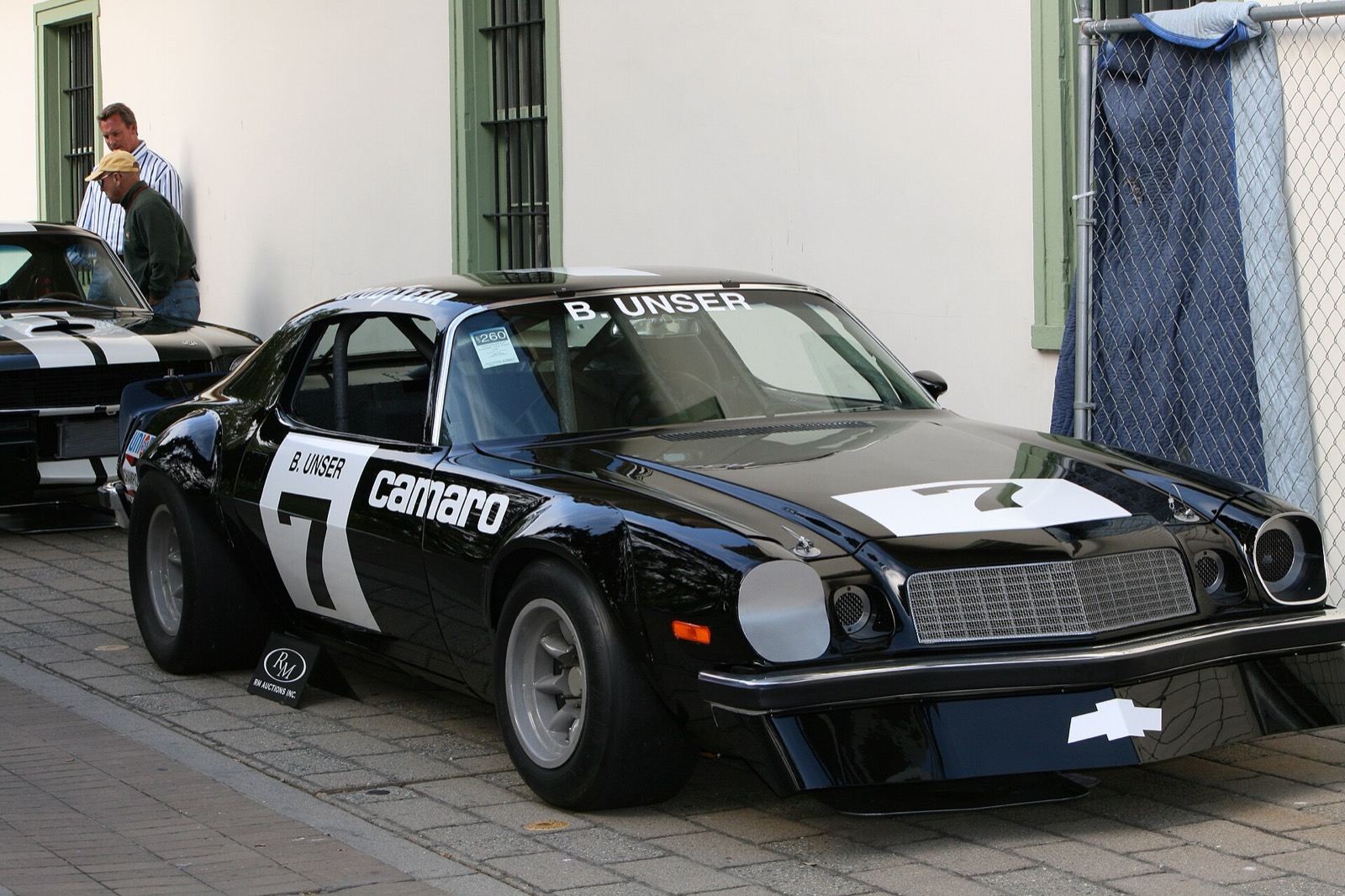
Penske and Donohue left Chevrolet after 1969, and not for another Chevrolet team: they went to AMC. For the new second-generation Camaro's 1970 season Chevrolet turned to Jim Hall's Chaparral, the Texas Can-Am team. Hall built three cars in about six months (one for himself, one for Ed Leslie and a spare) and brought Chaparral's aerodynamic thinking to the class, including a flexible clear Lexan front spoiler. Vic Elford took over Hall's seat and scored the team's only win, at Watkins Glen in August 1970. Chevrolet finished third in the manufacturers' standings, and the cars were sold after the one season.
Penske after Camaro
Penske's AMC Javelins finished second in the 1970 manufacturers' championship, with Ford beating AMC 72 points to 59. Separately, the reconstructed drivers' standings put Parnelli Jones one point ahead of Donohue, 142 to 141. For 1971 the series' reconstruction credits Donohue with seven wins and a second place in eight Javelin starts; starts are not the same denominator as a season's rounds. Penske then left Trans-Am for a factory Porsche 917 Can-Am program, and Roy Woods Racing carried the Javelins on: the series' history identifies George Follmer's 1972 title for that team as its first official drivers' championship. Donohue's three recognized earlier crowns belong to the later reconstruction.
Trans-Am After Penske
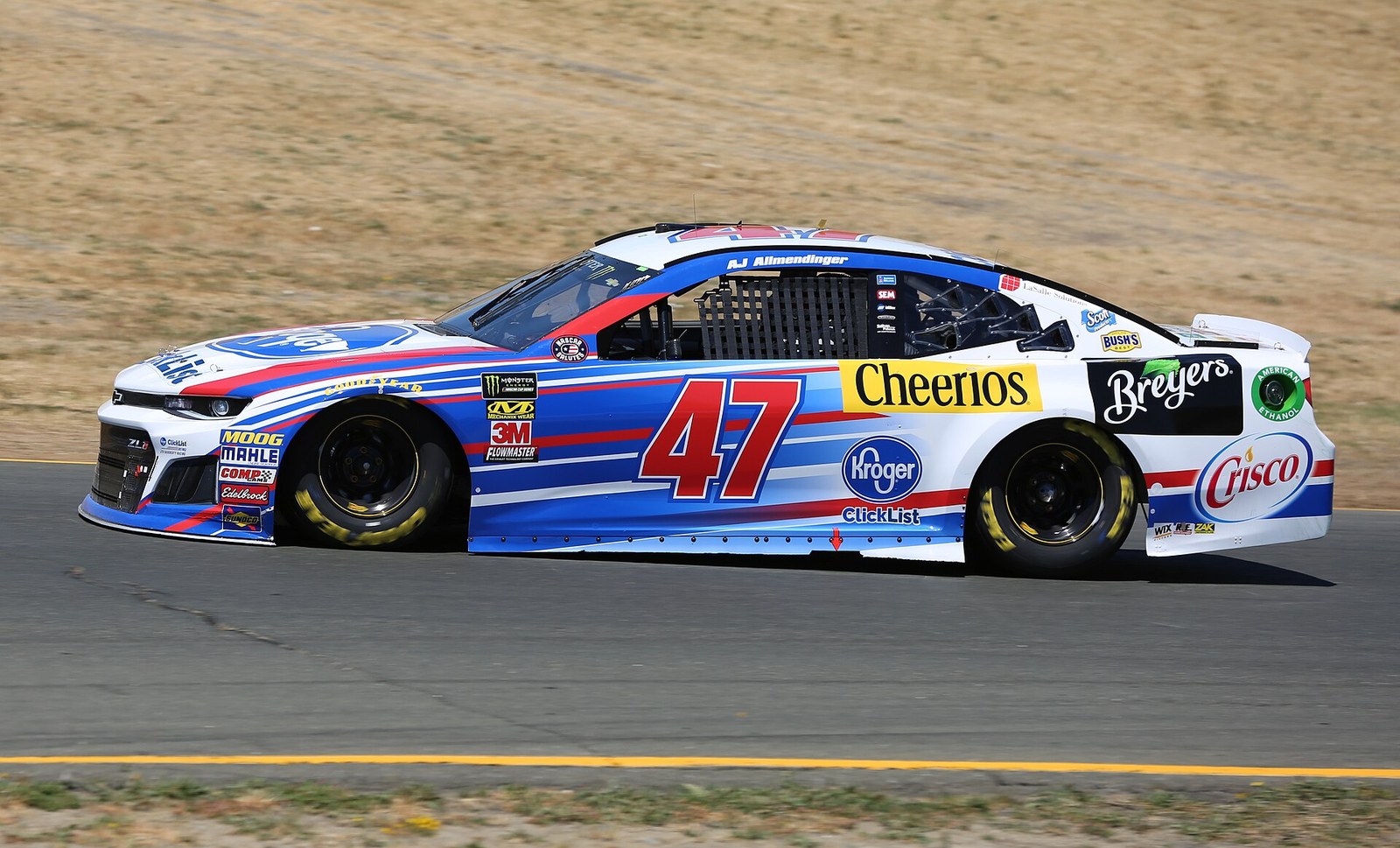
The factory era faded through the early 1970s with the rest of the muscle-car market. In 1983 DeAtley Racing's Camaros won 10 of 12 rounds, and Chevrolet took its first manufacturers' championship in 14 years; David Hobbs won the drivers' title ahead of Willy T. Ribbs. Chevrolet won the manufacturers' title again in 1990 and 1992, but that is a make-wide award: the 1990 drivers' champion, Tommy Kendall, raced a Beretta. Jack Baldwin's 1992 drivers' title was in a Camaro. In 1994 Scott Pruett won the drivers' crown in a Camaro while Ford took the manufacturers' title, another reason to keep the two awards distinct.
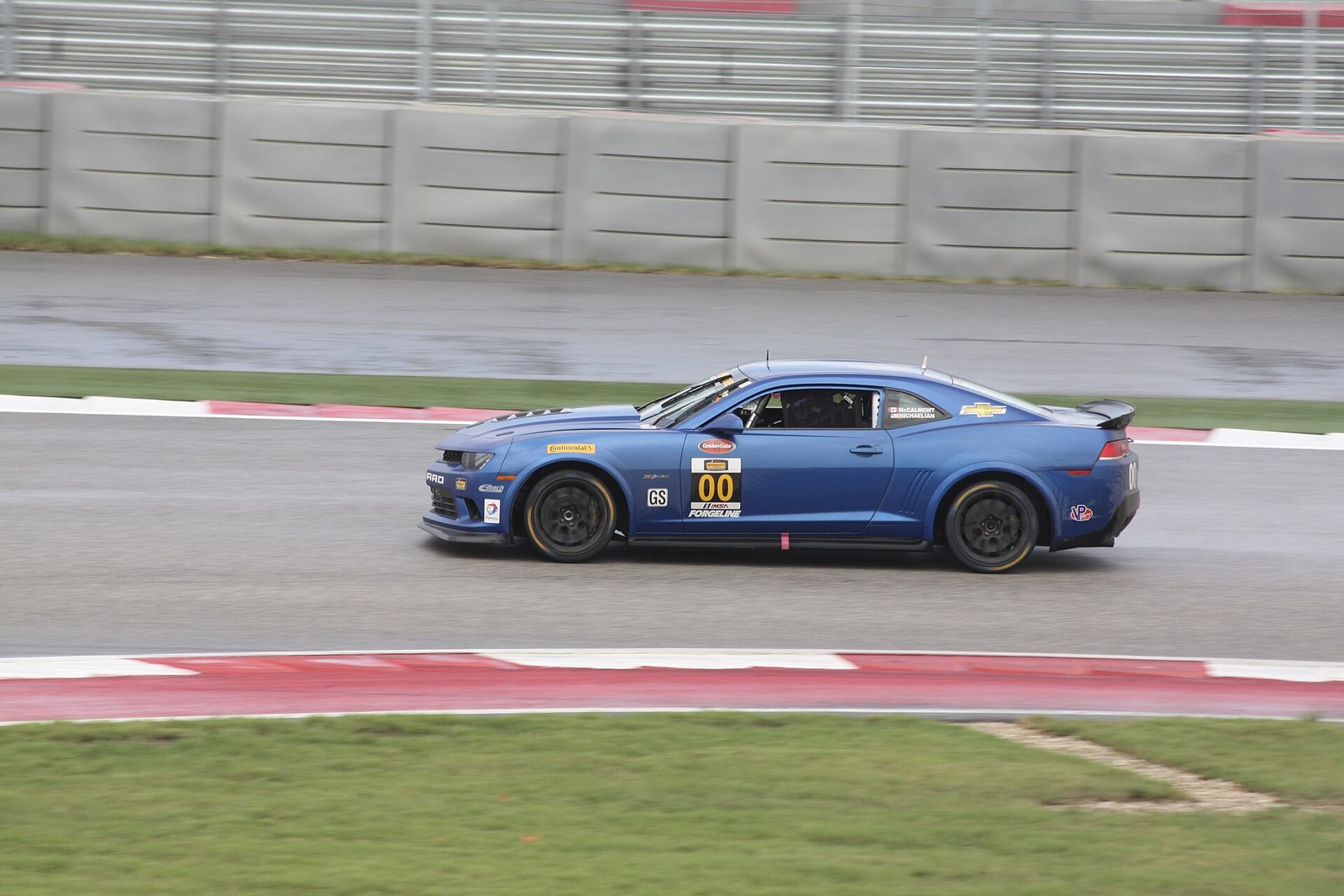
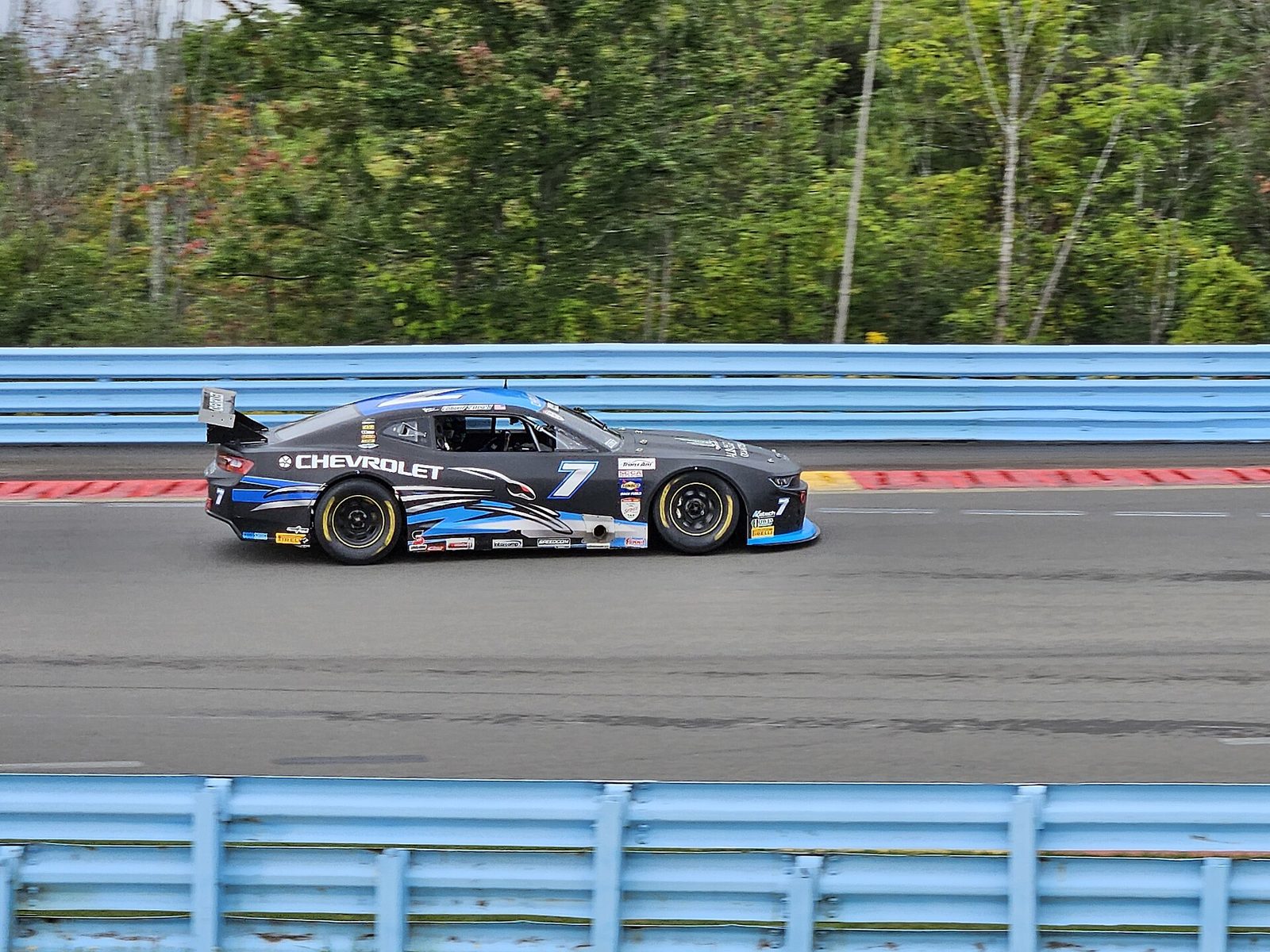
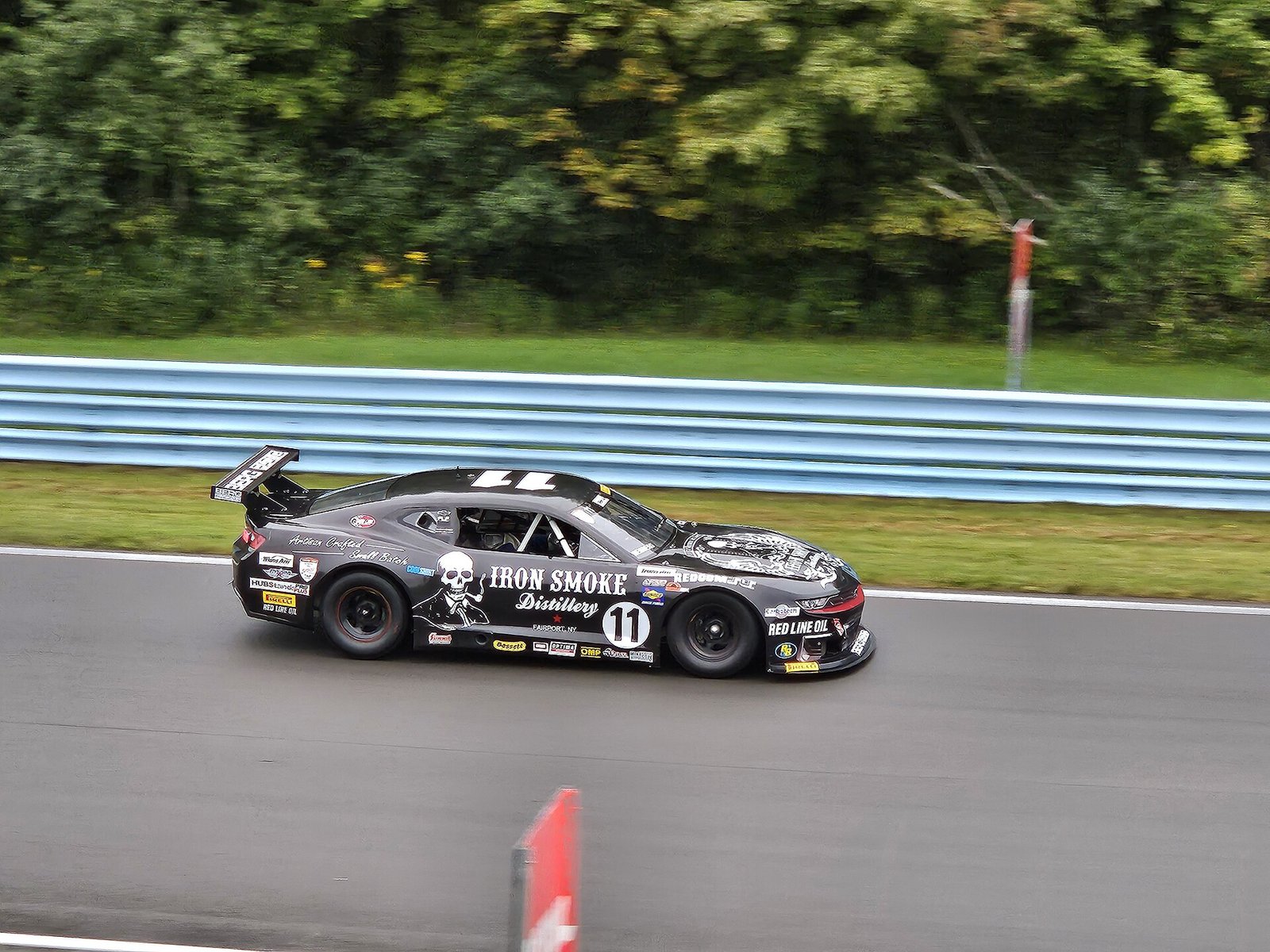
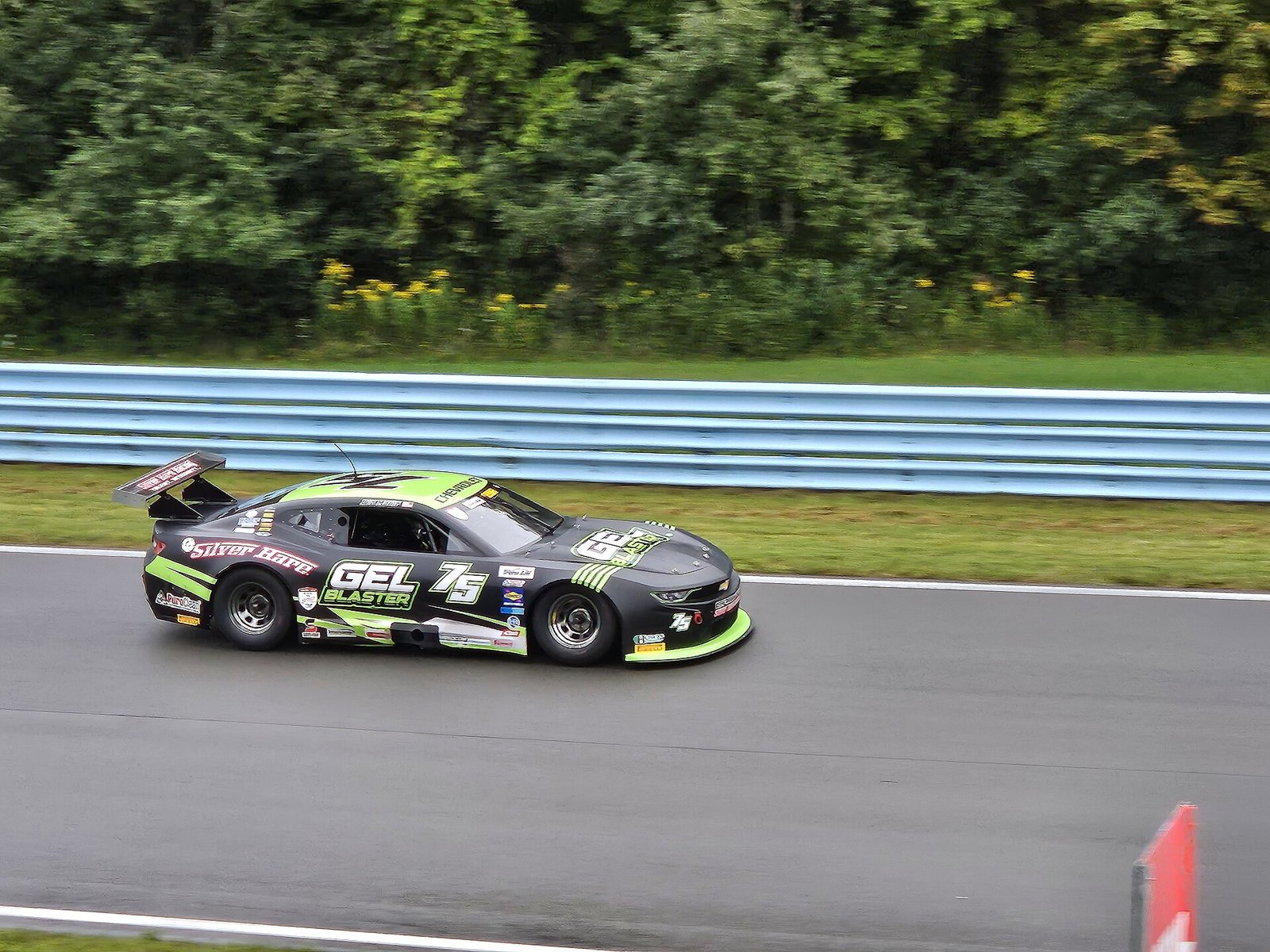
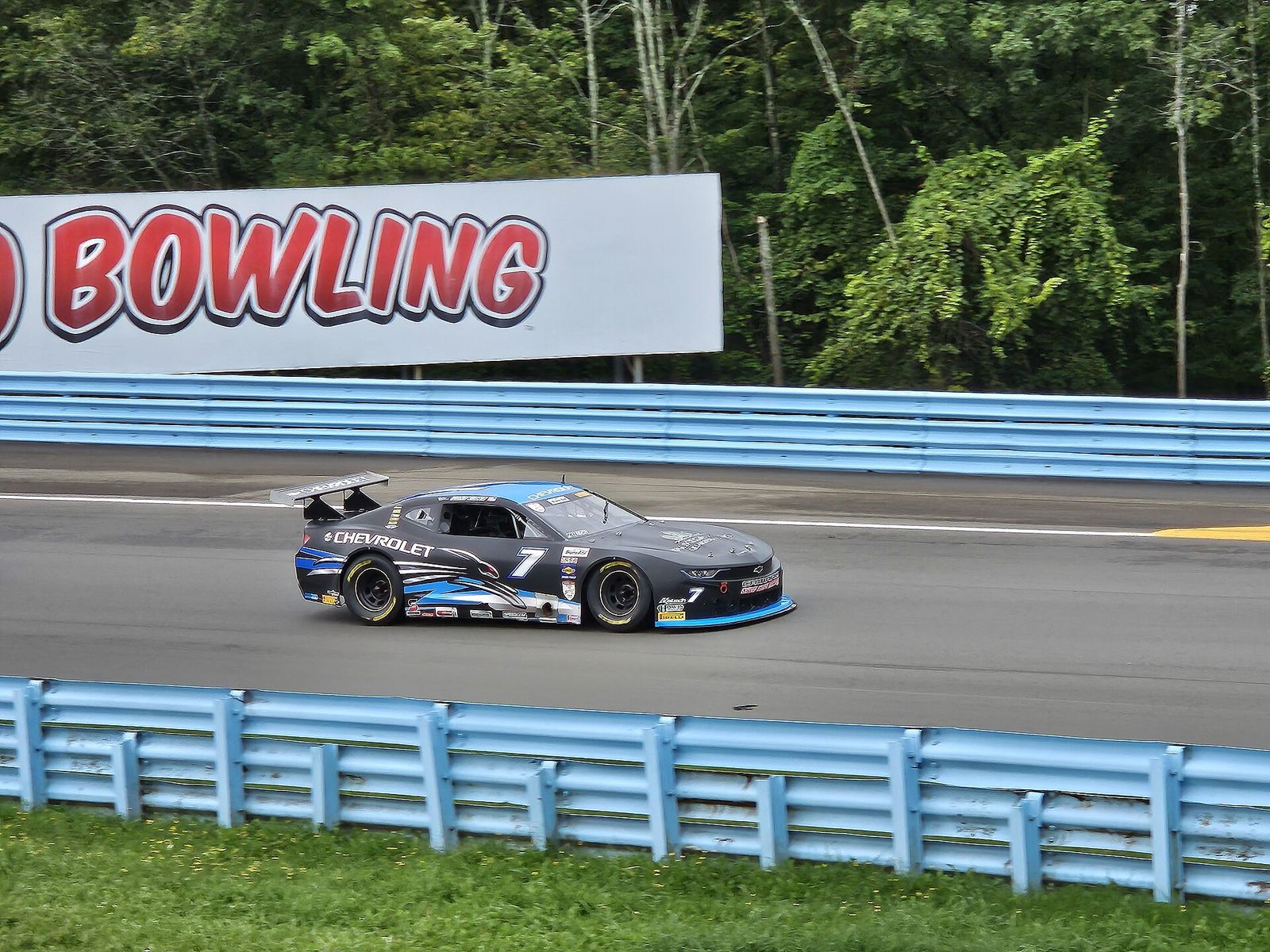
The series continues as the Trans Am Series presented by Pirelli. Its TA2 overview, read October 26, 2026, describes purpose-built racers restricted to 530 hp and lists Camaro, Mustang and Challenger bodies; the page does not state its revision date. The earlier description of about 490 hp, 447 lb-ft and Camry eligibility is not verified here as a dated ruleset and should not be treated as the current specification. The series' October 27, 2021 announcement advertised 50 TA2 entries for Circuit of the Americas, an announced entry count rather than a verified count of starters.
Did you know
- The series' history identifies 1972 as the first official drivers' championship. It says the SCCA's publicity department reconstructed 1966–71 driver points after the 1980 season, with later recognition for those early winners. That tally gives Donohue 222 points to George Follmer's 97 in 1968, with ten wins and eight in a row, and 156 to Parnelli Jones's 130 in 1969.
- Of Mark Donohue's 29 Trans-Am wins for Penske, 19 came in Camaros: three in 1967, ten in 1968 and six in 1969. The other ten came in AMC Javelins (three in 1970, seven in 1971). The series counts 43 podium finishes in his 55 Trans-Am starts.
- The 1969 title was won in a rush. Ford took four of the first five rounds, then Camaros won all of the last seven: Donohue six times and Ronnie Bucknum once, at Seattle. Donohue beat Parnelli Jones's Mustang, in the series' words, "only after winning six of the final seven races."
- Jim Hall's 1970 Chaparral Camaros wore Pontiac Firebird's taller rear spoiler because the production Camaro's short one made too little downforce. Through Vince Piggins's influence the spoiler reached Camaro showrooms, first through the COPO system and then as RPO D80 for 1971, so a Trans-Am fix became a catalog option.
- Vic Elford's Watkins Glen win in August 1970 was only his second Trans-Am start, taken over from car owner Jim Hall. When the rain returned Hall put wets on all four corners, and when it dried he kept the rain tires on the right side, so Elford finished on mixed rubber: 91 laps, 209.3 miles, 103.8 mph average, with Donohue's Javelin second.
- Beyond the acid dip, the Penske shop's Traco-built 302s carried a quick-fill oil valve on the valve cover for endurance stops. A vacuum system pulled the front caliper pistons back for faster pad changes, and because the etched shells came in under the minimum weight, ballast went wherever it helped the handling most.
- 1968 is the only season Trans-Am counted the Daytona 24 Hours and the Sebring 12 Hours as rounds. Ford won Daytona; Donohue and Craig Fisher won Sebring. Chevrolet's 90 points (105 before dropping its worst results) beat Ford's 59 and AMC's 51 under a 9-6-4-3-2-1 scale that scored only each make's top finisher.
- Chevrolet won the 1990 manufacturers' title, its first in seven years, with eight wins; Tommy Kendall won the drivers' title in a Beretta. Scott Sharp and Jack Baldwin ran 1–2 in 1991; Baldwin beat Sharp at the final turn of the 1992 finale, and Sharp won in 1993 for Buz McCall. Pruett won his second drivers' title in a Camaro in 1994, while Ford took that year's manufacturers' crown.
Sources for these details
- Trans Am, The Champions Who Never Were, April 21, 2020; retrospective driver points and later recognition Series retrospective; not a period points bulletin
- 1968 Trans-American Championship (Wikipedia, citing SCCA box scores) Reference
- Trans Am, Our History; 1983 team/driver/make results and later championships; publication/revision date unstated Series historical overview
- 1969 Trans-American Sedan Championship (Wikipedia, citing SCCA box scores) Reference
- Looking Back At Jim Hall's Chaparral Racing Camaro (ChevyHardcore / EngineLabs) Reference
- On this Day in Trans Am History: August 16, 1970 (Trans Am series site) Series record
- When the Penske/Sunoco Trans Am Camaros were in action, no advantage was too small (Hagerty) Reference
- Trans Am, On This Day: July 15, 1990, published July 15, 2020; Kendall and the Chevrolet Beretta Series retrospective
- Trans Am, On This Day: May 22, 1994, published May 22, 2020; Pruett Camaro and later title Series retrospective with driver recollection
- Trans Am Hall of Fame: Jack Roush, February 9, 2025; Ford manufacturers title in 1994 Series retrospective
- Trans Am TA2 overview, read October 26, 2026; 530 hp and listed body types; publication/revision date unstated Series overview; not an inspected event rulebook
- Trans Am TA2 Class Hits Milestone, October 27, 2021; announced 50-car COTA entry, not verified starters Series dated pre-event announcement
- SCCA Pro Racing, 1994 Trans-Am Round 13 Dallas, September 18, 1994 (PDF p. 13); third-party archival copy, car identity only Period SCCA race-result sheet reproduced by Autocourse; not final championship standings