


All-new, and a study in extremes
Third Generation
The IROC-Z decade, from the Iron Duke to the 1LE.

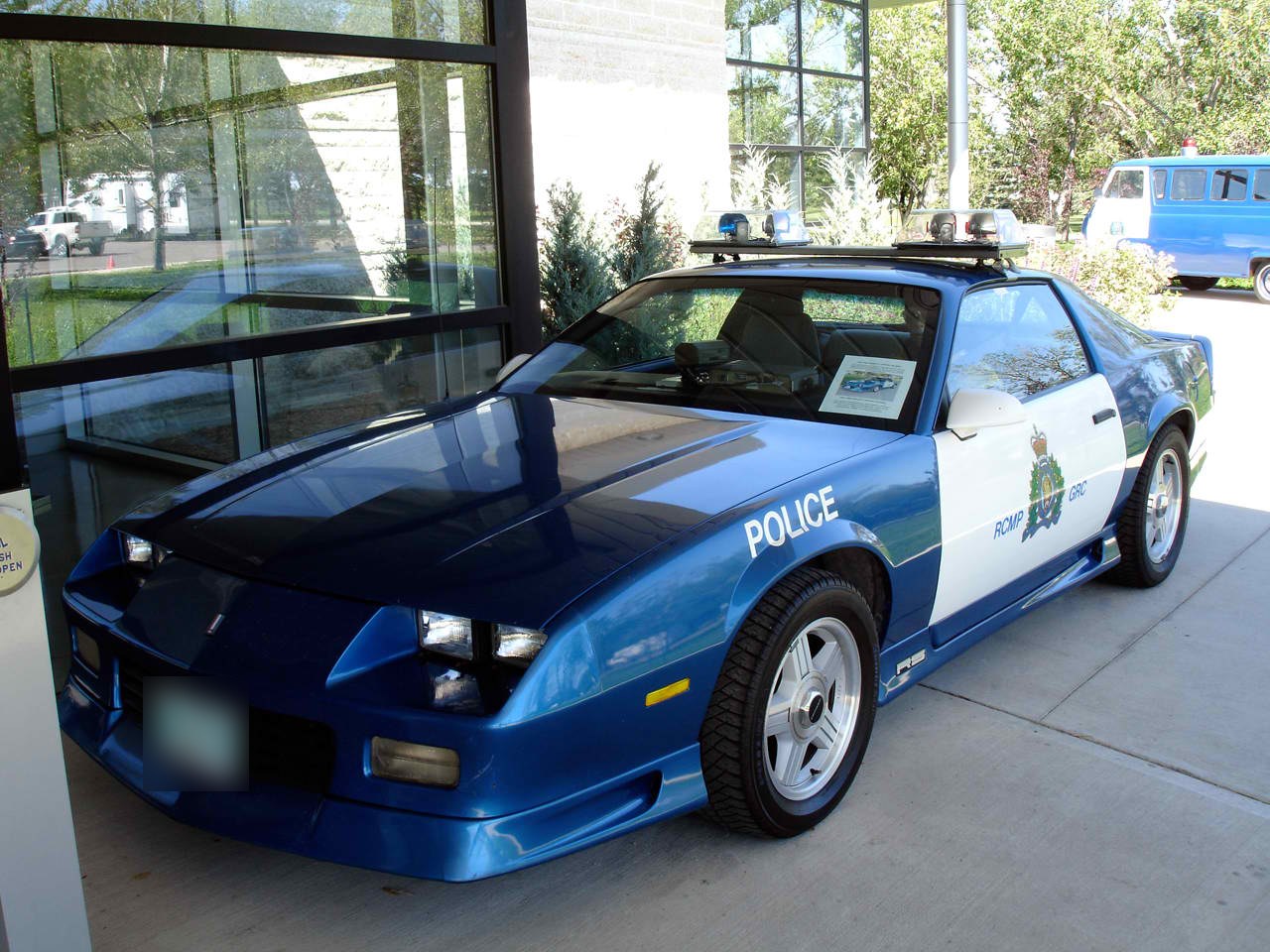
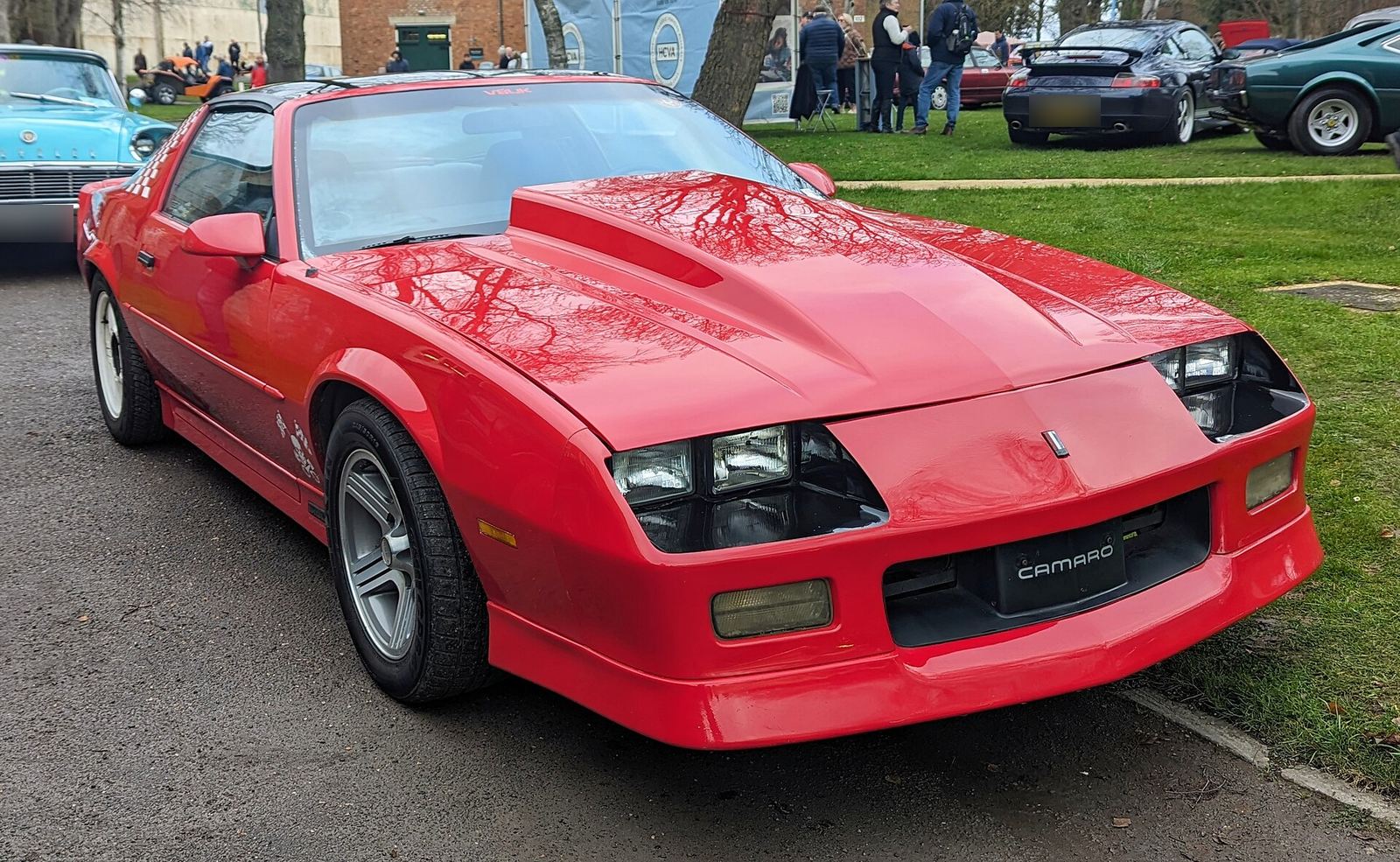
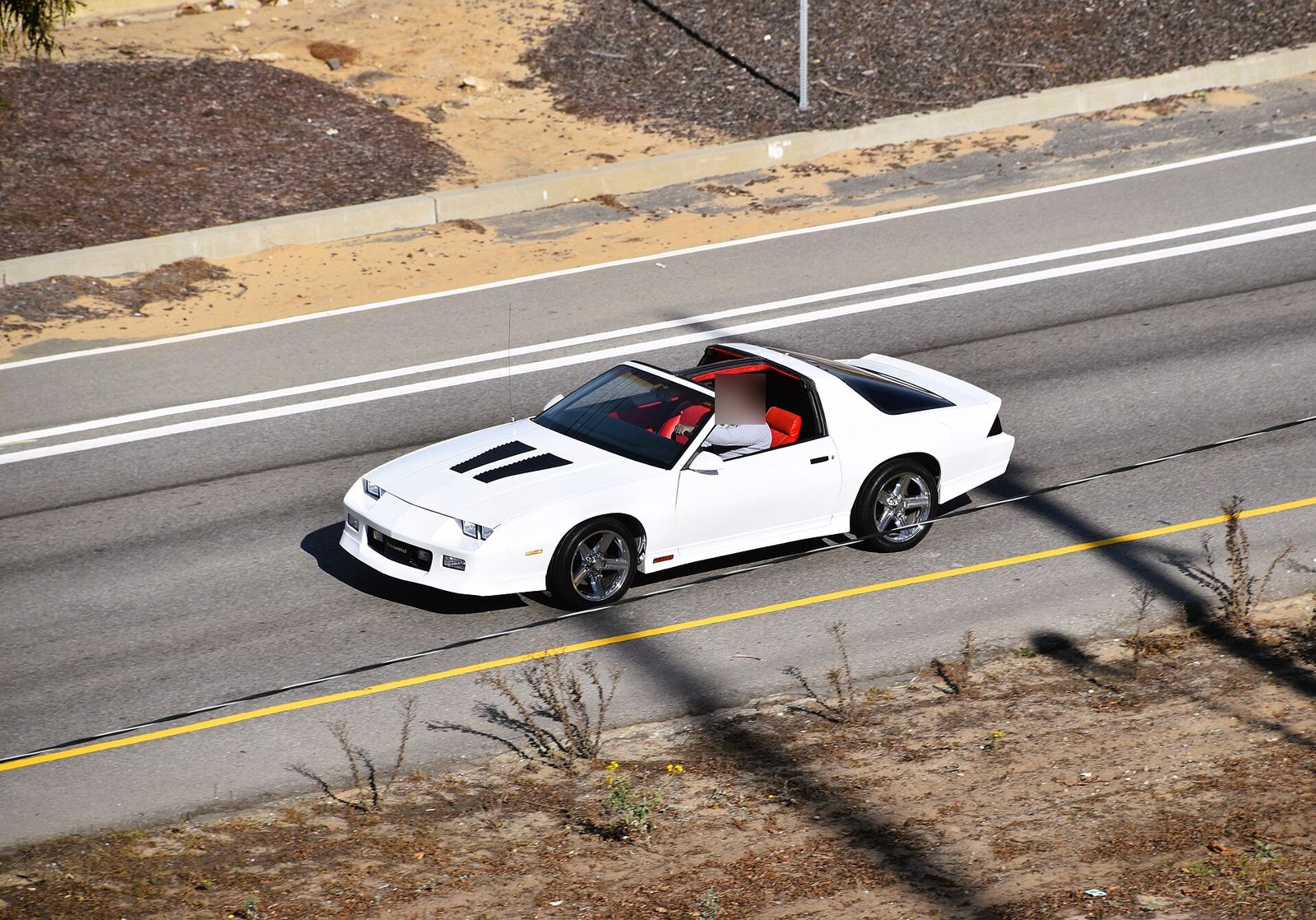
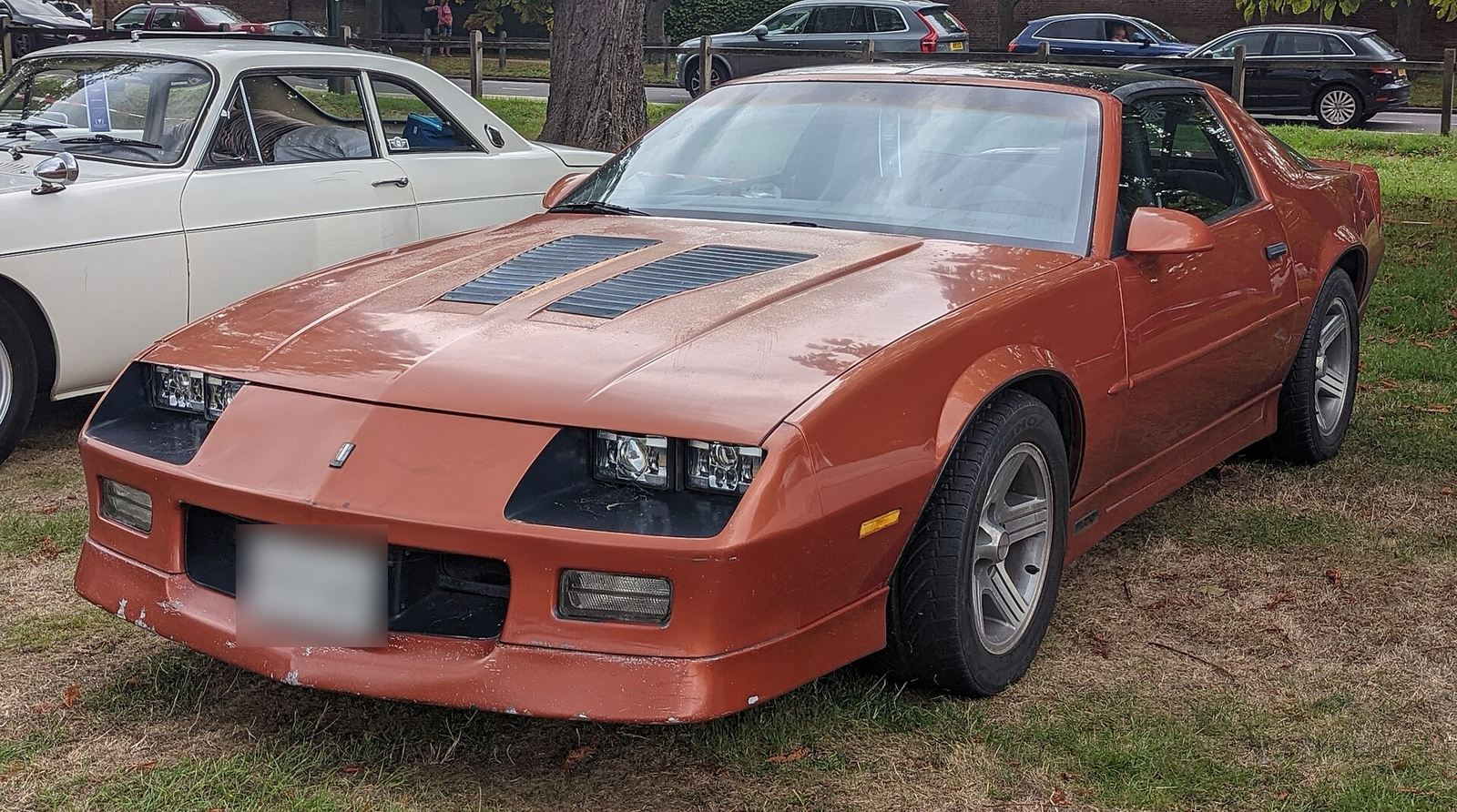
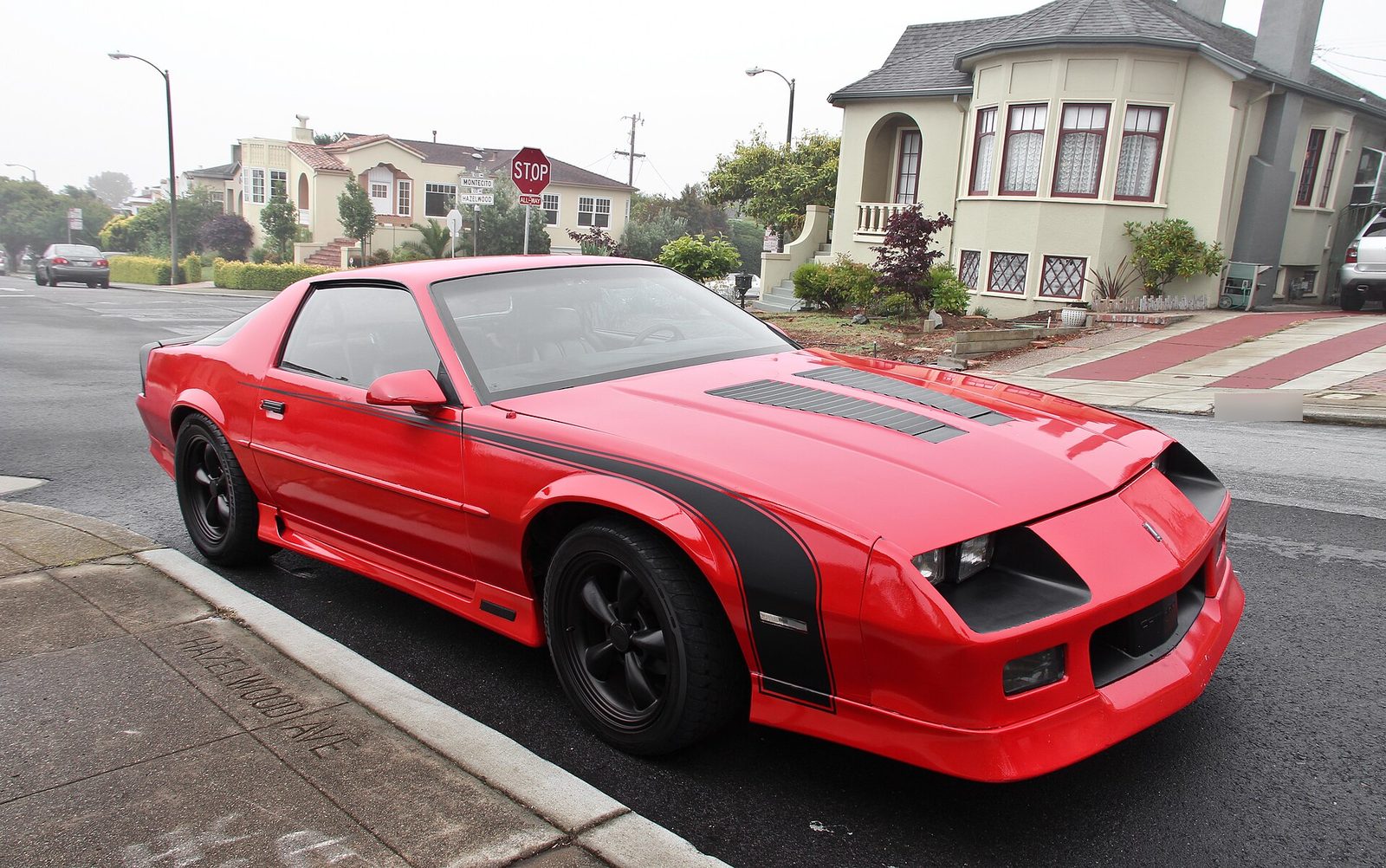
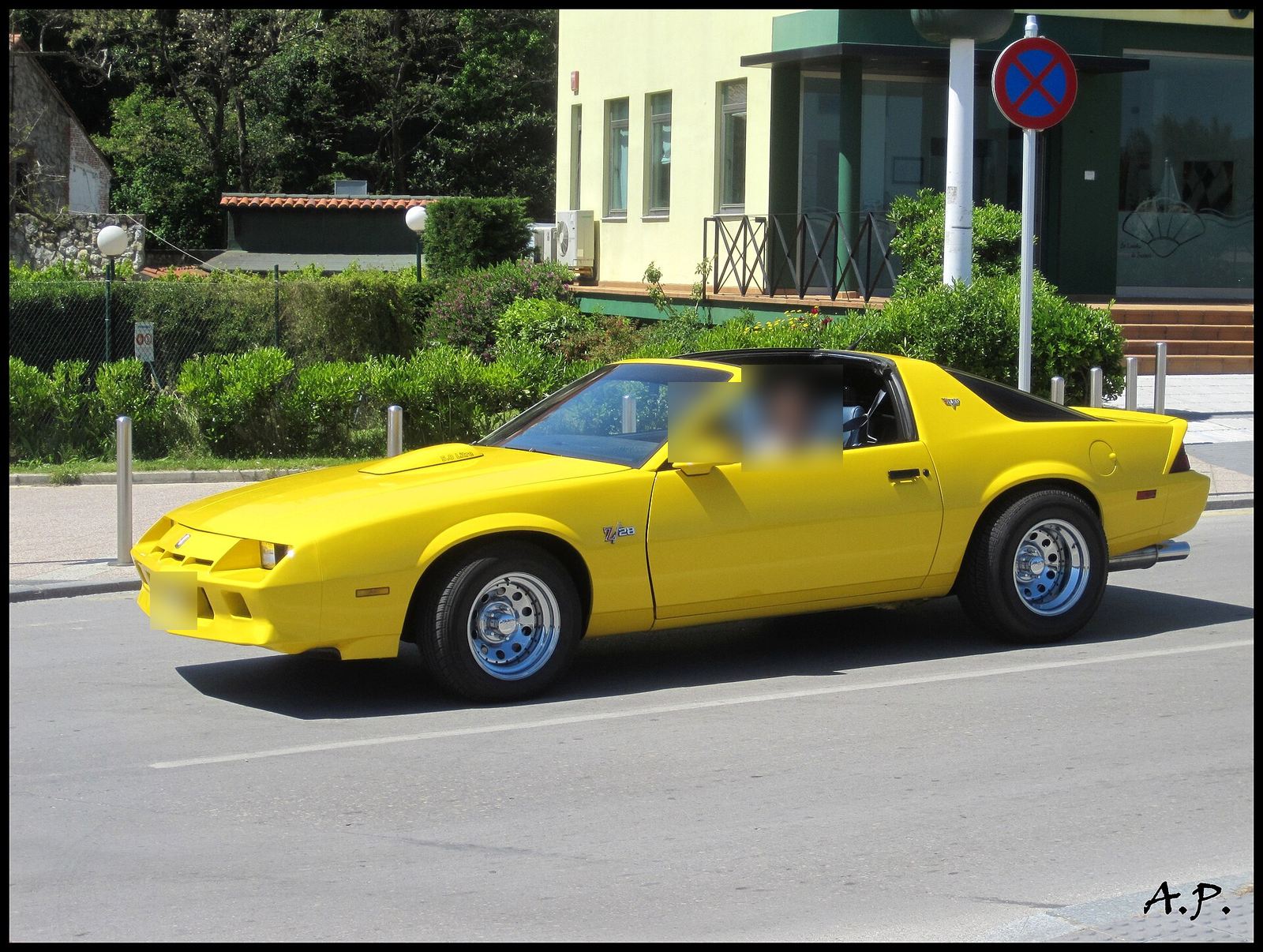
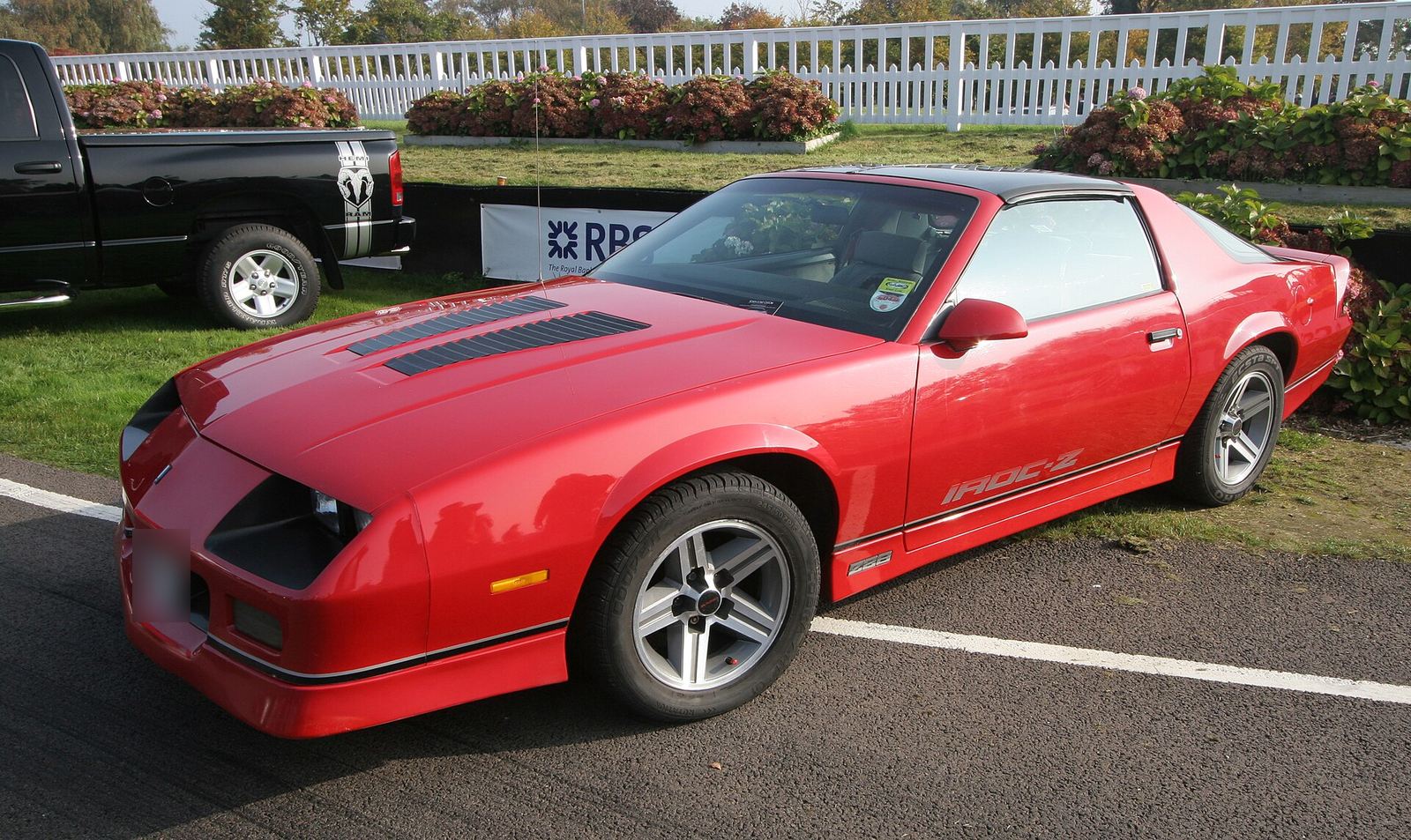
The new F-body introduced a liftback coupe, factory fuel injection and Camaro's first four-cylinder engine. A turbo four returned with the sixth generation. It produced the IROC-Z, the car most people picture when they hear "1980s Camaro," along with race-oriented 1LE equipment and the B4C police car.
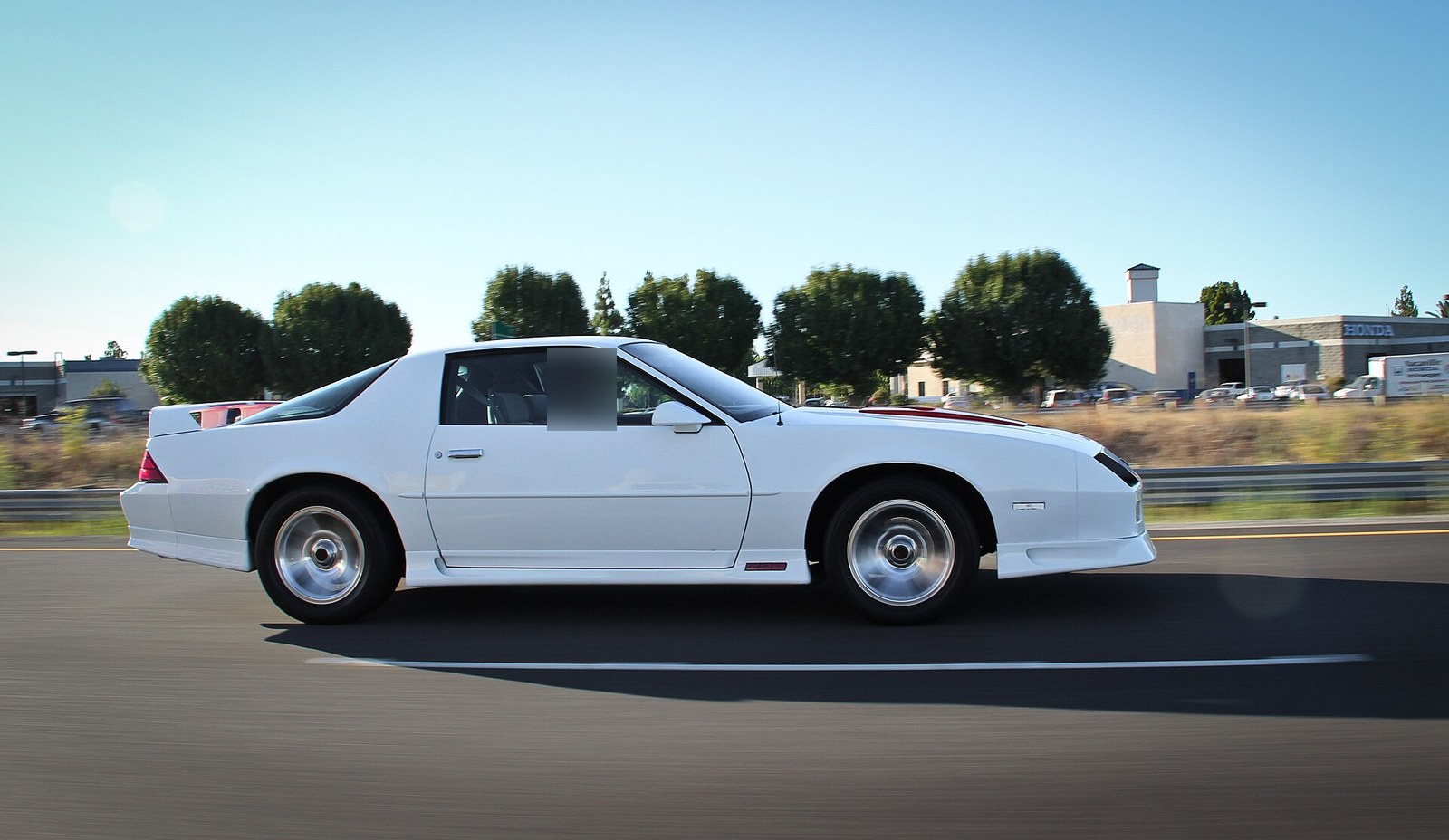
The convertible came back in 1987 after eighteen years, and the generation closed with a 25th Anniversary Heritage Edition in 1992.

1982: Car of the Year and the Iron Duke
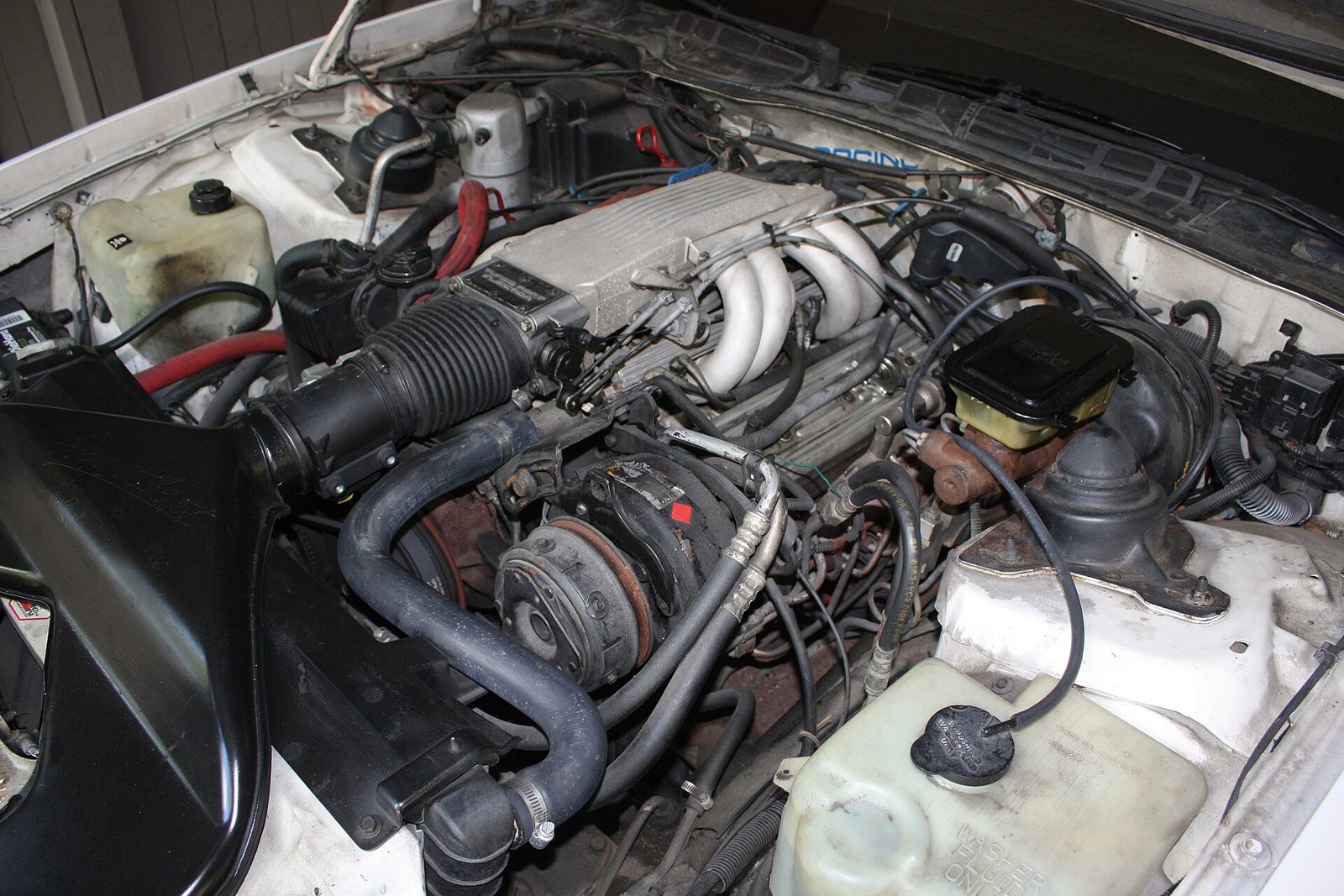
Motor Trend named the new Camaro its 1982 Car of the Year, and it paced the Indianapolis 500; 6,360 Z28 pace-car replicas were sold. The pace car used the 305 V8, carbureted or with Cross-Fire Injection, the first electronically controlled fuel injection on a Camaro.
At the other end of the range sat the 2.5-liter "Iron Duke" four at 90 hp, there to meet fuel-economy targets. Chevrolet's January 1982 US brochure lists the Sport Coupe's four-speed manual as standard and three-speed automatic as optional with this engine. MotorWeek said plainly that it would not recommend it. At roughly 2,864 lb the car carried about 32 lb per horsepower, and 0–60 times near 20 seconds were commonly reported.
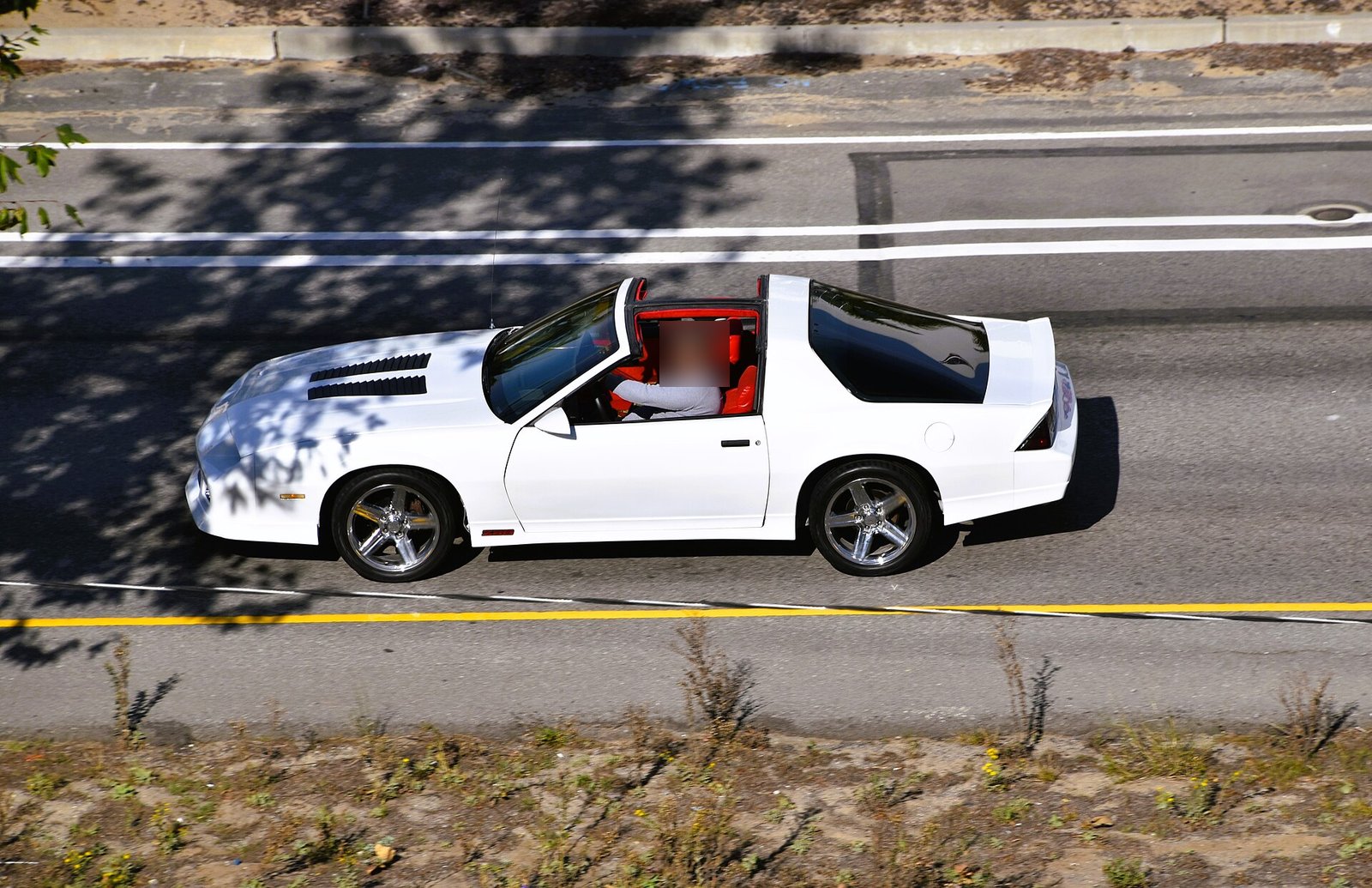
Original CamaroFacts figure. Sources:
1982 reference table
The Berlinetta's Digital Dashboard
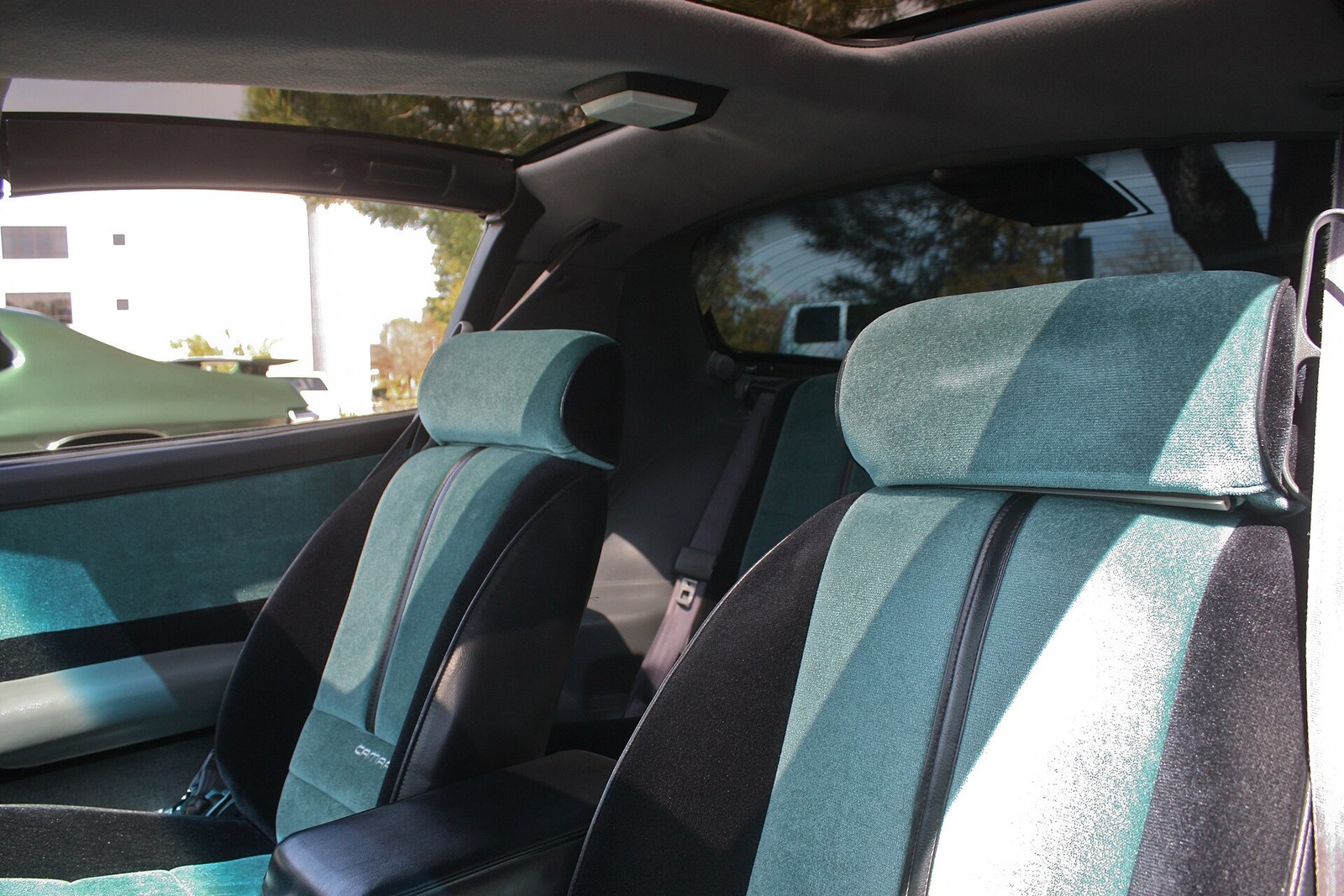
Berlinetta carried over from the second generation as the luxury model, and for 1984 it became one of the most memorable Camaros of the decade. Its "Graphic Control Center" put a digital instrument cluster in front of the driver and two swiveling control pods beside the column, an interface openly borrowed from contemporary Japanese cars. The Z28 and Sport Coupe kept conventional gauges. Recorded Berlinetta production fell from 33,400 in 1984 to 4,479 in 1986, its final year, with production discontinued early.
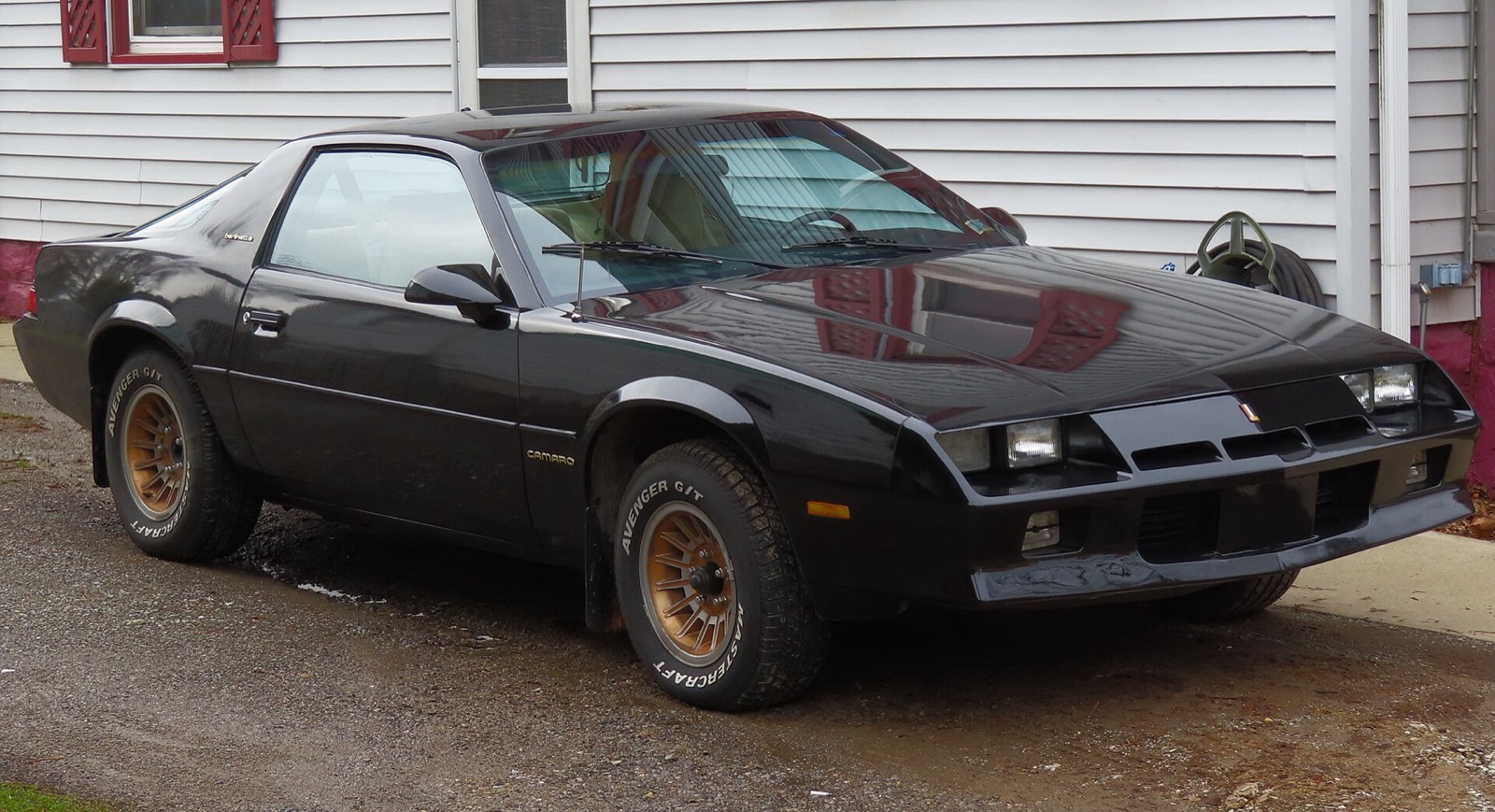
Original CamaroFacts figure. Sources:
1984 reference table
1986 reference table
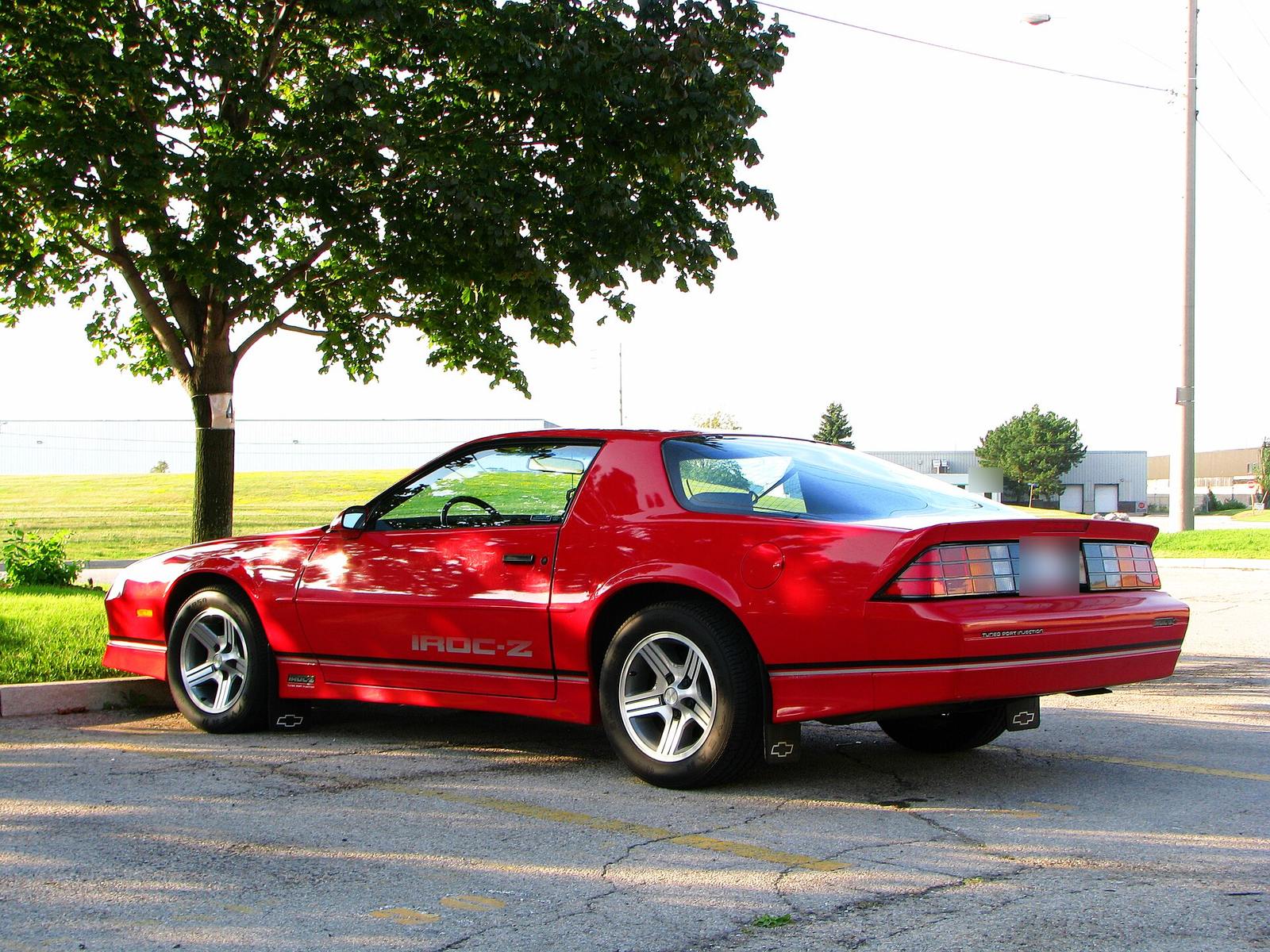
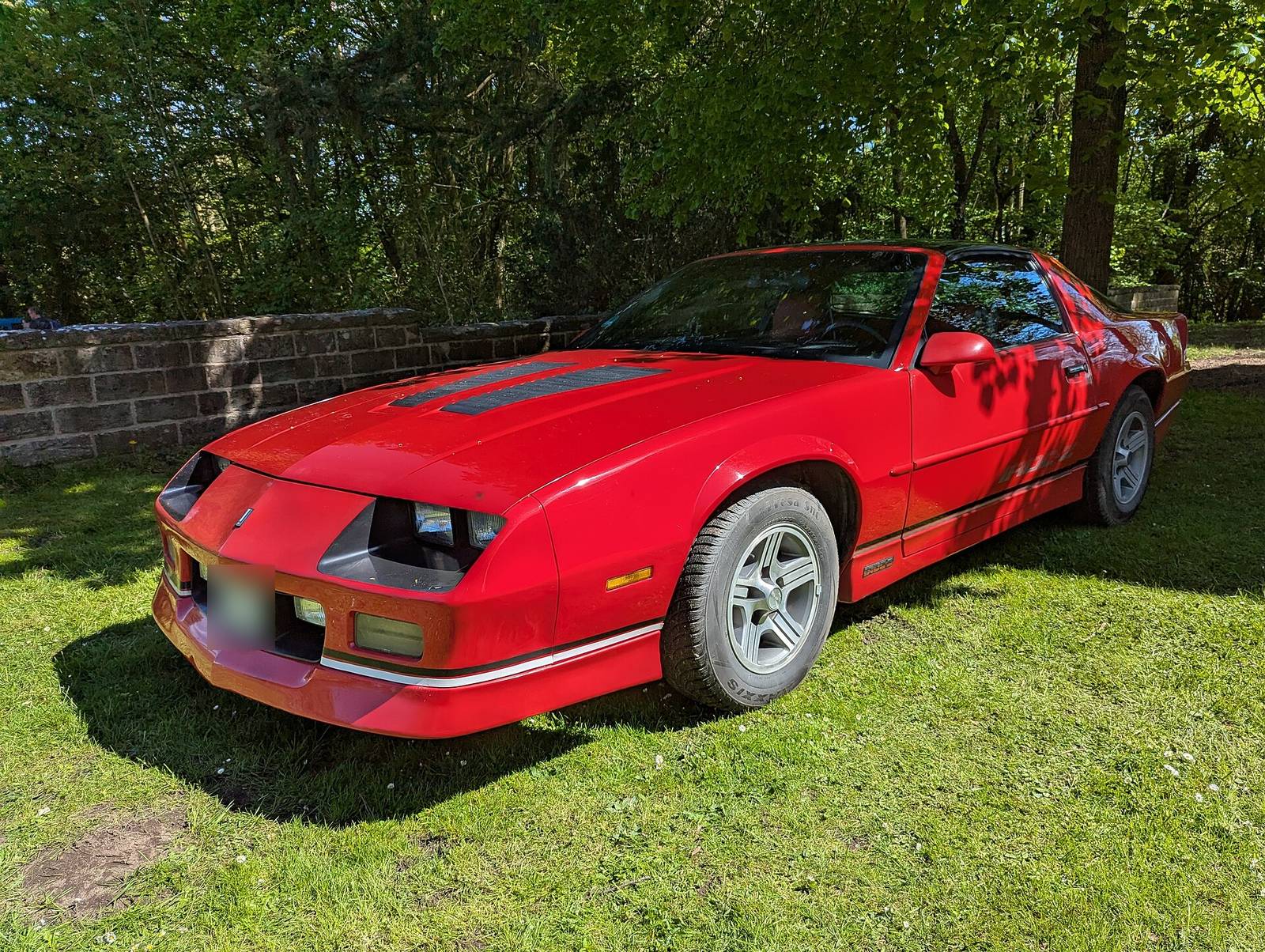
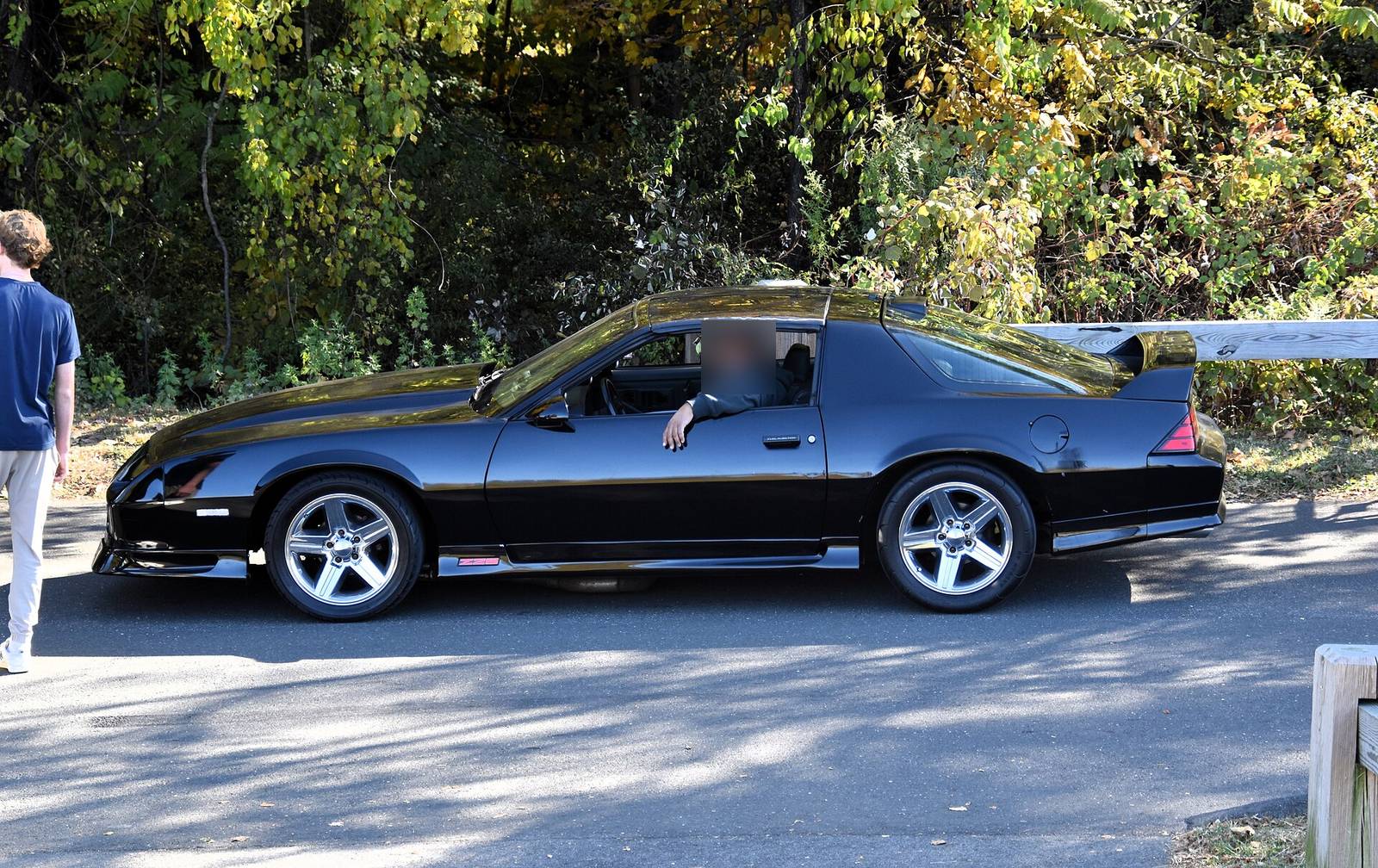
IROC-Z and Tuned Port Injection
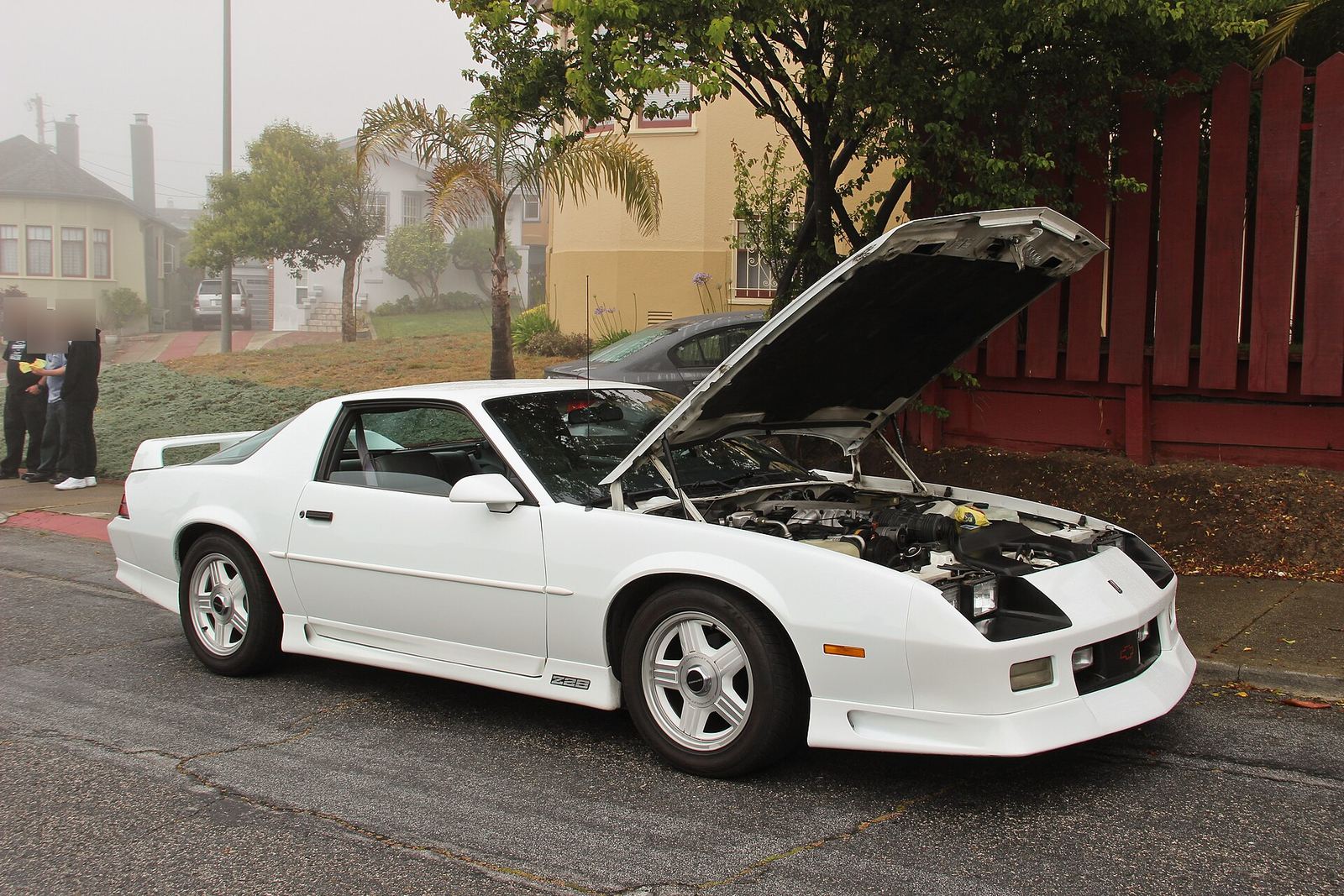
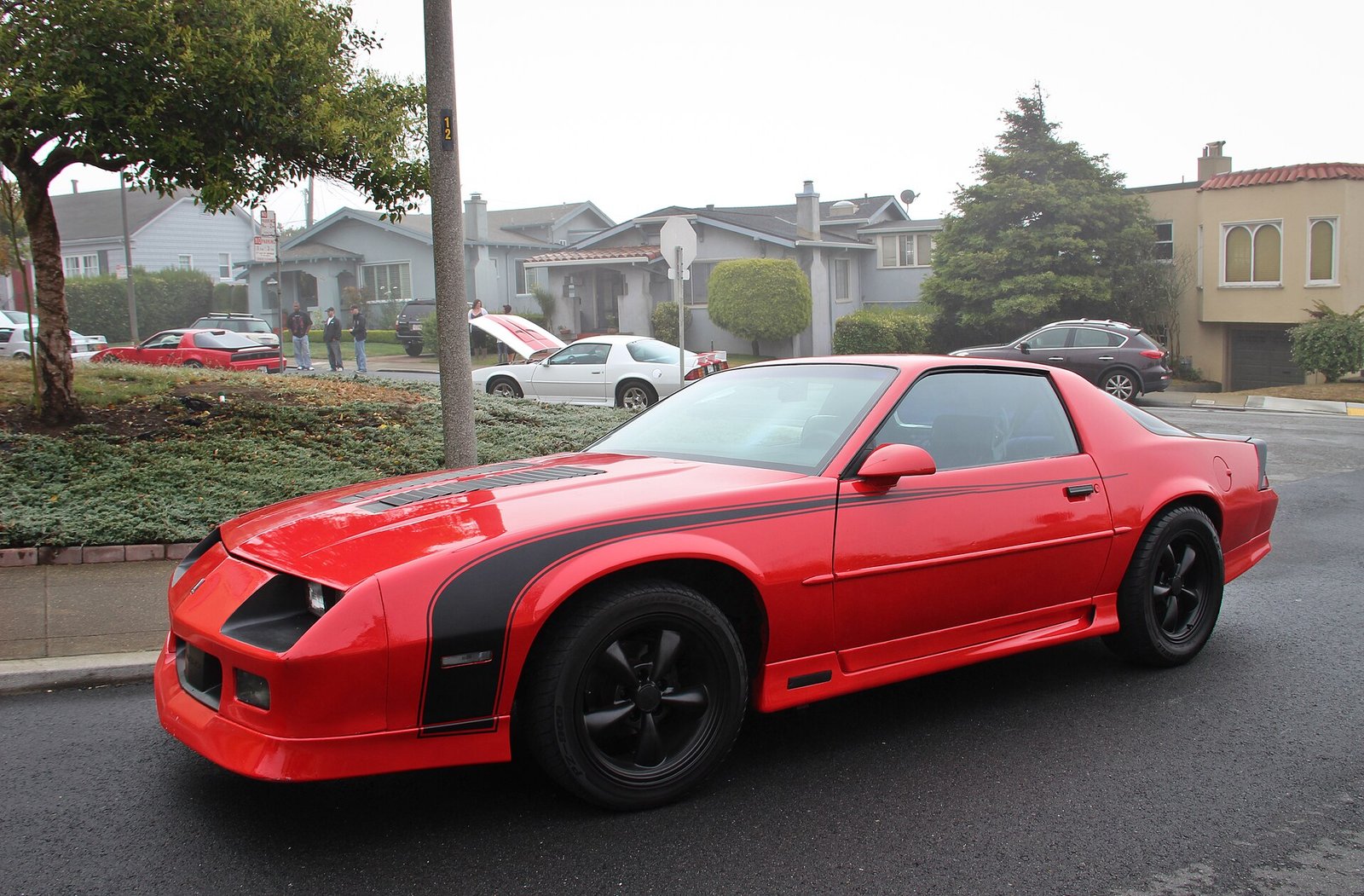
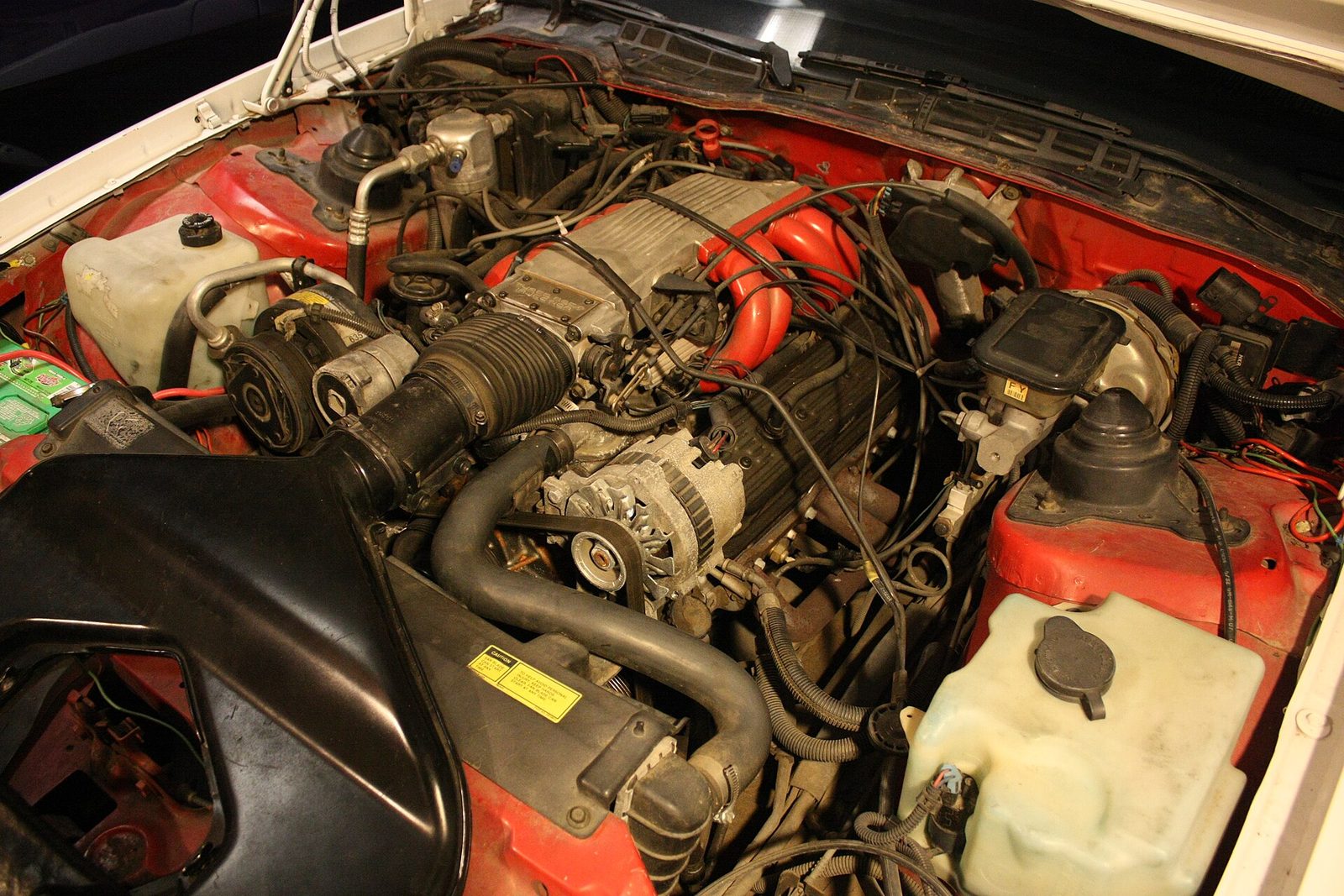
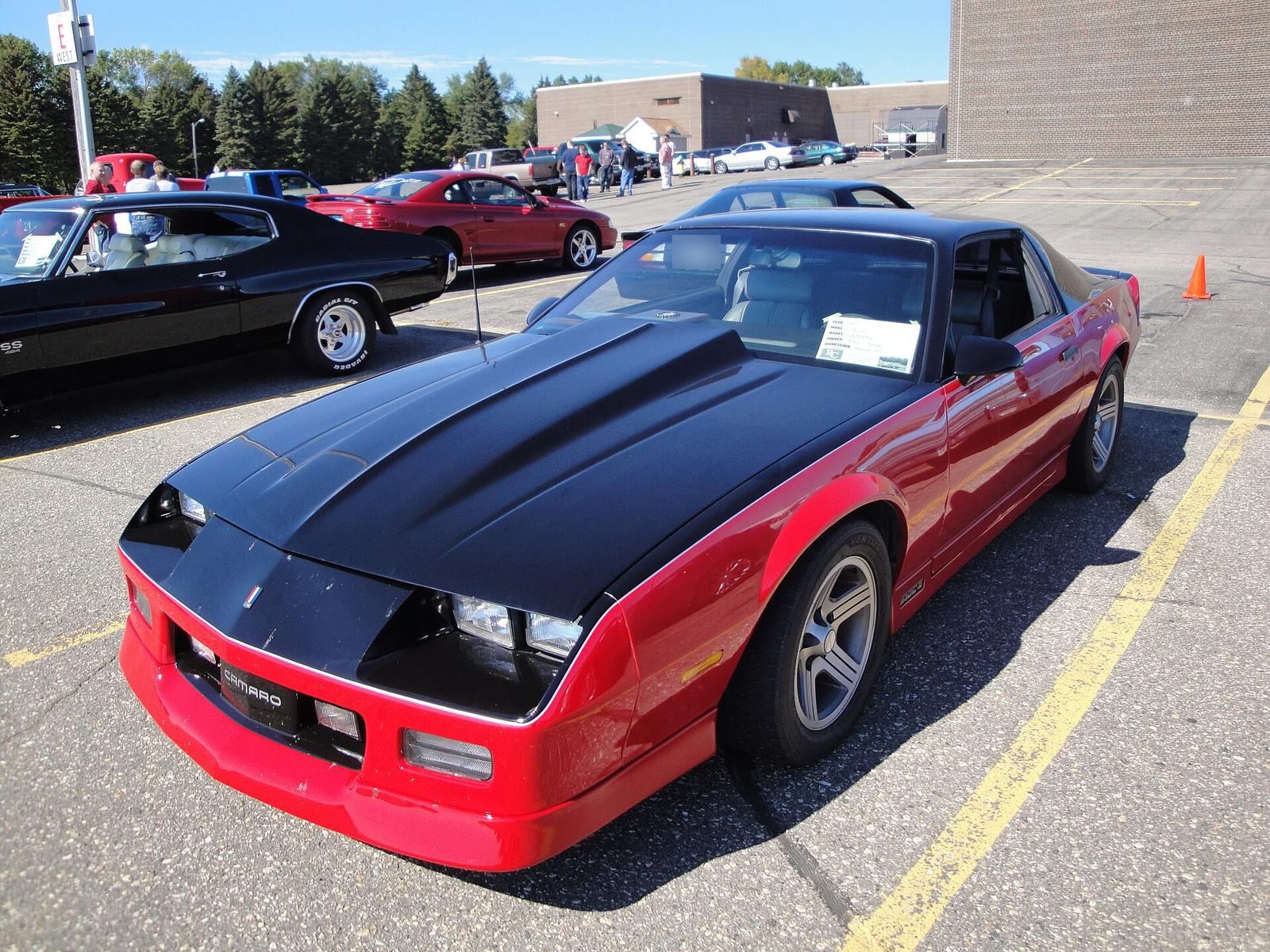
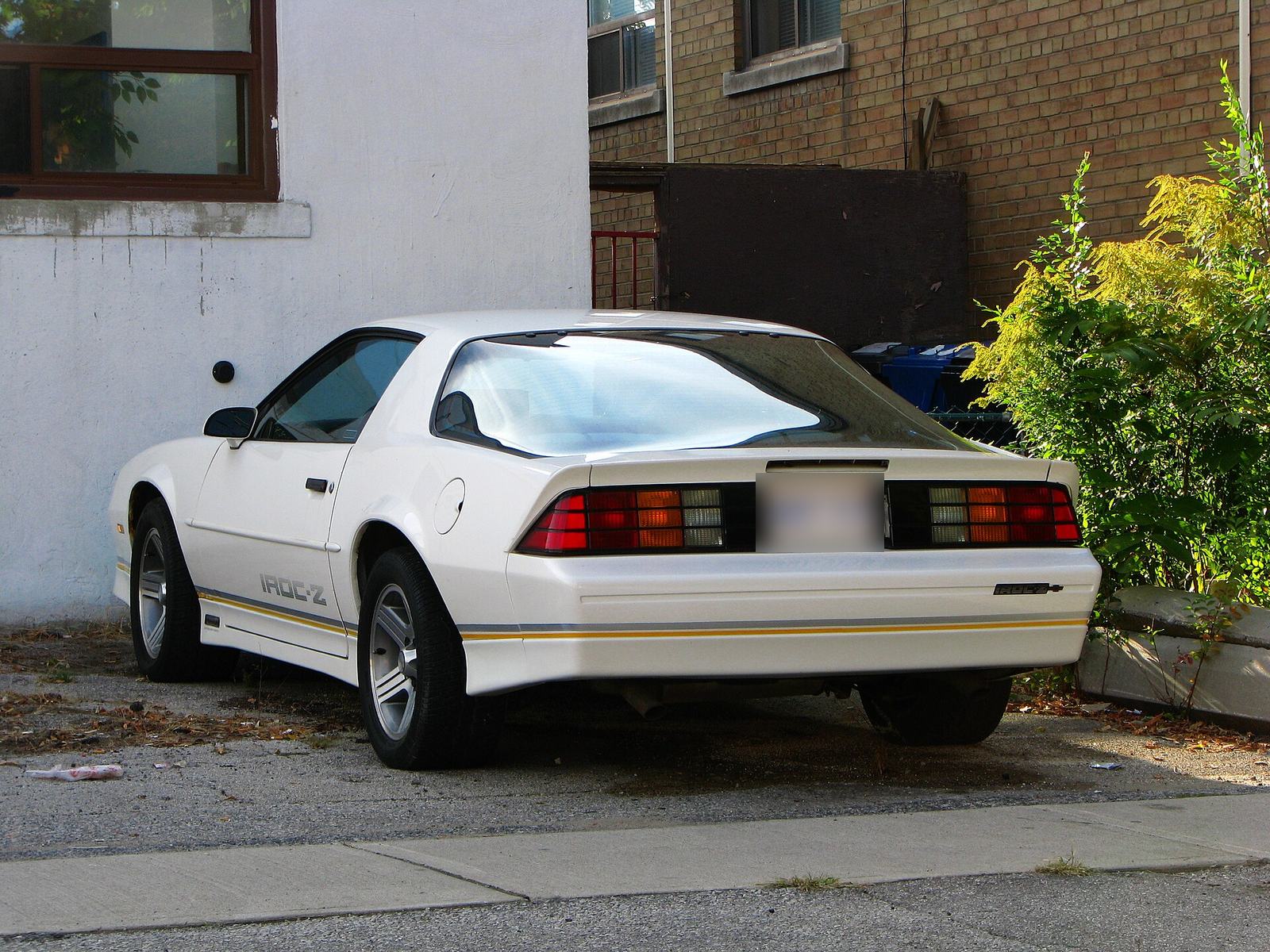
For 1985 Chevrolet licensed the name of the International Race of Champions, which had raced Camaros since 1975, for a $659 package on the Z28. It became the headline car for Tuned Port Injection, first on the 5.0-liter LB9 and later on the Corvette-derived 5.7-liter L98.
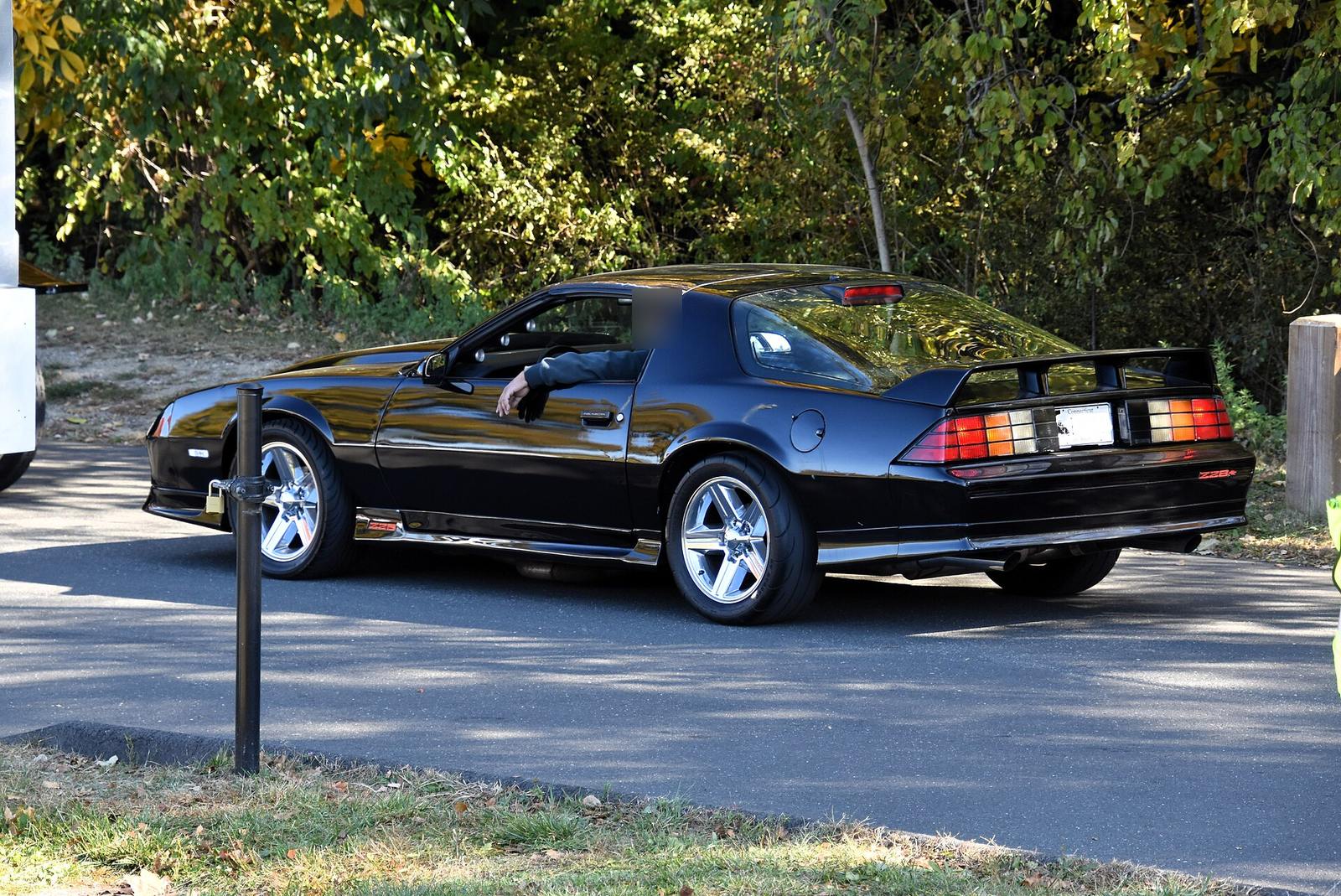
From 1988 to 1990 the Z28 name was set aside and IROC-Z became the performance model in its own right. 1990 was the last year. The license was not renewed as the race series moved to the Dodge Daytona, and the plain Z28 returned with a facelift for 1991.
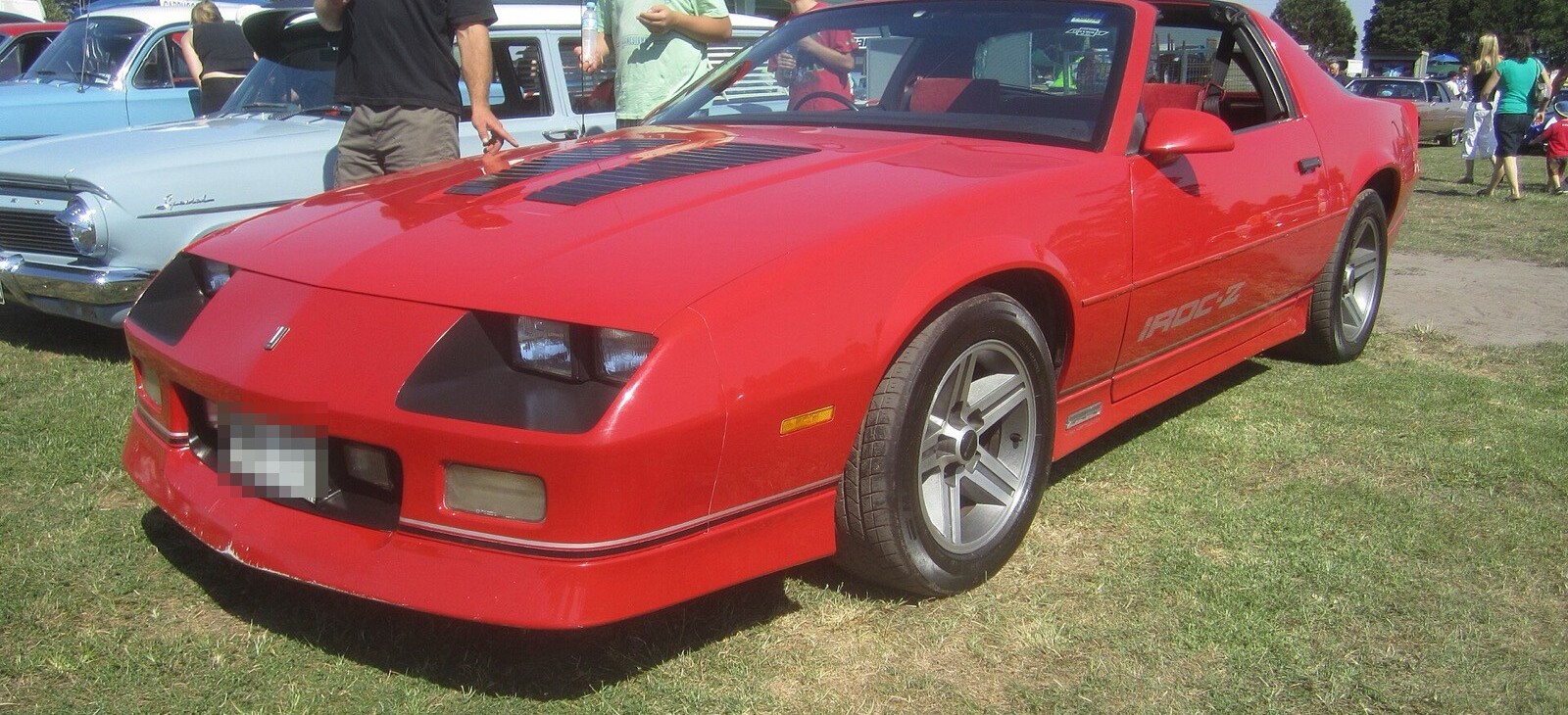
1990 IROC-Z: read the factory power-team columns
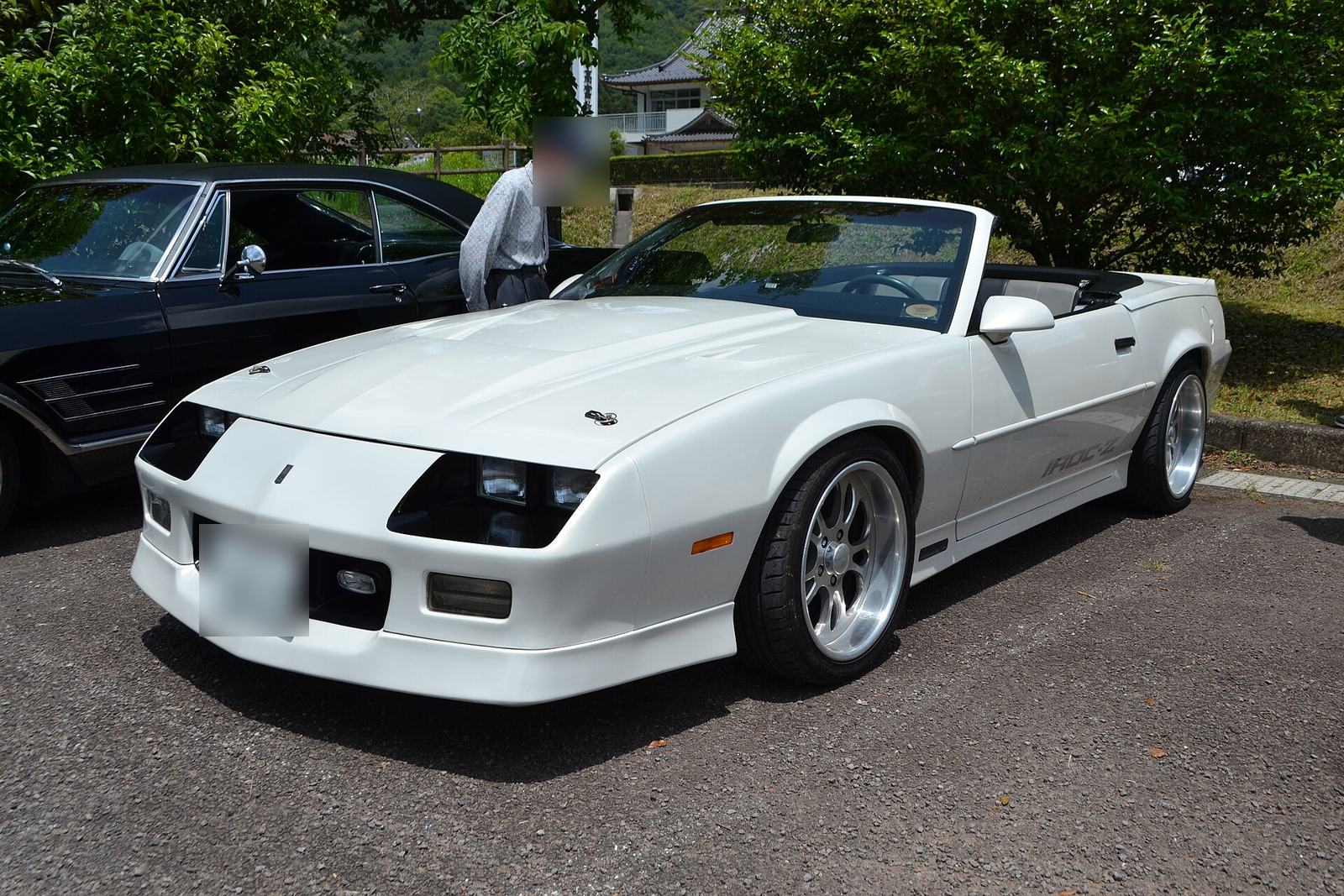
1987: The Convertible Returns
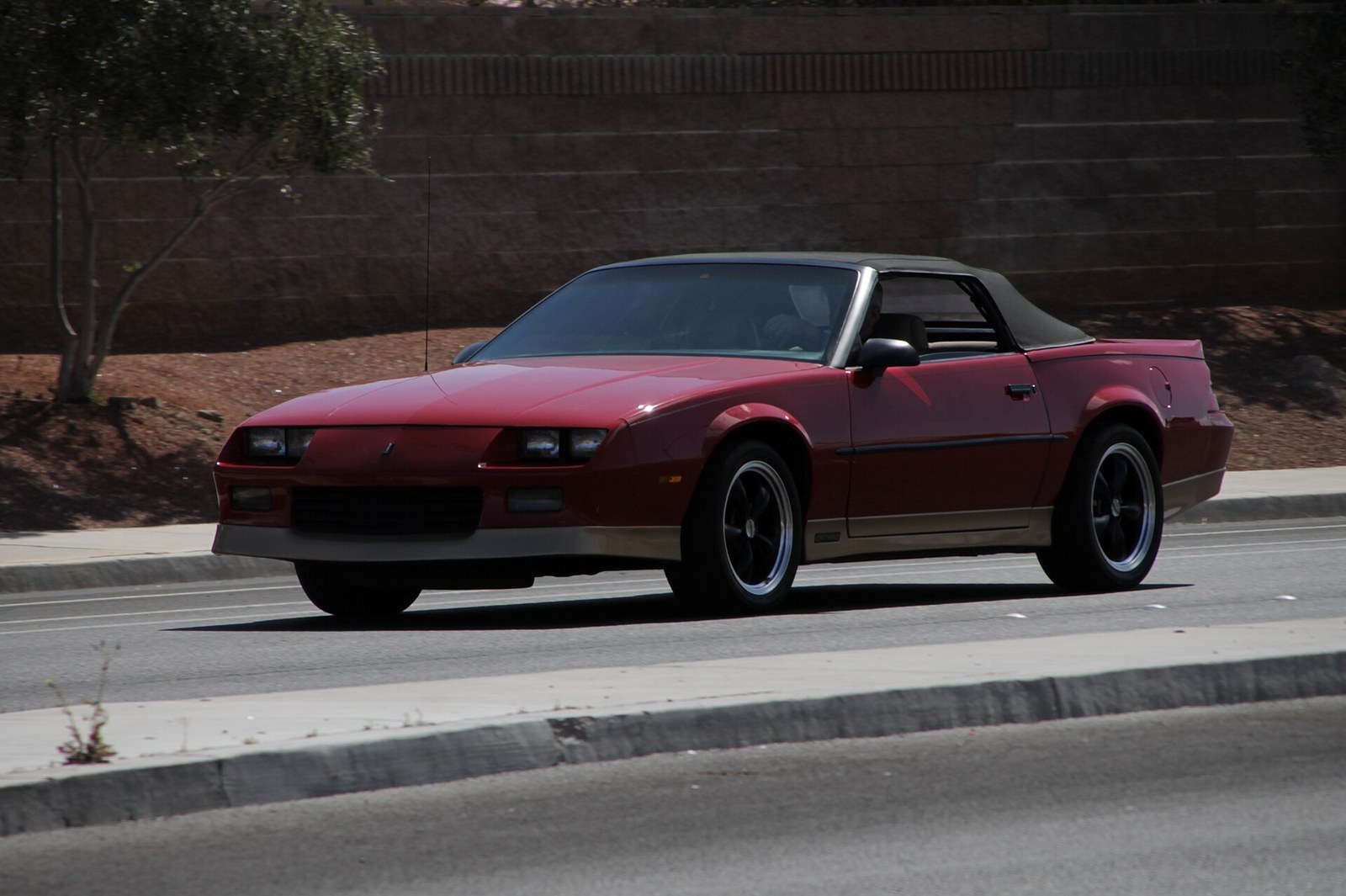
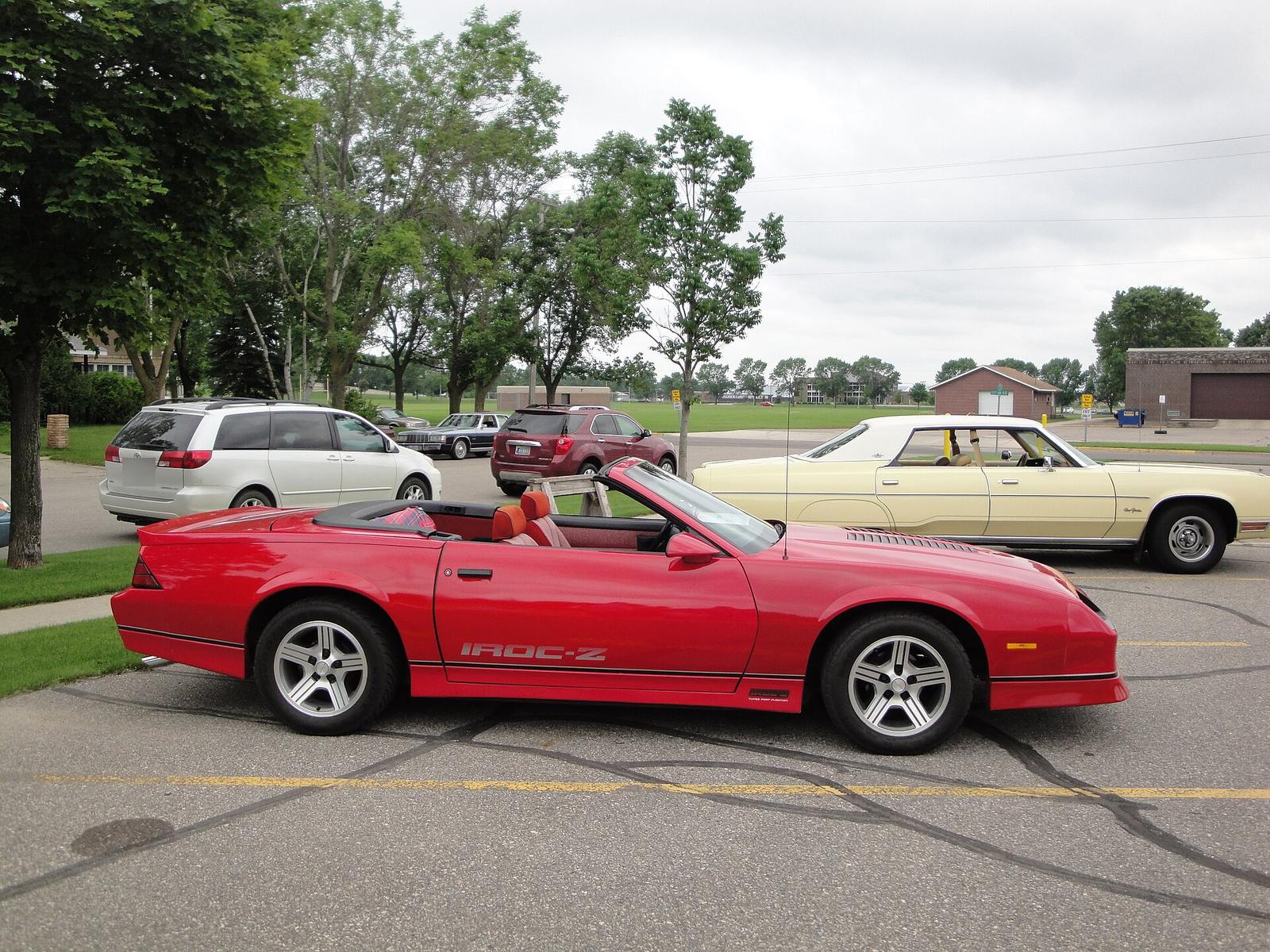
Chevrolet shipped cars to ASC, the American Sunroof Company, for conversion, and offered the convertible on the Sport Coupe, LT and IROC-Z. 1,007 were built in the first year, and because 1987 was the Camaro's twentieth anniversary they carried a "20th Anniversary Commemorative Edition" dash badge. Some cars were converted by ASC after delivery, so a genuine ASC convertible can carry the coupe body code in its VIN. The convertible stayed through 1992.
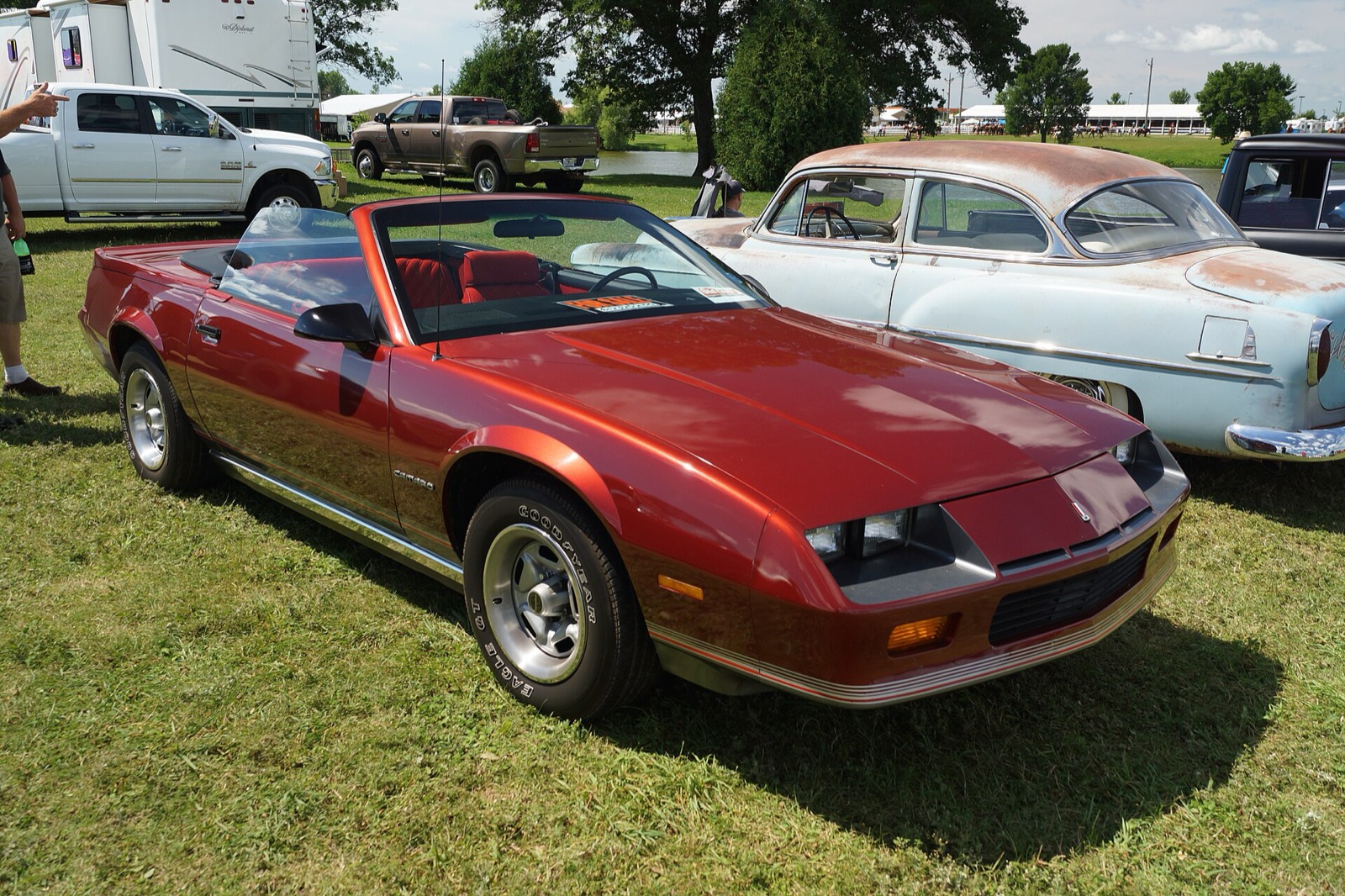
Original CamaroFacts figure. Sources:
1982 reference table
1992 reference table
1LE: factory heavy-duty brakes
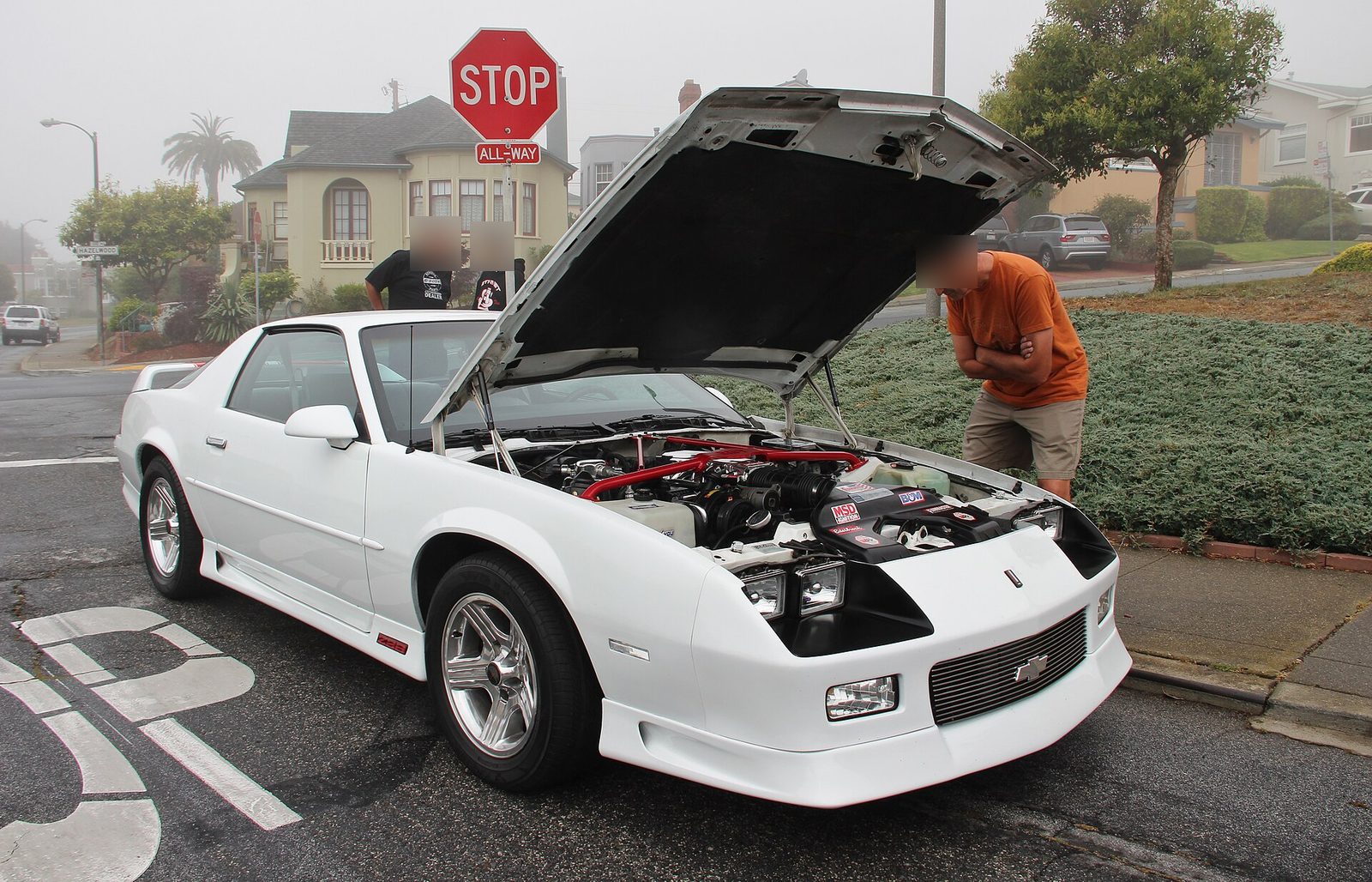
The third-generation Camaro's stock brakes weren't up to road racing, and 1LE was the fix, aimed at SCCA Showroom Stock and IMSA racers. A team including Ray Canale and John Heinricy (better known for his Corvette work) combined Caprice front rotors with Corvette calipers, a baffled fuel tank, a close-ratio transmission, retuned suspension and the Corvette's aluminum driveshaft. Early ordering accounts need dated context. The December 4, 1987 guide page for the 1988 IROC-Z Coupe lists G92 and related options without a separate 1LE line. The January 30, 1989 G92 listing explicitly requires C60. Later factory evidence—the June 1989 MVMA sheet and August 29 dispatch—describes model year 1990. These snapshots do not establish a complete early revision history or an exact build cutoff for the retrospective no-A/C recipe.
Chevrolet's 1990 MVMA brake sheet explicitly names Heavy Duty (Optional RPO 1LE), with 301.25-mm front rotors against the ordinary 267.0-mm discs. Retrospective accounts describe early hardtop IROC-Z orders combining G92, G80 and C41 air-conditioning delete. Their account counts about four U.S. cars in 1988, followed by larger runs; the table below preserves those reported counts.
1990 factory front-rotor dimensions: ordinary and 1LE
DeAtley Racing's Camaros won 10 of 12 Trans-Am rounds in 1983, bringing Chevrolet its first manufacturers' title in 14 years. David Hobbs took the drivers' title ahead of Willy T. Ribbs; team wins, a drivers' title and a manufacturers' title describe different results. See the racing history.
B4C: The Police Camaro
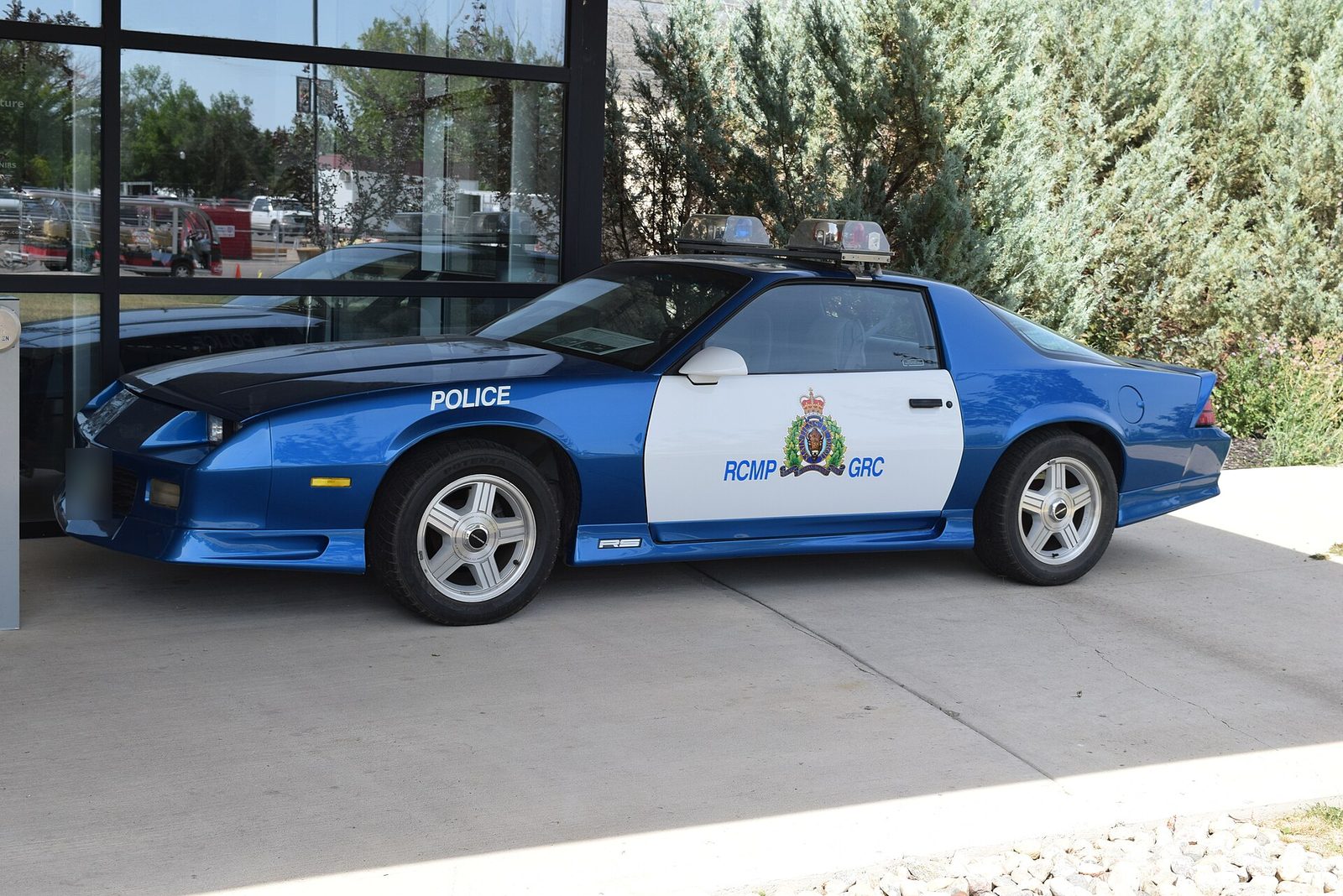
B4C, introduced for 1991, was a factory package for highway patrols, sheriff's departments and government fleets. Unlike 1LE it was built on the RS hardtop and could be ordered with air conditioning, and it shared the performance hardware without matching 1LE's specification. Cars occasionally reach private owners through police auctions.

1992: The 25th Anniversary
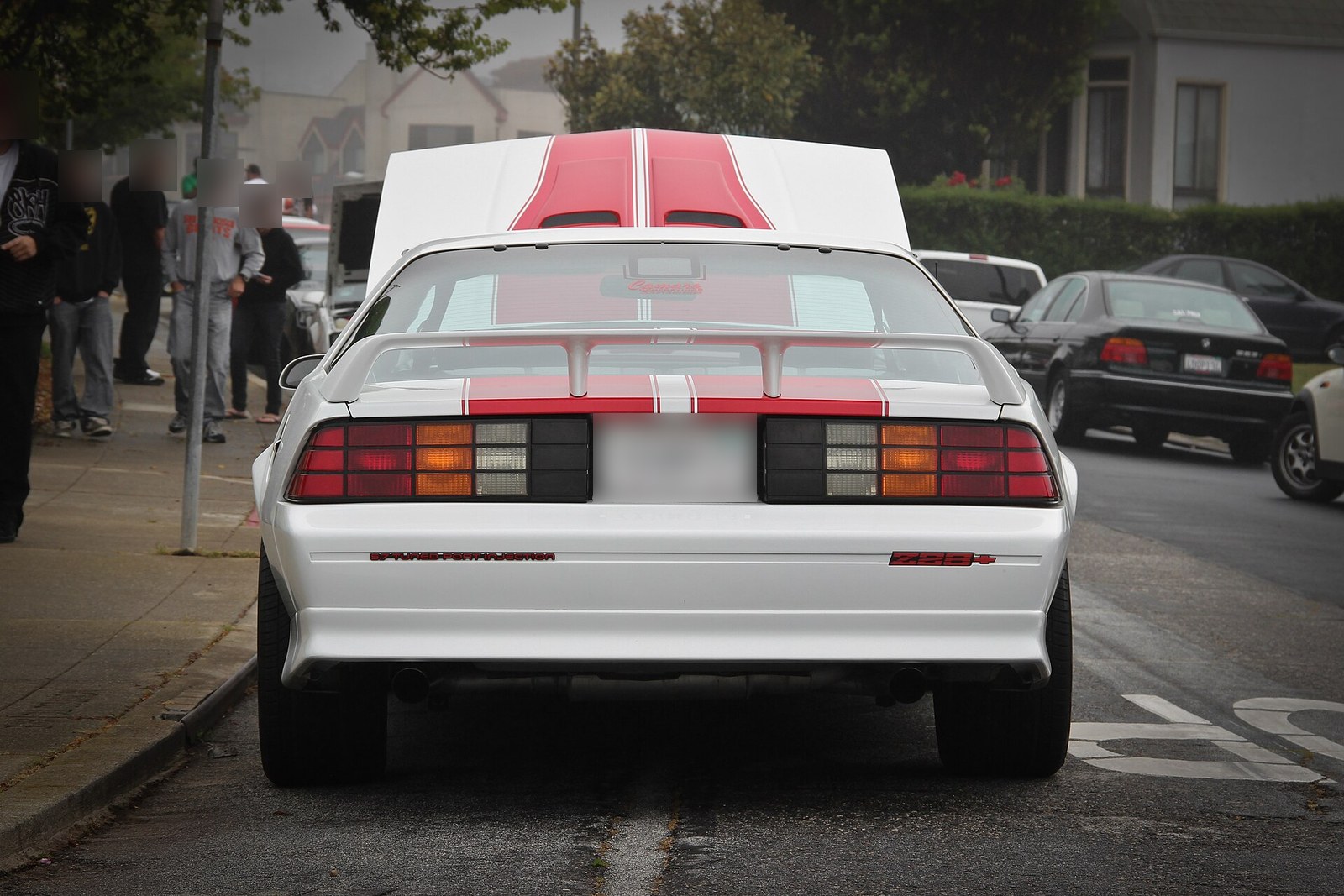
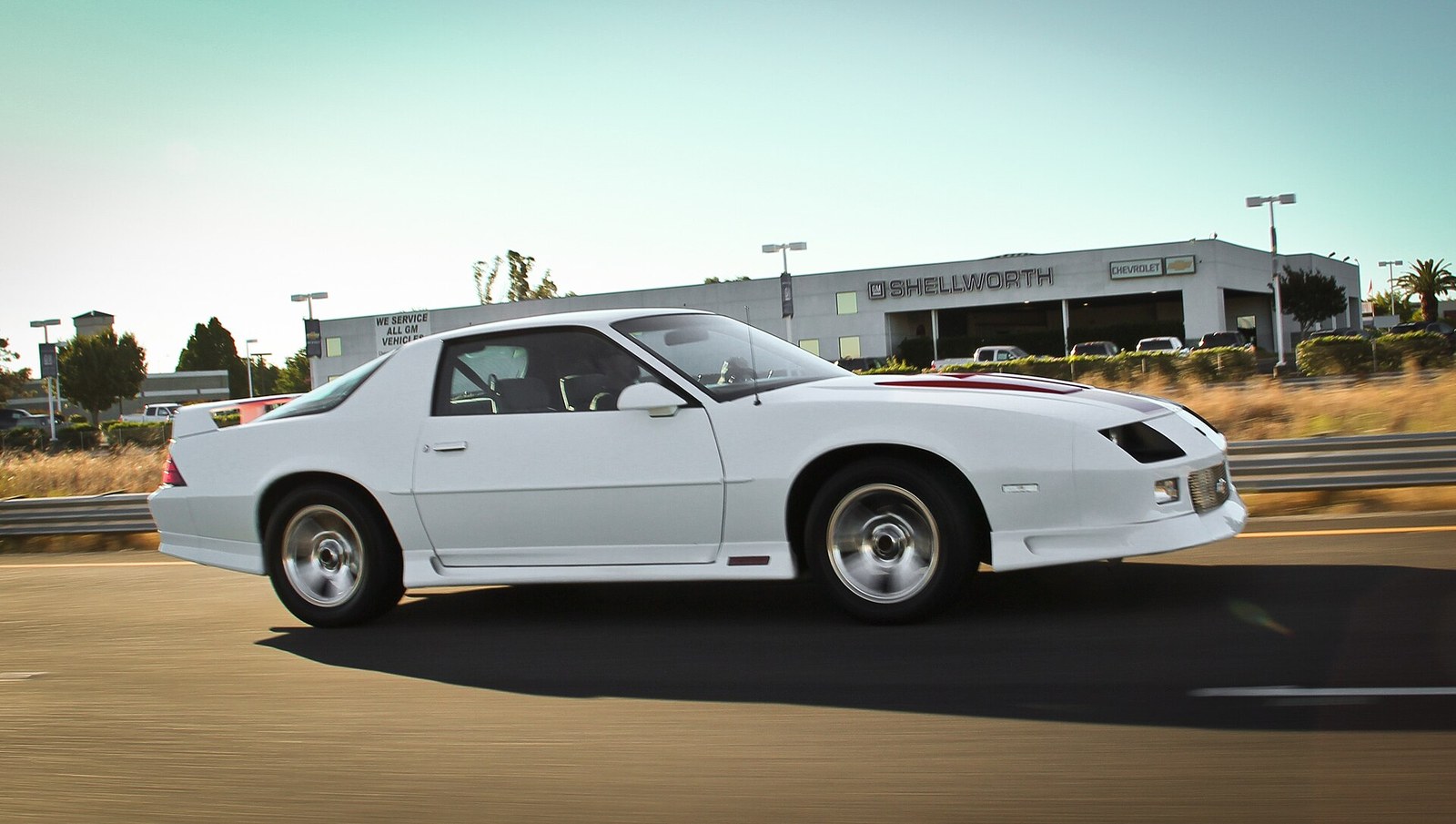
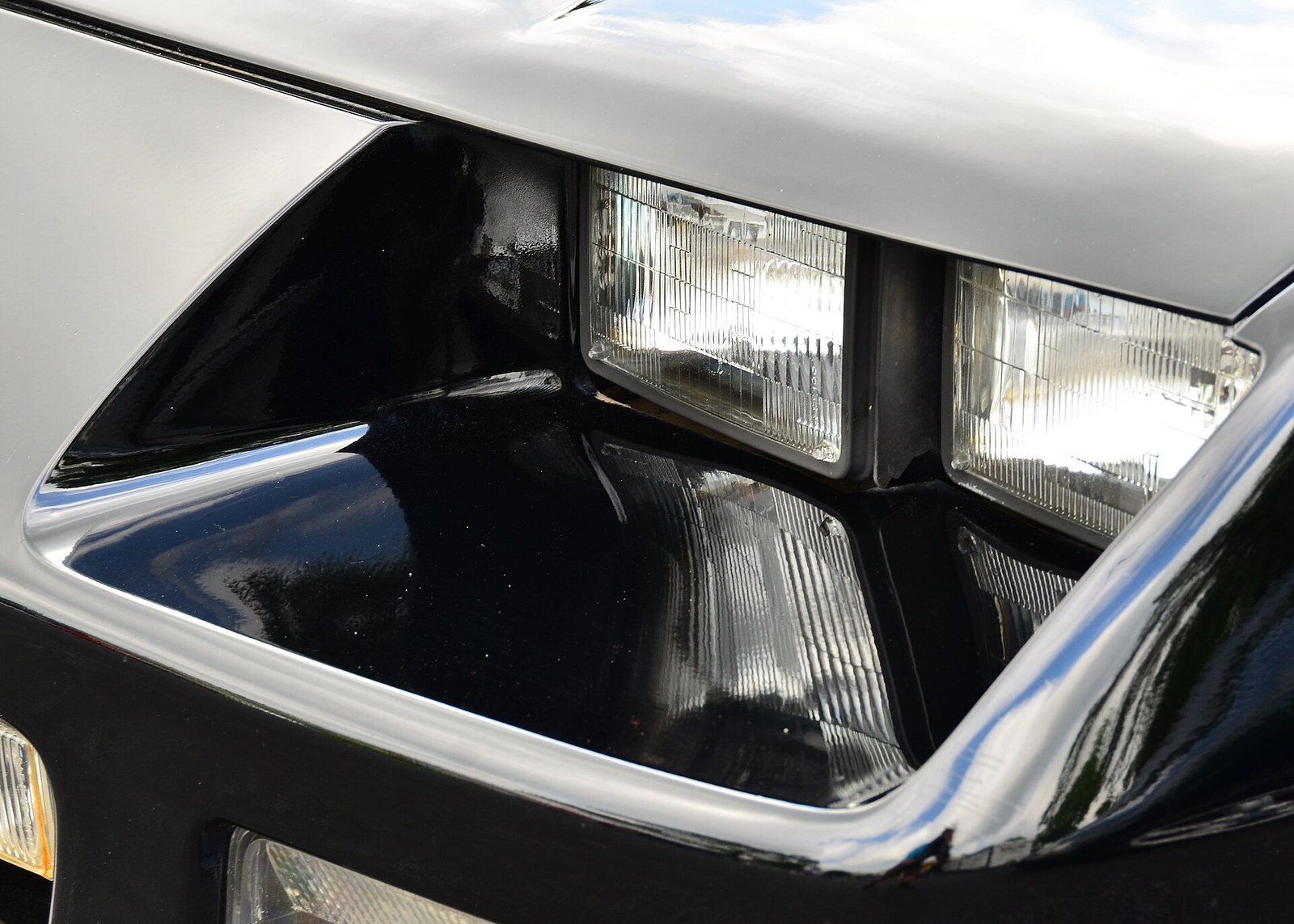
The final third-generation year added the 25th Anniversary Heritage Edition: $175 for double hood and decklid stripes in a nod to 1969, exterior badging, a body-color grille and black headlamp pockets. Van Nuys built the last third-generation cars before production moved to Quebec for 1993; see the fourth generation.
Did you know
- The third generation was a diet. GM's spec sheets put the 1982 hatchback on a wheelbase 7.0 inches shorter than the 1981 car's, and made it 187.8 inches long against 197.6. It was 1.7 inches narrower (72.8 against 74.5), and its base curb weight of 2,850 lb compares with 3,326 for the 1981 Sport Coupe, about 475 lb less.
- In GM's 2015 design retrospective, Chevrolet design executive John Cafaro credits the third generation with the first ground effects on a high-volume American car (on the Z28, inspired by Formula 1 racers) and a large compound-curve backlight that was a technical achievement in automotive glass. The aggressive nose, styled for downforce, was "almost too aggressive" for some at GM, and sales rose 50 percent for 1982.
- Underneath, the recipe changed from the 1967 car's leaf-sprung Hotchkiss rear. The 1982 Camaro used a strut-type front suspension with lower control arms and computer-selected coil springs, and a rear axle located by a torque arm and a track bar.
- With the 1982 F-body Pontiac dropped its own engines for Chevrolet's. The last Firebird with an engine the Camaro could not have was the 1989 Turbo Trans Am, with a turbocharged 3.8-liter Buick V-6.
- No Camaro has had a shorter wheelbase than the third generation's 101.0 inches. GM's figures run 108.0 for 1967-81, 101.0-101.1 for 1982-2002, 112.3 for the fifth generation and 110.7 for the sixth.
Sources for these details
- 1981 Chevrolet Camaro vehicle information kit (GM Heritage Center) GM Heritage factory archive
- 1982 Chevrolet Camaro vehicle information kit (GM Heritage Center) GM Heritage factory archive
- A Generational Thing: Camaro Design through the Years (Chevrolet press release, Feb. 26, 2015) GM press release
- 1967 Chevrolet Camaro vehicle information kit (GM Heritage Center) GM Heritage factory archive
- GM F platform (Wikipedia) Reference
- 1993 Chevrolet Camaro vehicle information kit (GM Heritage Center) GM Heritage factory archive
- 2010 Chevrolet Camaro (Chevrolet Pressroom vehicle page) GM press release
- 2016 Chevrolet Camaro reveal release (Chevrolet Pressroom vehicle page, May 16, 2015) GM press release
- Chevrolet 1990 MVMA brakes, June 1989, printed pp. 12–12.1, PDF pp. 93–94 Chevrolet factory specifications
- 1988 Chevrolet IROC-Z Coupe order guide, revised December 4, 1987, printed p. 3 (GM kit PDF p. 35) Chevrolet factory ordering information; dated snapshot
- 1989 Chevrolet IROC-Z Coupe order guide, revised January 30, 1989, printed pp. 3–4 (GM kit PDF pp. 35–36); G92 requires C60 Chevrolet factory ordering information; dated snapshot
- Chevrolet Distribution Dispatch 90-06, August 29, 1989, 1990 G92 pre-introductory MSRP revisions (GM kit PDF p. 49) Chevrolet factory dealer dispatch for model year 1990
- Trans Am, Our History; 1983 team/driver/make results and later championships; publication/revision date unstated Series historical overview
Year by year
| Year | The year in brief | Production / sales | Highest listed engine ratings |
|---|---|---|---|
| 1982 | All-new, and a study in extremes | 189,735 Total production |
305 cu in V8, cross-fire fuel injection (RPO LU5), 165 hp at 4,200 rpm
Code: 7. Z28 Cross-Fire; October 1981 MVMA lists interim manual availability, while January 1982 US brochure lists automatic only
|
| 1983 | A five-speed, an overdrive automatic and, at midyear, a 190-hp H.O. Z28. | 154,381 Total production |
305 cu in V8 (L69) 5.0 Liter H.O., 190 hp at 4,800 rpm
Code: 7. Z28; 9.5:1, 4-barrel Rochester, 5-speed manual
|
| 1984 | The Berlinetta's spaceship dashboard | 261,591 Total production |
305 cu in V8 (L69) 5.0 Liter H.O., 190 hp at 4,800 rpm
Code: G. Z28 only
|
| 1985 | The IROC-Z arrives | 180,018 Total production |
305 cu in V8 (LB9) Tuned Port Injection, 215 hp at 4,400 rpm
Code: F. Z28 and IROC-Z, automatic only
|
| 1986 | The last Berlinetta | 192,219 Total production |
305 cu in V8 (L69), 190 hp at 4,800 rpm
Code: G. Z28/IROC, manual only; White Book summary counts 74 built
305 cu in V8 (LB9) Tuned Port Injection, 190 hp at 4,000 rpm
Code: F. Z28 and IROC-Z, automatic only
|
| 1987 | The convertible returns | 137,760 Total production |
350 cu in V8, tuned-port fuel injection (RPO L98), 225 hp at 4,400 rpm
Code: 8. Automatic only; B2L ordering option
|
| 1988 | The secret 1LE | 96,275 Total production |
5.7 L V8 (L98; B2L ordering option), Tuned Port Injection, 230 hp at 4,400 rpm
Code: 8. IROC-Z, automatic only; requires G80, J65, KC4 oil cooler and QDZ tires
|
| 1989 | RS replaces the Sport Coupe, and 1LE orders reach three figures. | 110,739 Total production |
350 cu in V8, tuned-port fuel injection (RPO L98), 240 hp at 4,400 rpm
Code: 8. MD8 four-speed automatic, dual exhaust, 3.27 axle
|
| 1990 | The short year, and the last IROC-Z | 35,048 Total production |
350 cu in V8, tuned-port fuel injection (RPO L98), 245 hp at 4,400 rpm
Code: 8. MD8 four-speed automatic, dual exhaust; IROC-Z Coupe only
|
| 1991 | Z28 returns, IROC-Z retires, B4C debuts | 100,838 Total production |
350 cu in V8, tuned-port fuel injection (RPO L98), 245 hp
Code: 8. Z28 coupe only; requires MX0 automatic, G92 axle and QLC tires; SAE J1349 net ratings: MVMA table revised April 1990, kit PDF pp. 40–41
|
| 1992 | 25th Anniversary, and the third generation's goodbye | 70,007 Total production |
350 cu in V8, tuned-port fuel injection (RPO L98), 245 hp at 4,400 rpm
Code: 8. Z28 Coupe only; MD8 four-speed automatic, dual exhaust
|
Model mix where Chevrolet's counts survive
| Year | Sport Coupe | Berlinetta | Z28 | IROC-Z package |
|---|---|---|---|---|
| 1981* | 62,614 | 20,253 | 43,272 | — |
| 1984 | 127,292 | 33,400 | 100,899 | — |
| 1985 | 97,966 | 13,649 | 68,403 | 21,177 |
| 1986 | 99,608 | 4,479 | 88,132 | 49,585 |
*1981 is the last second-generation year, shown for comparison. IROC-Z cars are counted within the Z28 total.
Track and police packages
| Year | 1LE | B4C |
|---|---|---|
| 1988 | About 4 (US) | — |
| 1989 | 111 | — |
| 1990 | 62 | — |
| 1991 | 478 | Just under 600 |
| 1992 | 705 | 589 |
The 1990 1LE and 1991 B4C counts come from Wikipedia's third-generation article.
Base prices
| Year | Sport Coupe | Berlinetta | Z28 / IROC-Z | Convertible |
|---|---|---|---|---|
| 1984 | $7,995 | $10,895 | $10,620 | — |
| 1985 | $8,363 | $11,060 | $11,060 | — |
| 1986 | $9,349 | $12,316 | $12,316 | — |
| 1987 | $9,995 | — | $12,819 | $14,394 (V6) / $17,218 (Z28) |
| 1989 | $11,495 (RS) | — | $14,145 (IROC-Z) | $16,995 (RS) / $18,945 (IROC-Z) |
| 1990 | $10,995 (RS) | — | $14,555 (IROC-Z) | $16,880 (RS) / $20,195 (IROC-Z) |
From the GM Heritage kits. 1984–86 are introductory retail including delivery; 1987–90 are list prices excluding destination.
Model years
The Berlinetta's spaceship dashboard
The Berlinetta gets its digital “Graphic Control Center,” and the third generation has its best sales year.
The last Berlinetta
The oddball luxury Berlinetta bows out after 1986.
The short year, and the last IROC-Z
Production stopped on the last day of 1989, and the IROC name went with it.
Z28 returns, IROC-Z retires, B4C debuts
The Z28 name returns, a facelift lands, and the police Camaro arrives.
25th Anniversary, and the third generation's goodbye