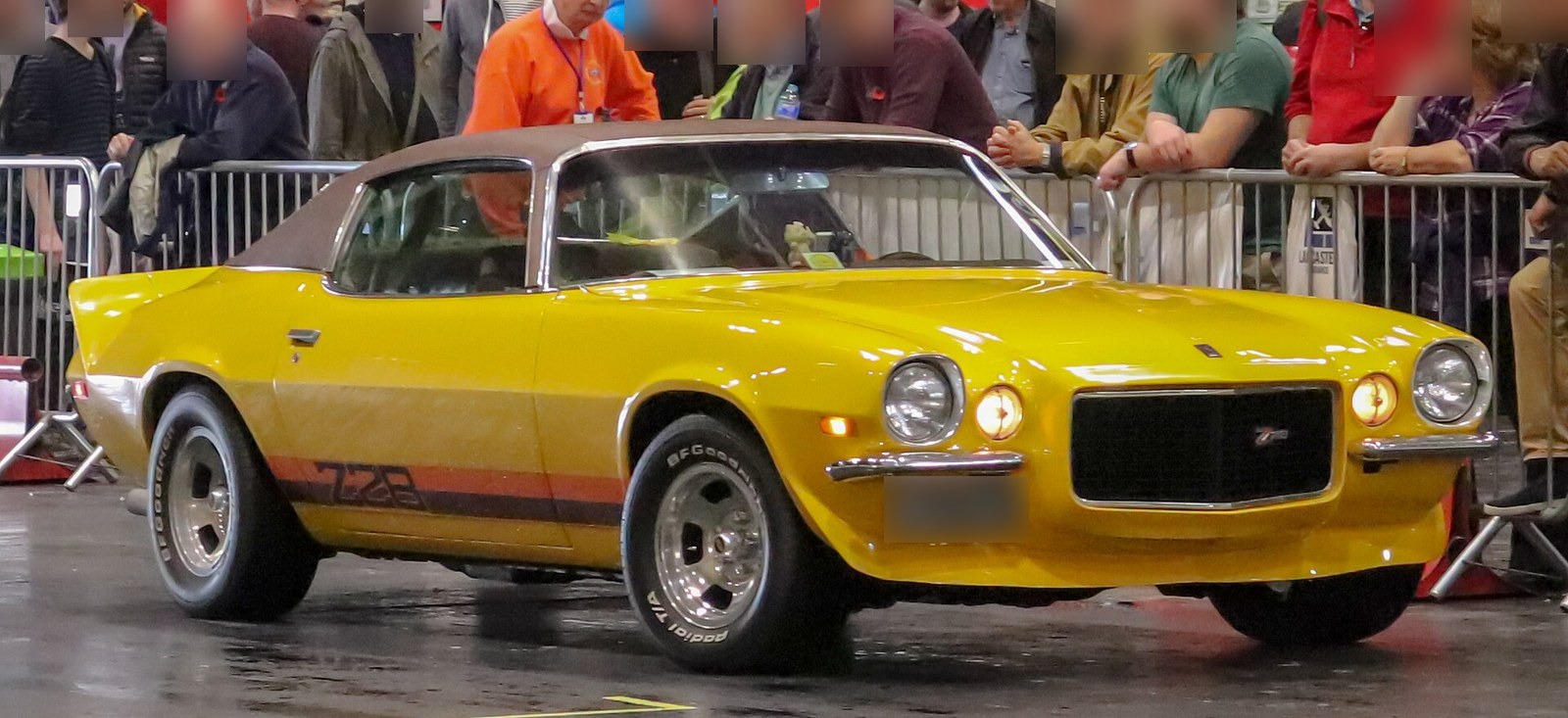
1970 split-bumper Camaro Z28
Photo: Brian Snelson, CC BY 2.0, via Wikimedia Commons; plates and faces blurred
1970 is a genuinely new car sold under a continuing name. The second-generation body arrived four to five months late, on February 26, 1970, and went on to define the Camaro's shape for twelve model years, the longest single body run in the nameplate's history.
The Z28 got the Corvette's LT-1 350, rated at 360 hp gross. No convertible was offered, the first Camaro year without one, and the drop-top didn't return until 1987.
Did you know
The 1970 Z/28 was the first that could be ordered with an automatic: the Turbo Hydra-Matic is on its February 1970 power-team chart, while the 1969 Z/28 spec sheet lists an automatic as not available. Car Life said the 302 had lacked the power to pull one.
The Z/28's jump from 302 to 350 cubic inches for 1970 didn't come from a higher Trans-Am displacement limit. The 5-liter (305-cubic-inch) ceiling stayed; the new rule let teams de-stroke a larger production engine to fit it, so a 350-cubic-inch street Z/28 could still supply a race-legal 5-liter motor.
Only 600 of the 12,476 SS Camaros built in 1970 had the top engine, the 375-hp L78 396 (really 402 cubic inches). Another 1,864 had the 350-hp L34 and 10,012 the 300-hp 350, and the L78 added $385.50 to the SS package's $289.65.
Car Life's May 1970 test of a Turbo Hydra-Matic Z/28 with 4.10 gears ran 0-60 mph in 6.5 seconds and the quarter-mile in 14.51 seconds at 98.79 mph, with a 119-mph top speed at 6,500 rpm. That beat the magazine's 1968 manual Z/28 (14.85 at 101 mph) even though the new car weighed about 200 pounds more; it listed at $3,794 and stickered at $4,518.
Car and Driver's March 1970 preview of the new Camaro and Firebird laid out the market GM was betting on: sport compacts had fallen from 13 percent of Detroit's new-car sales in 1967 to 9.0 percent in 1969. GM research found half of Firebird buyers had also considered a Camaro, 62 percent of buyers were under 35, and 55 percent of Camaro traders moved up to a bigger Chevrolet.
A period reference shows how 1970 buyers equipped their Camaros: 92,640 had variable-ratio power steering, 38,565 (about 31 percent) air conditioning, 110,779 an AM radio and only 8,586 an AM/FM radio, and 19,752 had Positraction.
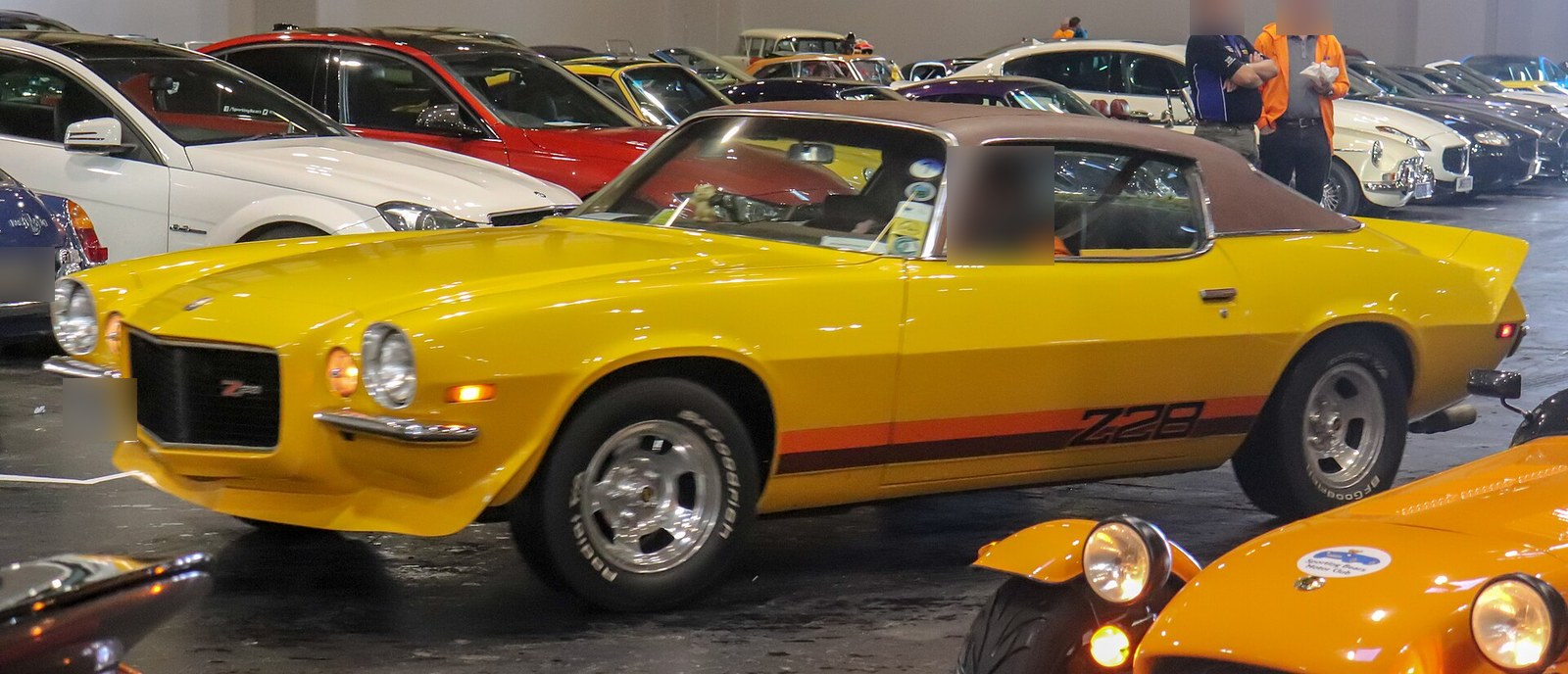
Yellow 1970 Camaro Z/28 RS coupe with vinyl roof and door stripe graphic, front three-quarter to side view, at an indoor classic motor show Photo: Vauxford, CC BY-SA 4.0, via Wikimedia Commons; licence plates and faces blurred
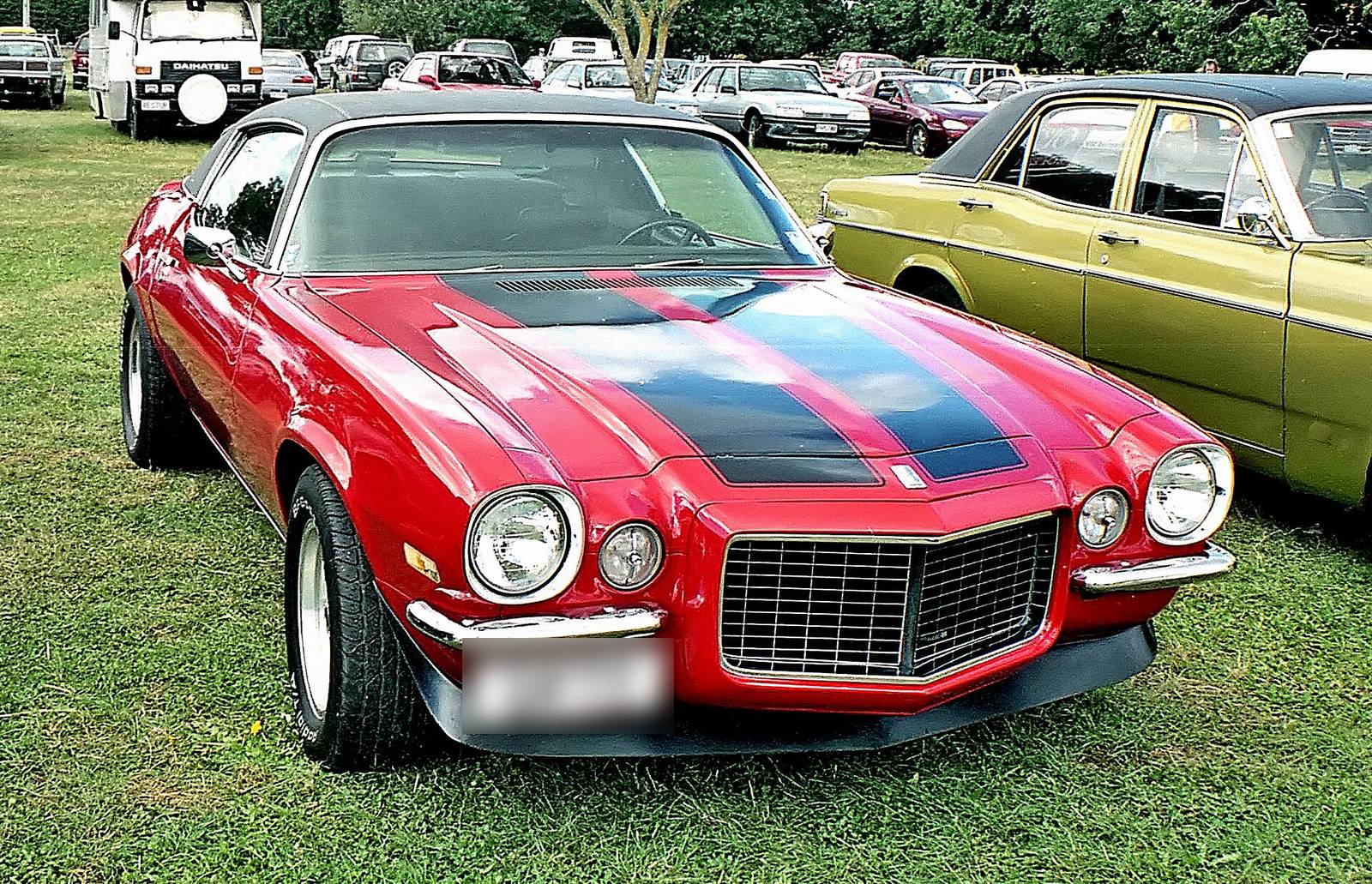
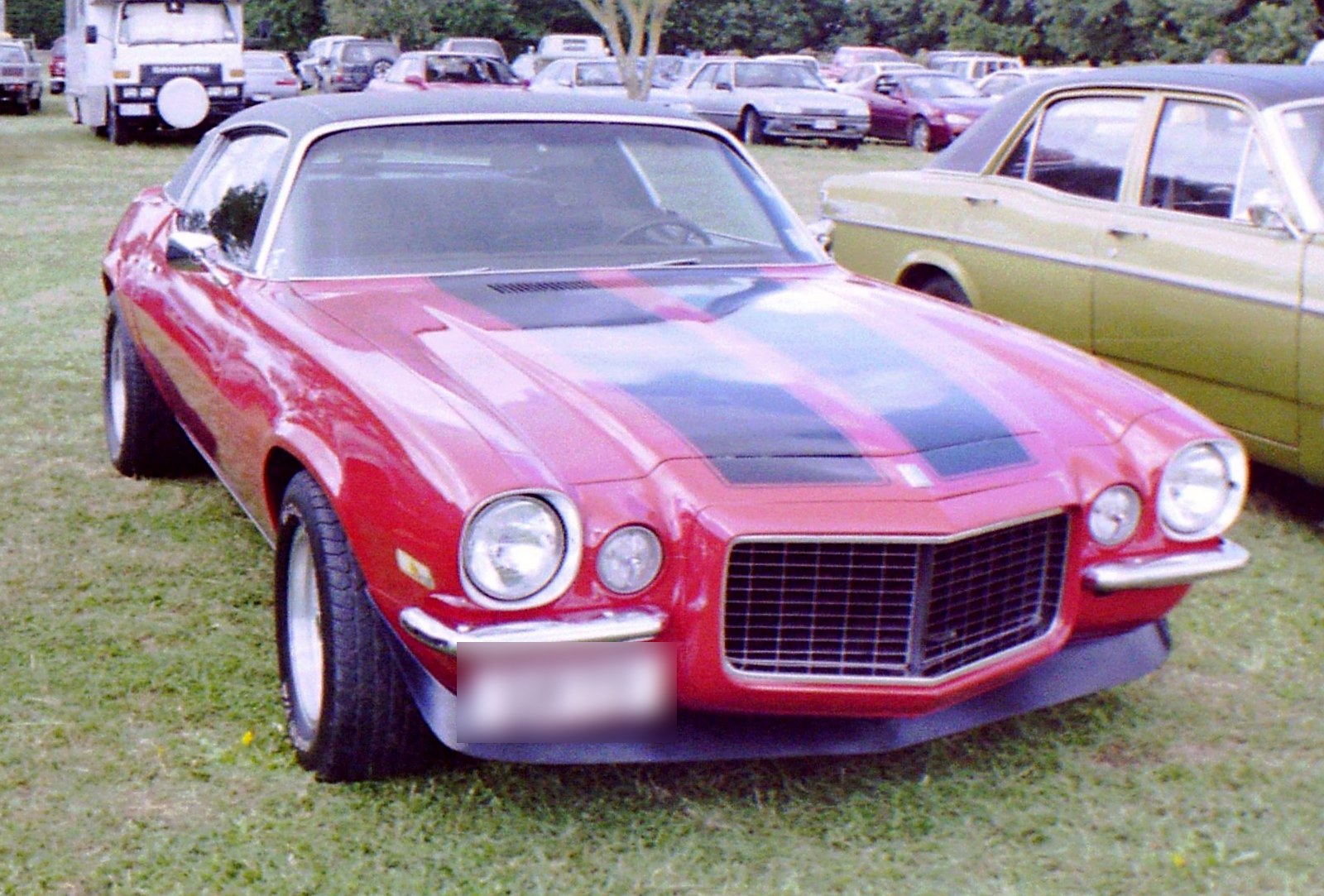
Original photographLicenseRed 1970 Camaro coupe with RS split-bumper front, black hood stripes and black vinyl roof, front three-quarter view on grass at an outdoor car show Photo: GPS 56, CC BY 2.0, via Wikimedia Commons; licence plates blurred
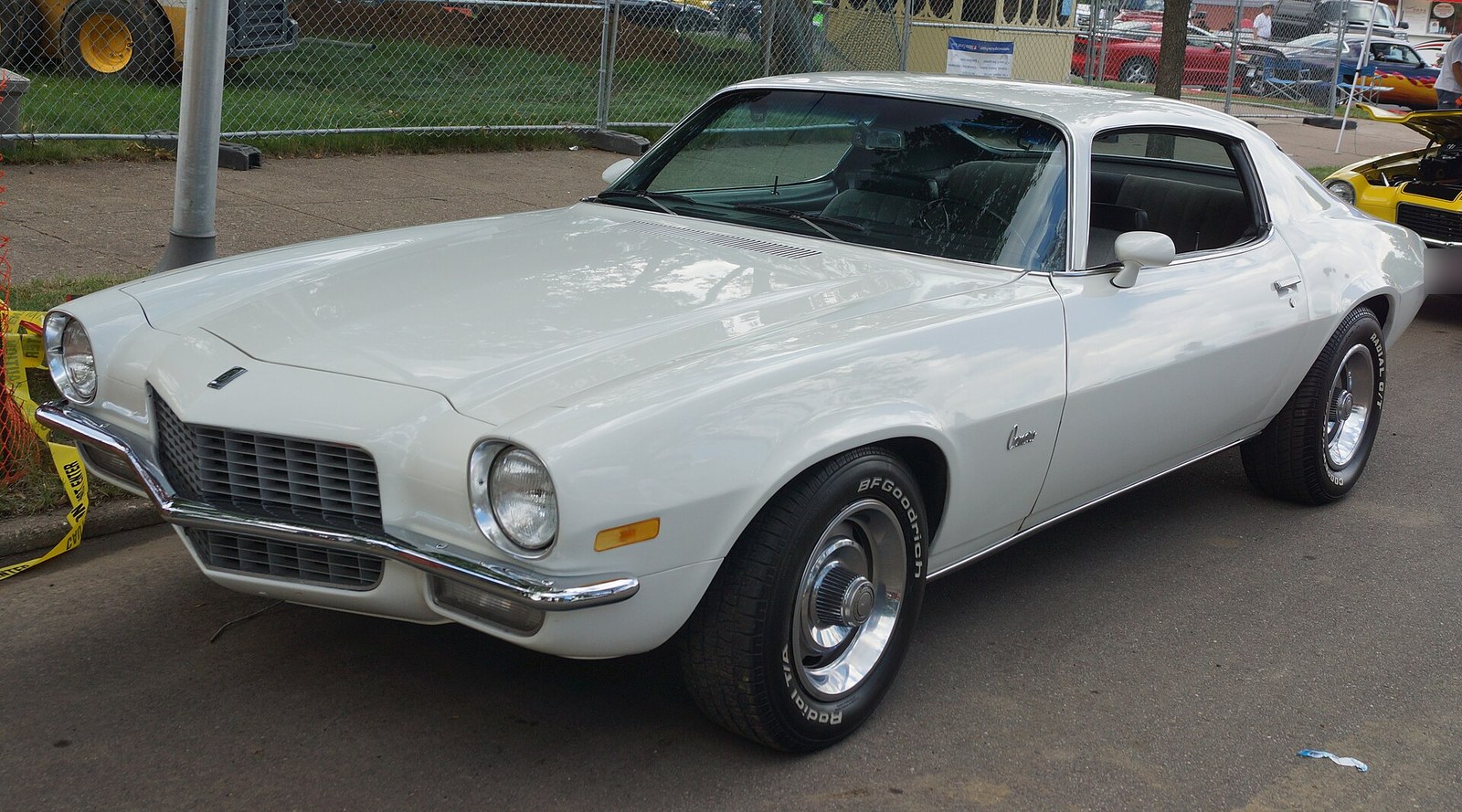
Original photographLicenseWhite 1970 Camaro coupe, front three-quarter view, at an outdoor car show Photo: Greg Gjerdingen, CC BY 2.0, via Wikimedia Commons; licence plates blurred
Original photographLicense
Production
The table lists two production figures for 1970. It opens with Total production, 124,901, followed by Sport Coupe (124,901).
Record
Count
Note
Total production
124,901
Sport Coupe
124,901
Only body style offered
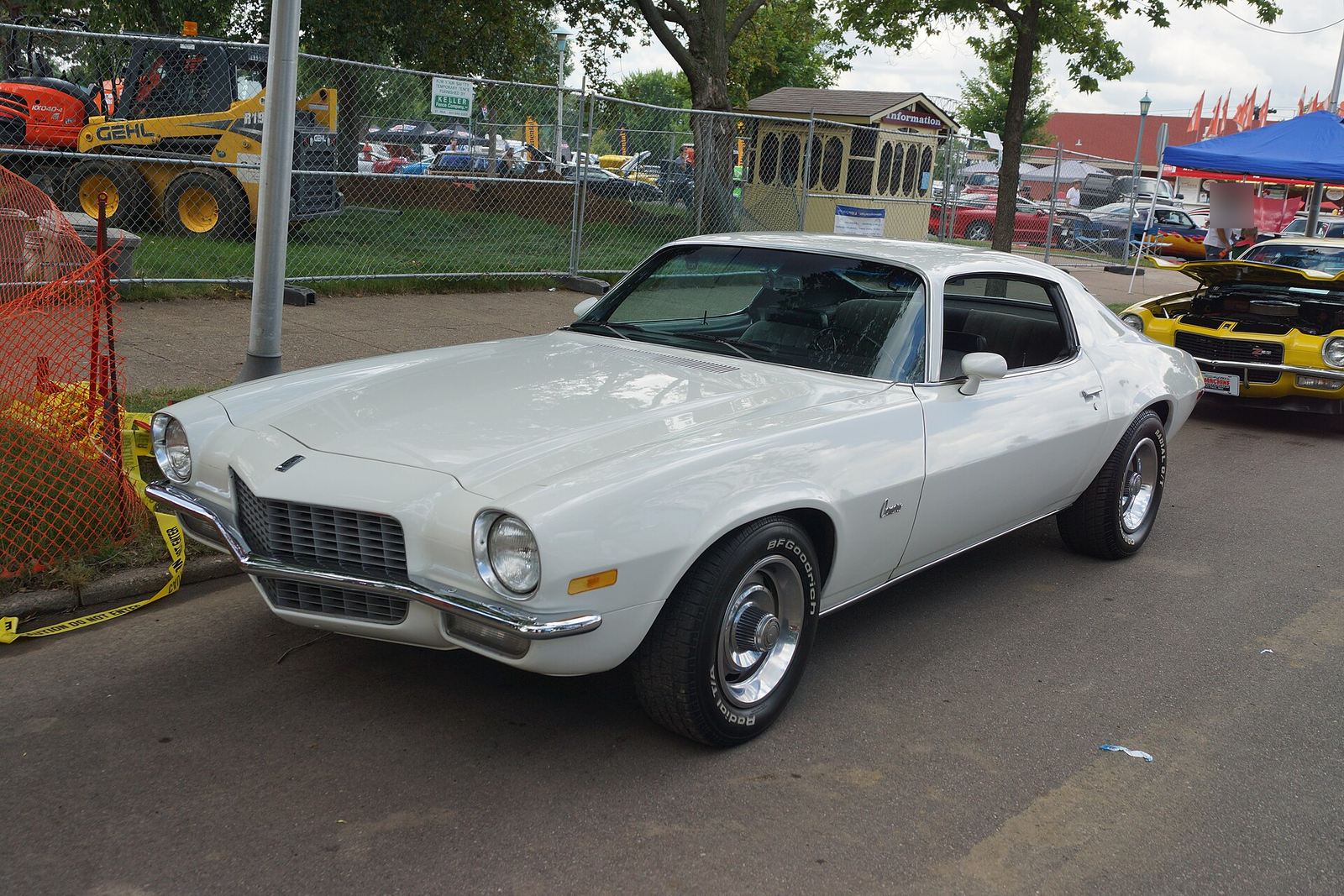
White 1970 Camaro coupe, front three-quarter view at an outdoor car show Photo: Greg Gjerdingen, CC BY 2.0, via Wikimedia Commons; faces blurred
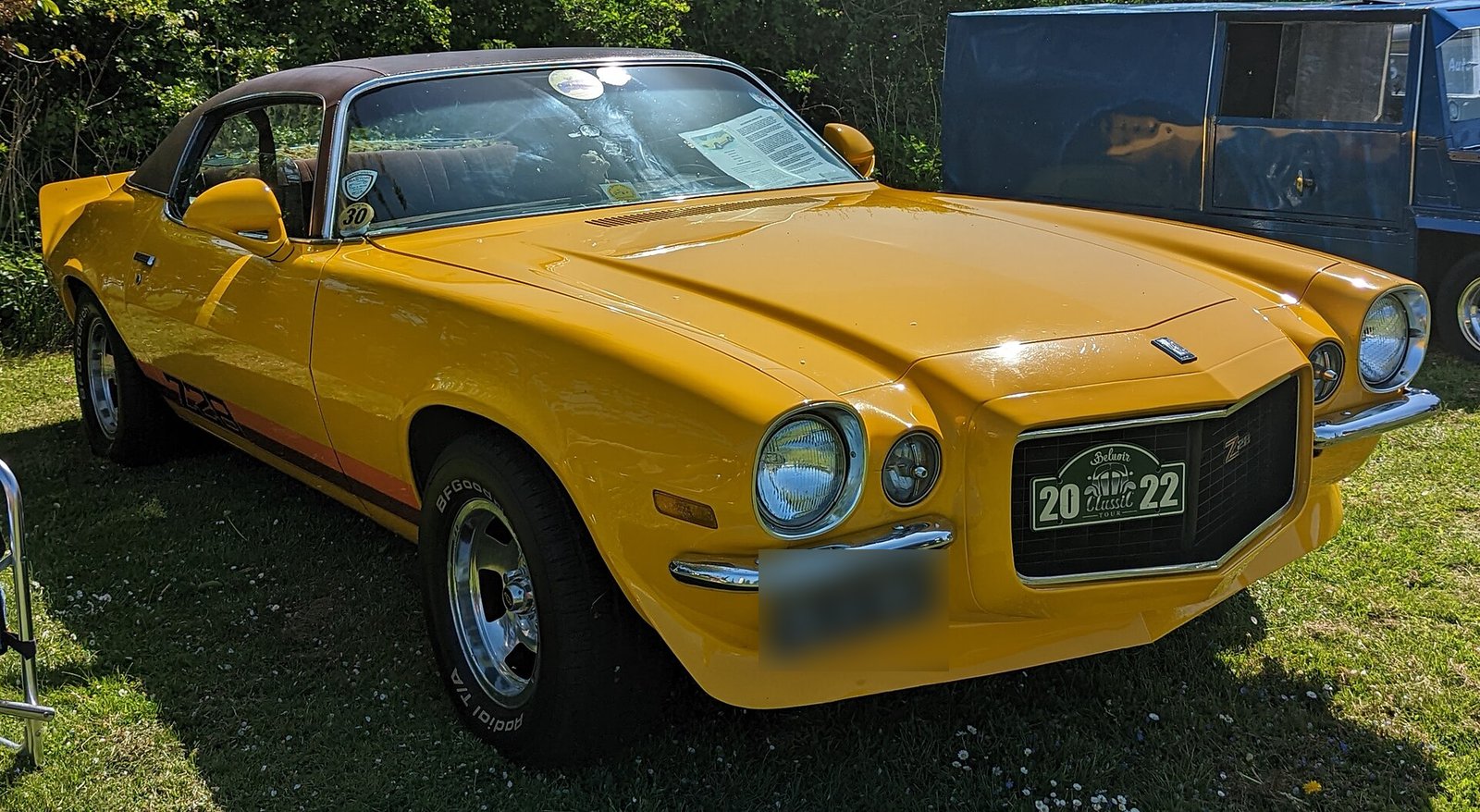
Original photographLicenseYellow 1970 Camaro Z28 coupe with RS split-bumper front, vinyl roof and Z28 side stripe, side profile with front visible, indoors at a crowded classic motor show Photo: Vauxford, CC BY-SA 4.0, via Wikimedia Commons; licence plates and faces blurred
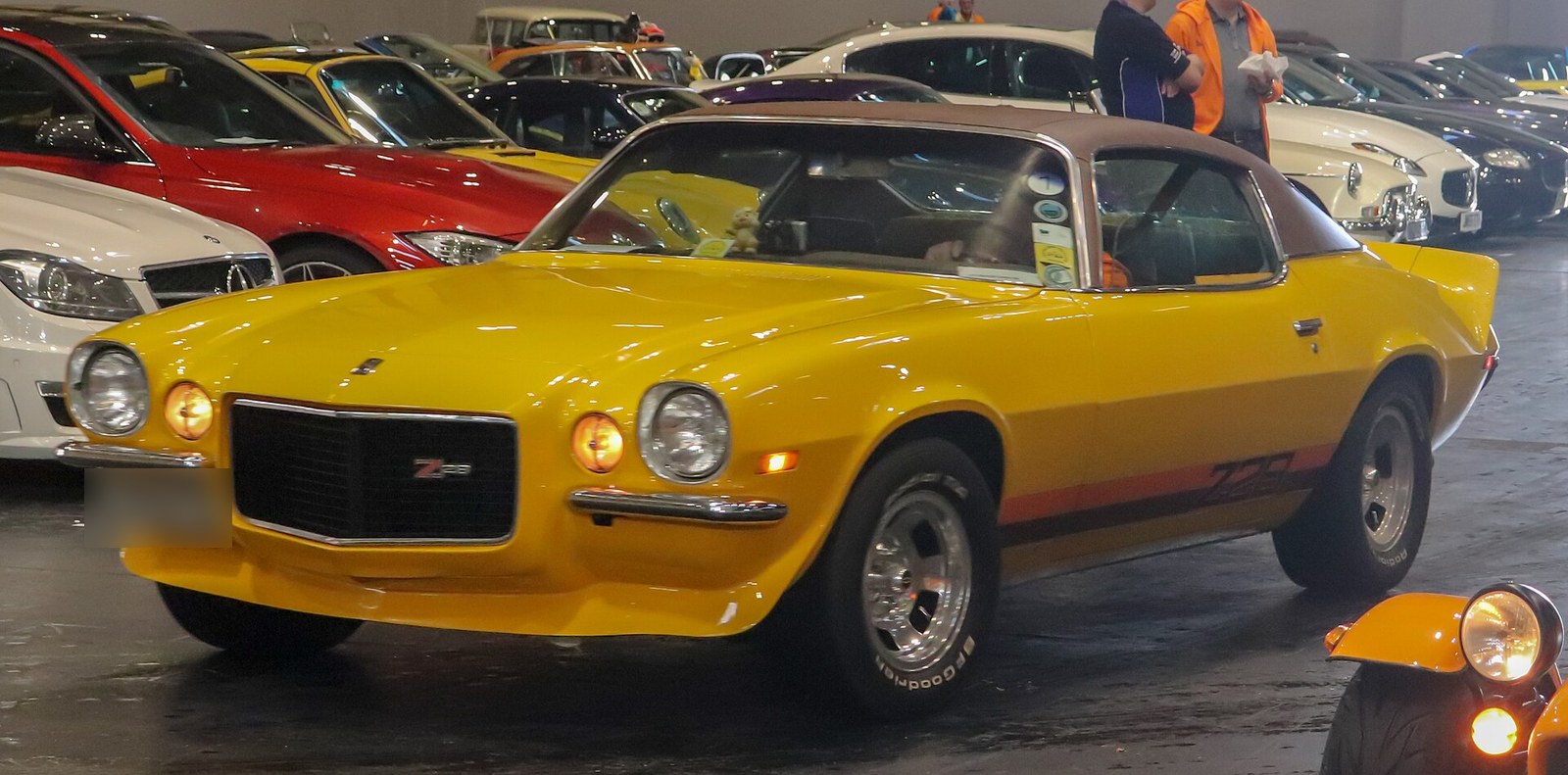
Original photographLicenseYellow 1970 Camaro Z28 coupe with RS split-bumper front, vinyl roof and Z28 side stripe, front three-quarter view indoors at a classic motor show Photo: Vauxford, CC BY-SA 4.0, via Wikimedia Commons; licence plates blurred
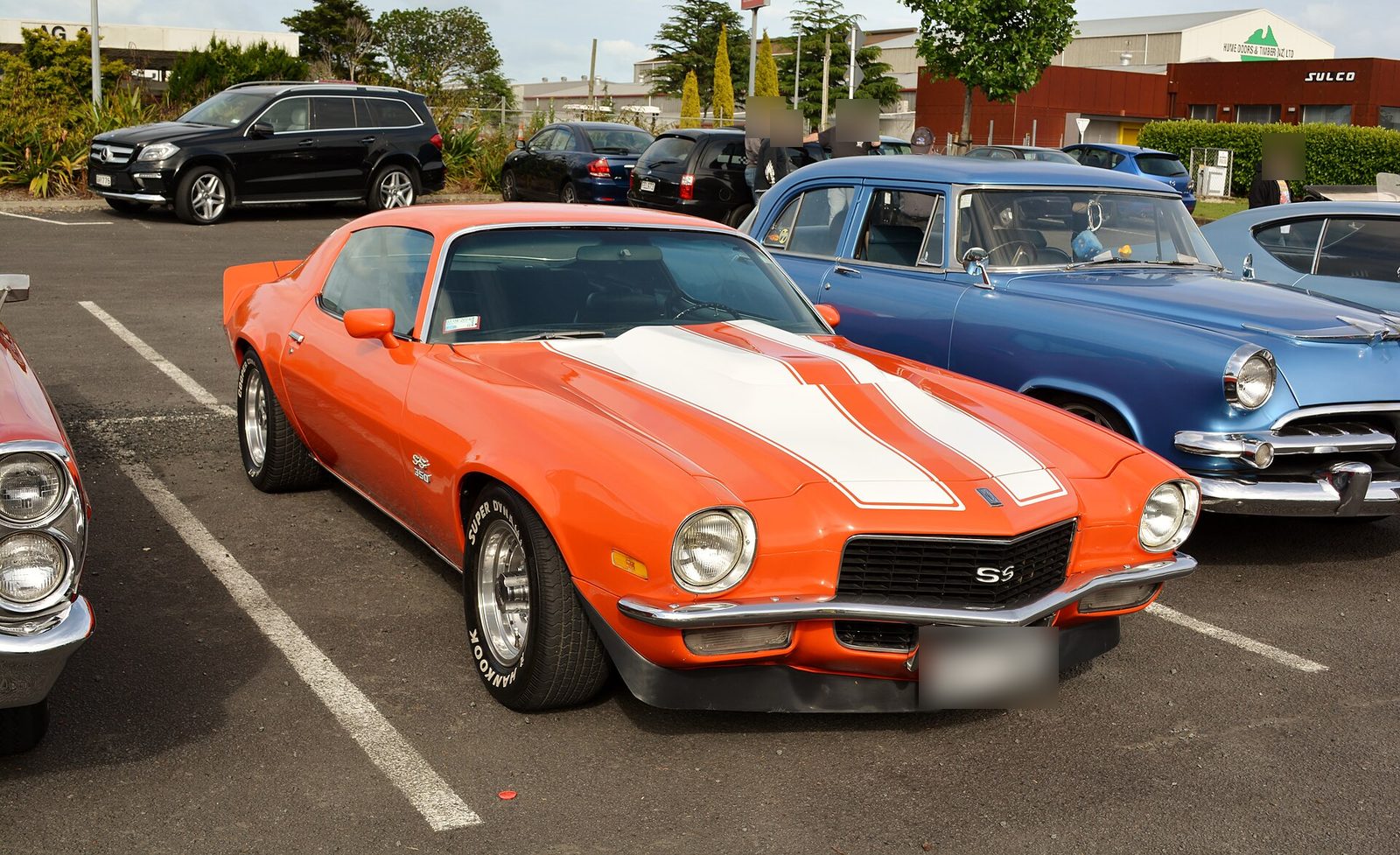
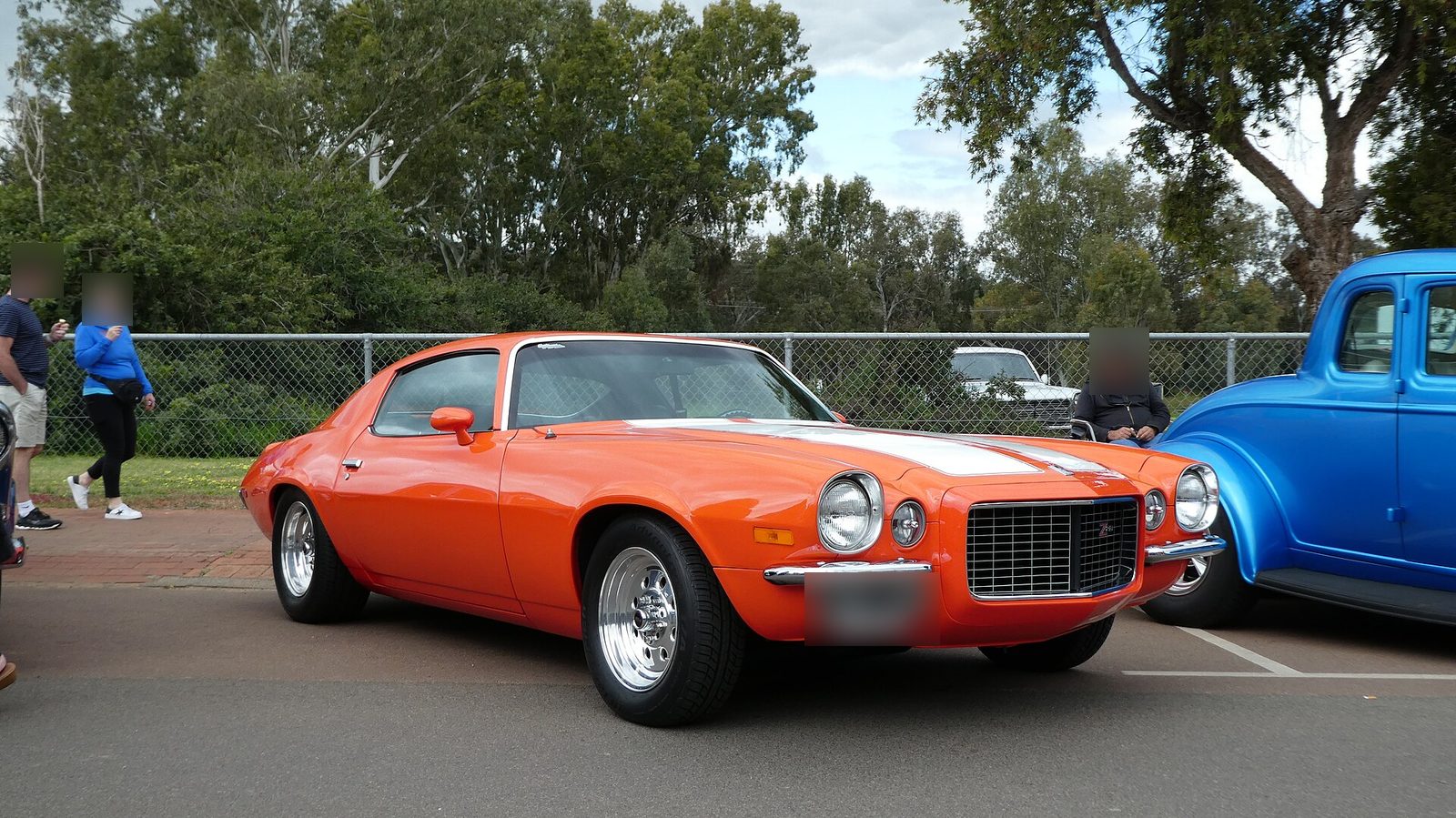
Original photographLicenseOrange 1970 Camaro SS 350 coupe with white hood stripes, front three-quarter view, at an outdoor car meet in a parking lot Photo: GPS 56, CC BY 2.0, via Wikimedia Commons; licence plates and faces blurred
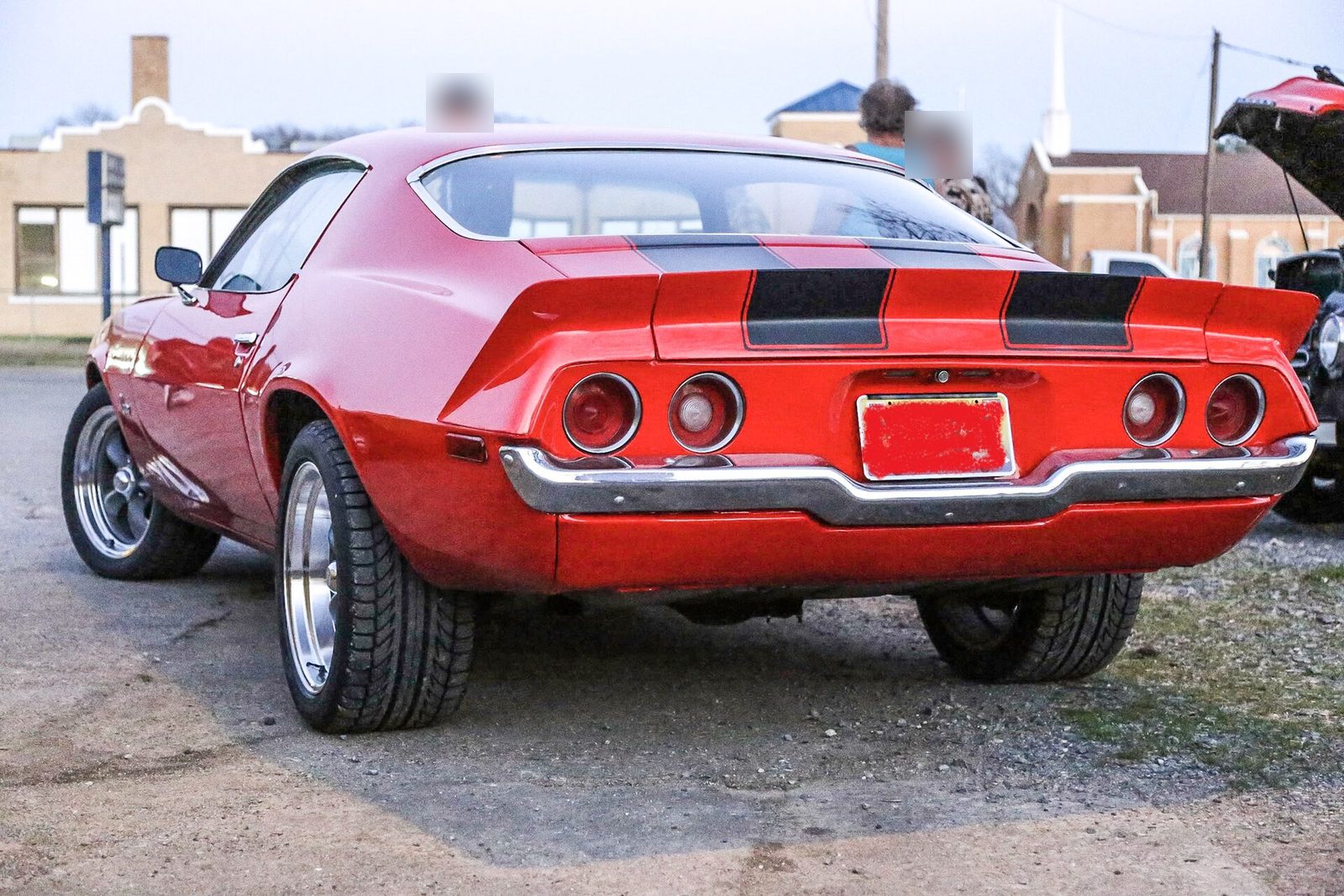
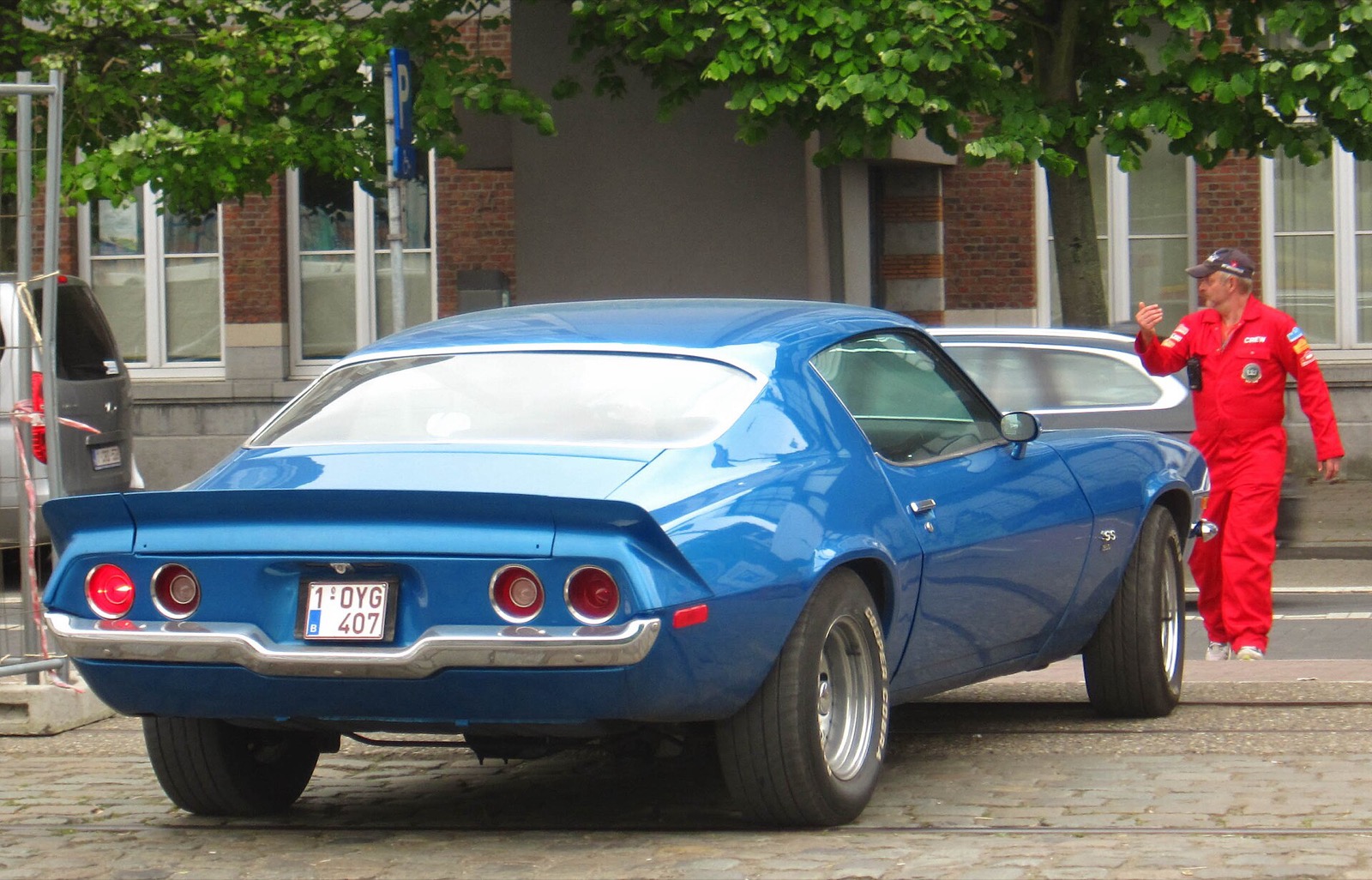
Original photographLicenseRed 1970 Camaro coupe with twin black deck stripes, rear spoiler and aftermarket wheels, rear three-quarter view at an outdoor gathering Photo: MerlinS.69, CC BY-SA 4.0, via Wikimedia Commons; faces blurred
Original photographLicense
Engines
The 1970 table lists seven engines, from the 250 cu in inline-6 to the 396 (402) cu in V8 (L78). The highest power rating shown is 375 hp (gross), for the 396 (402) cu in V8 (L78).
1970 engine ratings Published horsepower for the engine choices shown. Separately recorded ratings keep their qualifiers. Missing or unrecognized ratings are omitted, rather than plotted as zero. See the engine tables for transmission and equipment restrictions. All seven bars use gross ratings. The L48 torque-speed disagreement and L78 transmission-source disagreement remain in the table; horsepower alone does not settle either one.
380 lb-ft (gross) at 2,200 rpm (Power Trains); 380 lb-ft (gross) at 3,200 rpm (AMA)
SS; February 1970 factory tables disagree on torque peak speed: Power Trains p. 4 versus AMA p. 4B. No cause or equipment split is established.
Z28
350 cu in LT-1 V8
360 hp (gross) at 6,000 rpm
380 lb-ft (gross) at 4,000 rpm
Z28; solid lifters, 11.0:1
L34
396 (402) cu in V8 (L34)
350 hp (gross) at 5,200 rpm
415 lb-ft (gross) at 3,400 rpm
SS
L78
396 (402) cu in V8 (L78)
375 hp (gross) at 5,600 rpm
415 lb-ft (gross) at 3,600 rpm
SS; February 26 AMA lists four-speed manuals. The kit’s historical SS chapter lists manual and Turbo Hydra-matic suffixes; that transmission disagreement is unresolved. The chapter records 600 L78 cars.
Options, packages and special editions
The 1970 list has three options, packages and special editions. Of these, 3 show how many were built.
Code
Description
Built
Z22
Rally Sport — split-bumper Endura nose
27,136
Z27
Super Sport — 350 or 396 (402) V8
12,476
Z28
Special Performance Package — LT-1 350
8,733
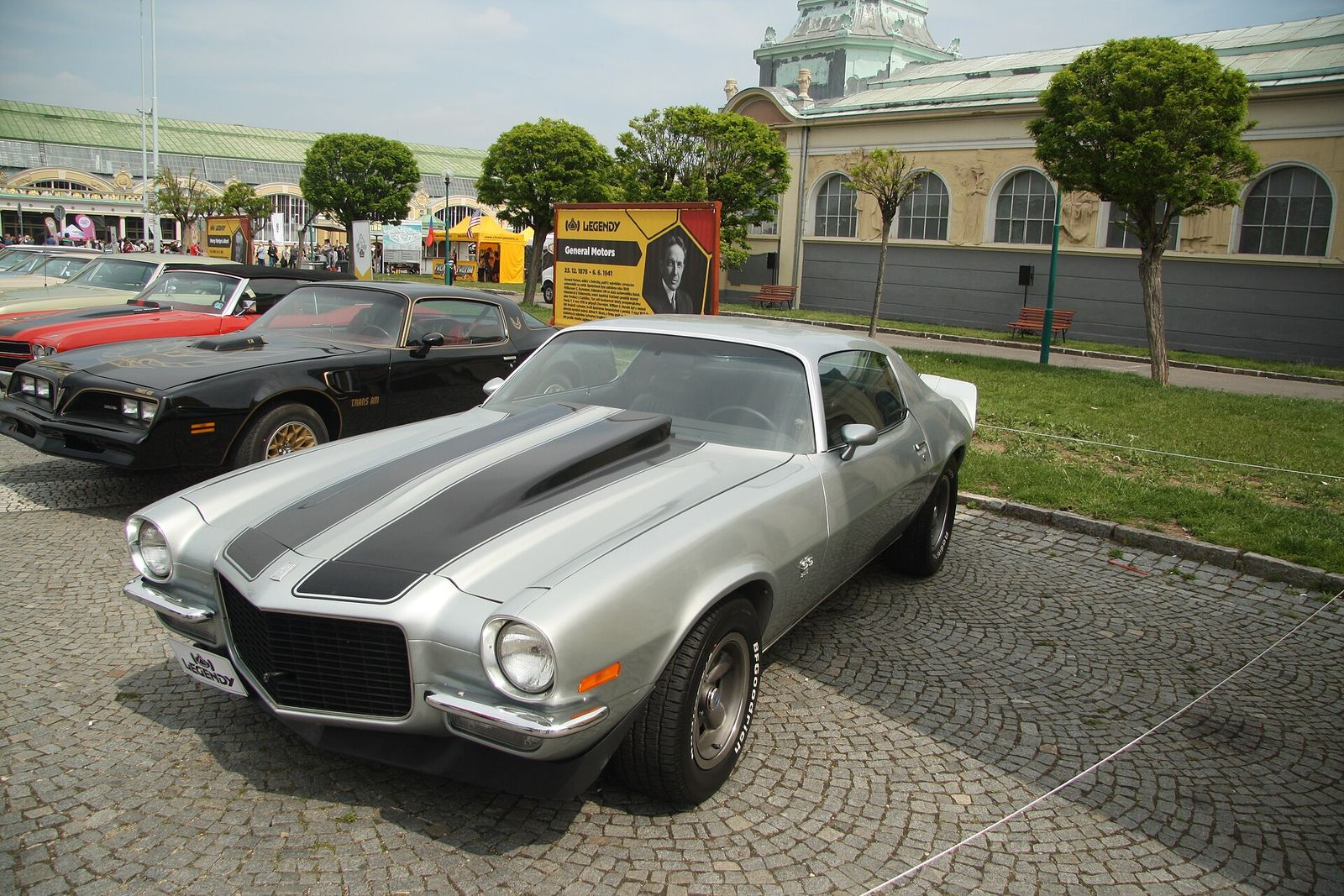
Silver 1970 Camaro SS coupe with RS split-bumper front and black hood stripes, front three-quarter view at an outdoor classic car show Photo: Jiří Sedláček, CC BY-SA 4.0, via Wikimedia Commons
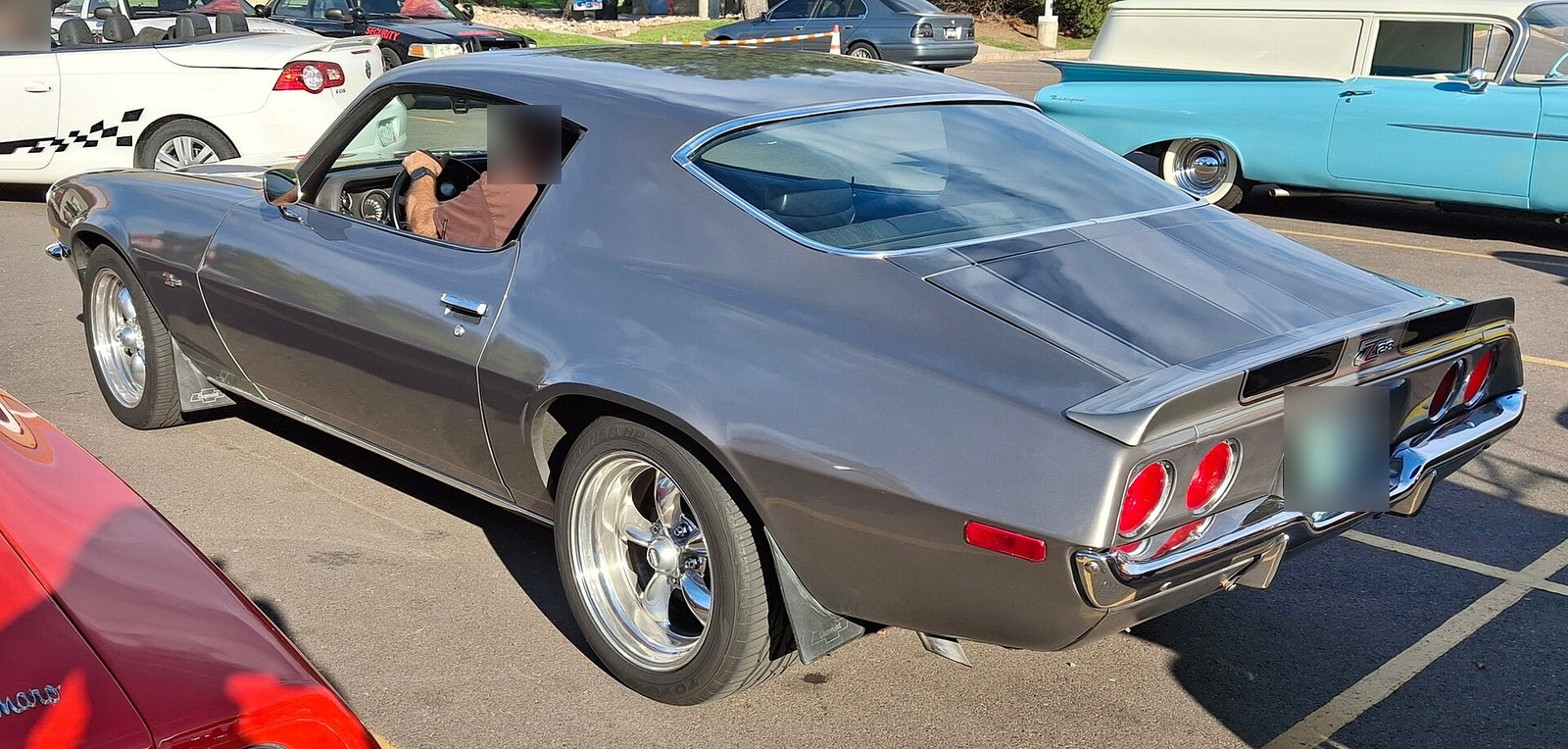
Original photographLicenseGrey 1970 Camaro Z28 coupe with deck stripes, rear spoiler and aftermarket wheels, rear three-quarter view with driver inside, at a car meet in a car park Photo: Xnatedawgx, CC BY-SA 4.0, via Wikimedia Commons; licence plates and faces blurred
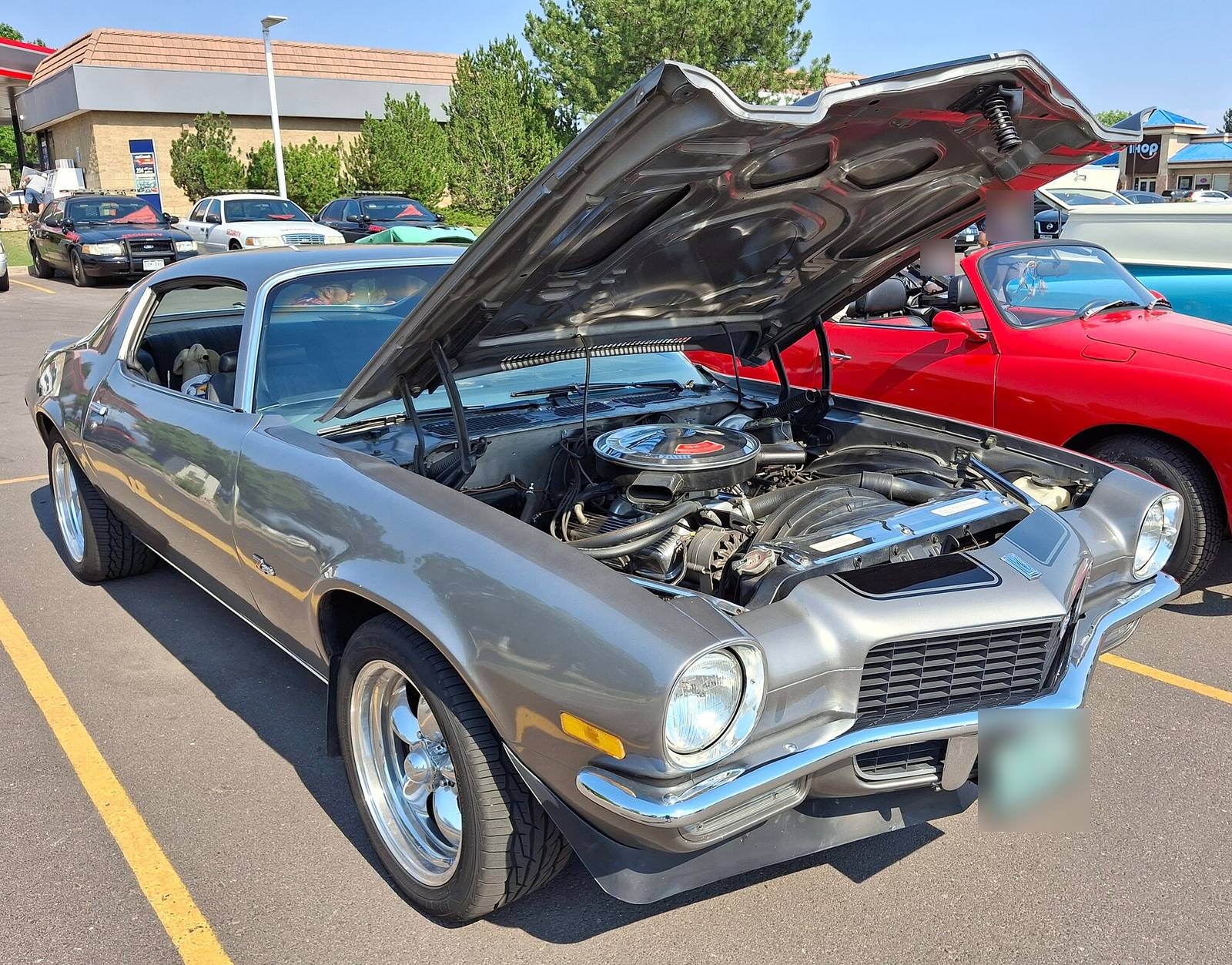
Original photographLicenseGrey 1970 Camaro Z28 coupe with hood open showing the engine and aftermarket wheels, front three-quarter view at a car meet in a car park Photo: Xnatedawgx, CC BY-SA 4.0, via Wikimedia Commons; licence plates and faces blurred
Original photographLicenseOrange 1970 Camaro Z28 coupe with RS split-bumper front, white hood stripes and aftermarket wheels, side profile with front visible, at an outdoor street car meet Photo: ZidaneHartono, CC BY-SA 4.0, via Wikimedia Commons; licence plates and faces blurred
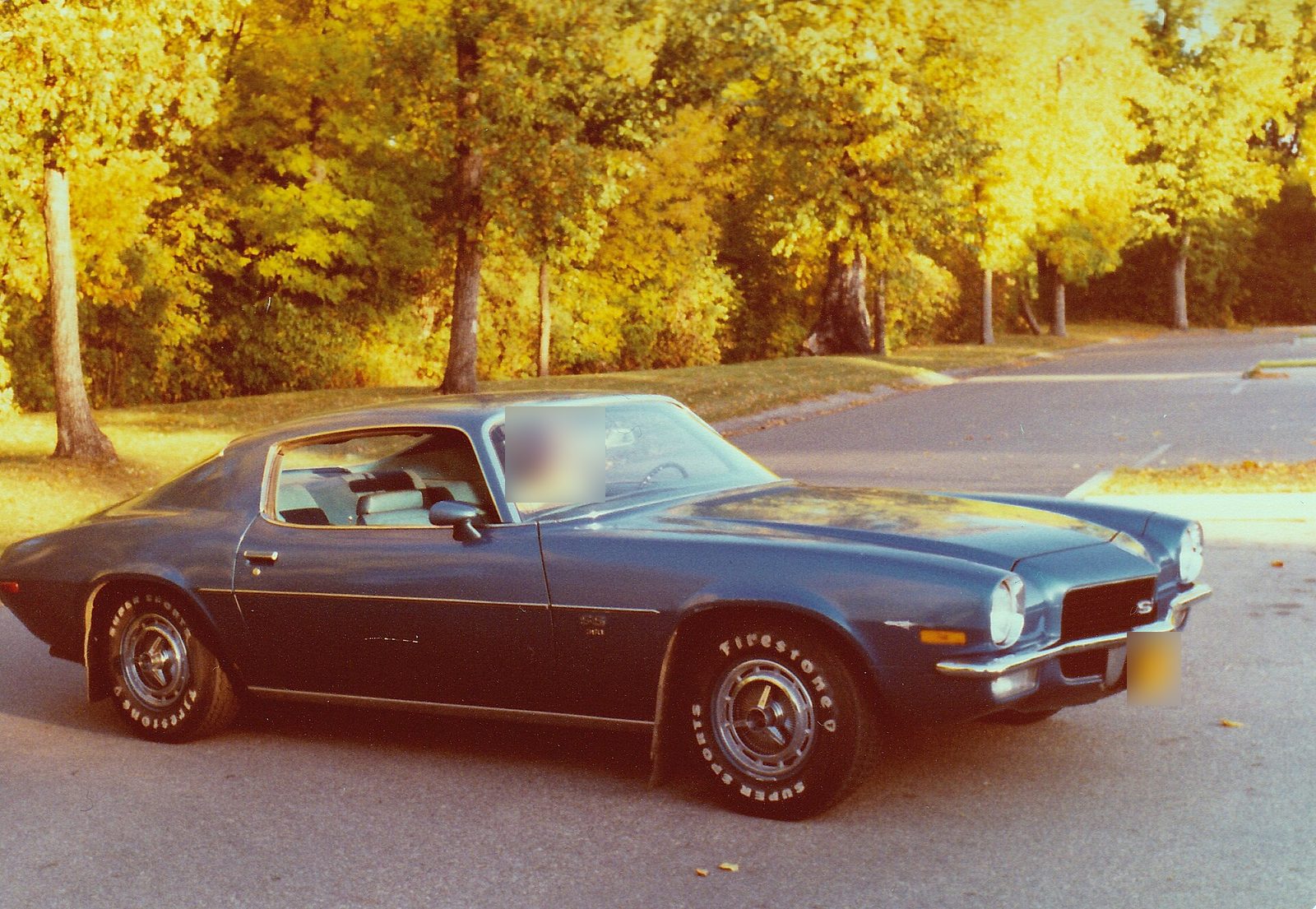
Original photographLicenseDark blue 1970 Camaro SS coupe with driver at the wheel, side profile toward front three-quarter, in a park parking lot with autumn trees Photo: NESR, CC BY-SA 2.0, via Wikimedia Commons; licence plates and faces blurred
Original photographLicenseRed 1970 Camaro Z/28 RS coupe with black hood stripes and vinyl roof, front three-quarter view, at an outdoor car show on grass Photo: GPS 56, CC BY 2.0, via Wikimedia Commons; licence plates blurred
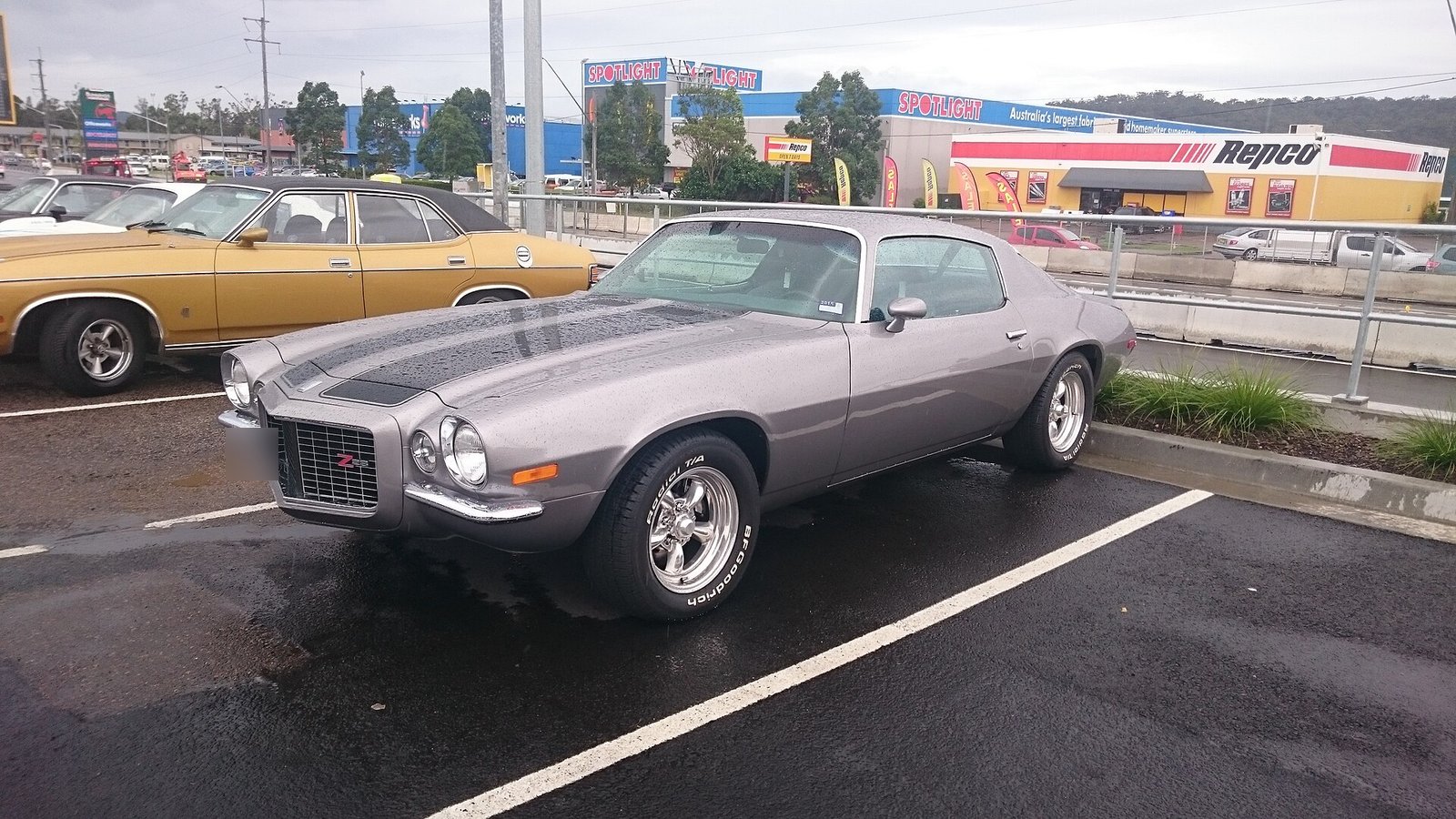
Original photographLicenseSilver-grey 1970 Camaro Z/28 RS coupe with black hood stripes, front three-quarter view, in a wet retail car park Photo: FotoSleuth, CC BY 2.0, via Wikimedia Commons; licence plates blurred
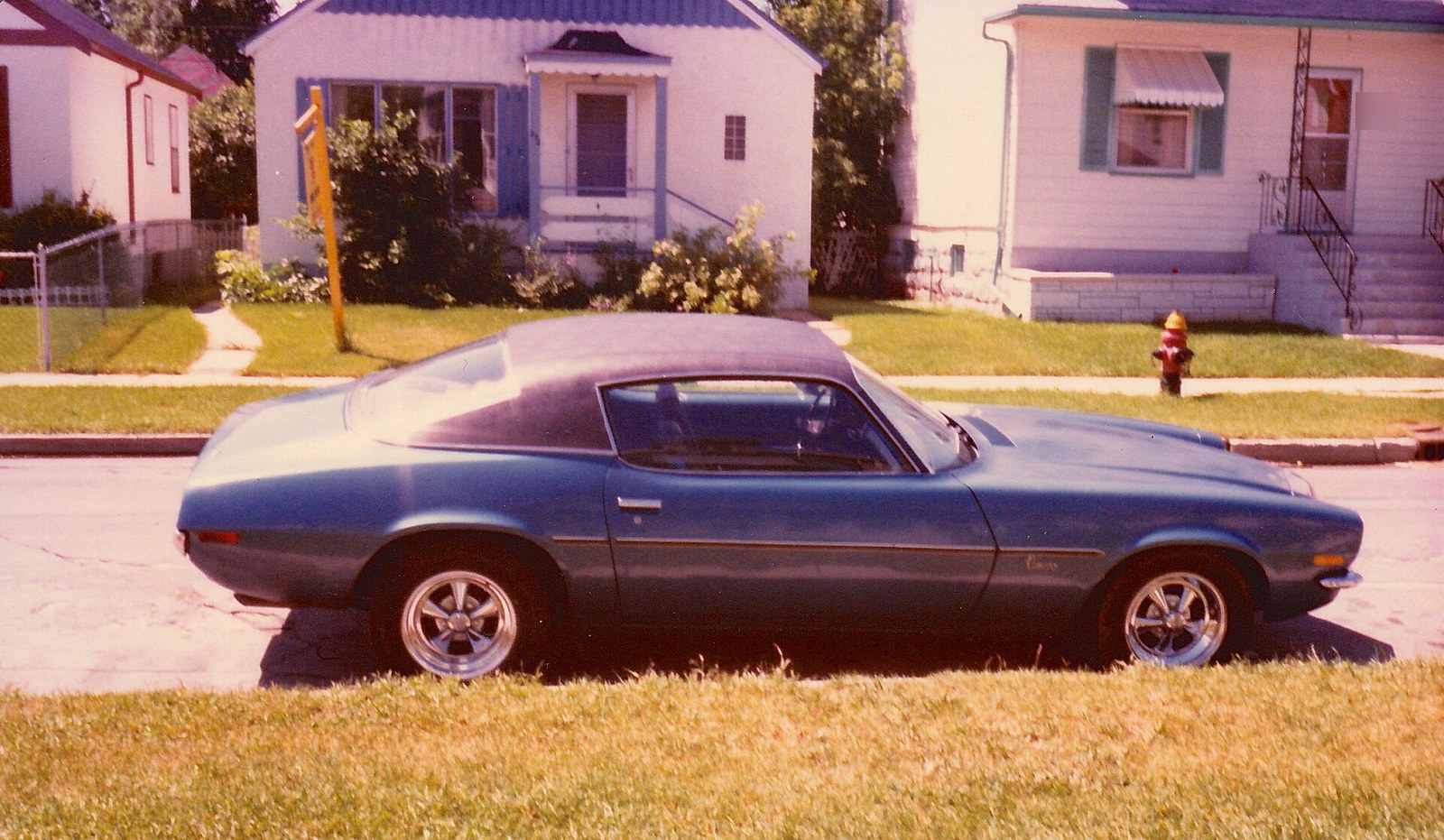
Original photographLicenseBlue 1970 Camaro coupe with vinyl roof, side profile, parked on a residential street in front of houses Photo: NESR, CC BY-SA 2.0, via Wikimedia Commons; street numbers blurred
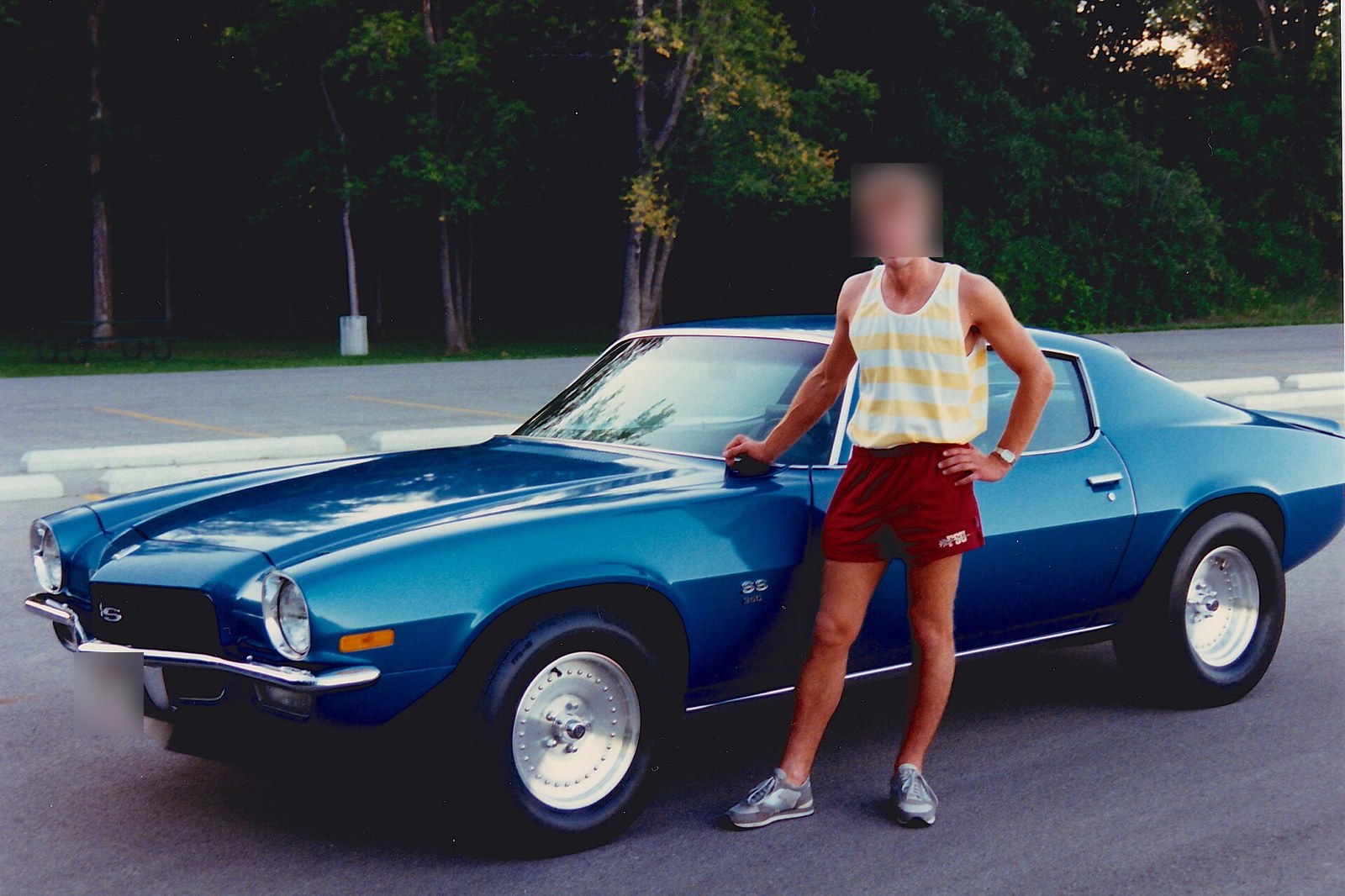
Original photographLicenseBlue 1970 Camaro SS 396 coupe with a man posing beside it, front three-quarter to side view, in a park parking lot Photo: NESR, CC BY-SA 2.0, via Wikimedia Commons; licence plates and faces blurred
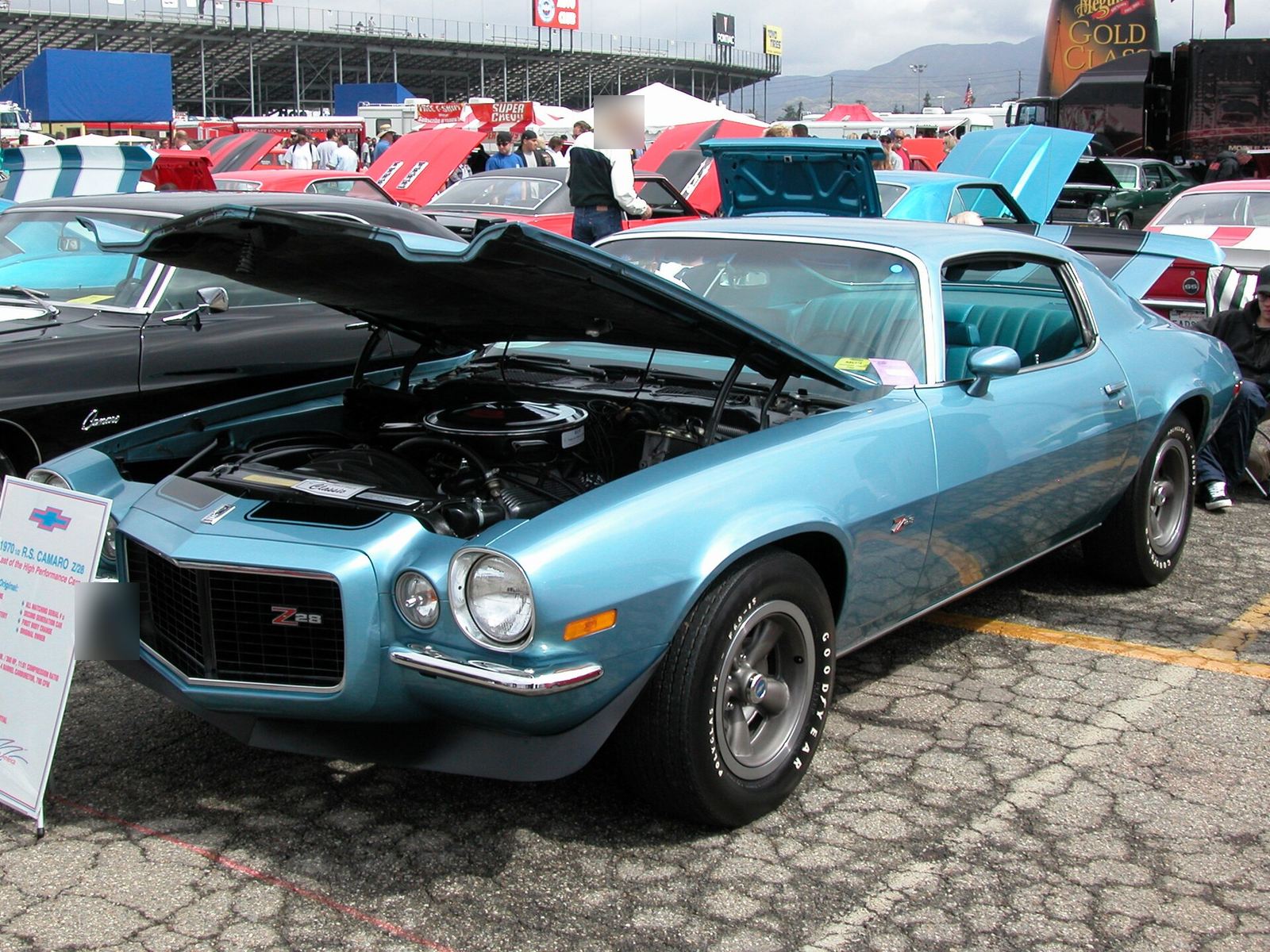
Original photographLicenseLight blue 1970 Camaro Z/28 RS coupe with hood open and black stripes, front three-quarter view, at a large outdoor car show Photo: Rich Niewiroski Jr., CC BY 2.5, via Wikimedia Commons; licence plates and faces blurred
Original photographLicense
Exterior colors
This table has 18 exterior colors for 1970, each with its paint code. They include Classic White, Cortez Silver and Shadow Gray.
Code
Color
Note
10
Classic White
14
Cortez Silver
17
Shadow Gray
25
Astro Blue
26
Mulsanne Blue
43
Citrus Green
45
Green Mist
48
Forest Green
51
Daytona Yellow
53
Camaro Gold
58
Autumn Gold
63
Desert Sand
65
Hugger Orange
67
Classic Copper
75
Cranberry Red
AA
White vinyl top
Upper-body code
BB
Black vinyl top
Upper-body code
GG
Dark Green vinyl top
Upper-body code
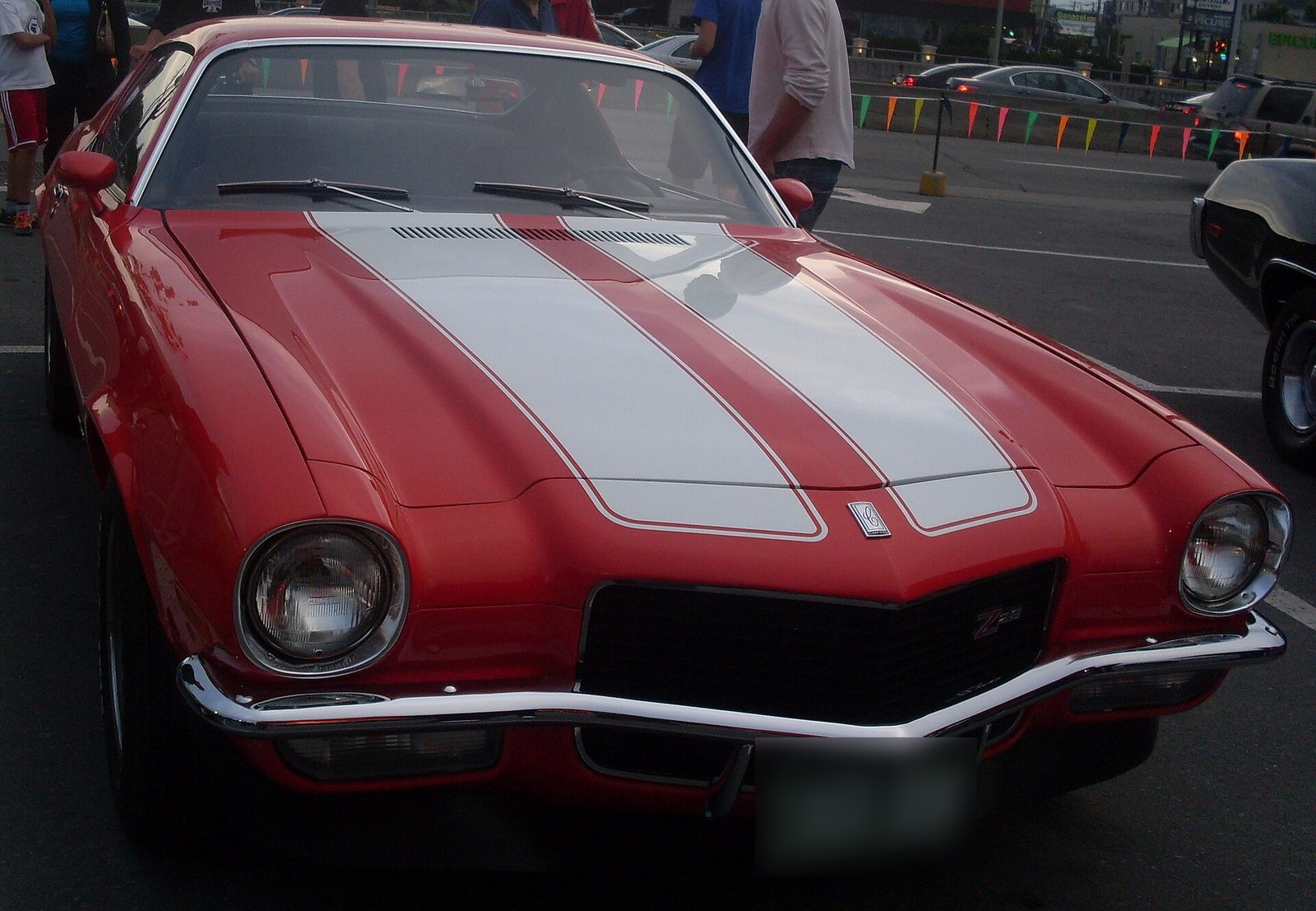
Red 1970 Camaro Z/28 coupe with white hood stripes, close front view, at an evening car meet in a parking lot Public domain (Bull-Doser), via Wikimedia Commons; licence plates blurred
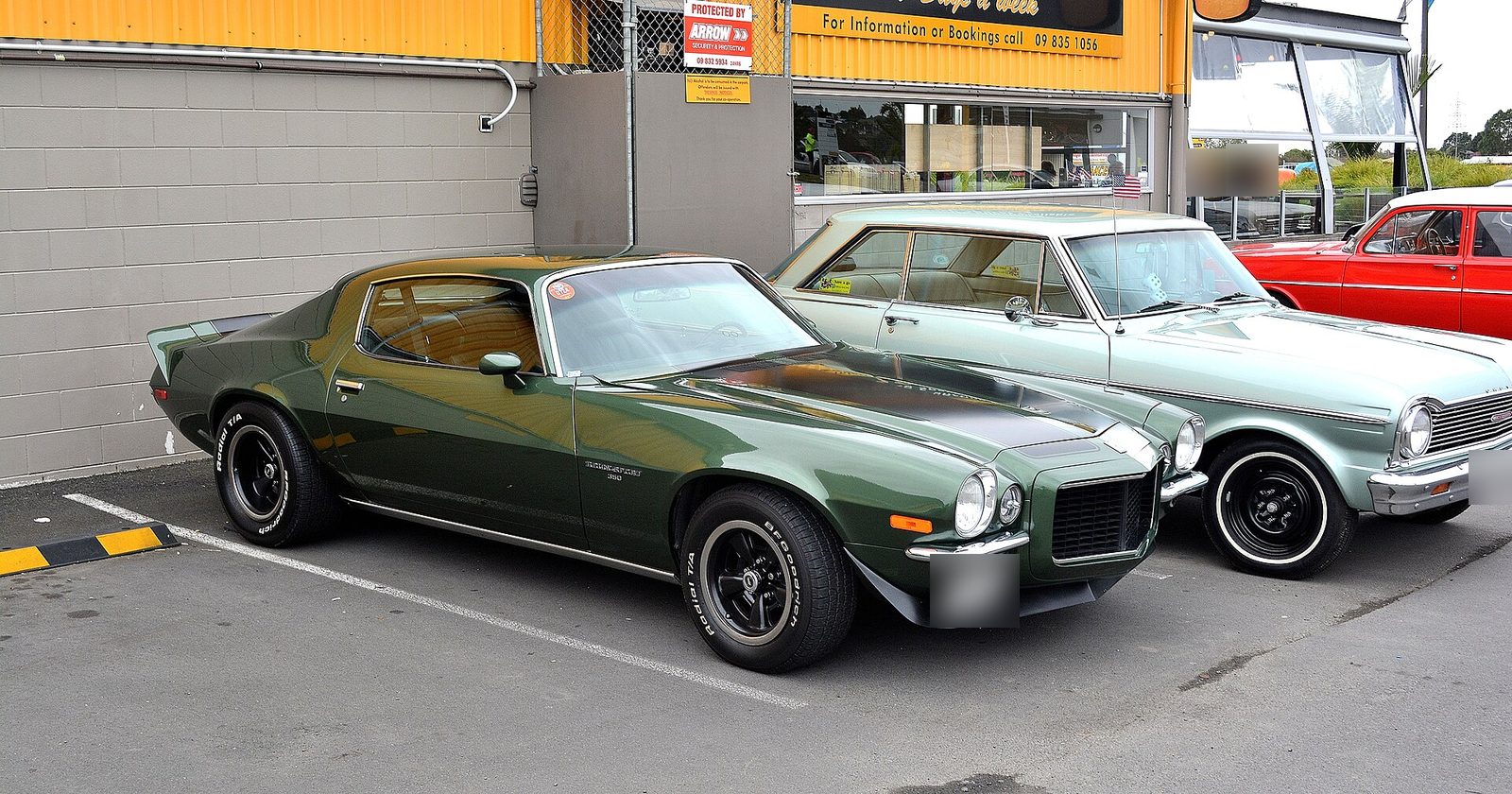
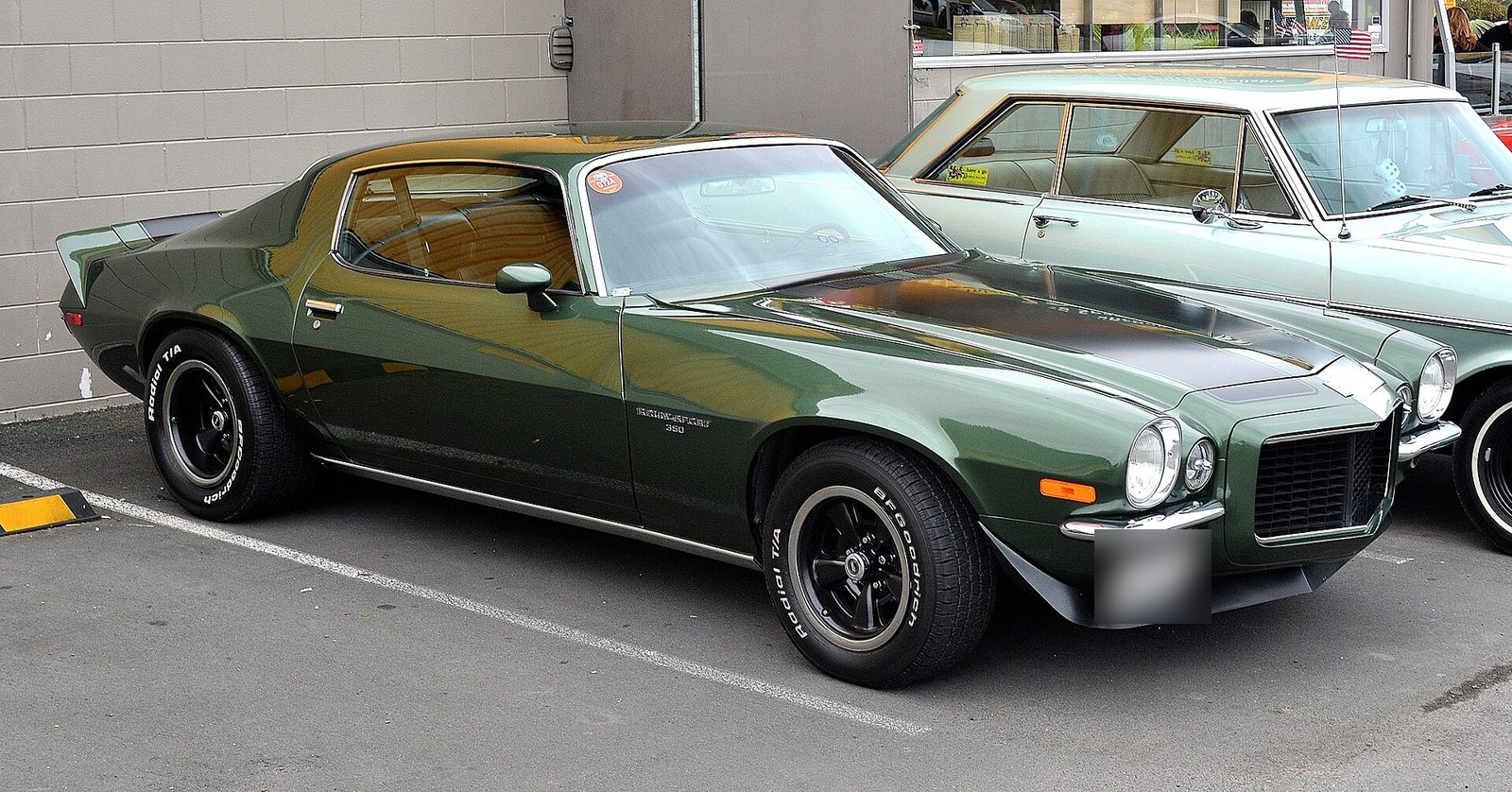
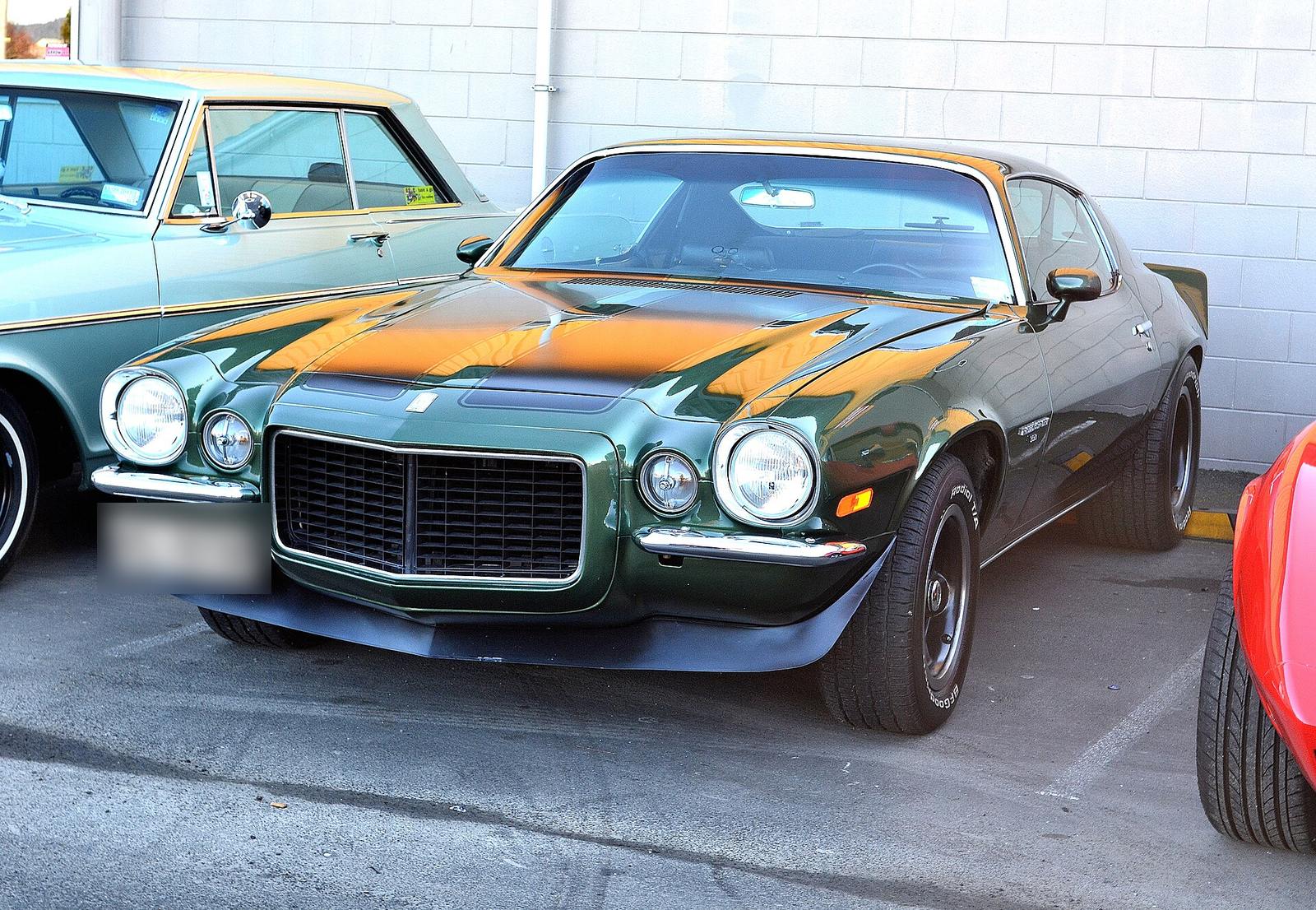
Original photographDark green 1970 Camaro Rally Sport coupe with RS split-bumper front, black hood stripes and 'Rally Sport 350' fender script, side profile in a street-side car park beside other classic cars Photo: GPS 56, CC BY 2.0, via Wikimedia Commons; licence plates and faces blurred
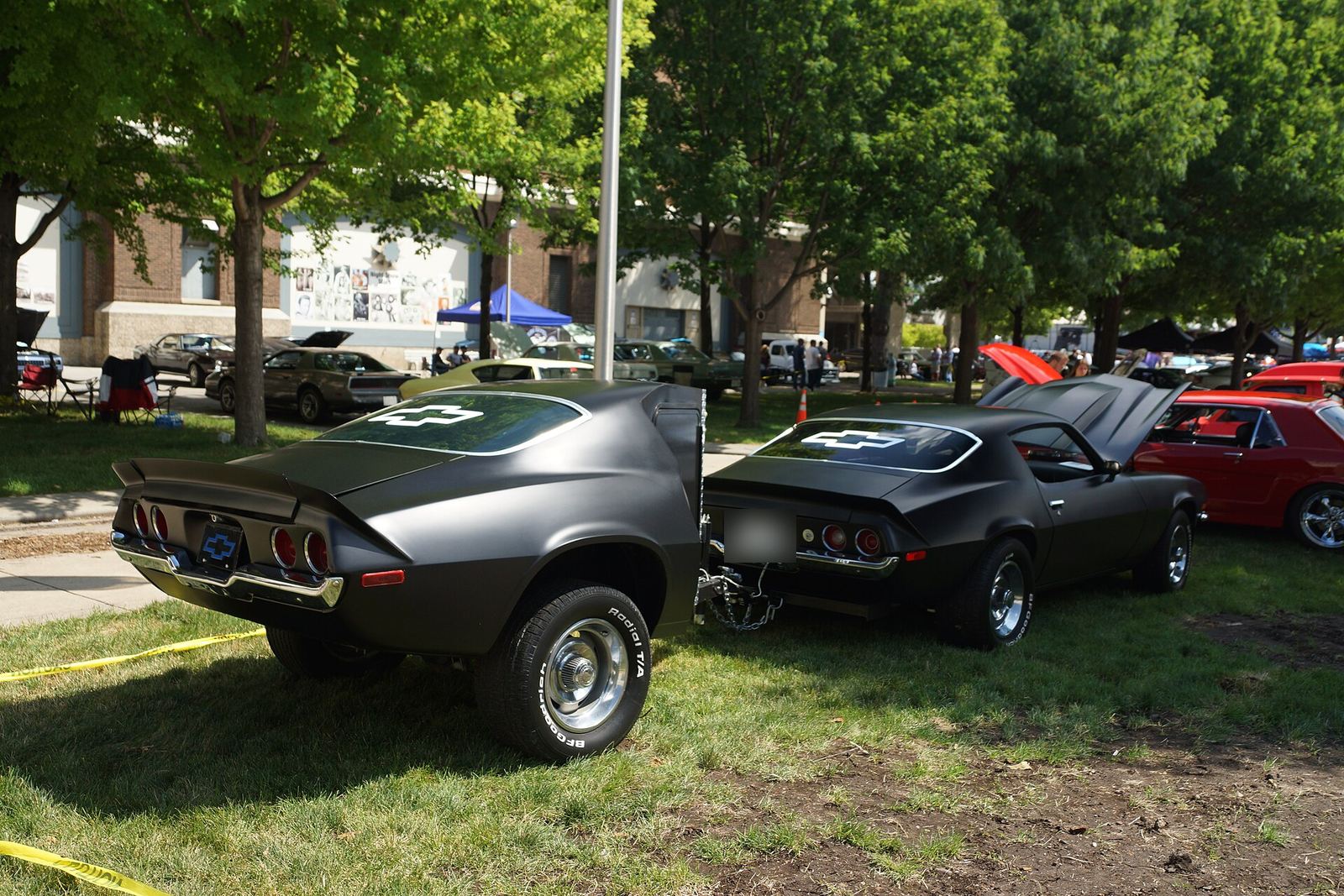
Original photographLicenseMatte black 1970 Camaro coupe with rear spoiler and bowtie window graphic, rear three-quarter view, with a second matte black Camaro behind it at an outdoor car show Photo: Greg Gjerdingen, CC BY 2.0, via Wikimedia Commons; licence plates blurred
Original photographLicenseDark green 1970 Camaro RS coupe with Rally Sport fender script, side view toward front three-quarter, parked outside a bar Photo: GPS 56, CC BY 2.0, via Wikimedia Commons; licence plates blurred
Original photographLicenseYellow 1970 Camaro Z28 coupe with RS split-bumper front, vinyl roof and Z28 side stripe, front three-quarter view on grass at an outdoor classic car event Photo: Calreyn88, CC BY-SA 4.0, via Wikimedia Commons; licence plates blurred
Original photographLicense
Interior trim
This table has 14 interior trims for 1970, each with its trim code.
The February 1970 Chevrolet chart, printed Body p. 3 (GM kit PDF p. 17), independently verifies all fourteen retained codes: five Standard Vinyl, five RPO Z87 Knit Vinyl and four Z87 cloth choices. Pattern Cloth 713 is Black/White, while the footnote calls 725 all Black; 714/720 appear in Bright Blue/Dark Green columns. Existing shorter Blue/Green names and the Black/color pattern descriptions from the separate reference are retained without silently conflating source wording. Sandalwood and Saddle have no Pattern Cloth cells. The February 1970 equipment page, printed General p. 7 (PDF p. 7), keeps Z23 Special Interior Group separate from Z87 Custom Interior and describes a rear seat with two cushions and one full-width backrest; it does not describe a split-folding backrest. The appended trim-plate reference, printed p. 54 (PDF p. 137), is separately identified because its author/date are not established by the inspected pages. Archive inclusion alone does not make that reference factory-authored. No complete paint/roof/material cross-product, later revision, VIN crosswalk or individual-car originality is inferred.
Code
Trim
Note
710
Sandalwood standard vinyl
The February 1970 factory chart lists this in the Standard Vinyl row; the Z87 Knit Vinyl and Pattern Cloth choices remain separate.
711
Black standard vinyl
The February 1970 factory chart lists this in the Standard Vinyl row; the Z87 Knit Vinyl and Pattern Cloth choices remain separate.
712
Black custom vinyl
The February 1970 factory chart lists this under RPO Z87 Custom Interior as Knit Vinyl, separately from standard Vinyl and Pattern Cloth.
713
Black/White pattern custom cloth
The February 1970 factory chart footnote identifies this Pattern Cloth as Black/White, distinct from all-Black cloth code 725.
714
Black/Blue pattern custom cloth
The February 1970 factory chart lists Pattern Cloth in the Bright Blue color column. The retained Black/color pattern wording also appears in the separate undated reference chapter; its authorship is not established here.
715
Blue standard vinyl
The February 1970 factory chart lists this in the Standard Vinyl row; the Z87 Knit Vinyl and Pattern Cloth choices remain separate.
716
Blue custom vinyl
The February 1970 factory chart lists this under RPO Z87 Custom Interior as Knit Vinyl, separately from standard Vinyl and Pattern Cloth.
720
Black/Green pattern custom cloth
The February 1970 factory chart lists Pattern Cloth in the Dark Green color column. The retained Black/color pattern wording also appears in the separate undated reference chapter; its authorship is not established here.
723
Green standard vinyl
The February 1970 factory chart lists this in the Standard Vinyl row; the Z87 Knit Vinyl and Pattern Cloth choices remain separate.
724
Green custom vinyl
The February 1970 factory chart lists this under RPO Z87 Custom Interior as Knit Vinyl, separately from standard Vinyl and Pattern Cloth.
725
Black custom cloth
The February 1970 factory chart footnote identifies this cloth choice as all Black, distinct from Black/White Pattern Cloth 713.
726
Saddle standard vinyl
The February 1970 factory chart lists this in the Standard Vinyl row; the Z87 Knit Vinyl and Pattern Cloth choices remain separate.
727
Saddle custom vinyl
The February 1970 factory chart lists this under RPO Z87 Custom Interior as Knit Vinyl, separately from standard Vinyl and Pattern Cloth.
730
Sandalwood custom vinyl
The February 1970 factory chart lists this under RPO Z87 Custom Interior as Knit Vinyl, separately from standard Vinyl and Pattern Cloth.
Specifications
This table gives six specifications for 1970, among them wheelbase (108.0 in) and overall length (188.0 in).
Item
Value
Wheelbase
108.0 in
Overall length
188.0 in
Overall width
74.4 in
Overall height
50.5 in
Track, front / rear
61.3 / 60.0 in
Fuel tank
18 gal
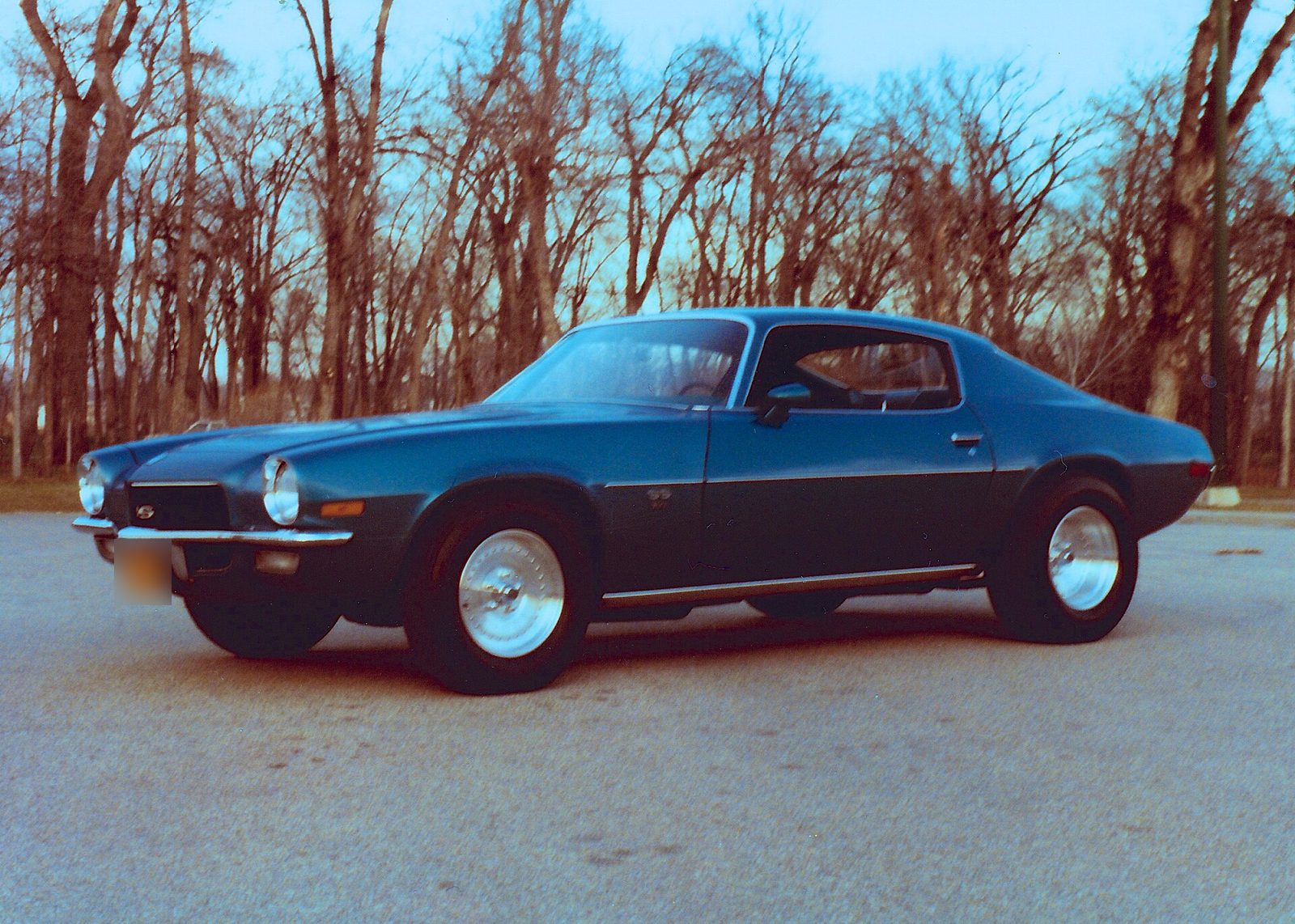
Blue 1970 Camaro SS coupe, low front three-quarter view showing the whole car, in an empty parking lot with bare trees Photo: NESR, CC BY-SA 2.0, via Wikimedia Commons; licence plates blurred
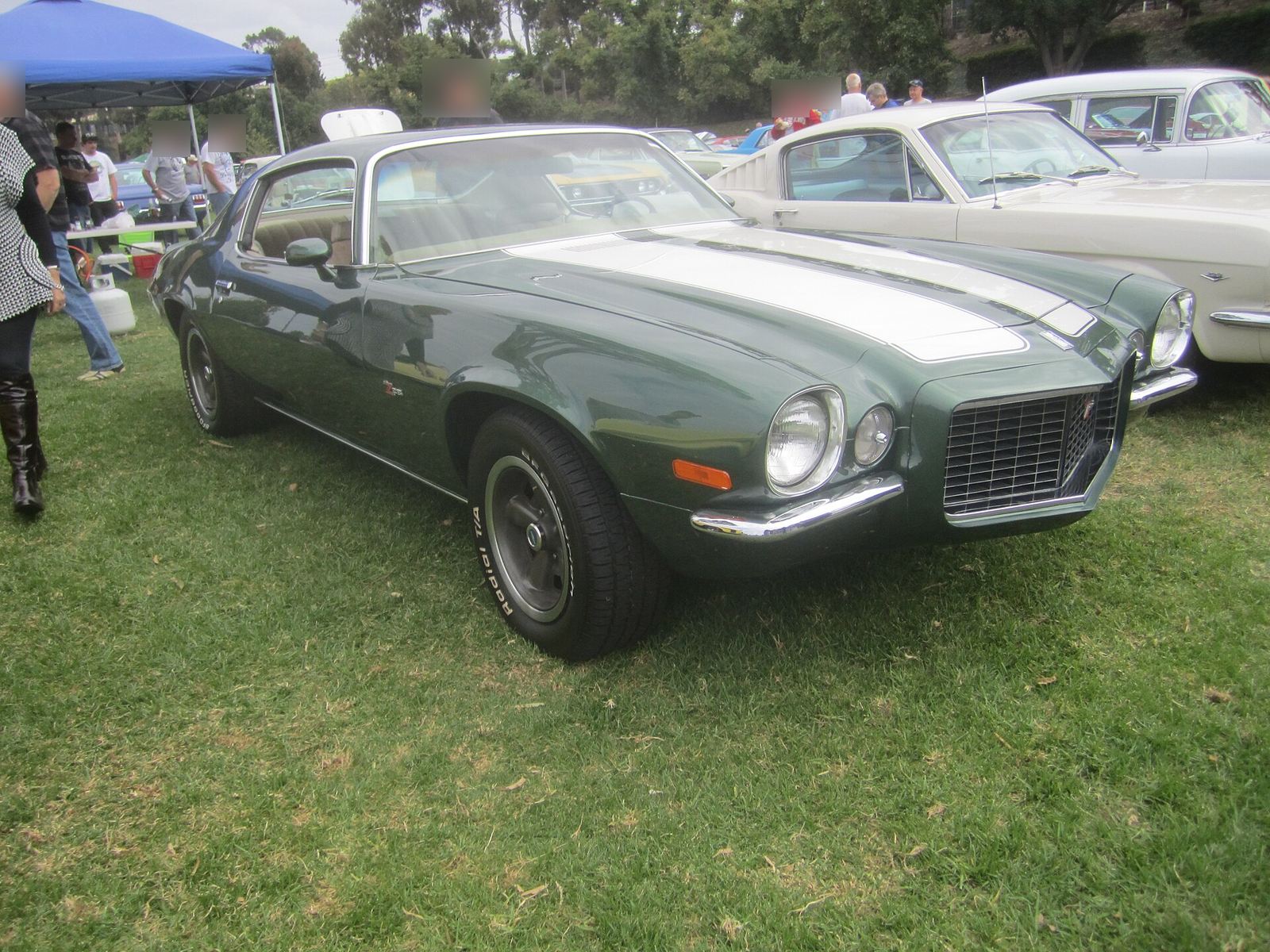
Original photographLicenseDark green 1970 Camaro Z28 coupe with RS split-bumper front and white hood stripes, front three-quarter view on grass at an outdoor car show Photo: Sicnag, CC BY 2.0, via Wikimedia Commons; faces blurred
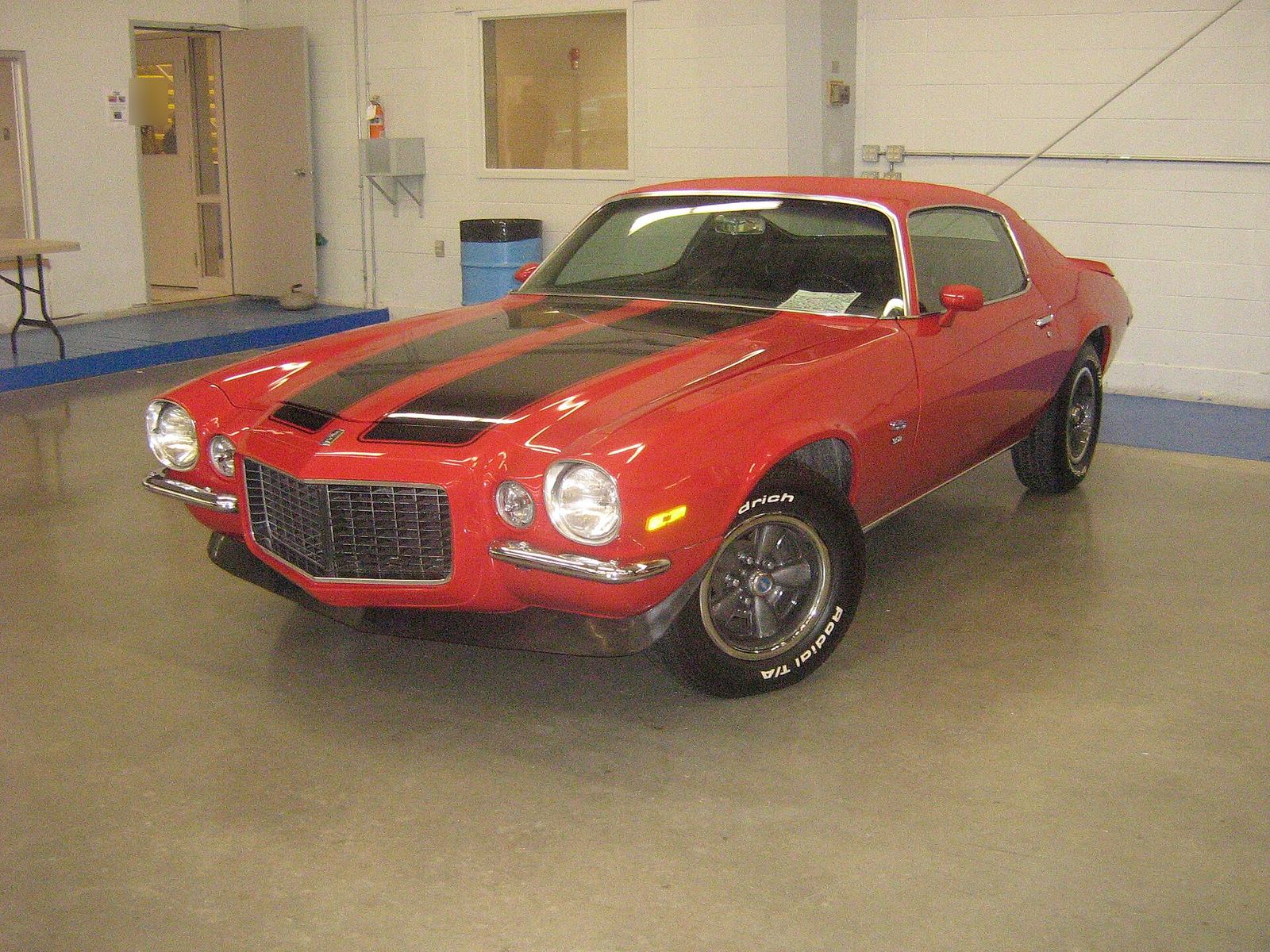
Original photographLicenseRed 1970 Camaro SS coupe with RS split-bumper front and black hood stripes, front three-quarter view indoors in a hall Photo: dave_7, CC BY-SA 2.0, via Wikimedia Commons; faces blurred
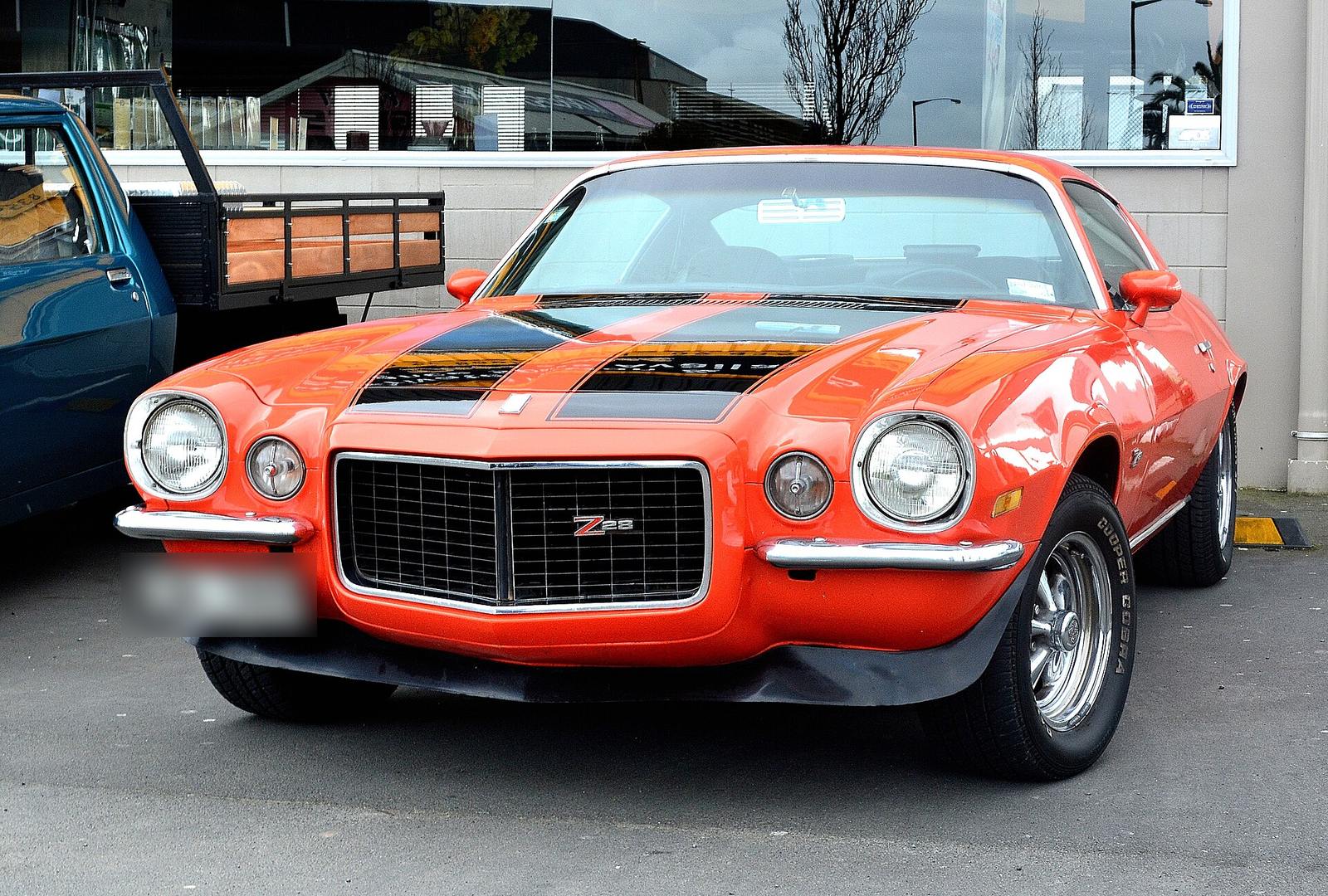
Original photographLicenseOrange 1970 Camaro Z/28 RS coupe with black hood stripes, front view, parked outside a shop Photo: GPS 56, CC BY 2.0, via Wikimedia Commons; licence plates blurred
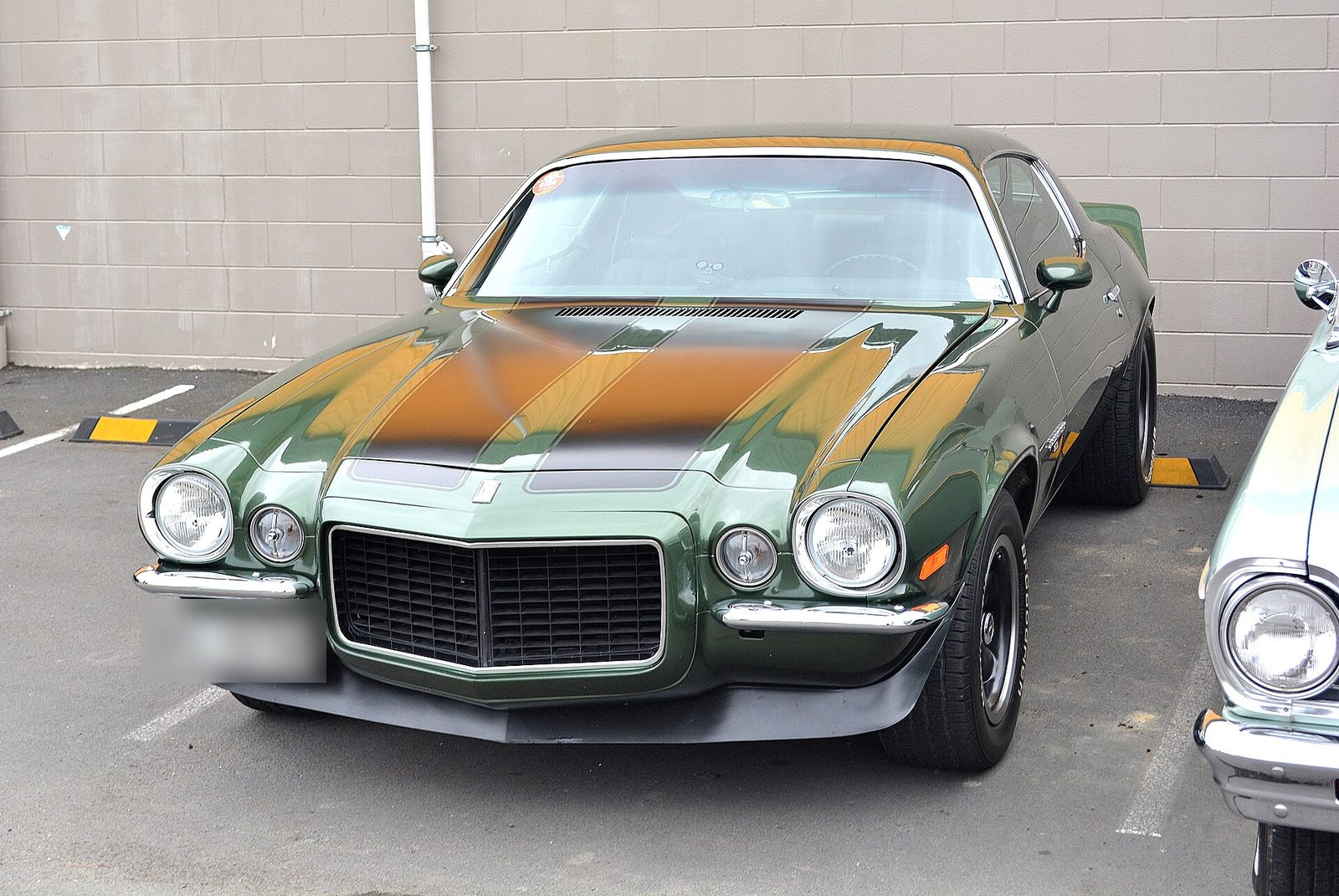
Original photographLicenseDark green 1970 Camaro coupe with RS split-bumper front and black hood stripes, front view in a car park Photo: GPS 56, CC BY 2.0, via Wikimedia Commons; licence plates blurred
Original photographLicense
Identification
What to check on a 1970 Camaro: VIN, engine pad, year cues and RS.
Item
What to look for
Note
VIN
12 3/4 87 0 N/L 500001-up
1 Chevrolet, 2 Camaro, 3 six or 4 V8, body 87, year digit, plant
Engine pad
Plant, date and suffix code stamped on the block pad
Year cues
Front fender emblem reads “Camaro by Chevrolet”
1970 only
RS
Split front bumper with body-color Endura surround and bumperettes
1970–73 only
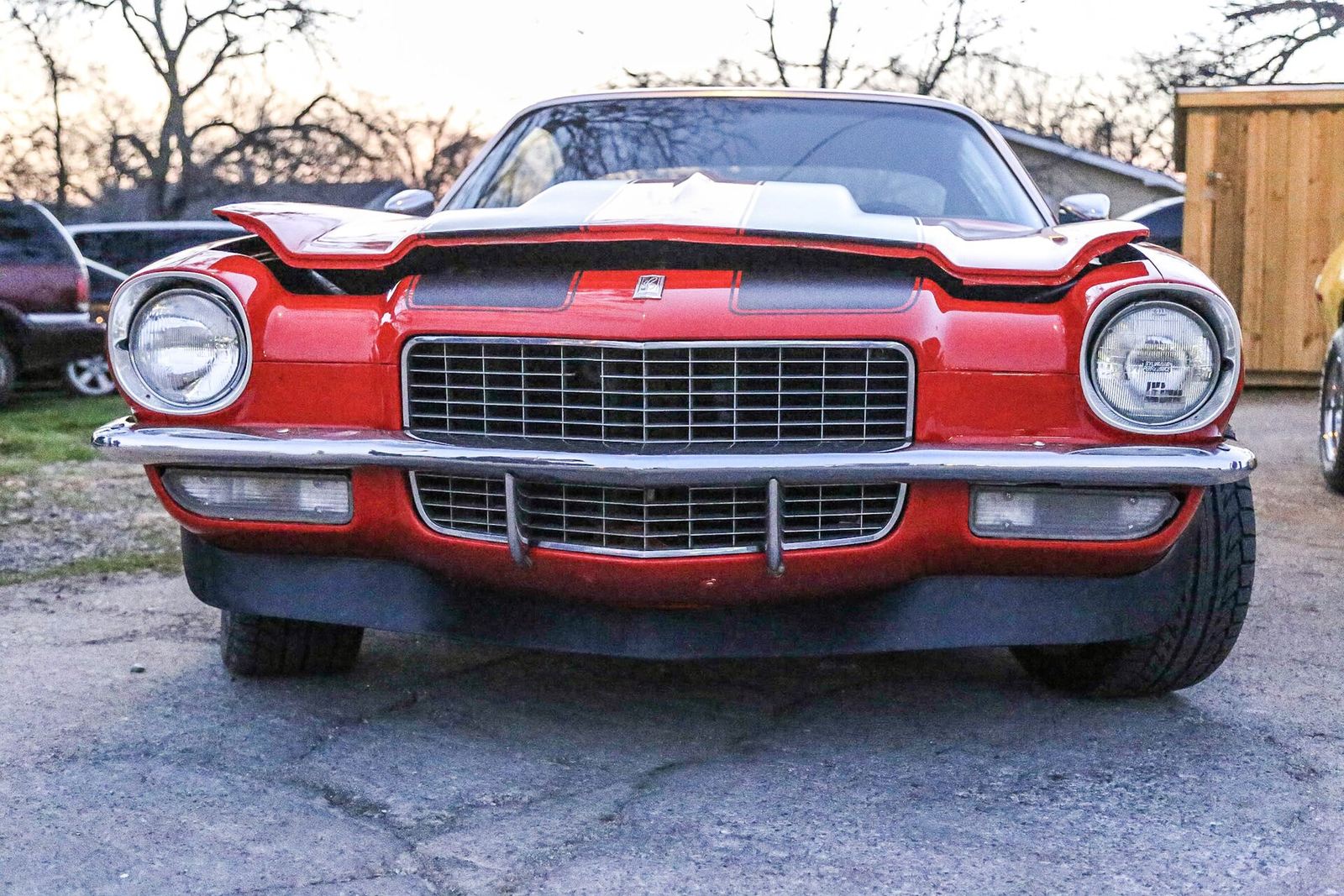
Red 1970 Camaro coupe front end with chrome bumper and grille, close front view, parked on a gravel lot at dusk Photo: MerlinS.69, CC BY-SA 4.0, via Wikimedia Commons
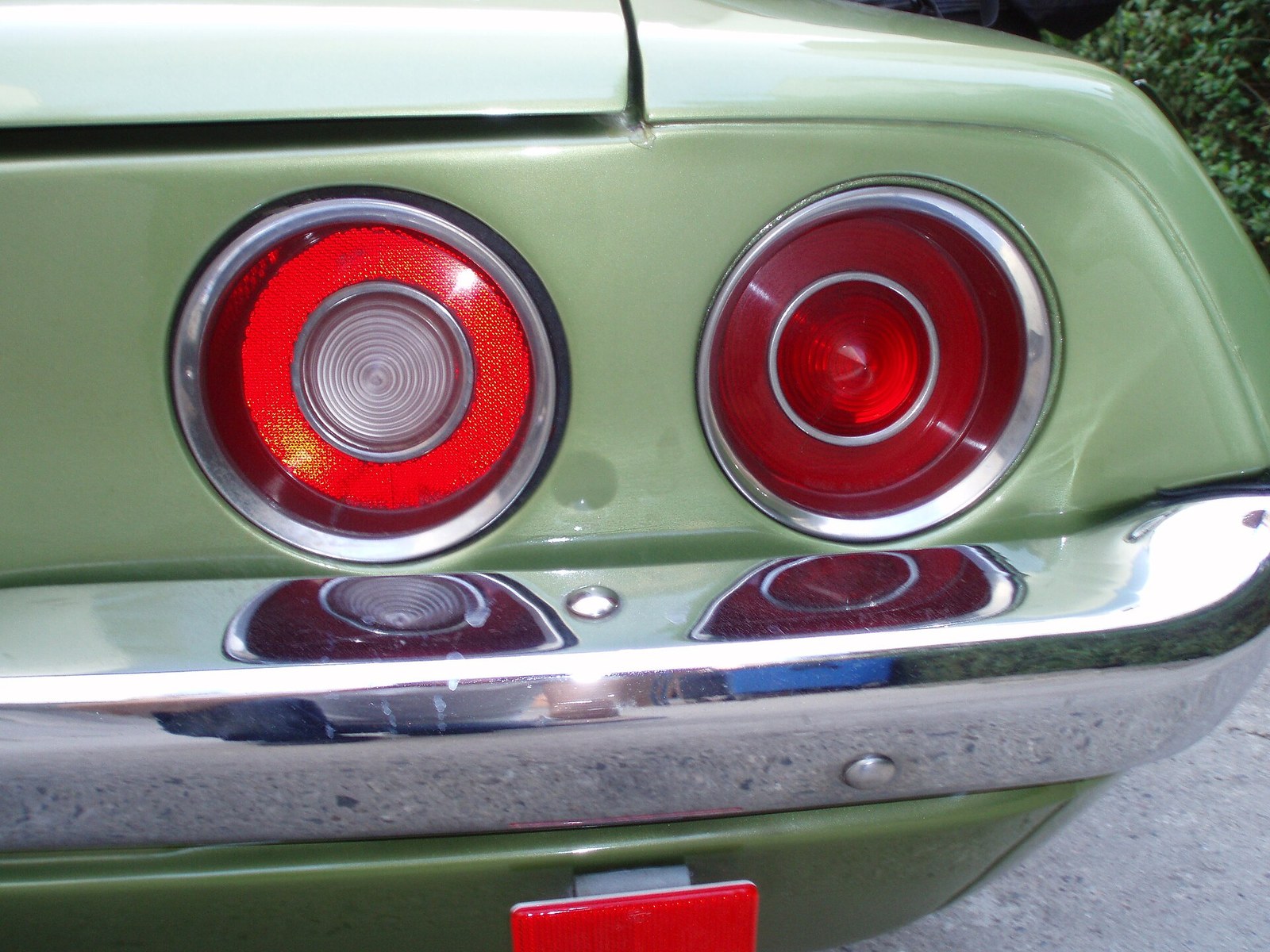
Original photographLicenseGreen 1970 Camaro rear taillamps and chrome rear bumper, close detail view Photo: tru.st, CC BY-SA 2.0, via Wikimedia Commons
Original photographLicense
This body carried the Camaro through the whole of the 1970s, from the high-compression LT-1 to catalytic converters and computer engine controls.
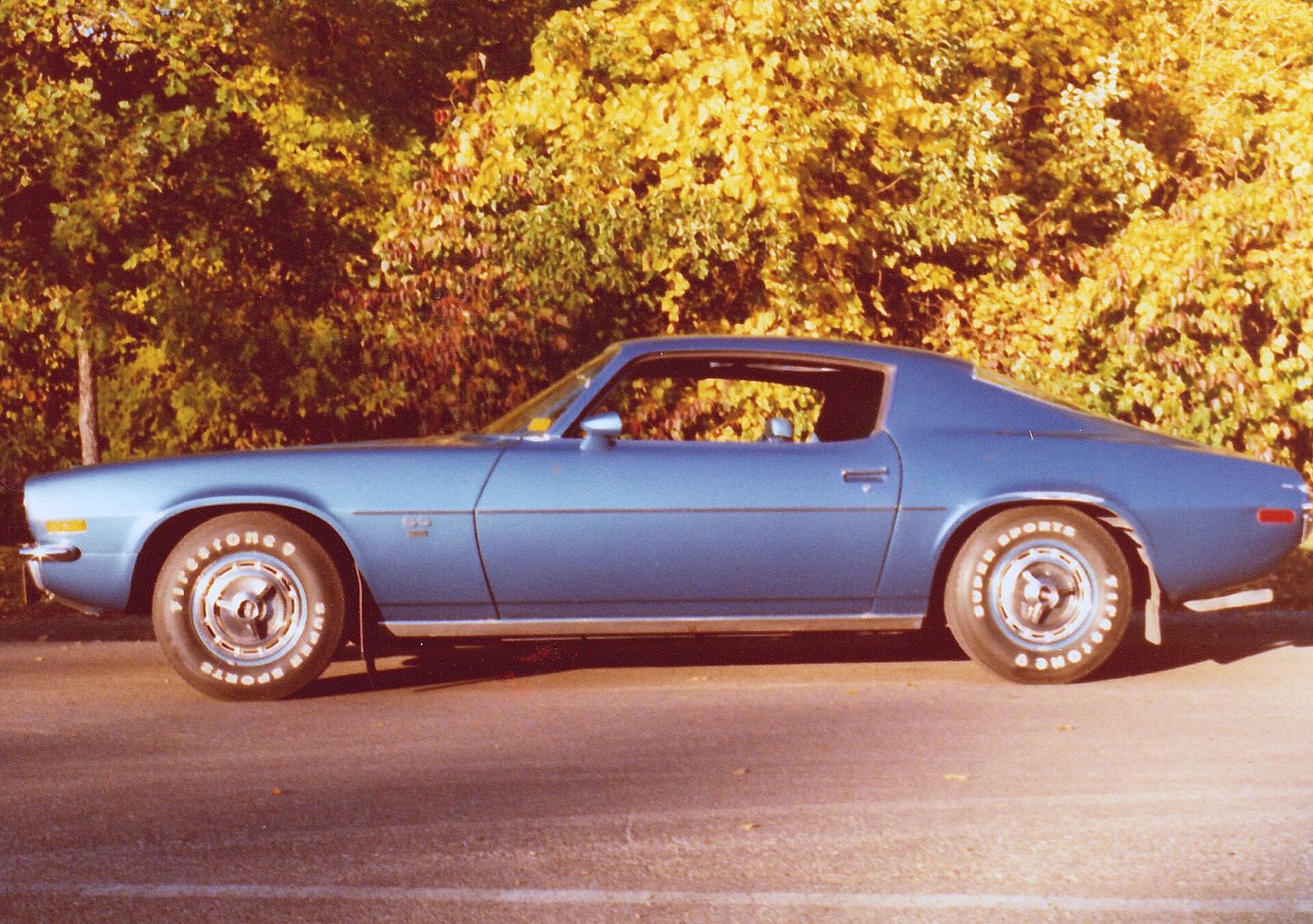
Light blue 1970 Camaro SS coupe, side profile, parked on a road in front of autumn foliage Photo: NESR, CC BY-SA 2.0, via Wikimedia Commons
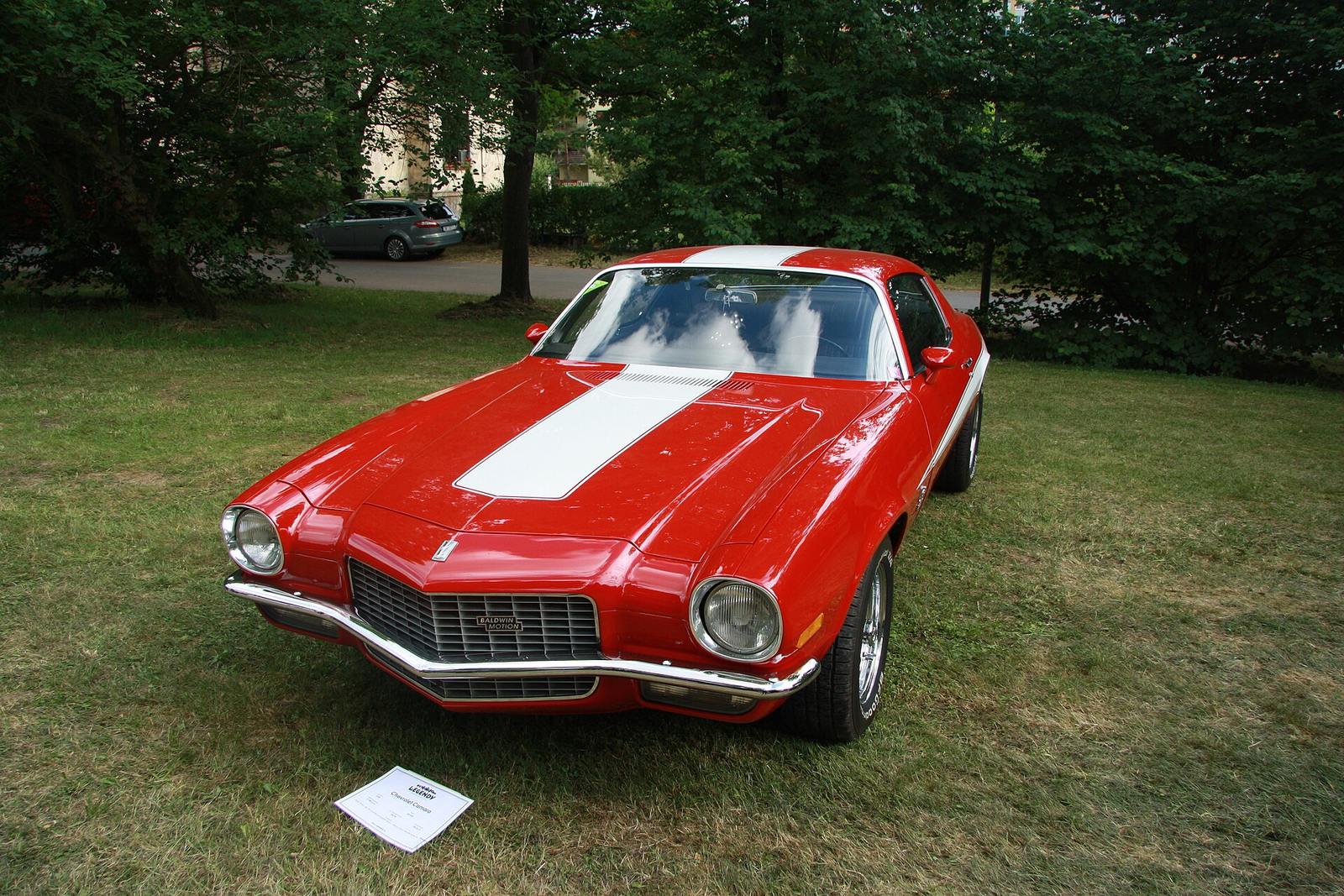
Original photographLicenseRed 1970 Camaro coupe with white hood stripe and Baldwin Motion grille badge, front three-quarter view on grass at an outdoor car show Photo: Jiří Sedláček, CC BY-SA 4.0, via Wikimedia Commons
Original photographLicenseDark green 1970 Camaro RS coupe, front three-quarter view, parked beside other classics outside a bar Photo: GPS 56, CC BY 2.0, via Wikimedia Commons; licence plates blurred
Original photographLicense
The Real Reason For The Delay
Popular belief blames a labor strike. The documented cause was tooling: Fisher Body ran into serious trouble with the complex new rear quarter-panel dies, which had to be modified and then completely redesigned and rebuilt. That pushed the launch from the normal fall window to February 1970. Chevrolet's own model-year designation stayed simply "1970"; "1970½" is enthusiast shorthand, not a factory term.
Design And Engineering
The new car was longer, lower and wider than the first generation, and contemporary reviewers likened its styling to early-1960s Ferrari and Maserati GT cars. GM engineers of the era called it more of "a driver's car" than the first. The Rally Sport (RPO Z22) package was not dropped, whatever forum lore says. It continued with a redesigned split-bumper Endura nose unique to the early years of this generation.
1970–1973 Camaro SS Photo: Rutger van der Maar, CC BY 2.0, via Wikimedia Commons; plates and faces blurred
Original photographLicense
Racing Connection
A 1970 change in the Trans-Am rules let Chevrolet move the Z28's homologation engine from the 302 DZ to the Corvette-sourced LT-1 350. The first generation explains why 302 was chosen in the first place, and the racing history follows the Trans-Am program after Penske's departure.
A new body, inside and out
Chevrolet's catalog listed what was new beyond the shape. Sixteen paint colors were offered, fourteen of them new. Full-foam seats replaced seat springs, and the rear seat was styled as two buckets with separate cushions under a one-piece backrest. With a radio, the antenna was hidden in the windshield glass. The front seat belts combined lap and shoulder straps in a single buckle, with a reminder light and buzzer. Front disc brakes were standard. The body had steel side-guard beams in the doors, a double-panel roof with a full inner panel, and a windshield and rear window bonded flush to the body. The doors used full side glass with no vent windows.
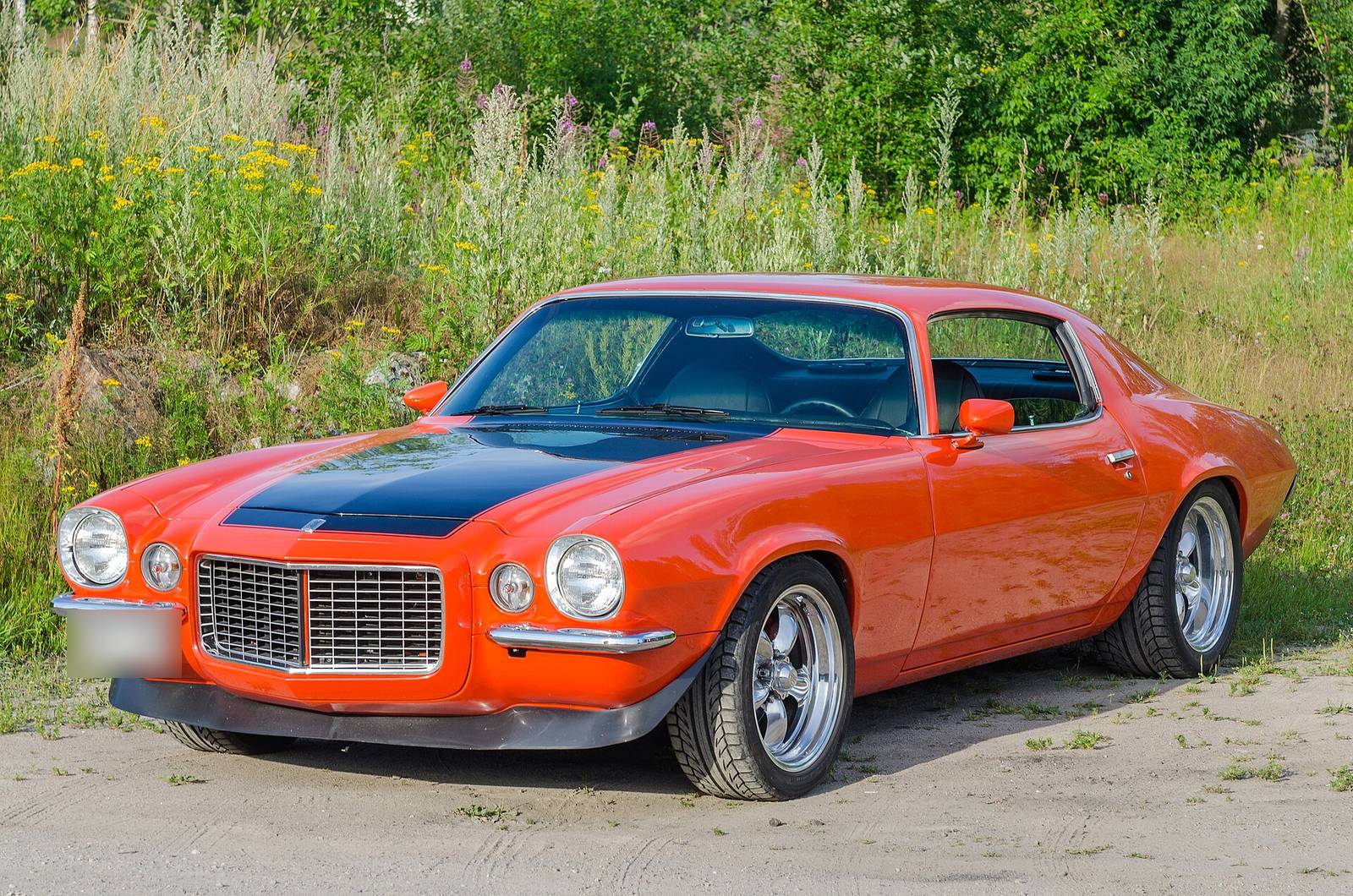
Orange 1970 Camaro RS coupe with black hood stripe, front three-quarter view, parked beside a wildflower meadow Photo: Arild Vågen, CC BY-SA 4.0, via Wikimedia Commons; licence plates blurred
Original photographLicense
Chevrolet designer Ken Parkinson, looking back in 2015, called the second-generation car "a radical departure from the first-gen." For the first time the Camaro had its own dedicated architecture, "which gave the design team the freedom to create a pure expression" of American muscle shaped by European grand touring cars. He pointed to the strong crease along the flanks, the body tucking in below it to expose the tires, and the long distance from the dash to the front axle. He also singled out the Rally Sport's split-bumper nose, which he called "arguably one of the greatest fronts on any car."