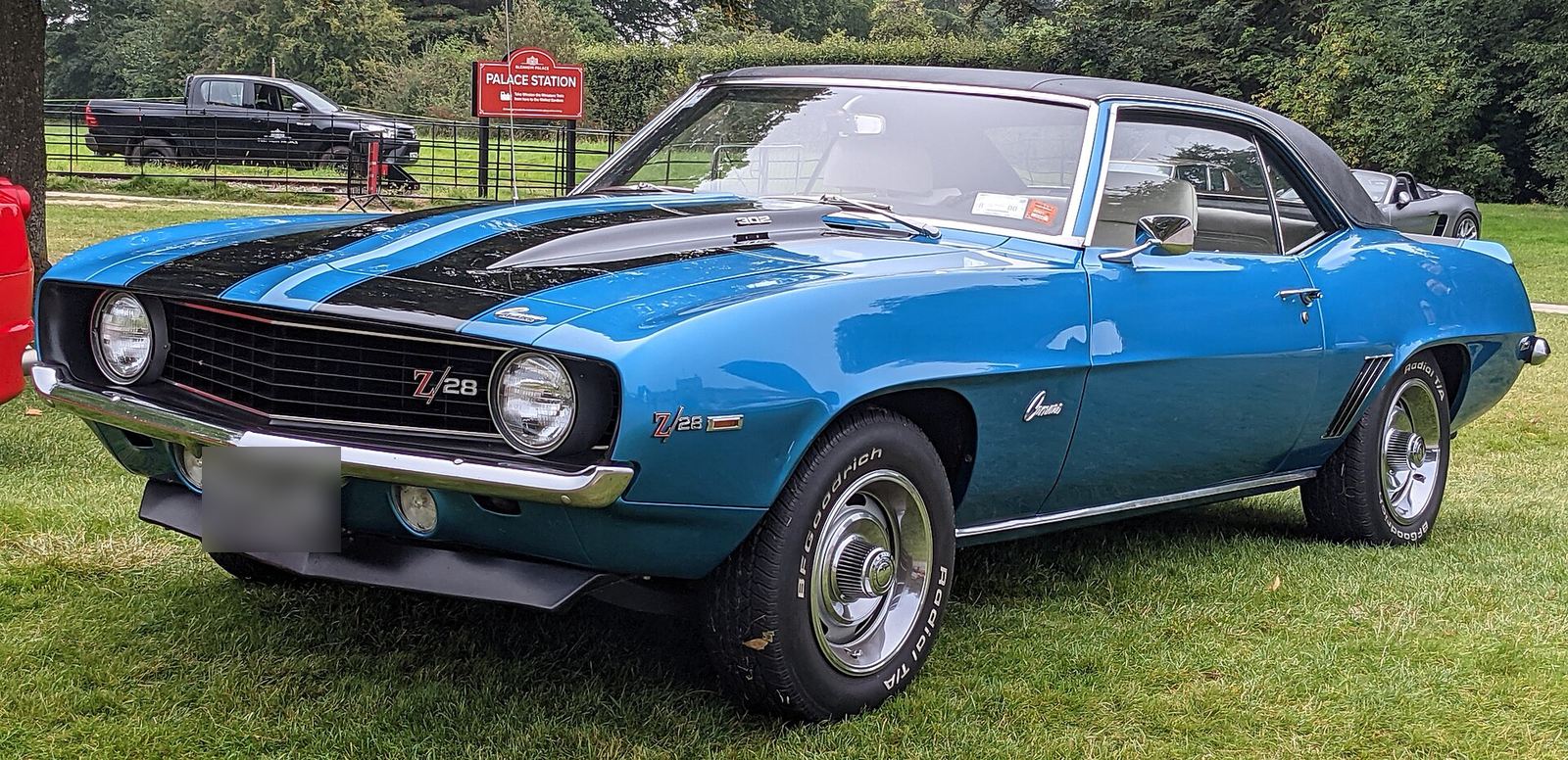
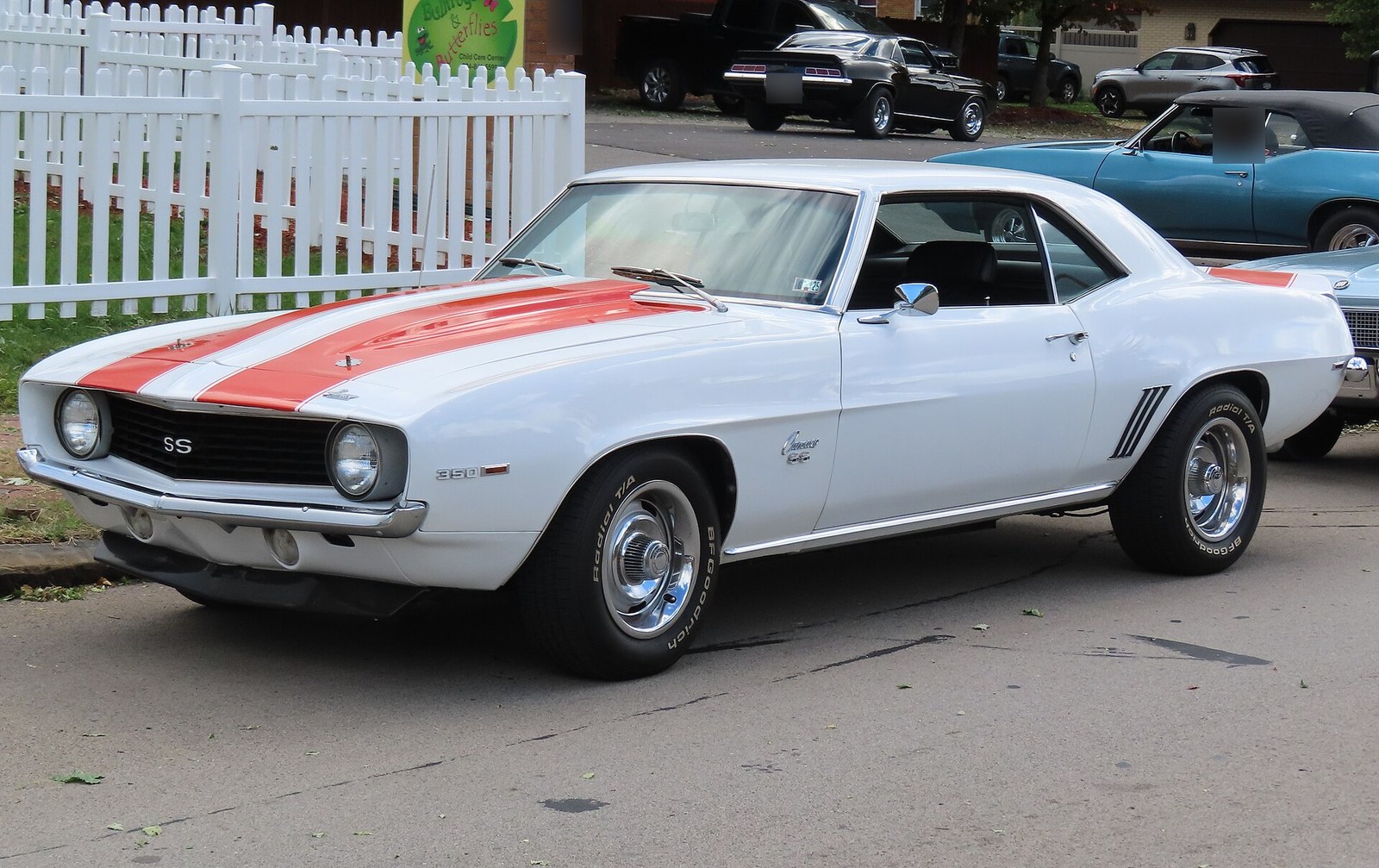
1969 Camaro SS 396
Photo: Sicnag, CC BY 2.0, via Wikimedia Commons
1969 is where the first generation peaked. It had all-new sheet metal on the original platform, the most extreme factory engines the Camaro ever carried (the all-aluminum COPO 9560 ZL1 and the iron-block L72 COPO 9561) and a second Indianapolis 500 pace-car assignment, and it was the last year before a complete redesign.
Production reached 243,095, helped by a long model year. The delayed 1970 car didn't arrive until February 1970, so 1969s were built well into the autumn. Rally Sport (37,773) and SS (33,980) continued.
The 1969 Z/28 total is the most stubborn production dispute in first-generation history. GM's own production table lists 19,014 (its 1969 row includes the 1970 carry-over of the 1969 design), while the Camaro Research Group's Z28 report gives 20,302 for a model year that ran into November 1969.
Did you know
Chevrolet created the Z11 pace-car replica option with a product bulletin dated February 4, 1969. It appeared on window stickers as 'Indy 500 Pace Car Accents' for $36.90, and 1960 Indy winner Jim Rathmann drove the two real pace cars.
Chevrolet's 1969 ads leaned on skier Jean-Claude Killy ('Camaro is as different from other sportsters as Killy is from a snow bunny'), plugged his ABC special and CBS series, and closed with the slogan 'Putting you first, keeps us first.' Another ad claimed the Camaro beat every other sporty car in Car and Driver's 1969 Readers' Choice poll of over half a million readers.
1969 was the first Camaro with the ignition on the steering column. The 1967 and 1968 cars had the switch in the dash, and the new lock also immobilized the steering wheel and transmission selector; a Chevrolet ad boasted the car couldn't be driven with the column locked.
The 255-hp LM1 350 was the first 350 in a non-SS Camaro, and at $52.70 it cost $40 less than the 275-hp 327 it replaced. Chevrolet built 10,406 LM1 Camaros, a bit over 12 percent of production in the first four months of the model year, before the 250-hp two-barrel L65 ($21.10) took over in January 1969.
Hot Rod's May 1969 drag-prep story on a stock-class Z/28 took a 3,215-pound car (smog gear removed) with 5.38 gears and slicks to 12.73 seconds at 109.91 mph at Orange County Raceway, just off the NHRA F/Stock record of 12.69 at 110.50. It also found weak factory valve springs, with seat pressures of 54 to 76 pounds against a specified 84.
Popular Hot Rodding's April 1969 test put an L78 375-hp SS 396 with aluminum heads and Turbo Hydra-Matic through the quarter-mile in 14.48 seconds at 100.55 mph on street tires and 14.20 at 101.58 on slicks. Its standard 3.73-geared Z/28 managed only 14.58 at 96.98, and the writers stressed that it was not a 13-second car because the 302 doesn't come alive until over 4,000 rpm.
Philippine-market Camaros were assembled from 24-car kits in Manila by Yutivo, roughly 288 a year, all with a special low-compression 250-cubic-inch six because of government engine-size limits. Production ended after the 1969 model year when the government wanted to reclassify the Camaro as a sports car, which would have pushed the duty to an unrealistic 250 percent.
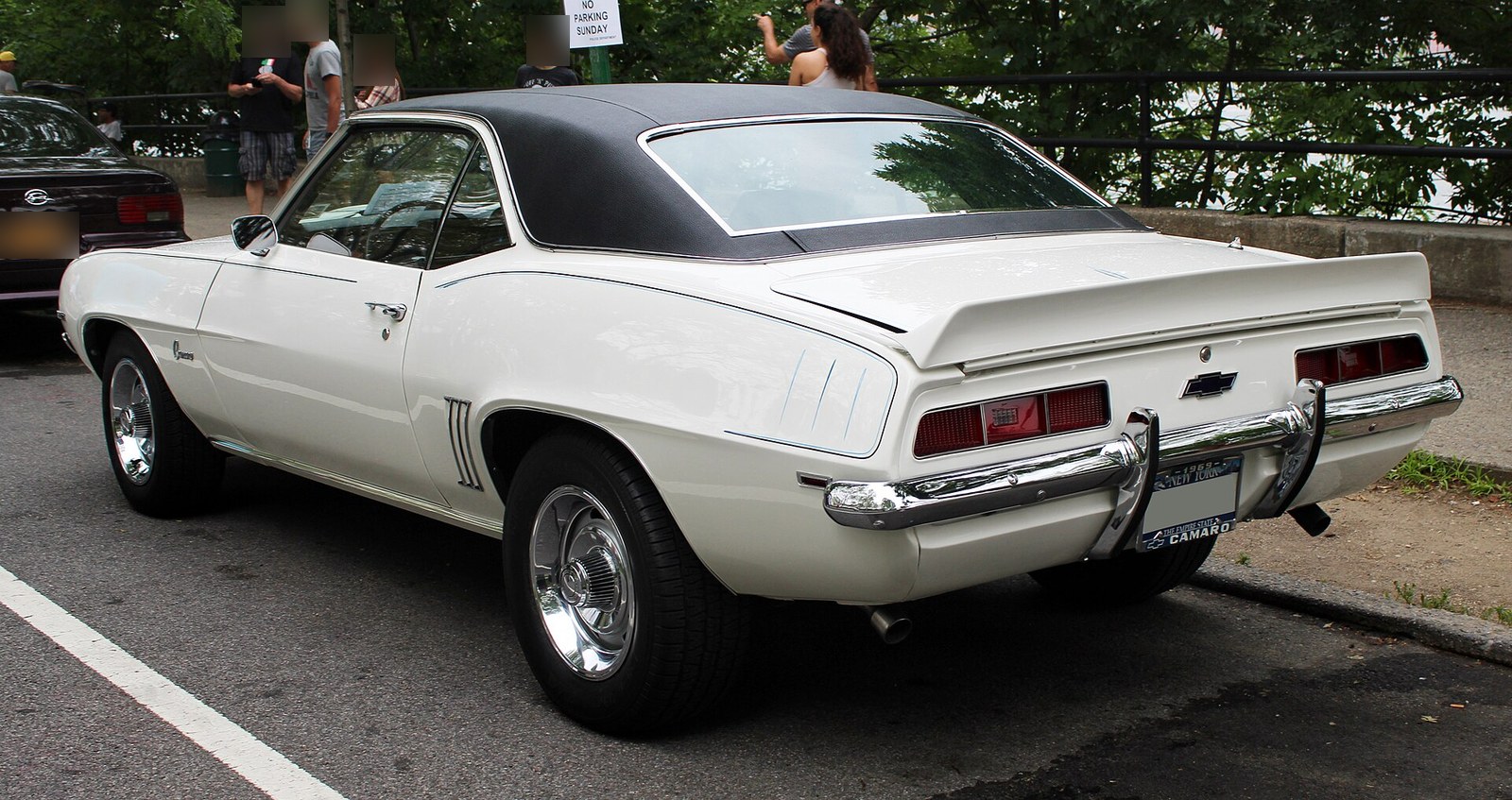
White 1969 Camaro coupe with black vinyl roof and rear spoiler, rear three-quarter view, at an outdoor park car show Photo: Kevauto, CC BY-SA 4.0, via Wikimedia Commons; licence plates and faces blurred
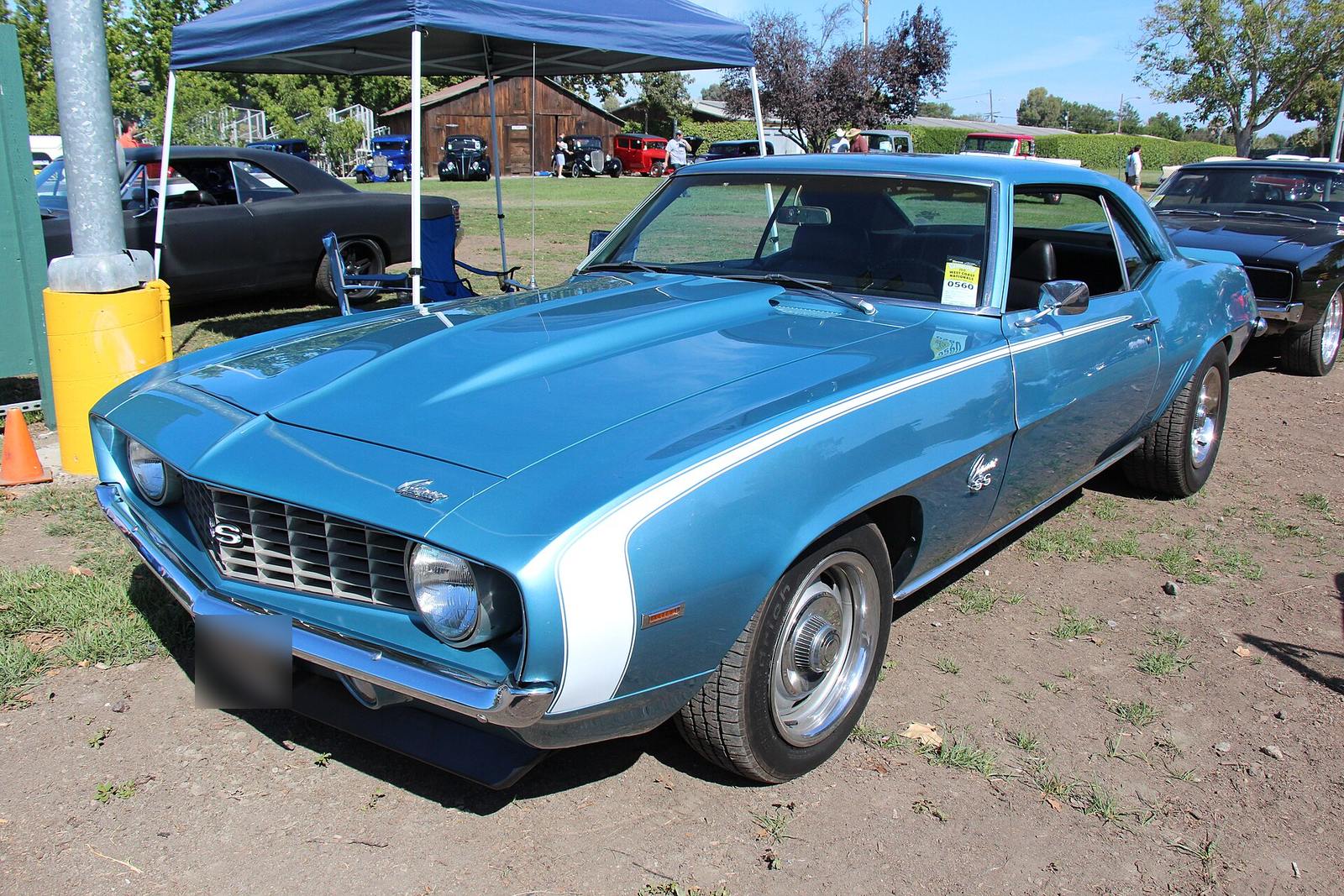
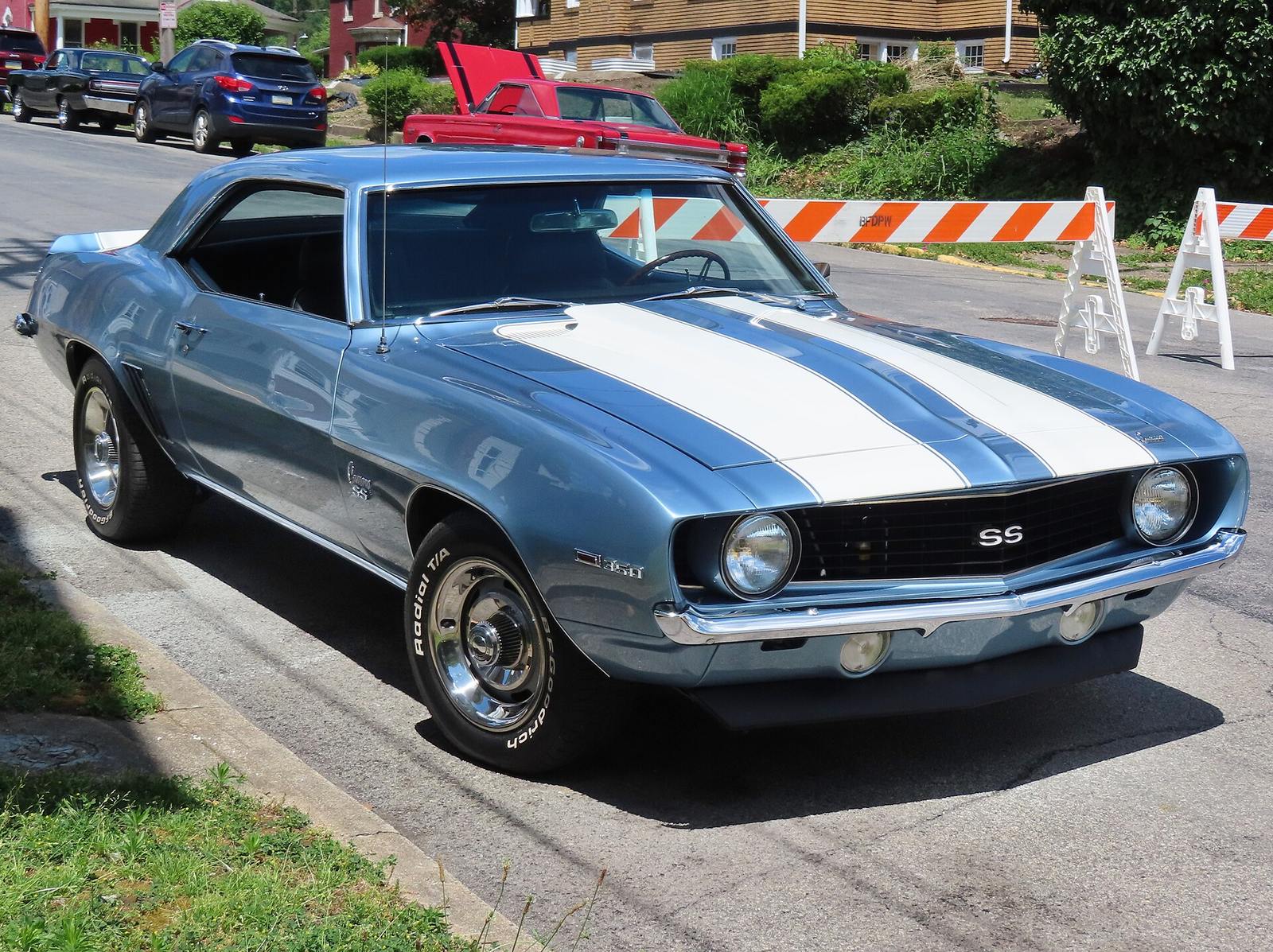
Original photographLicenseLight blue 1969 Camaro SS coupe with white hockey-stick stripe, front three-quarter view, at an outdoor car show Photo: Sicnag, CC BY 2.0, via Wikimedia Commons; licence plates blurred
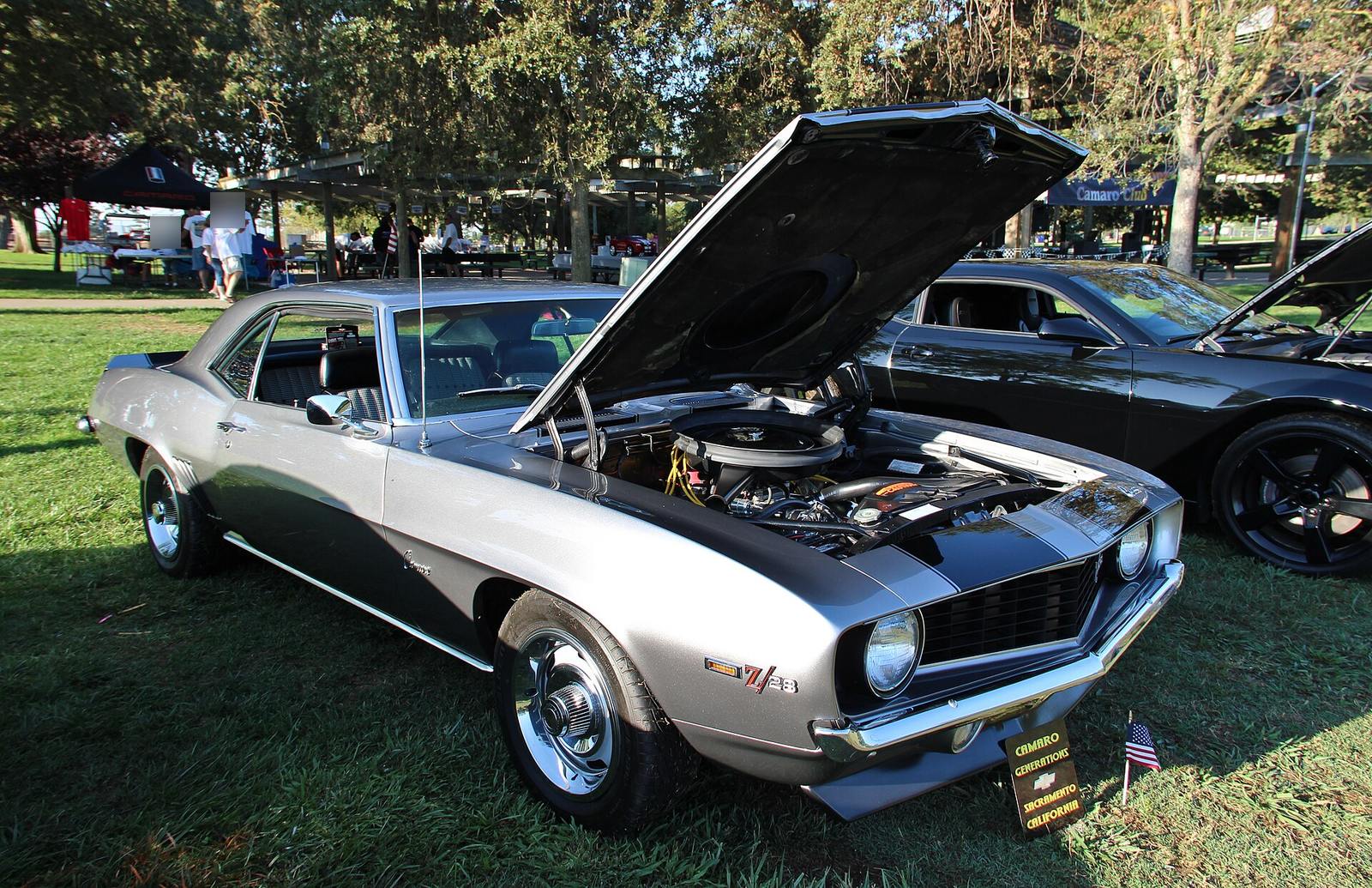
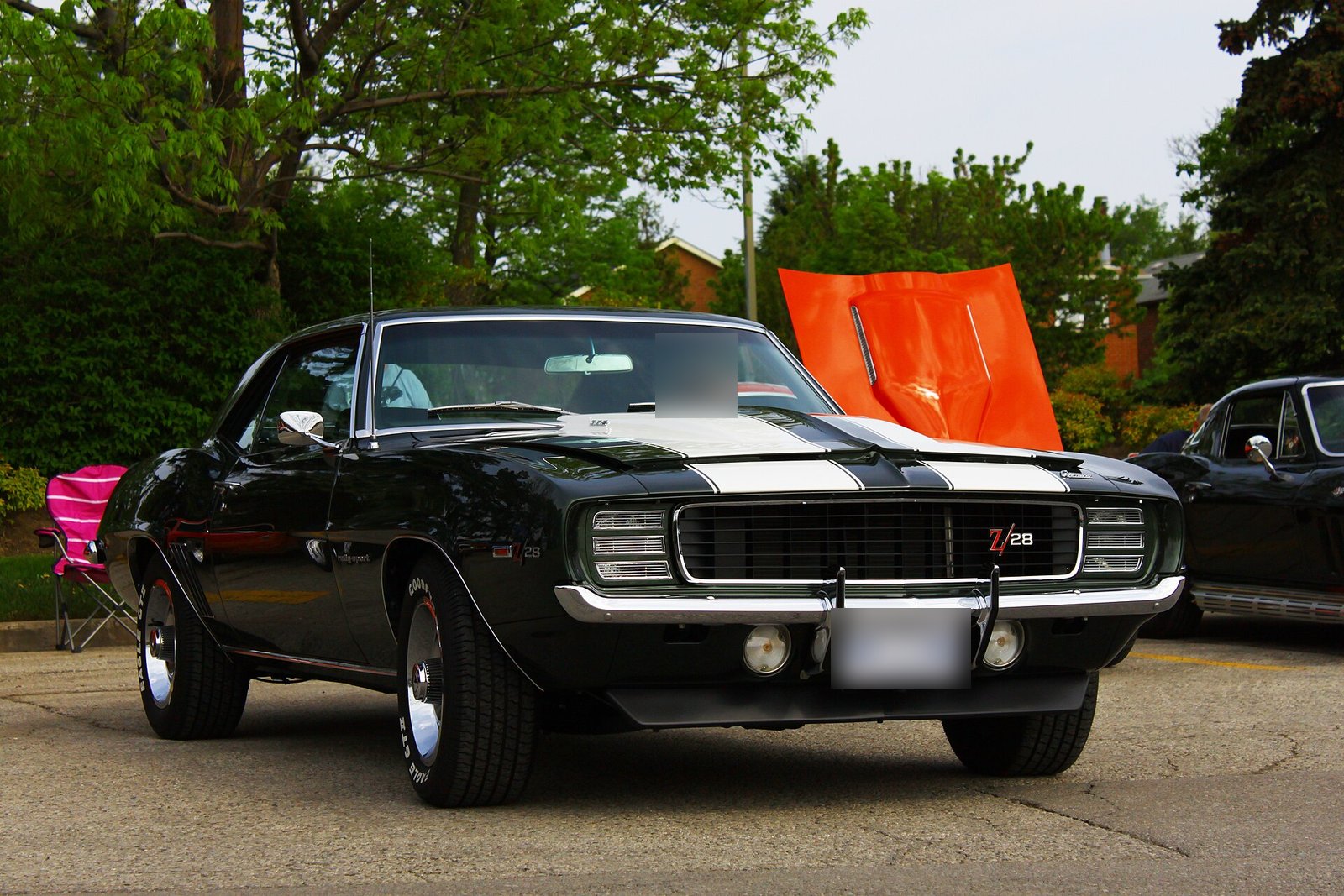
Original photographLicenseSilver 1969 Camaro Z/28 coupe with black stripes and hood open, front three-quarter view, at an outdoor car show in a park Photo: Nick Ares, CC BY-SA 2.0, via Wikimedia Commons; faces blurred
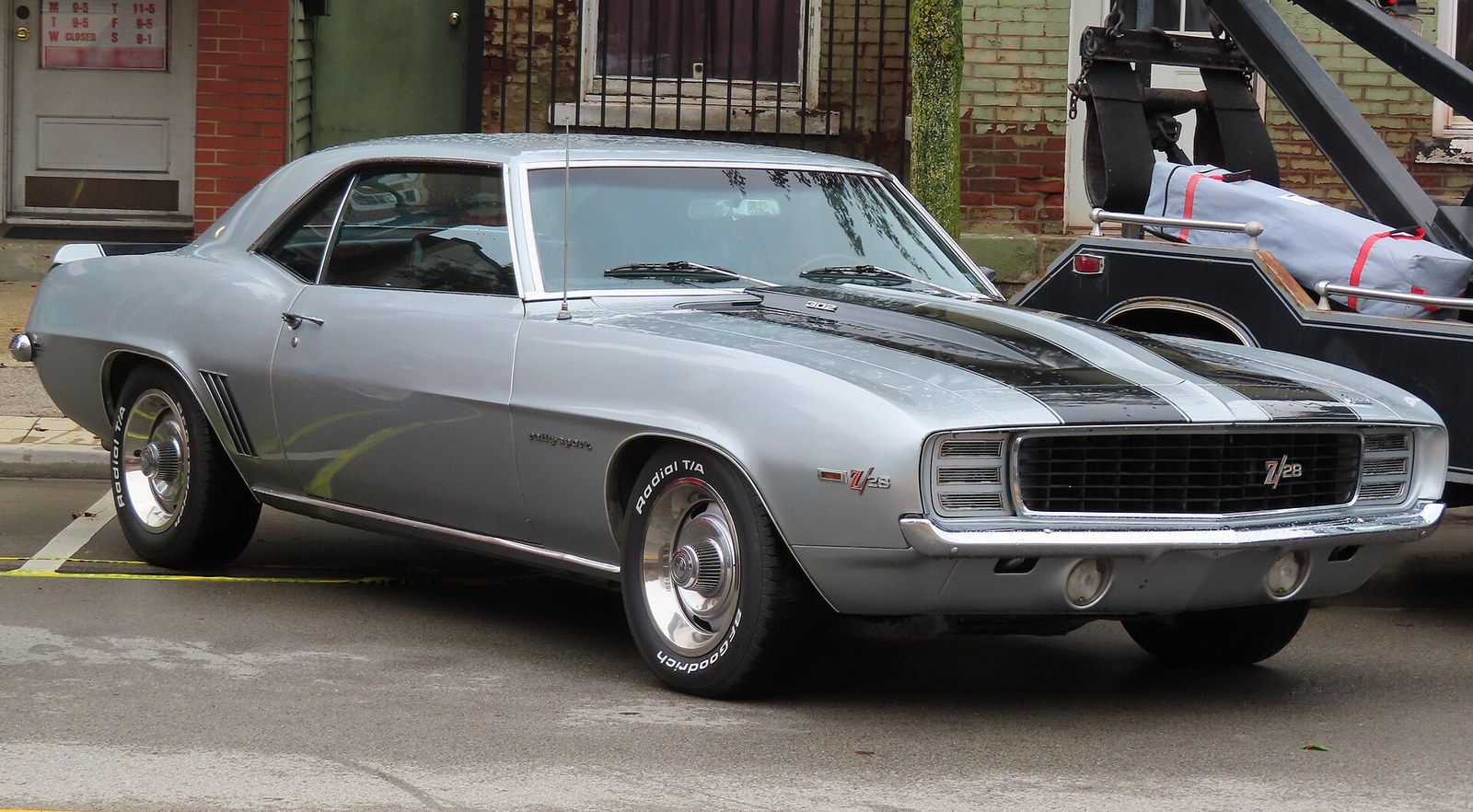
Original photographLicenseSilver 1969 Camaro Z/28 RS coupe with black hood stripes, 302 and Z/28 badges and rally-sport script, side and front three-quarter view, parked on a street Photo: MercurySable99, CC BY-SA 4.0, via Wikimedia Commons
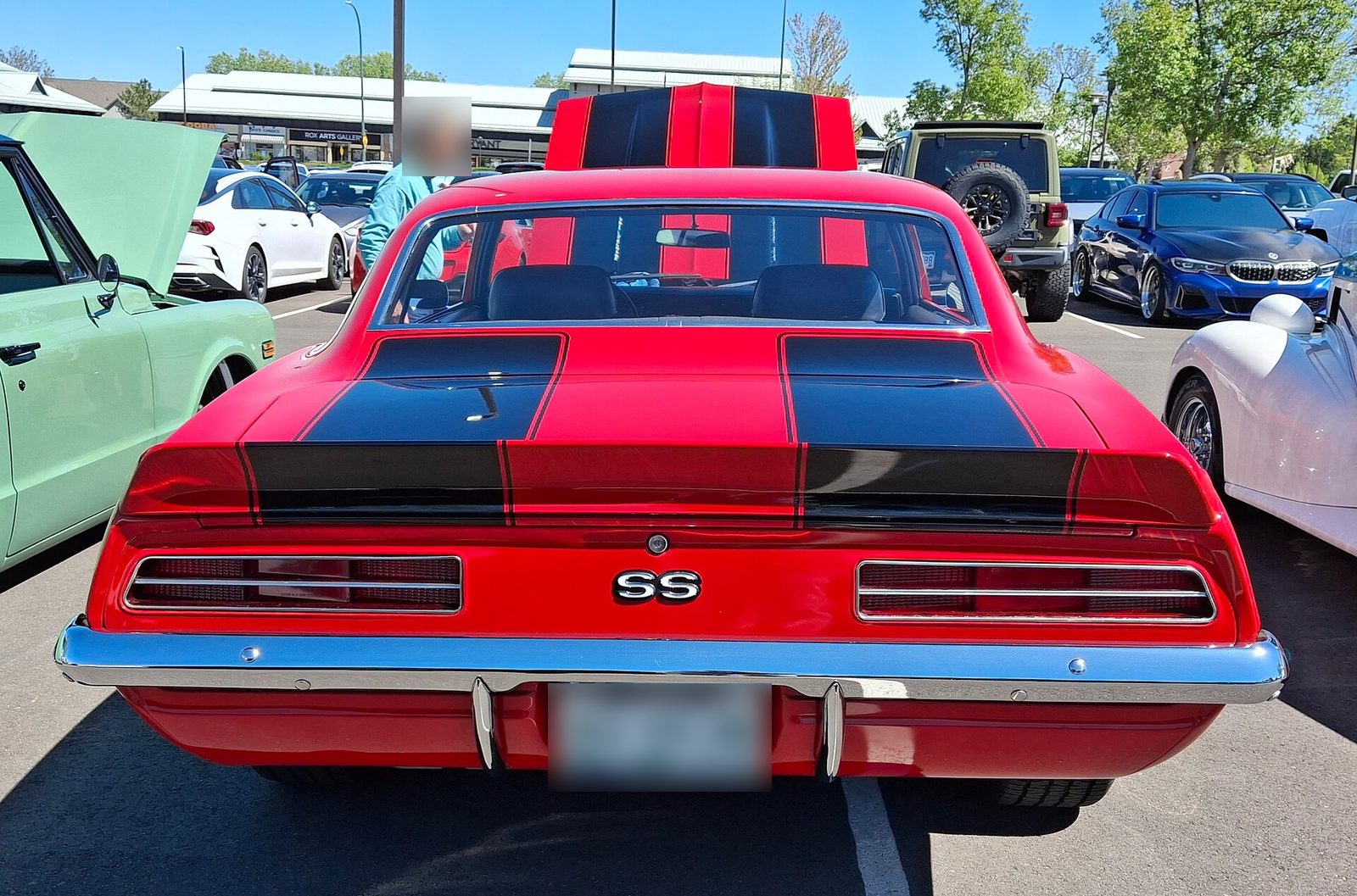
Original photographLicenseRed 1969 Camaro SS coupe with black deck-lid stripe and SS rear badge, rear view, at an outdoor car show in a parking lot Photo: Xnatedawgx, CC BY-SA 4.0, via Wikimedia Commons; licence plates and faces blurred
Original photographLicense
Production
The table lists three production figures for 1969. It opens with Total production, 243,095, followed by Sport Coupe (214,280) and Convertible (16,519).
Record
Count
Note
Total production
243,095
230,779 domestic and 12,316 export
Sport Coupe
214,280
Includes Z/28. With the convertibles this adds up to 230,799, 20 more than the 230,779 domestic cars in GM's own table
Convertible
16,519
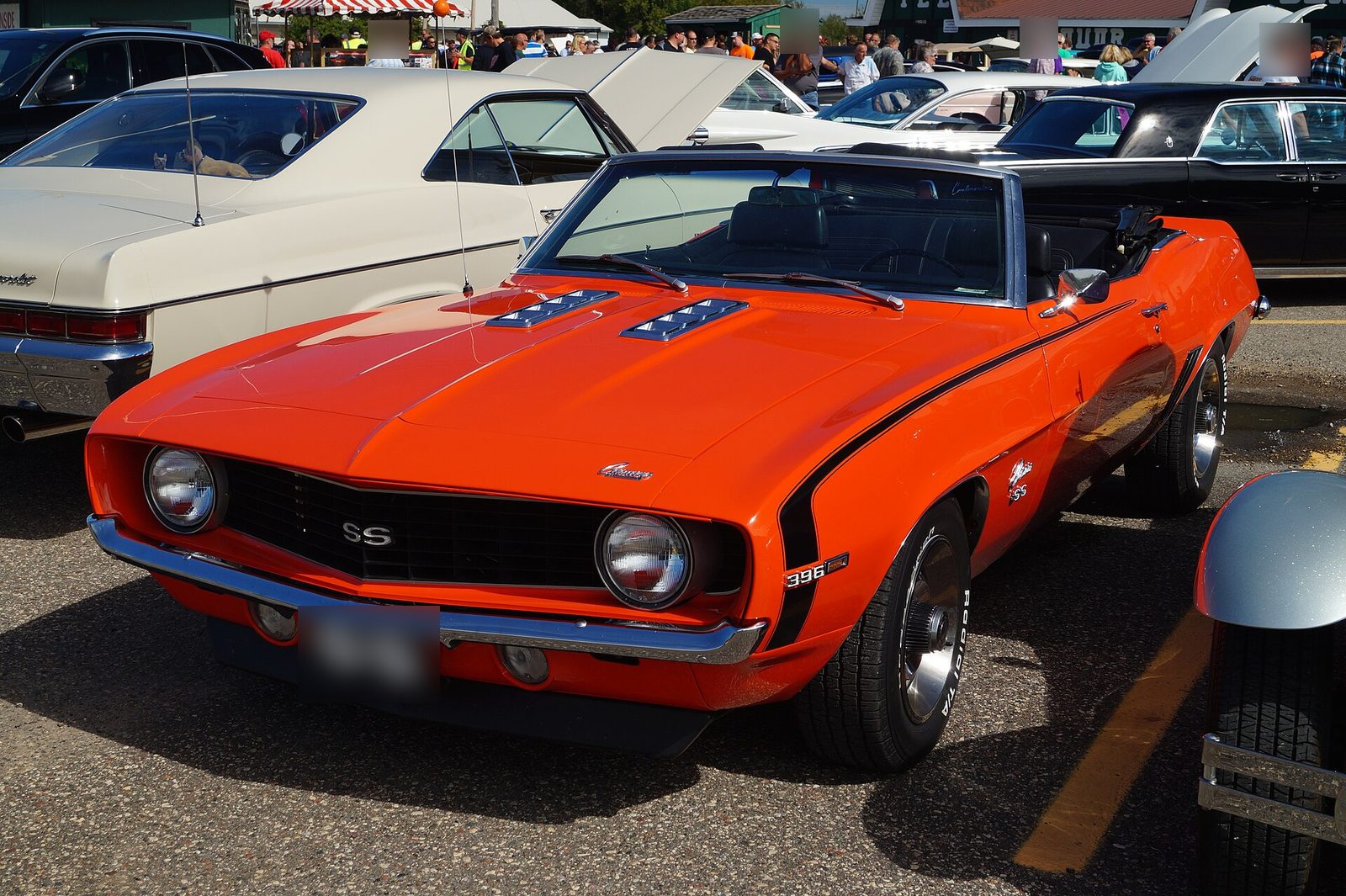
Orange 1969 Camaro SS 396 convertible with black hockey-stick stripe and SS hood inserts, front three-quarter view, at an outdoor car show Photo: Greg Gjerdingen, CC BY 2.0, via Wikimedia Commons; licence plates and faces blurred
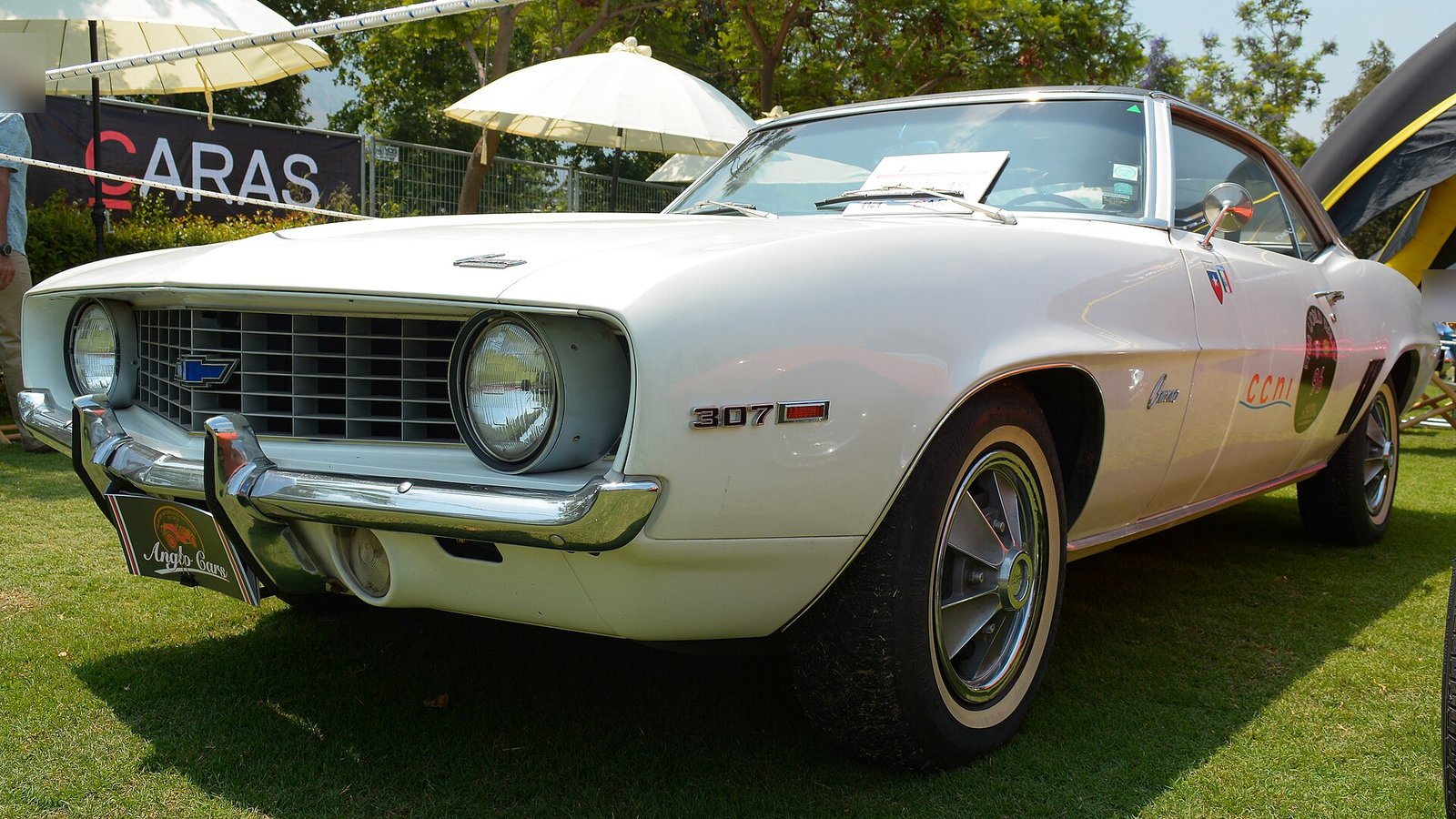
Original photographLicenseWhite 1969 Camaro coupe with 307 fender badge, rally-style wheels and whitewall tyres, event decals on the door, front three-quarter view, at an outdoor concours on grass Photo: RL GNZLZ, CC BY-SA 2.0, via Wikimedia Commons; faces blurred
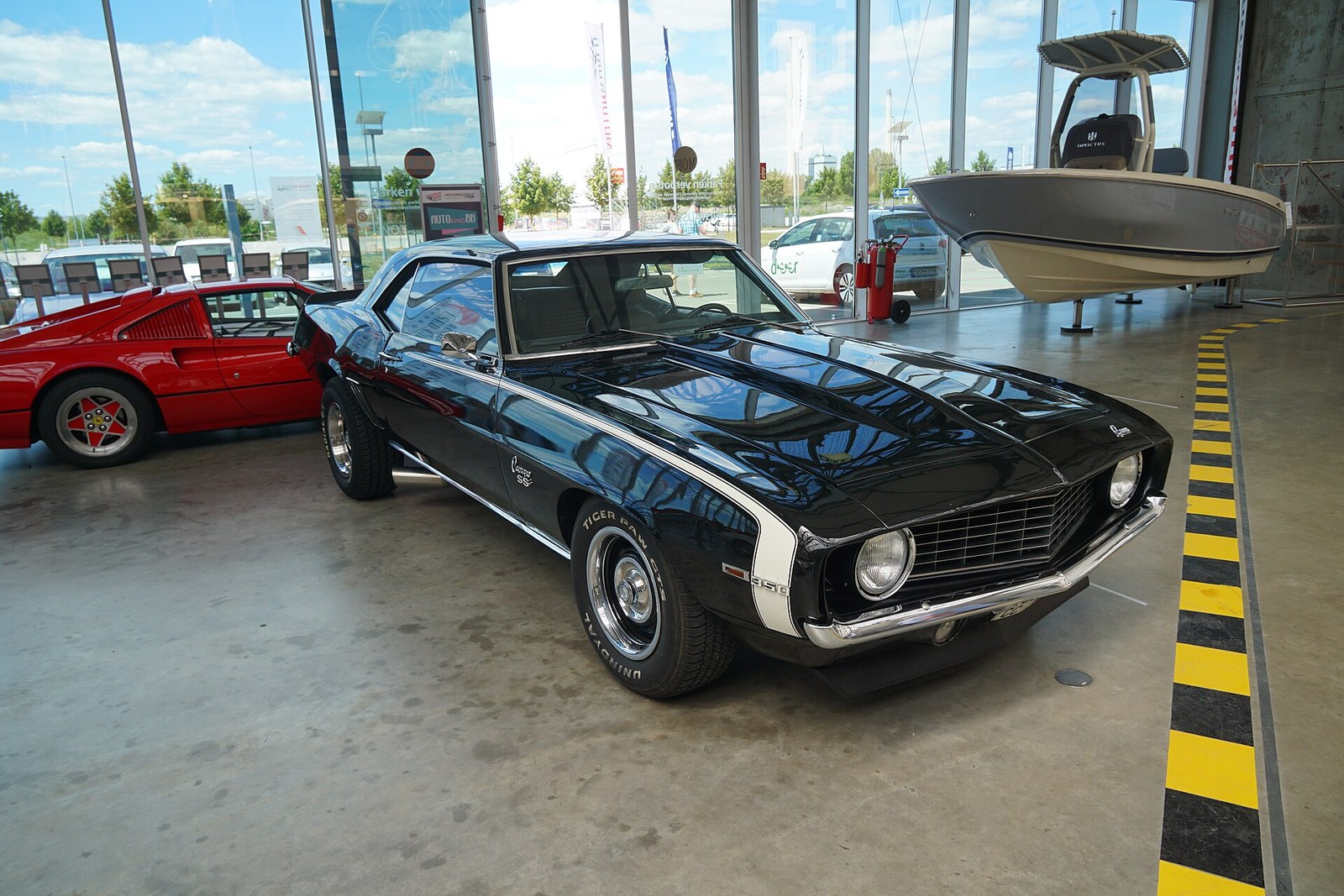
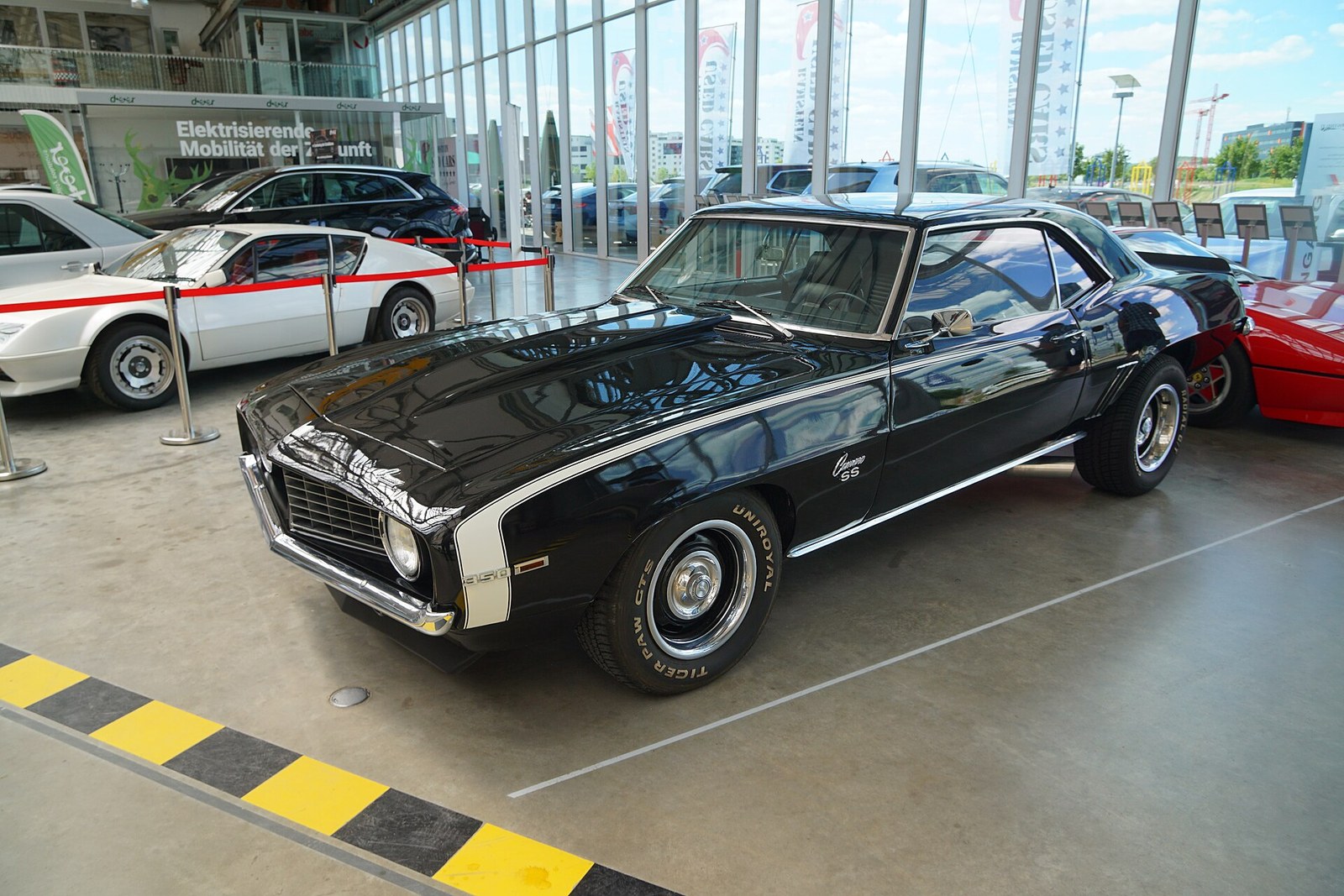
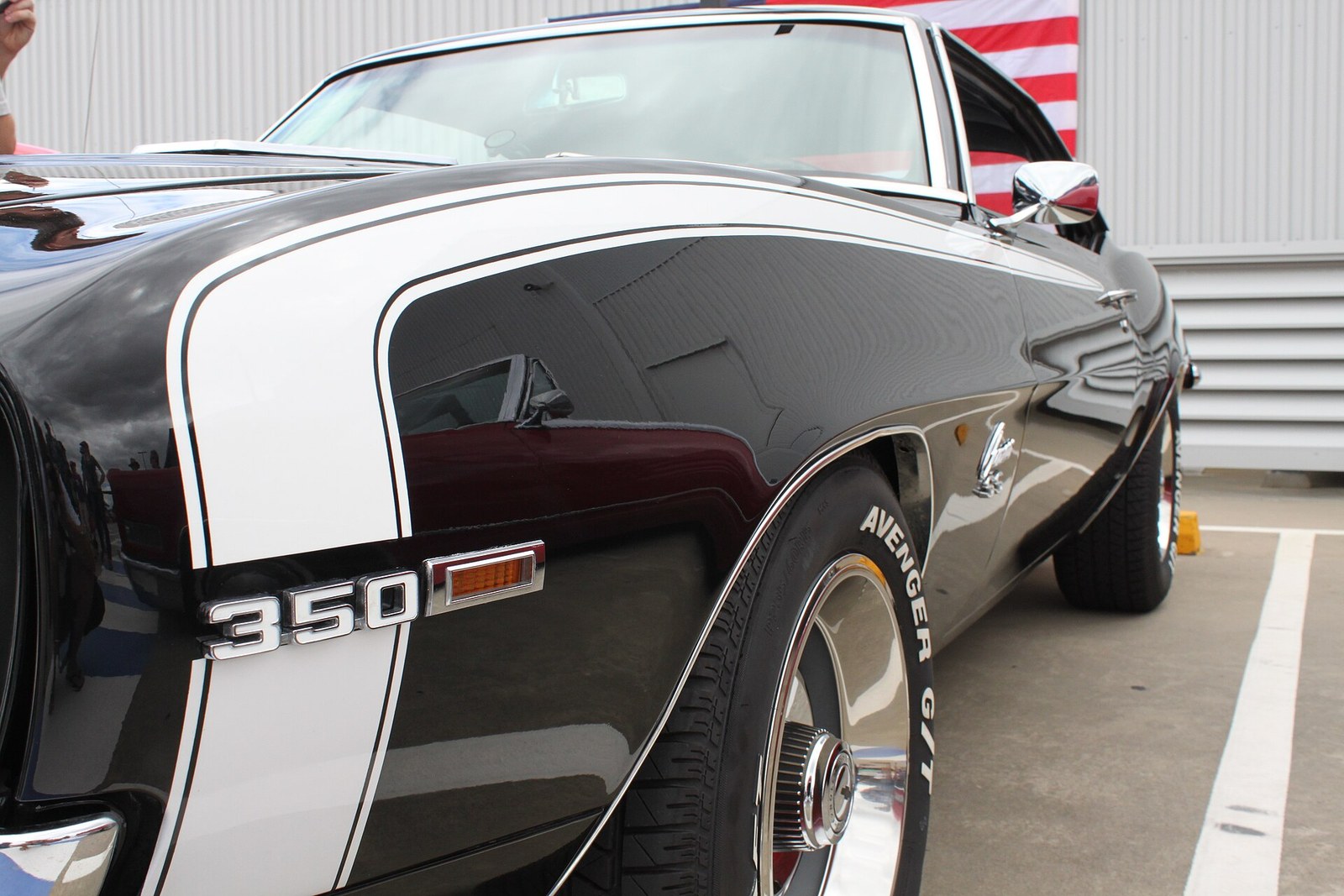
Original photographLicenseBlack 1969 Camaro SS coupe with white nose stripe and 350 fender badge, front three-quarter view, indoors in a glass-walled showroom Photo: Giftzwerg 88, CC BY-SA 3.0, via Wikimedia Commons
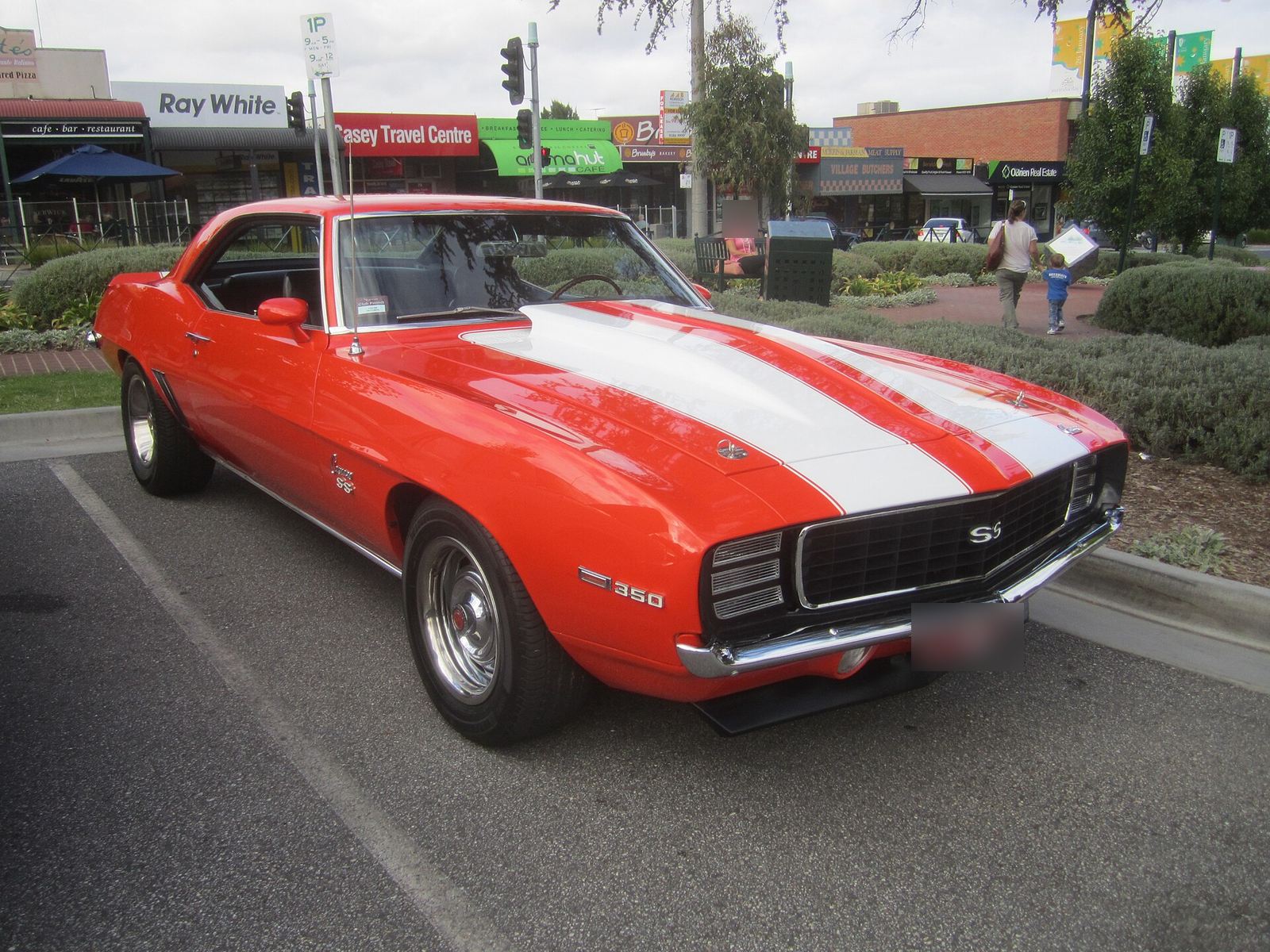
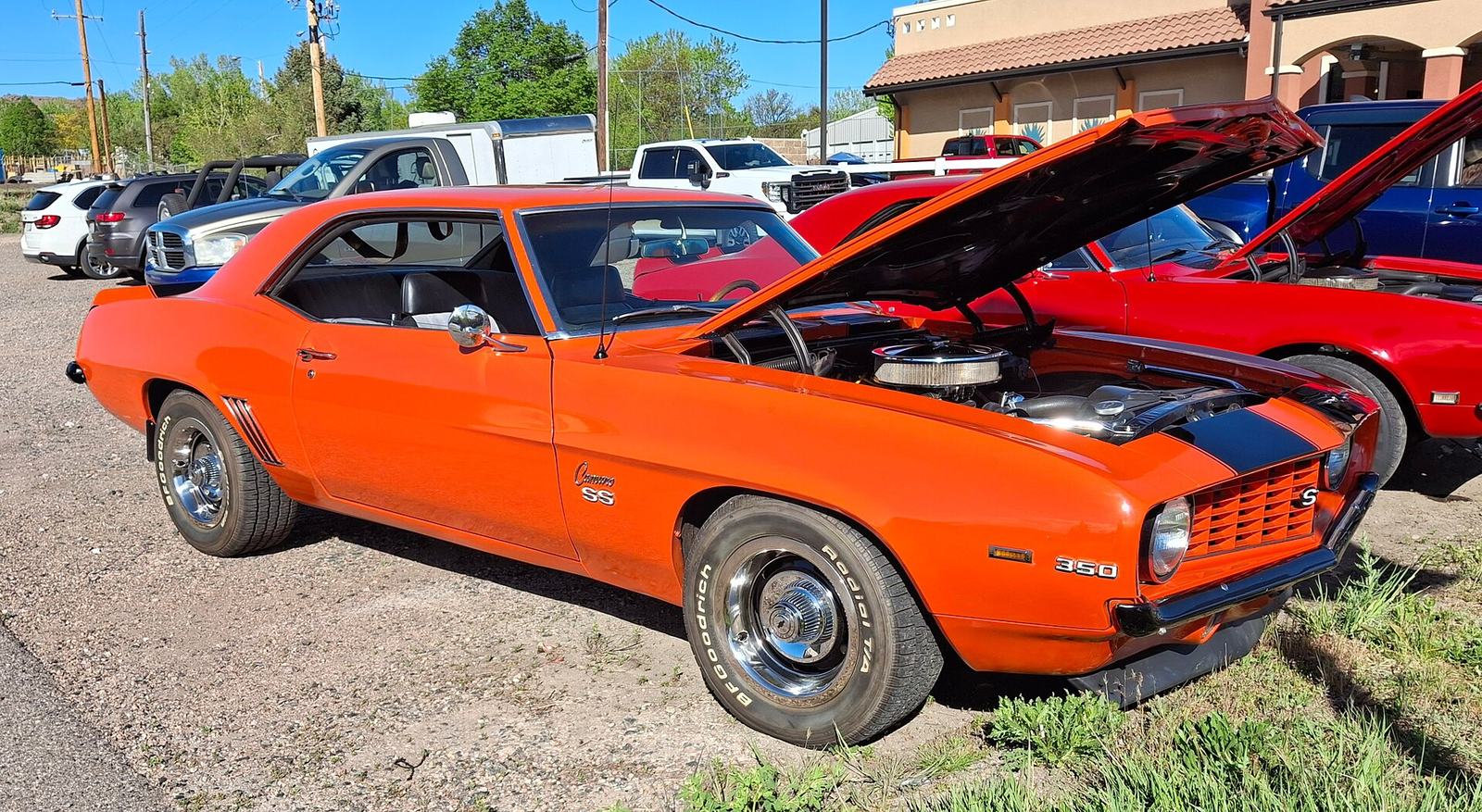
Original photographLicenseOrange 1969 Camaro SS 350 coupe with white hood stripes, front three-quarter view, parked on a shopping street Photo: Sicnag, CC BY 2.0, via Wikimedia Commons; licence plates and faces blurred
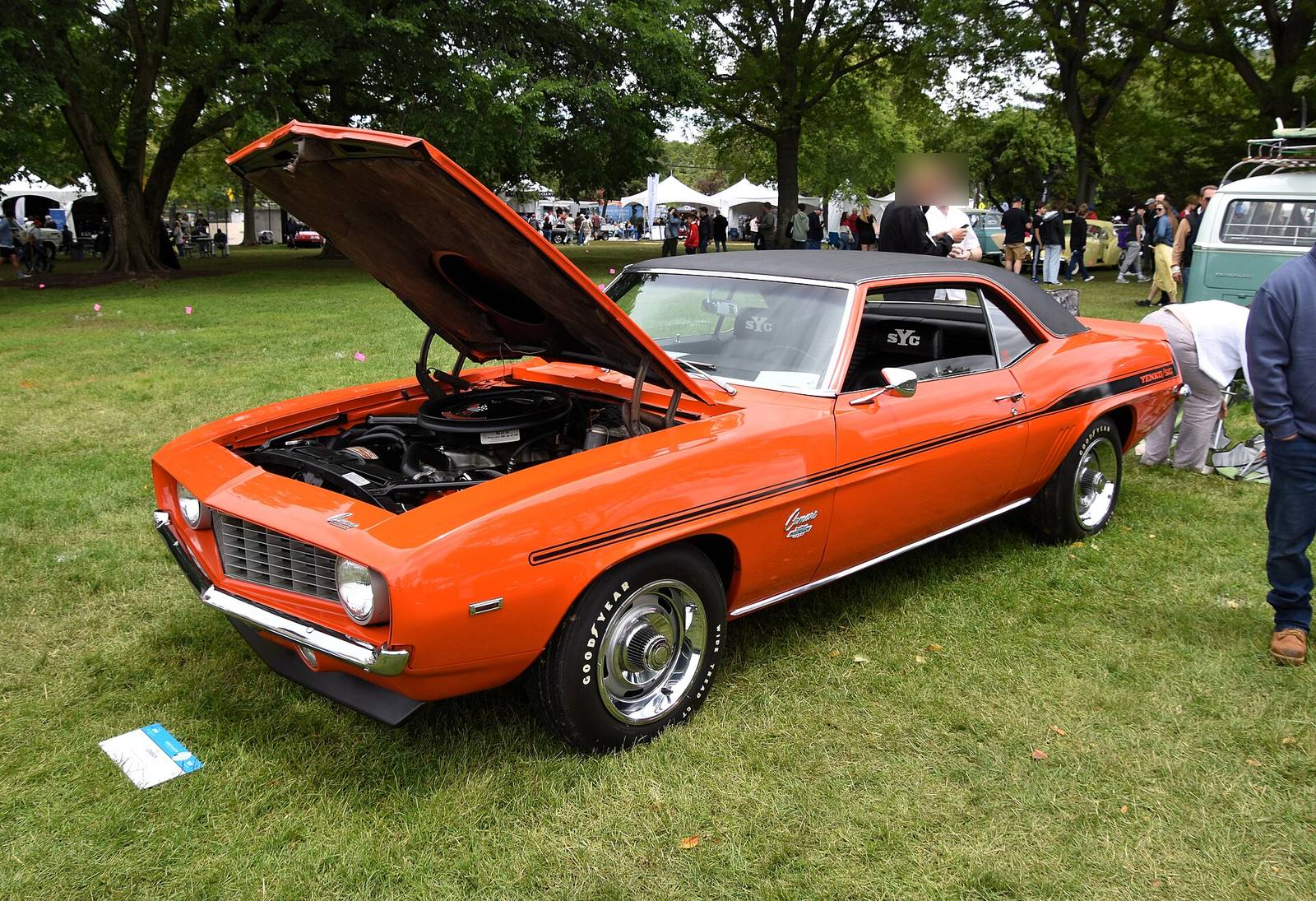
Original photographLicenseOrange 1969 Camaro coupe with black vinyl roof, Yenko/SC side stripe decal and sYc headrests, hood raised, front three-quarter view, at a grass-field car show Photo: Charles, CC BY 2.0, via Wikimedia Commons; faces blurred
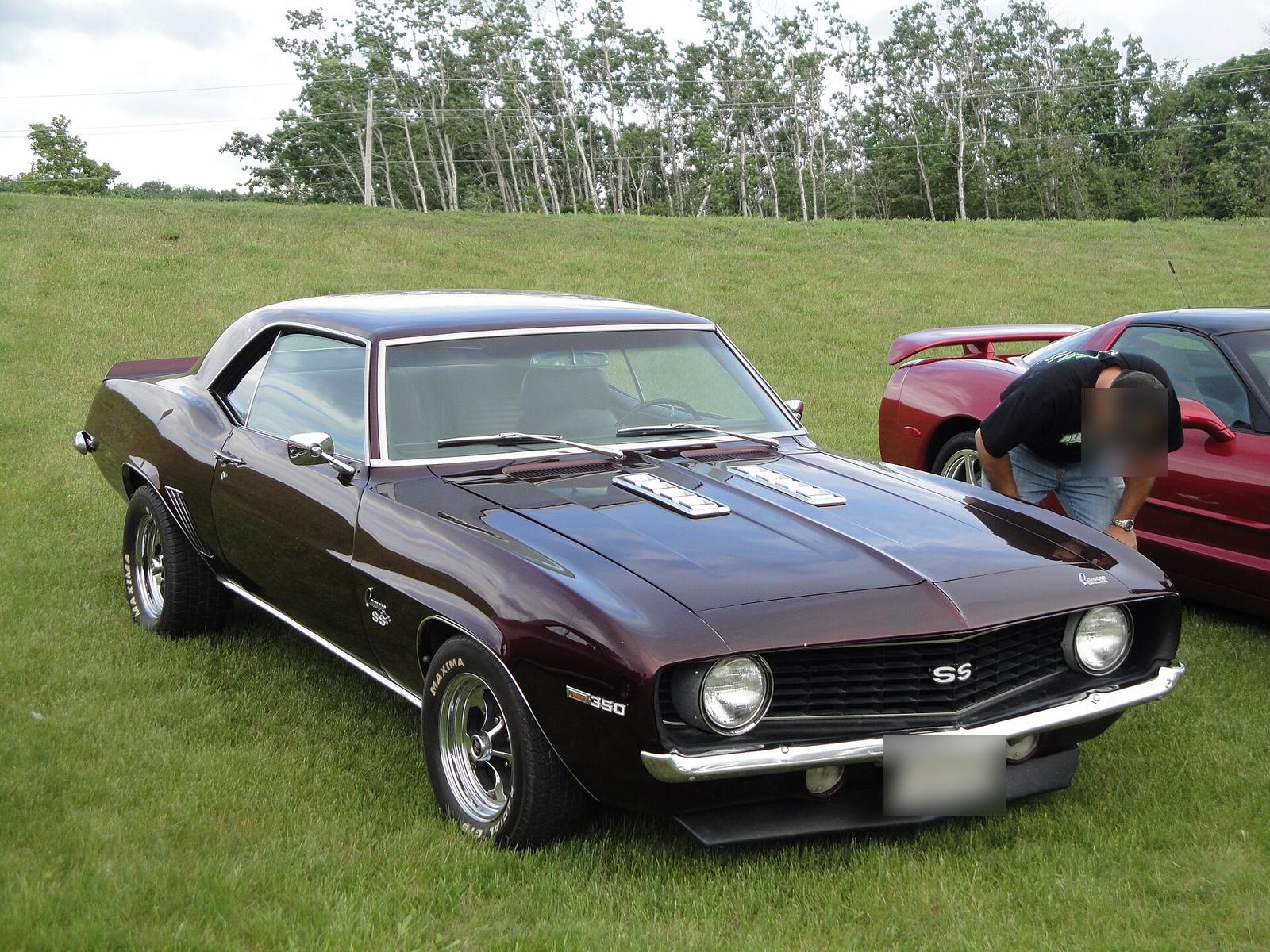
Original photographLicenseDark burgundy 1969 Camaro SS coupe with SS hood inserts, SS grille badge and 350 fender badge, front three-quarter view, on grass at a cruise night Photo: Greg Gjerdingen, CC BY 2.0, via Wikimedia Commons; licence plates and faces blurred
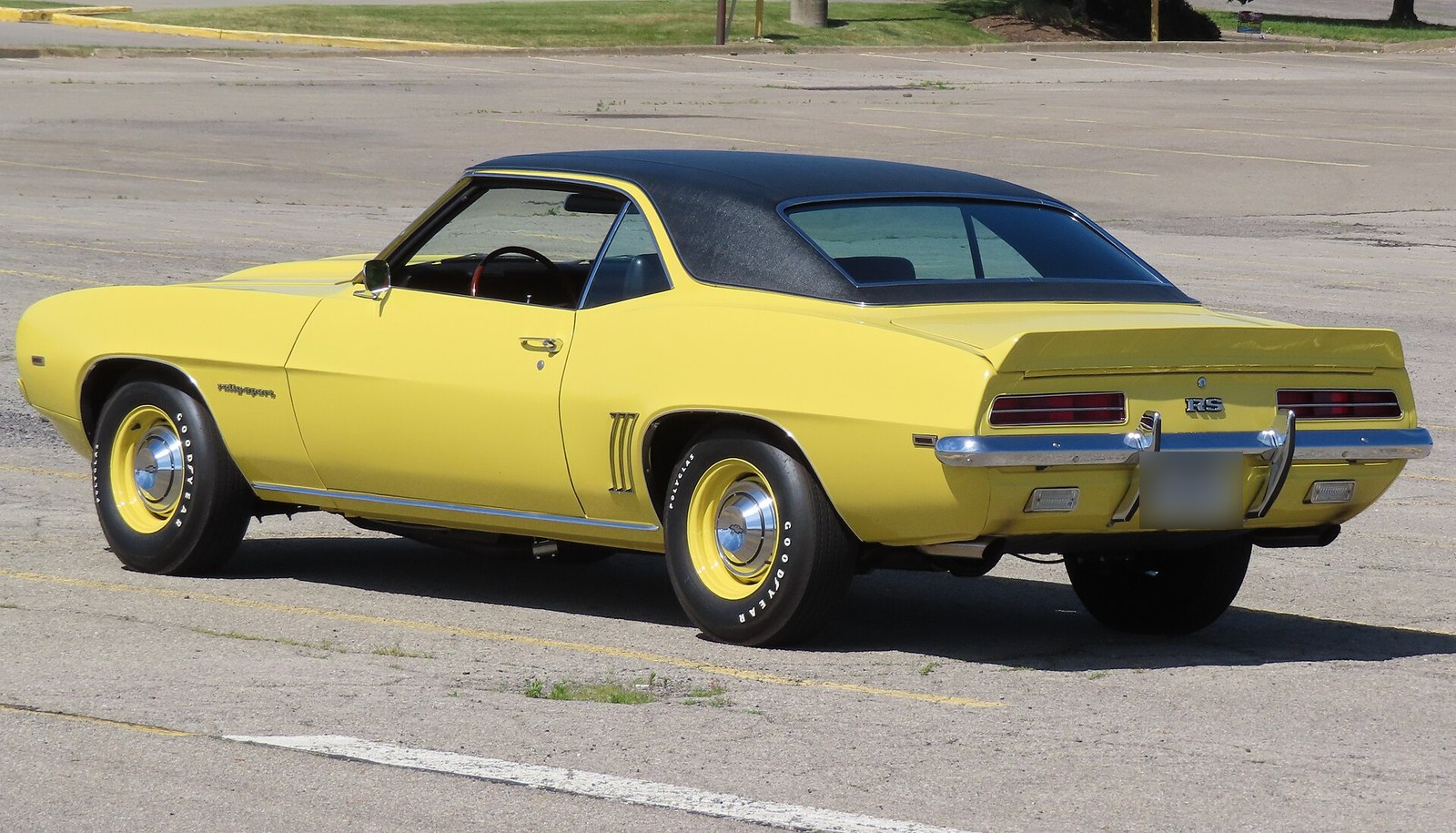
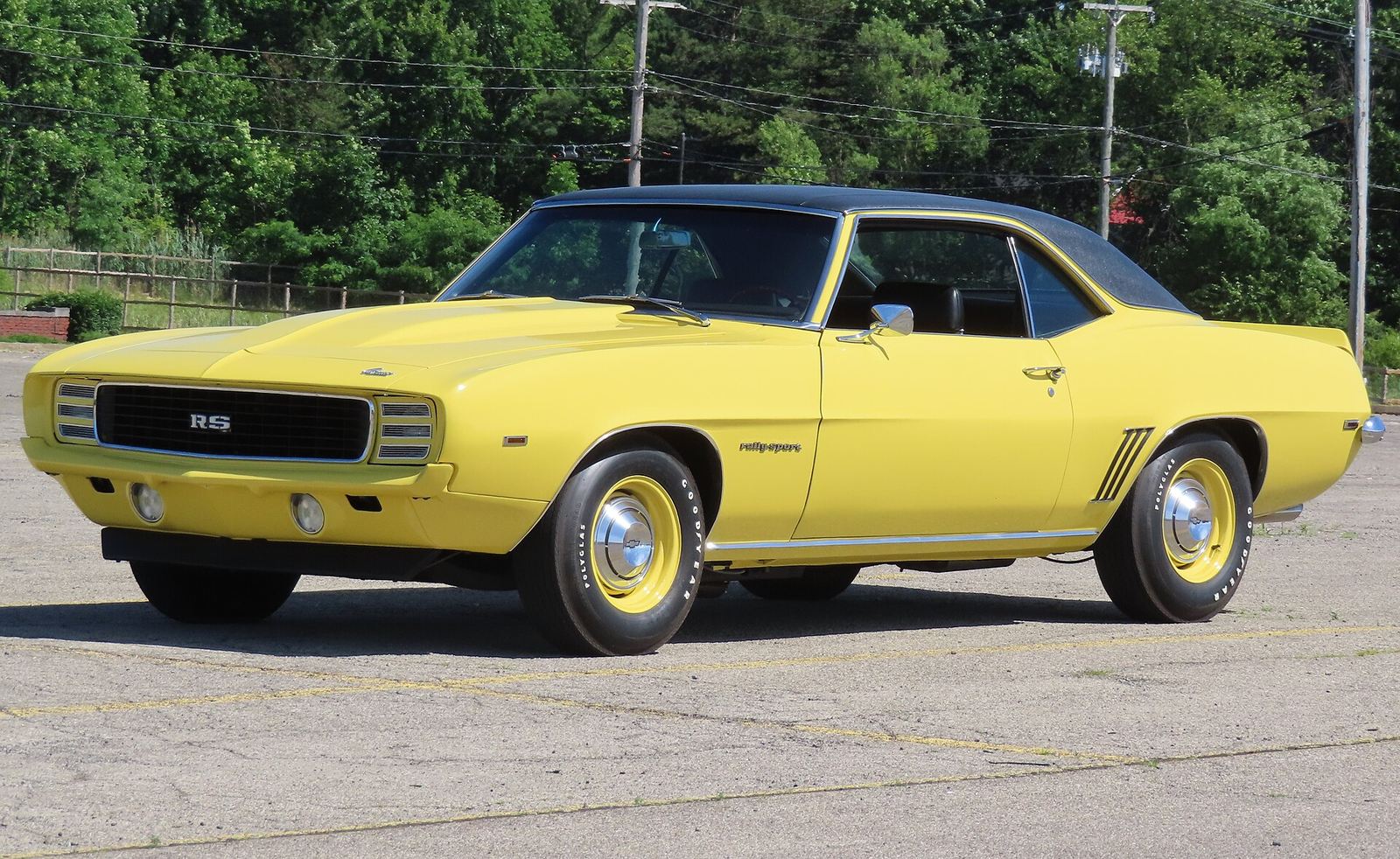
Original photographLicenseYellow 1969 Camaro RS coupe with black vinyl roof, Rally Sport script and RS rear badge, rear left three-quarter view, in an empty parking lot Photo: MercurySable99, CC BY-SA 4.0, via Wikimedia Commons; licence plates blurred
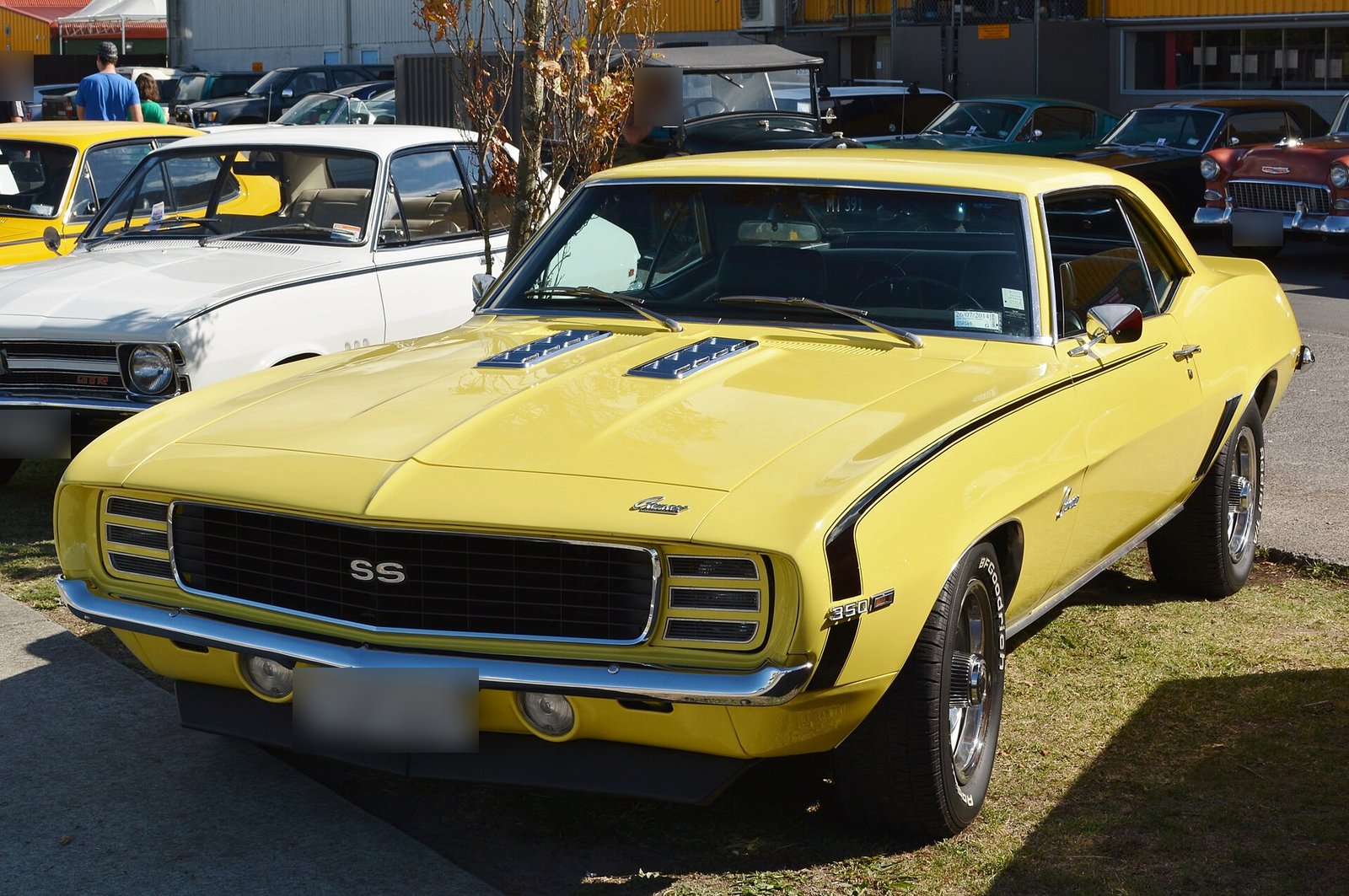
Original photographLicenseYellow 1969 Camaro SS 350 coupe with SS grille badge, hood inserts and front fender stripe, front three-quarter view, at an outdoor car show Photo: GPS 56, CC BY 2.0, via Wikimedia Commons; licence plates and faces blurred
Original photographLicense
Engines
The 1969 table lists 20 engines, from the 230 cu in inline-6 to the 427 cu in V8. The highest power rating shown is 430 hp (gross), for the 427 cu in V8.
Code
Engine
Power
Torque
Note
AN/AQ/AO/AR/AM/AP
230 cu in inline-6
140 hp (gross) at 4,400 rpm
220 lb-ft (gross) at 1,600 rpm
BB/BC/BD/BH/BE/BF
250 cu in inline-6
155 hp (gross) at 4,200 rpm
235 lb-ft (gross) at 1,600 rpm
AT/AV/AS/AU
230 cu in inline-6 (export)
—
—
DC/DD/DA/DE
307 cu in V8
200 hp (gross) at 4,600 rpm
300 lb-ft (gross) at 2,400 rpm
FK/FL/FJ/FZ
327 cu in V8
210 hp (gross) at 4,600 rpm
320 lb-ft (gross) at 2,400 rpm
FT/FS
327 cu in V8 (export)
—
—
HF/HD/HC
350 cu in V8
250 hp (gross) at 4,800 rpm
345 lb-ft (gross) at 2,800 rpm
L65
HR/HS/HQ
350 cu in V8
255 hp (gross) at 4,800 rpm
365 lb-ft (gross) at 3,200 rpm
LM1
HE/HB/HA
350 cu in V8
300 hp (gross) at 4,800 rpm
380 lb-ft (gross) at 3,200 rpm
L48
DZ
302 cu in V8
290 hp (gross) at 5,800 rpm
290 lb-ft (gross) at 4,200 rpm
JG/JB
396 cu in V8
325 hp (gross) at 4,800 rpm
410 lb-ft (gross) at 3,200 rpm
L35
CJG/CJB
402 cu in V8 (SS396)
325 hp (gross)
—
L35; late production, C-prefixed suffix; marketed as SS396
JI/JF
396 cu in V8
350 hp (gross)
—
L34
CJI/CJF
402 cu in V8 (SS396)
350 hp (gross)
—
L34; late production, C-prefixed suffix; marketed as SS396
JL/JH
396 cu in V8
375 hp (gross)
—
L78
CJL/CJH
402 cu in V8 (SS396)
375 hp (gross)
—
L78; late production, C-prefixed suffix; marketed as SS396
JM/JJ
396 cu in V8
375 hp (gross)
—
L78 with L89 aluminum heads
CJM/CJJ
402 cu in V8 (SS396)
375 hp (gross)
—
L78 with L89 aluminum heads; late production, C-prefixed suffix; marketed as SS396
MO/MN
427 cu in V8
425 hp (gross)
—
L72
MM/ML
427 cu in V8
430 hp (gross)
—
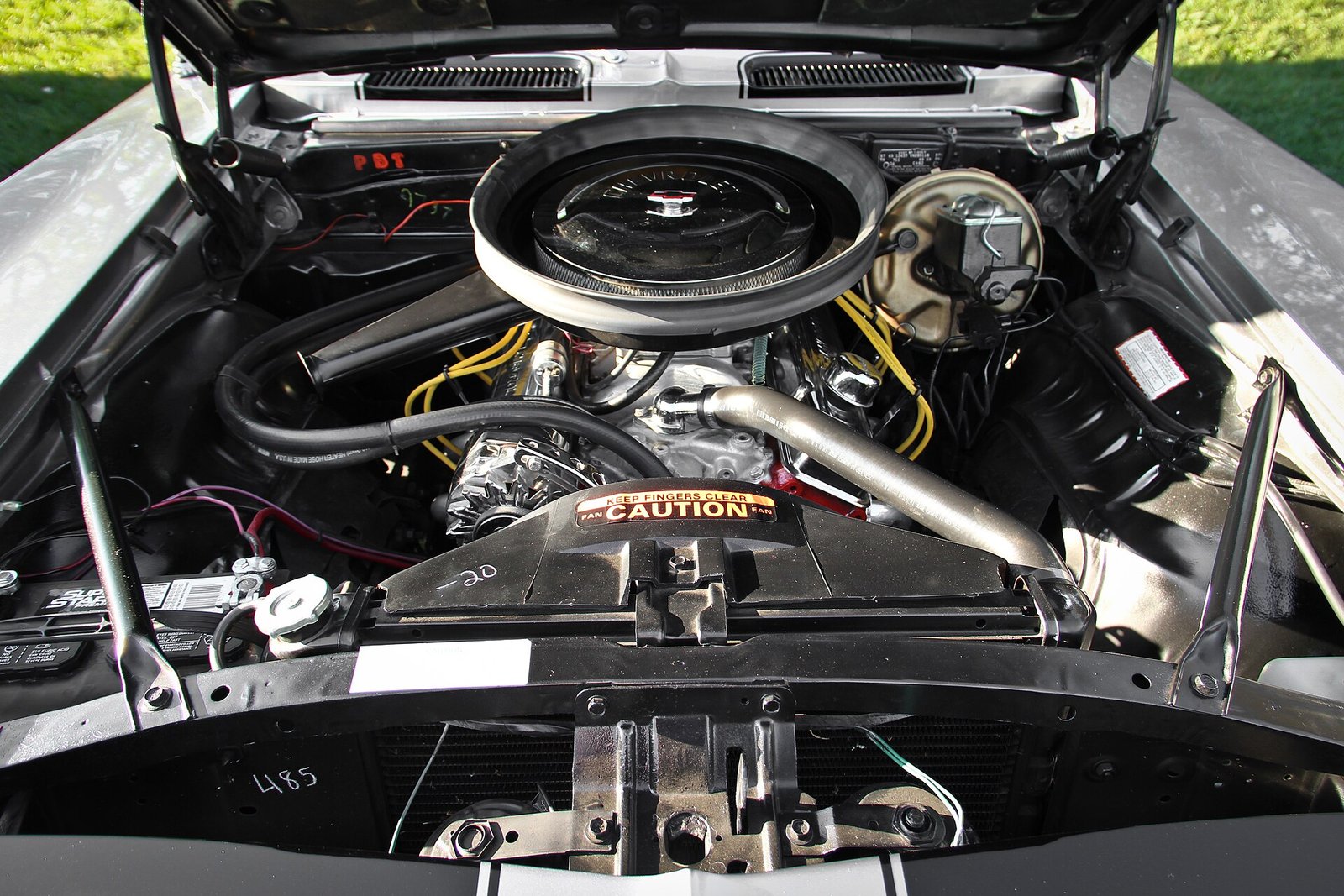
Engine bay of a silver 1969 Camaro with hood raised, showing small-block V8, air cleaner, cowl-induction hood plenum and fan shroud, at an outdoor show Photo: Nick Ares, CC BY-SA 2.0, via Wikimedia Commons
Original photographLicense
Options, packages and special editions
The 1969 list has 41 options, packages and special editions. Of these, 38 show a price and 7 show how many were built.
Code
Description
Price
Built
Note
12337
Sport Coupe, 6-cylinder (230, 140 hp)
$2,638.00
—
Base price
12367
Convertible, 6-cylinder
$2,852.00
—
Base price
12437
Sport Coupe, V8 (307, 200 hp)
$2,727.00
—
Base price
12467
Convertible, V8
$2,941.00
—
Base price
Z22
Rally Sport — concealed headlights with washers
$131.65
37,773
Z27
Camaro SS — 300 hp 350, power front discs, special hood
$311.75
33,980
L35
SS engine upgrade, 325 hp 396
+$63.20
—
L34
SS engine upgrade, 350 hp 396
+$184.35
—
L78
SS engine upgrade, 375 hp 396
+$316.00
—
L78/L89
SS engine upgrade, 375 hp 396 with aluminum heads
+$710.95
—
Z28
Special Performance Package — DZ 302, Sport Coupe only
$506.60
19,014 or 20,302
Required 4-speed and power front or four-wheel disc brakes. GM's production table lists 19,014, including 1970 carry-over of the 1969 design; the Camaro Research Group's Z28 report gives 20,302
Z11
Indianapolis 500 pace-car replica convertible
—
3,675
JL8
Four-wheel disc brakes
$500.30
206
$623.50 without SS or Z28
ZL2
Special ducted hood (cowl induction)
$79.00
—
SS or Z28 only
COPO 9561
L72 427 iron-block big block
—
997
Camaro Research Group estimate; 1,015 engines built
COPO 9560
ZL1 all-aluminum 427
—
69
50 to Fred Gibb Chevrolet, 19 to other dealers
Z87
Custom interior
$110.60
—
Z21
Style trim
$36.90 / $47.40
—
Convertible / Sport Coupe
L22
Engine, 155 hp 250 six
$26.35
—
L65
Engine, 250 hp 350 V8
$21.10
—
M20 / M21
4-speed wide- or close-ratio, Hurst shifter
$195.40
—
M22
Heavy-duty close-ratio 4-speed
$322.10
—
M40
Turbo Hydra-Matic
$190.10 to $290.40
—
By engine
M35
Powerglide
$163.70 six / $174.25 V8
—
G80
Positraction rear axle
$42.15
—
C60
Four-Season air conditioning
$376.00
—
N40
Power steering
$94.80
—
J50
Power brakes
$42.15
—
A31
Power windows
$105.35
—
U16
Tachometer
$52.70
—
U17
Special instrumentation — V8 with console
$94.80
—
D55
Console
$53.75
—
D80
Spoiler
$32.65
—
NC8
Chambered dual exhaust — SS or Z28
$15.80
—
NK1
Cushioned-rim steering wheel
$34.80
—
—
Vinyl roof (five colors), Sport Coupe
$84.30
—
—
Two-tone paint
$31.60
—
U57
Stereo tape system
$133.80
—
U79
AM/FM stereo radio
$239.10
—
ZJ7
Rally wheels
$35.85
—
VE3
Special body-color front bumper
$42.15
—
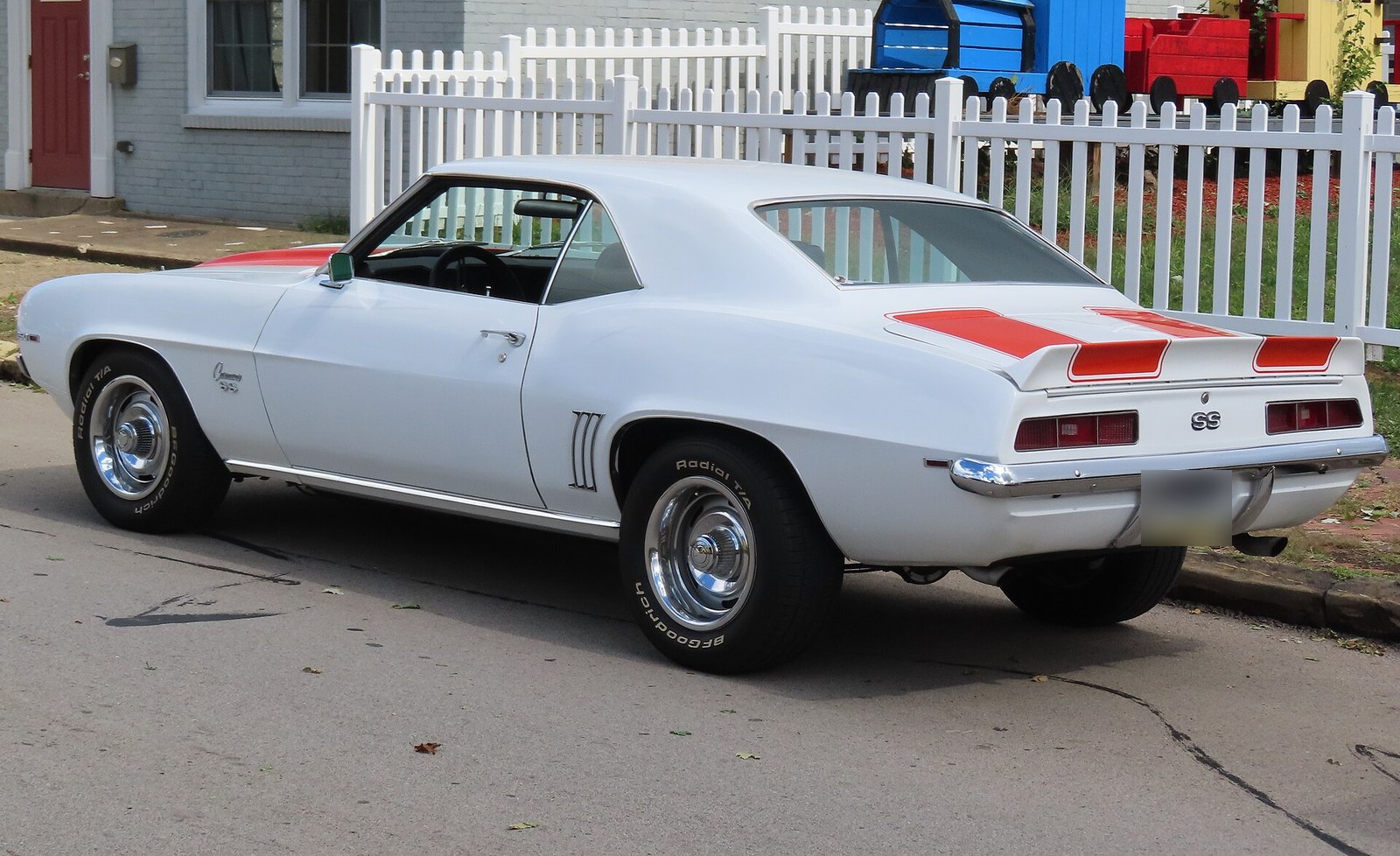
White 1969 Camaro SS coupe with orange deck stripes, rear spoiler and SS badges, rear left three-quarter view, parked on a street Photo: MercurySable99, CC BY-SA 4.0, via Wikimedia Commons; licence plates blurred
Original photographLicenseOrange 1969 Camaro SS coupe with black nose band, SS grille badge and 350 fender badge, hood raised, side and front three-quarter view, at an outdoor car show Photo: Xnatedawgx, CC BY-SA 4.0, via Wikimedia Commons
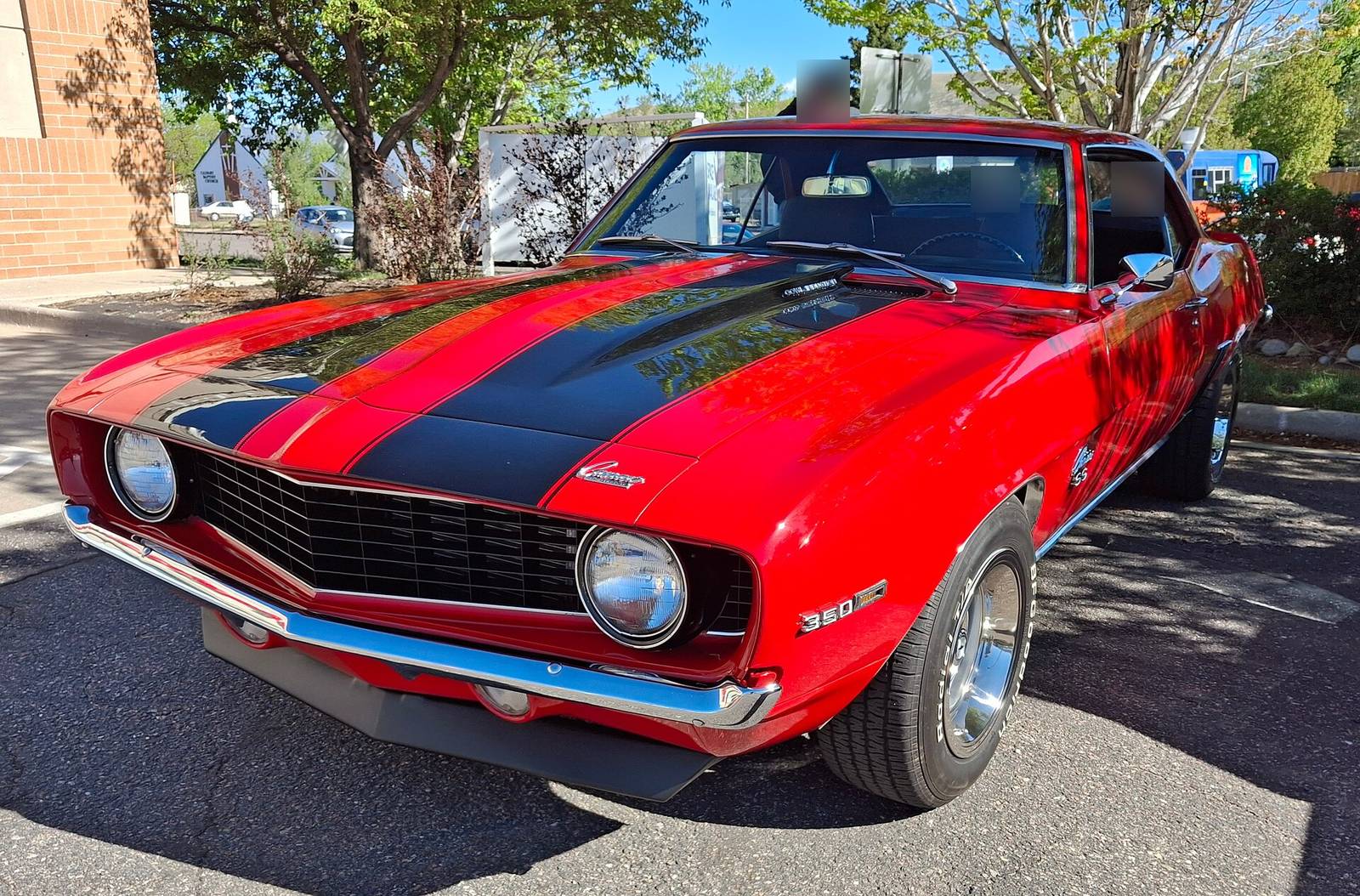
Original photographLicenseRed 1969 Camaro SS 350 coupe with wide black hood stripes and SS emblem, front three-quarter view, in a car-show parking lot Photo: Xnatedawgx, CC BY-SA 4.0, via Wikimedia Commons; faces blurred
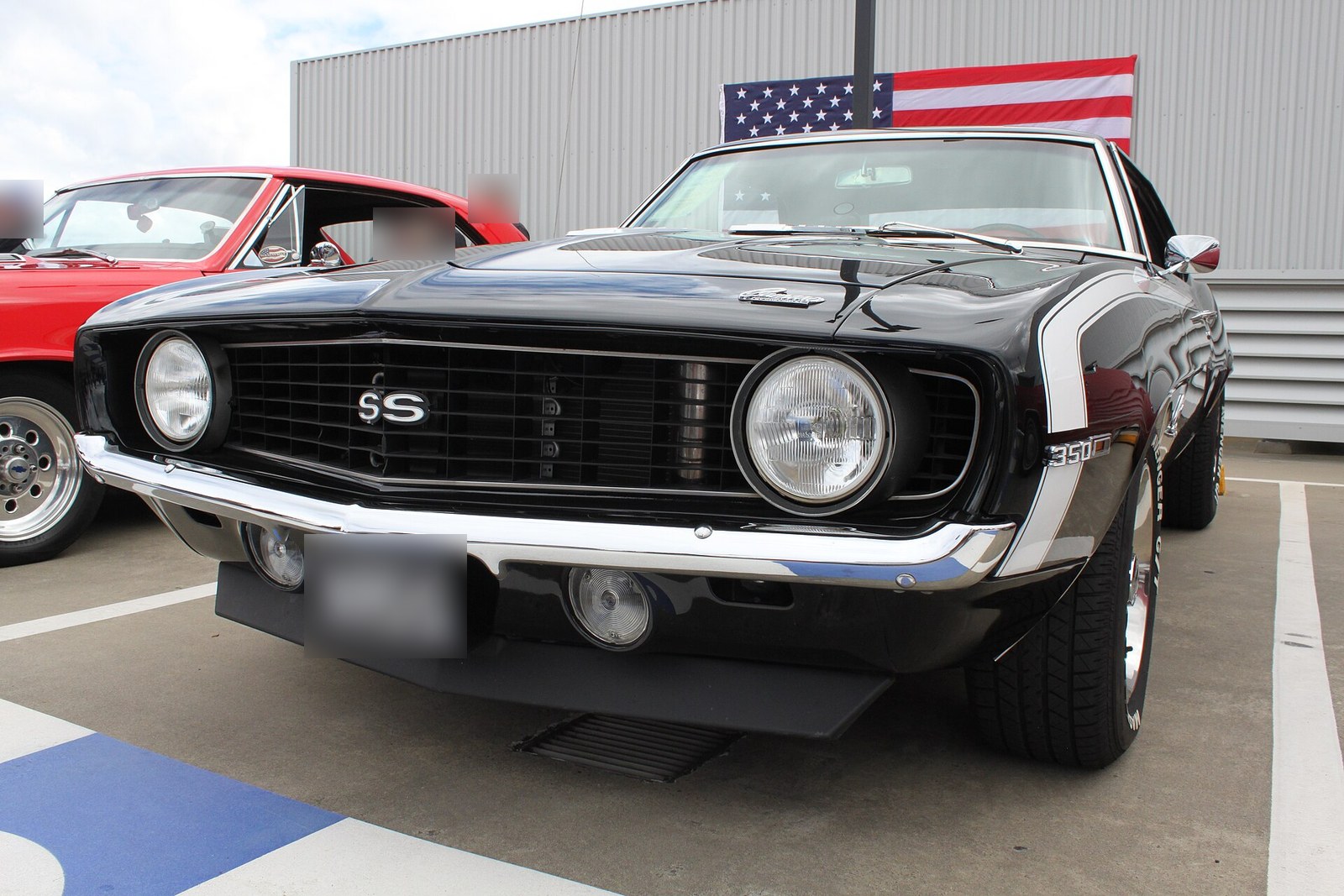
Original photographLicenseBlack 1969 Camaro SS coupe with SS grille badge, white fender stripe and 350 badge, low front view, at an outdoor car show Photo: Jeremy, CC BY 2.0, via Wikimedia Commons; licence plates and faces blurred
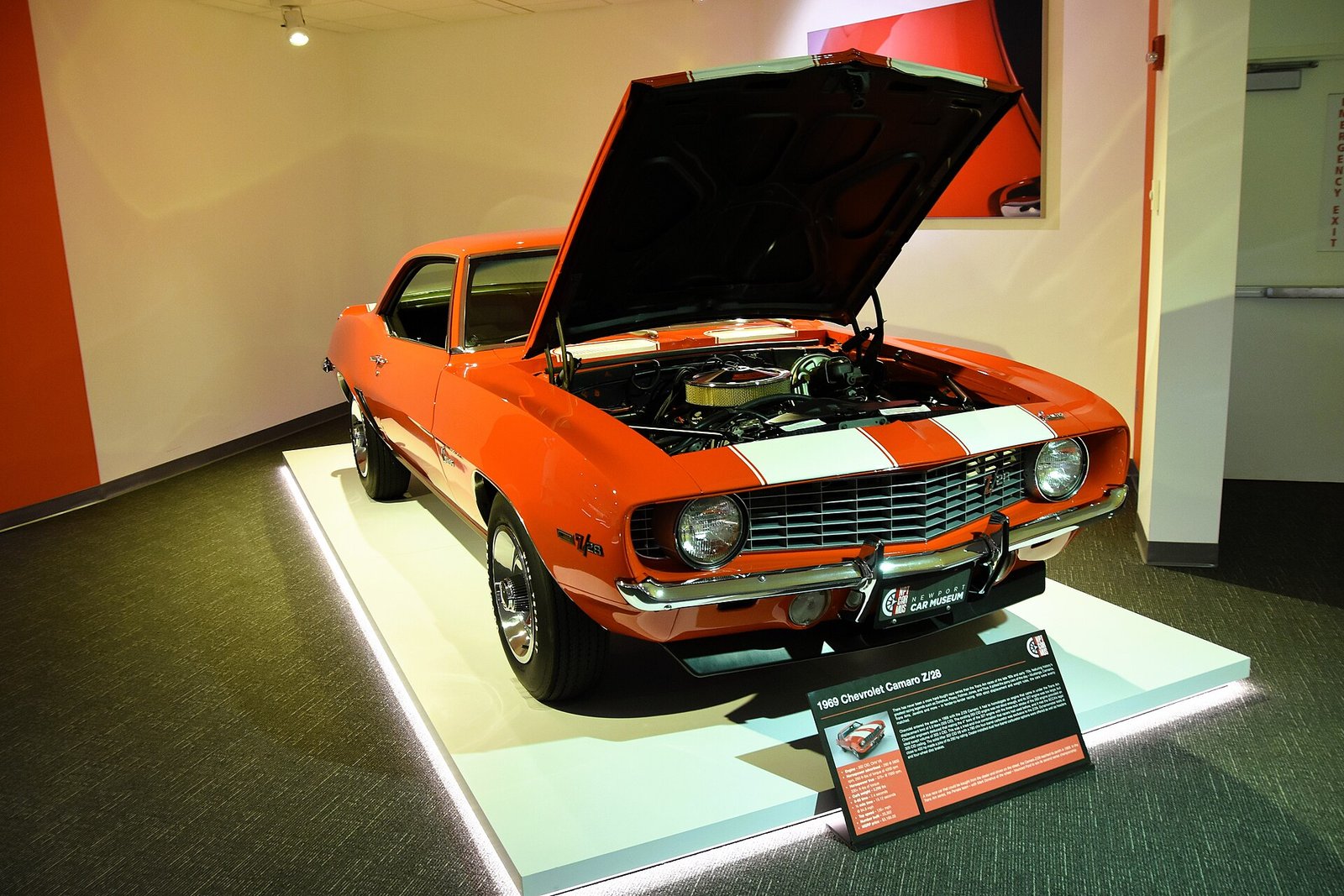
Original photographLicenseOrange 1969 Camaro Z/28 coupe with white twin hood stripes and Z/28 badges, hood open, front three-quarter view, in a museum display Photo: Charles, CC0, via Wikimedia Commons
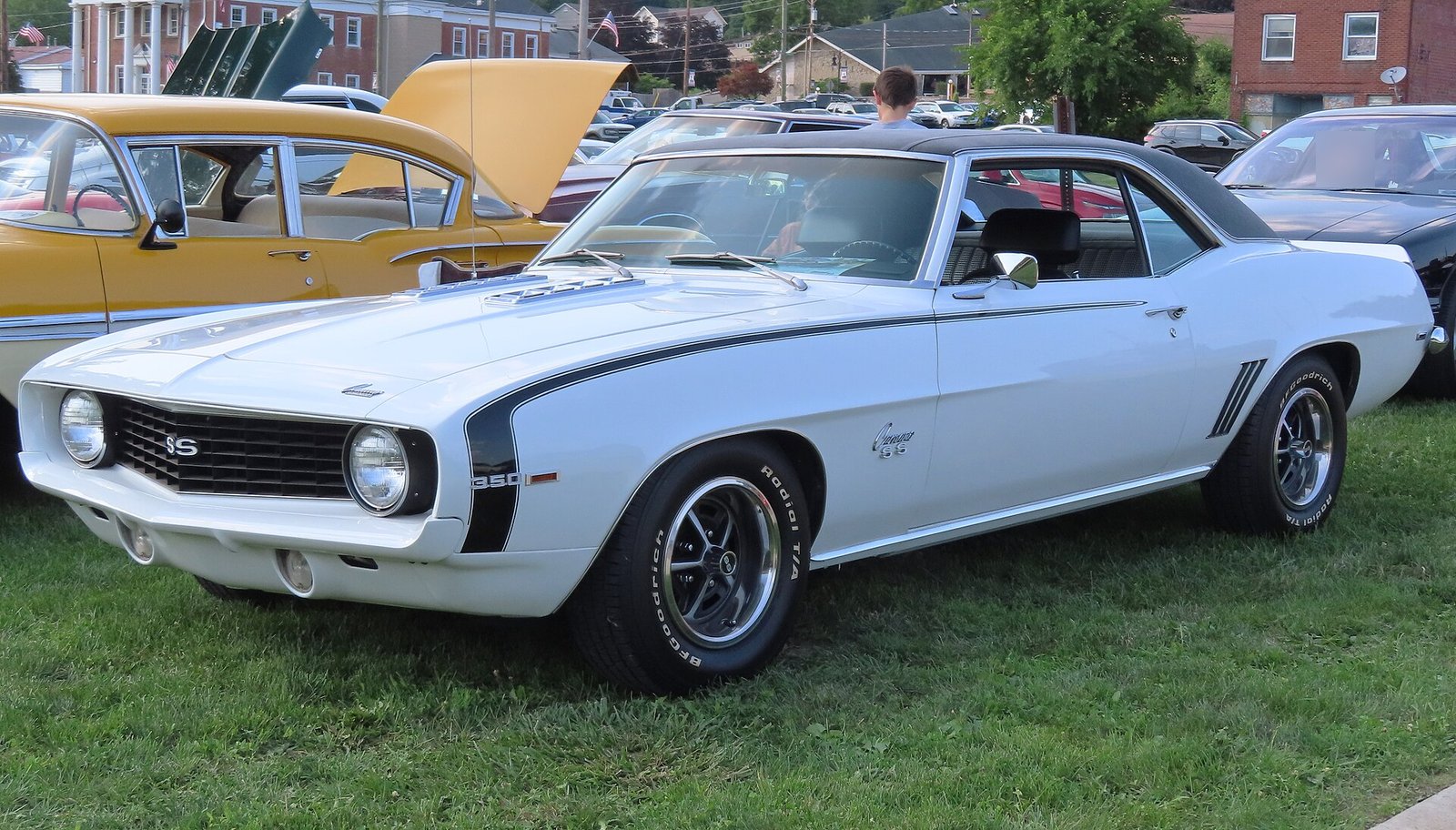
Original photographLicenseWhite 1969 Camaro SS coupe with black vinyl roof, black side stripe, SS hood inserts, SS grille badge and 350 fender badge, front left three-quarter view, at an outdoor car show Photo: MercurySable99, CC BY-SA 4.0, via Wikimedia Commons; faces blurred
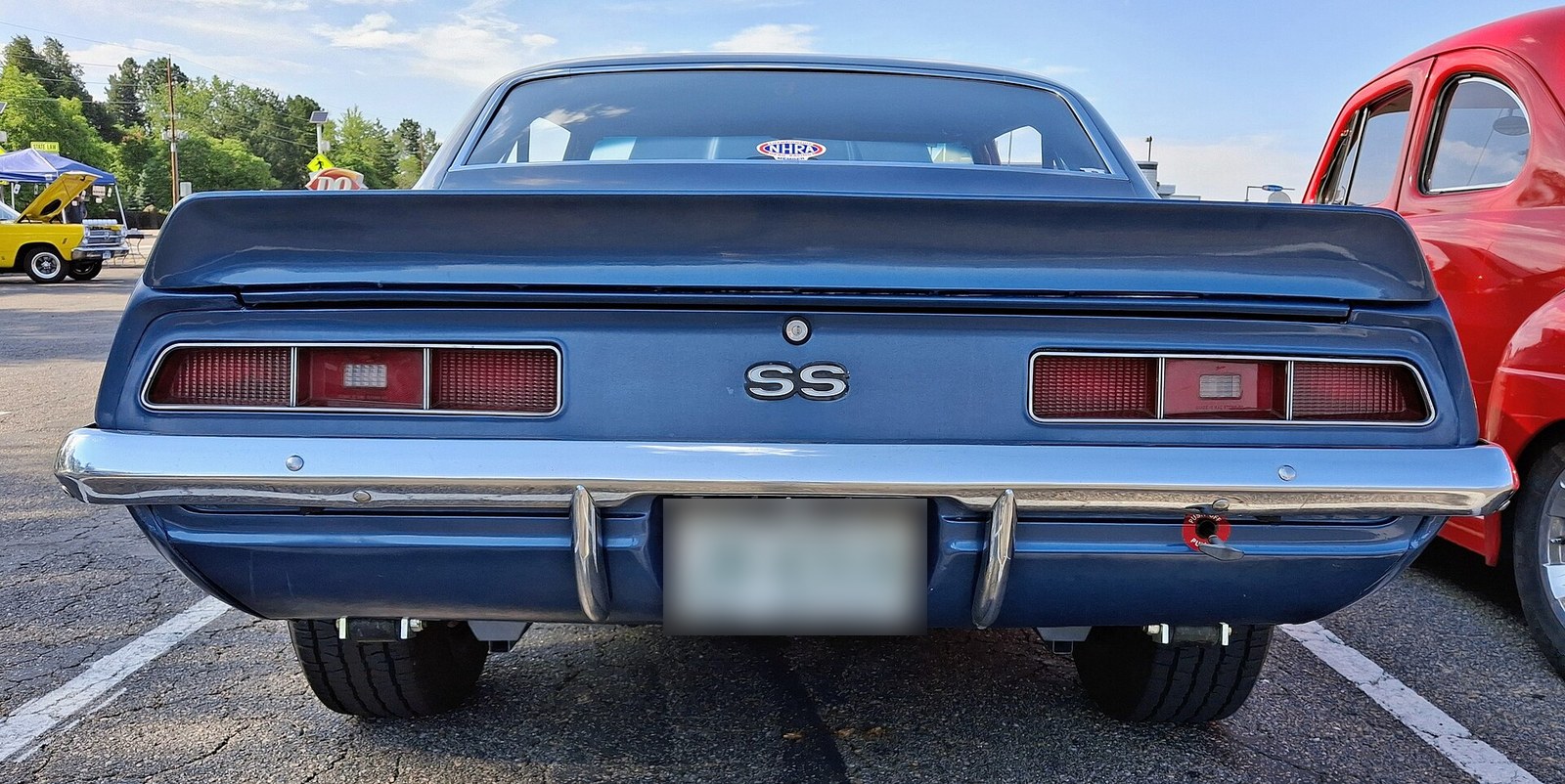
Original photographLicenseBlue 1969 Camaro SS coupe with rear spoiler and SS rear badge, rear view, at a car show in a parking lot Photo: Xnatedawgx, CC BY-SA 4.0, via Wikimedia Commons; licence plates blurred
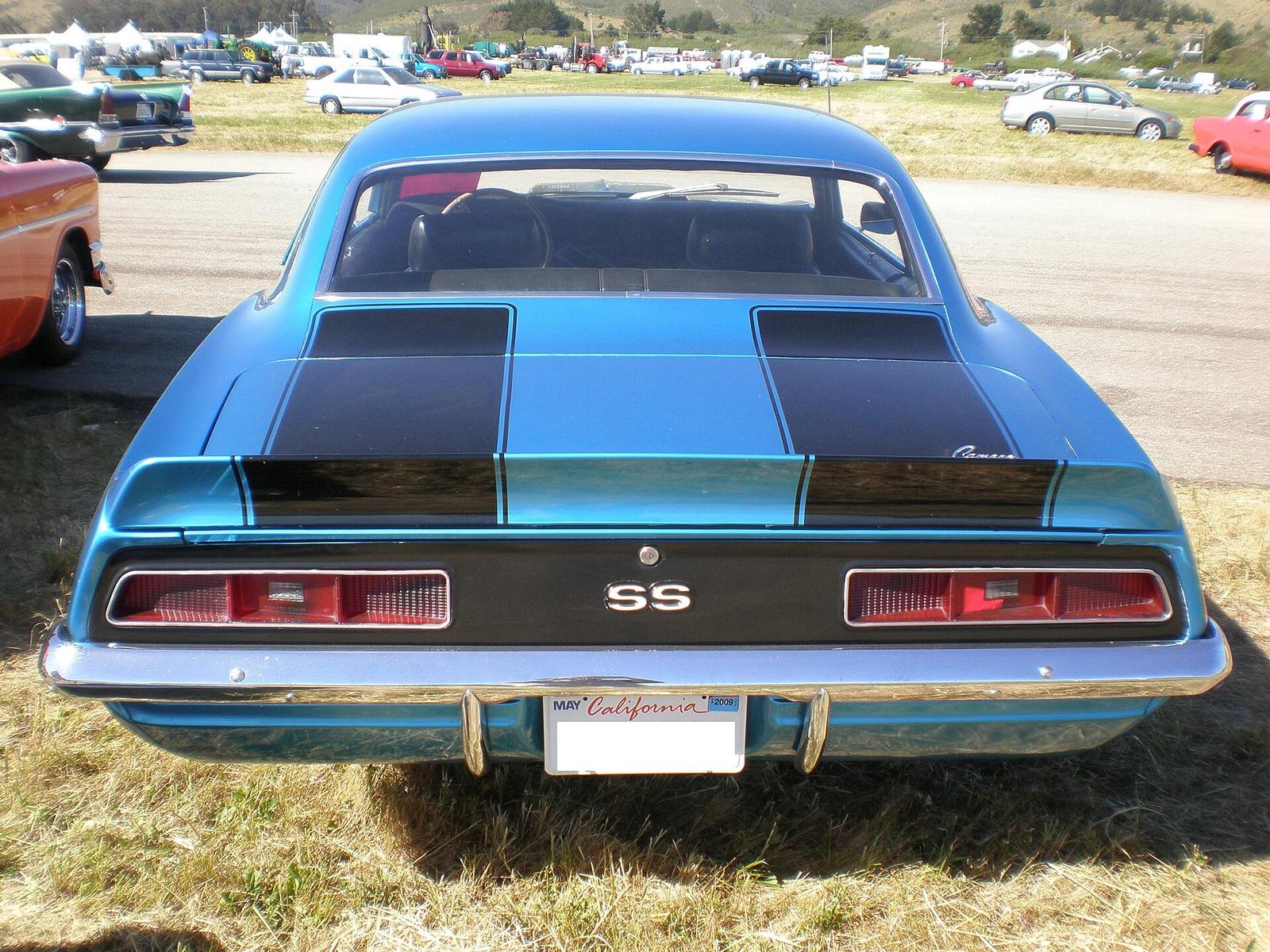
Original photographLicenseBlue 1969 Camaro SS coupe with black rear-deck stripe, rear view, at an outdoor airfield car show Photo: BrokenSphere, CC BY-SA 3.0, via Wikimedia Commons
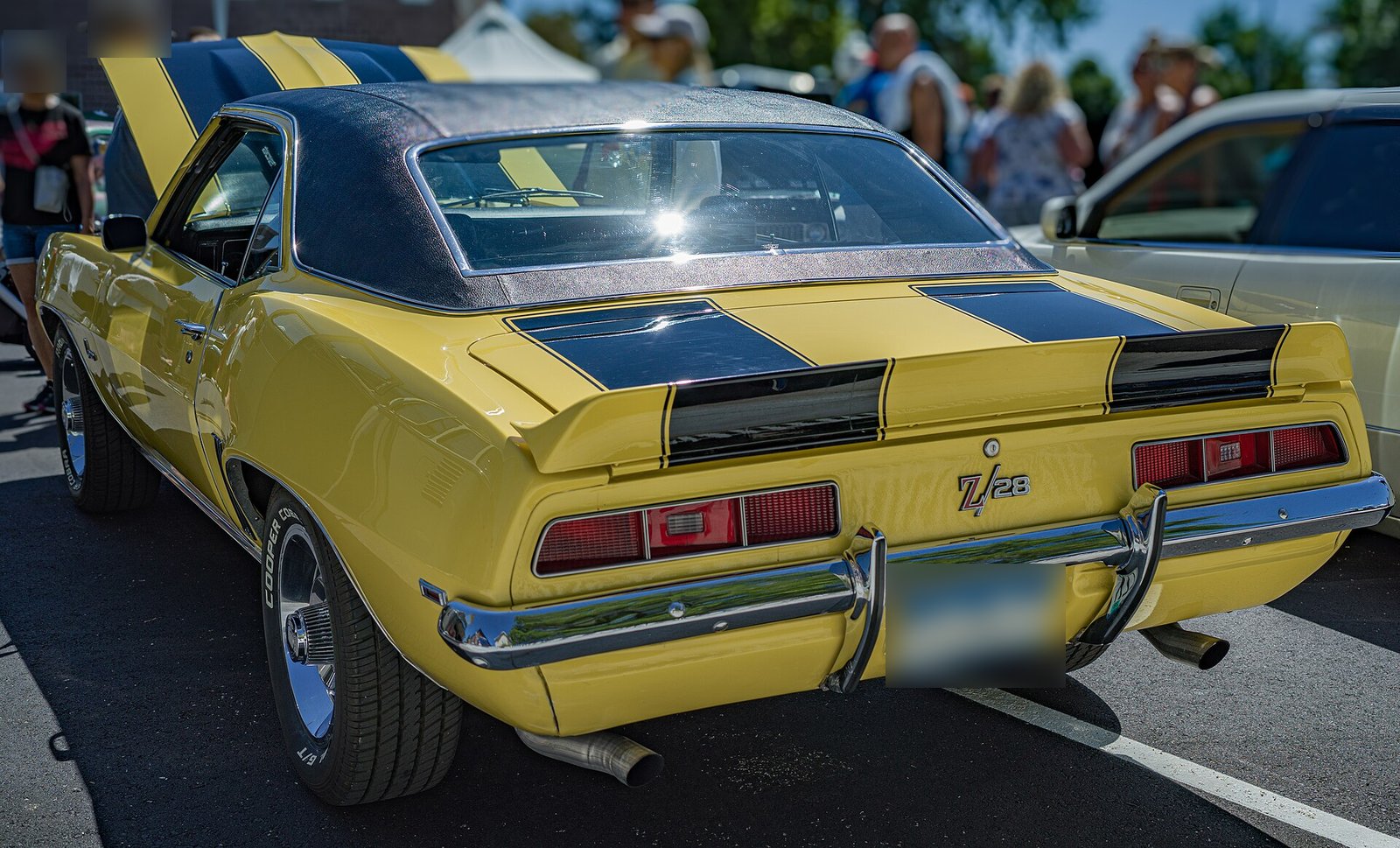
Original photographLicenseYellow 1969 Camaro Z/28 coupe with black vinyl roof, twin black deck stripes, rear spoiler and Z/28 badge, rear three-quarter view, at an outdoor car show Photo: BUTTON74, CC BY-SA 4.0, via Wikimedia Commons; licence plates and faces blurred
Original photographLicense
Exterior colors
This table has 24 exterior colors for 1969, each with its paint code. They include Tuxedo Black, Butternut Yellow and Dover White.
Code
Color
Note
10
Tuxedo Black
40
Butternut Yellow
50
Dover White
51
Dusk Blue
52
Garnet Red
53
Glacier Blue
55
Azure Turquoise
57
Fathom Green
59
Frost Green
61
Burnished Brown
63
Champagne
65
Olympic Gold
67
Burgundy
69
Cortez Silver
71
LeMans Blue
72
Hugger Orange
76
Daytona Yellow
79
Rallye Green
A
White convertible top (convertibles only)
Second character of the paint code
B
Black (vinyl or convertible top)
Second character of the paint code
C
Dark Blue vinyl top
Second character of the paint code
E
Parchment (off-white) vinyl top
Second character of the paint code
F
Dark Brown vinyl top
Second character of the paint code
S
Midnight Green vinyl top
Second character of the paint code
Black 1969 Camaro SS coupe with white hockey-stick stripe and SS 350 badges, front three-quarter view, indoors at a museum Photo: Giftzwerg 88, CC BY-SA 3.0, via Wikimedia Commons
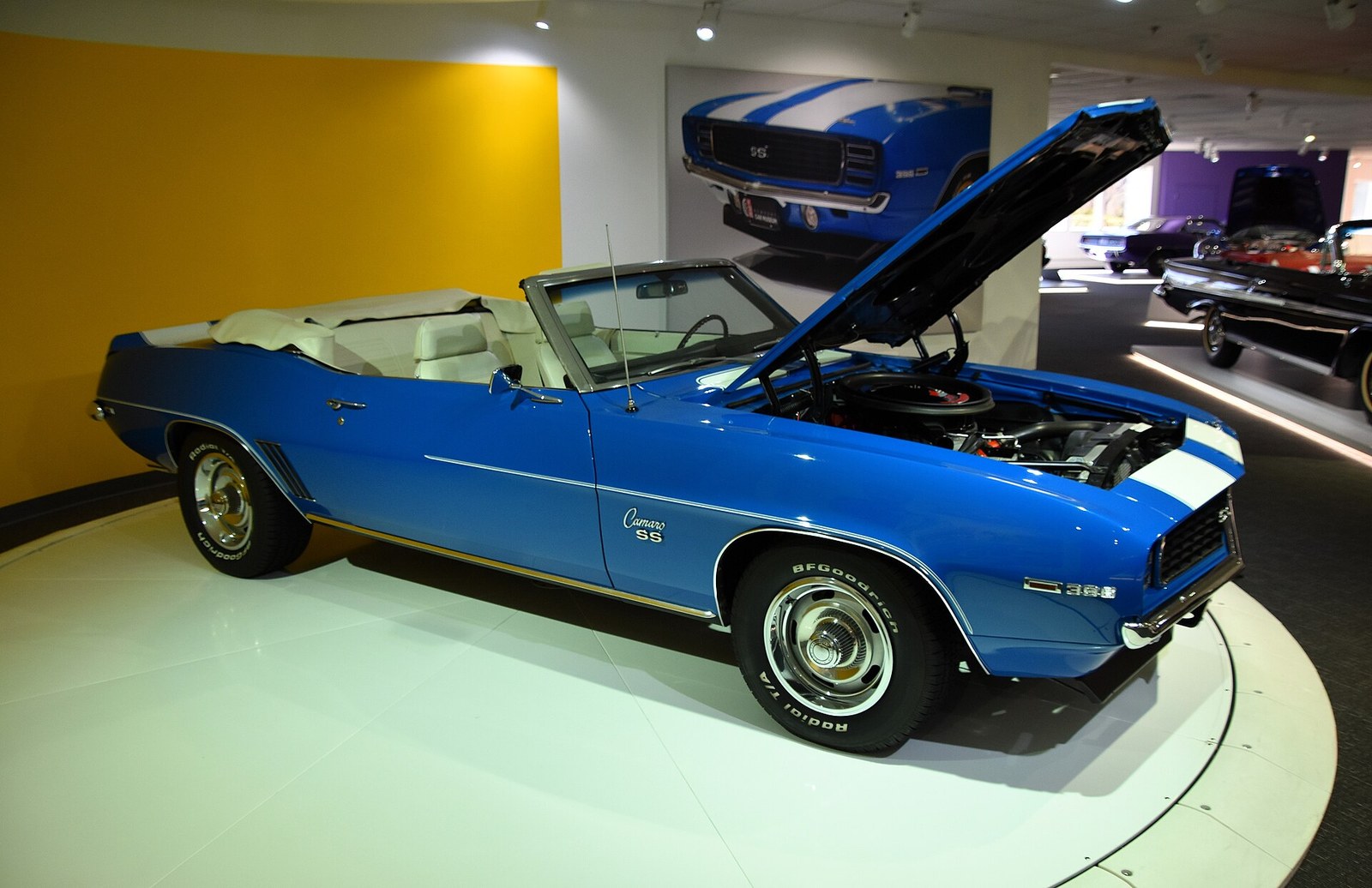
Original photographLicenseBlue 1969 Camaro SS 396 convertible with white nose stripes, RS hidden headlamps and white interior, hood open, side profile, indoors at a museum Photo: Charles, CC0, via Wikimedia Commons
Original photographLicenseBlue 1969 Camaro SS coupe with SS script, SS grille badge and 350 fender badge, hood open, right side profile, at a parking-lot car cruise Photo: Xnatedawgx, CC BY-SA 4.0, via Wikimedia Commons; faces blurred
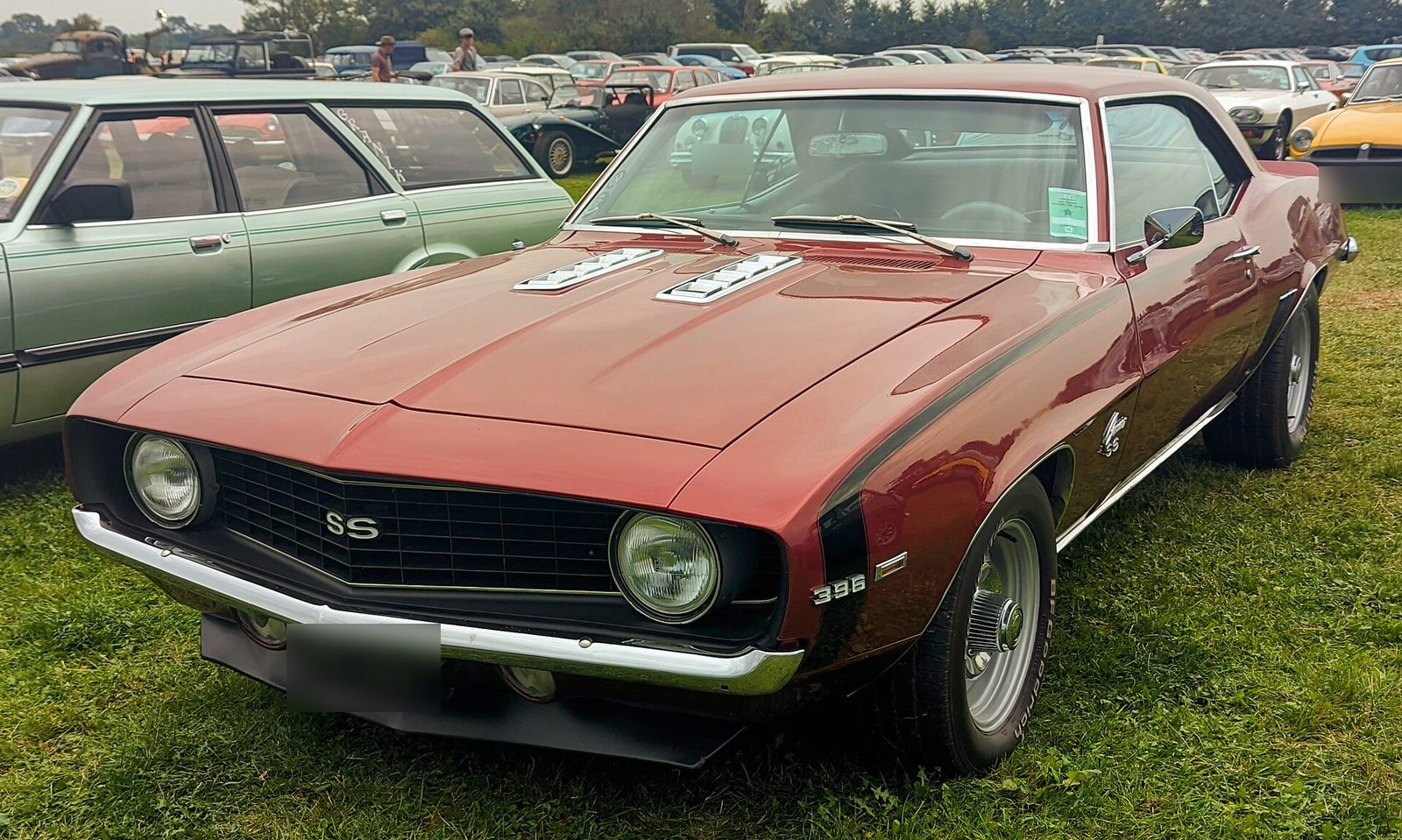
Original photographLicenseMaroon 1969 Camaro SS 396 coupe with front fender stripe and hood inserts, front three-quarter view, at an outdoor car show on grass Photo: Calreyn88, CC BY 4.0, via Wikimedia Commons; licence plates blurred
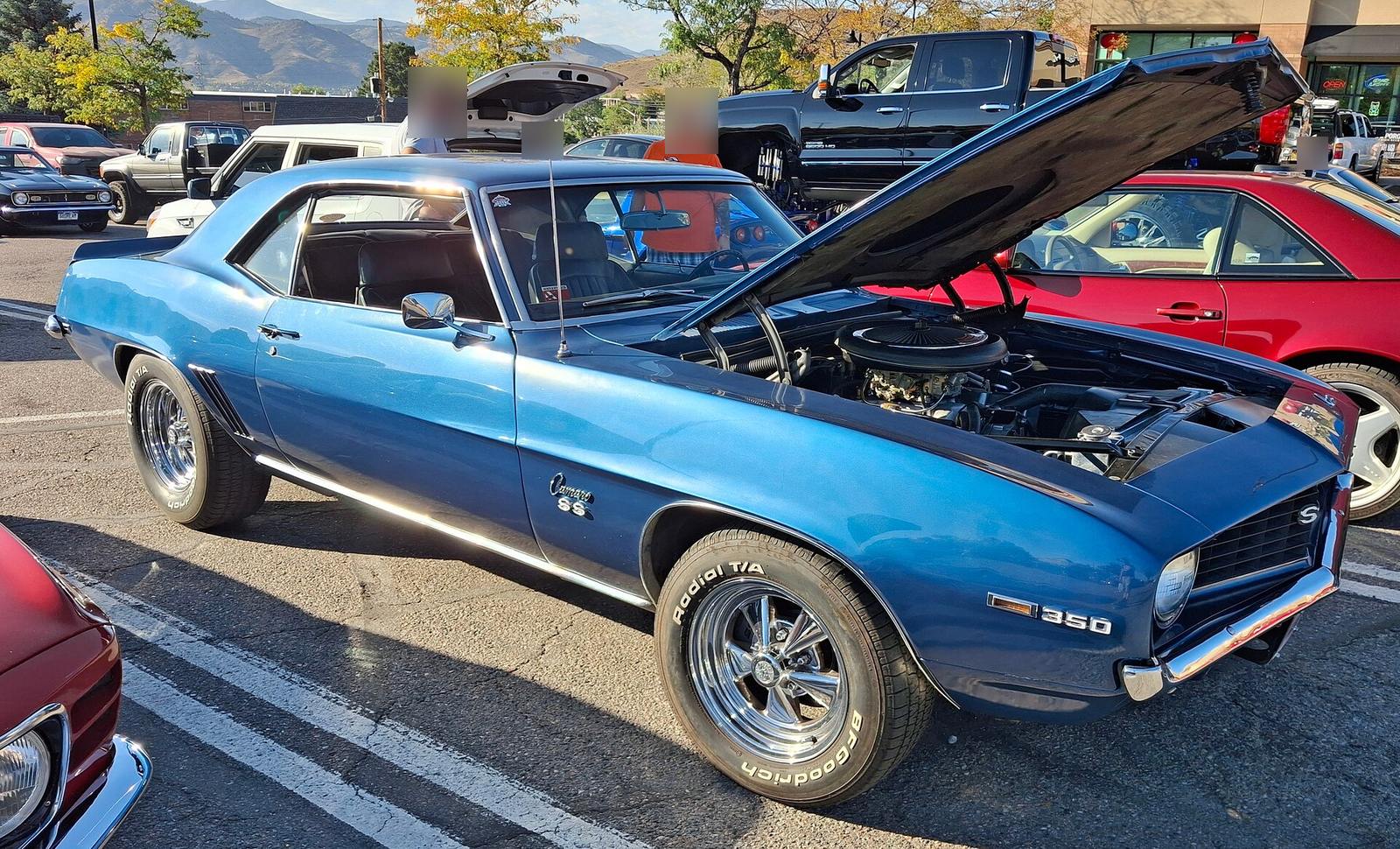
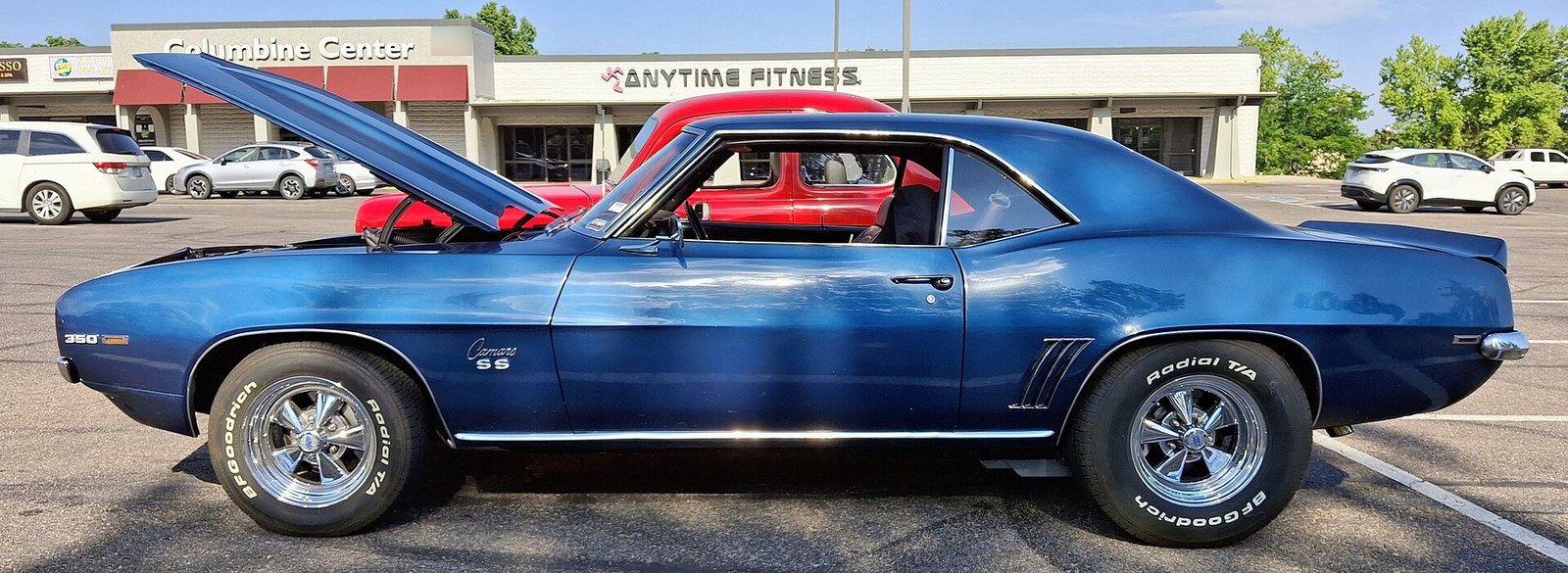
Original photographLicenseBlue 1969 Camaro SS 350 coupe with Camaro SS fender script and 350 badge, hood raised, side profile, in a shopping-centre parking lot Photo: Xnatedawgx, CC BY-SA 4.0, via Wikimedia Commons; street numbers blurred
Original photographLicenseBlue 1969 Camaro Z/28 coupe with black twin hood stripes, 302 hood badge, Z/28 grille and fender badges and black vinyl roof, front three-quarter view, at an outdoor grass show Photo: Calreyn88, CC BY-SA 4.0, via Wikimedia Commons; licence plates blurred
Original photographLicenseLight blue 1969 Camaro SS coupe with white twin hood stripes, SS grille and fender badges and 350 badge, front three-quarter view, parked on a street at a car show Photo: MercurySable99, CC BY-SA 4.0, via Wikimedia Commons
Original photographLicense
Interior trim
This table has 13 interior trims for 1969, each with its trim code.
The Chevrolet Color and Trim Choices sheet, printed p. 12 (GM kit PDF p. 154), independently lists thirteen retained codes: six standard-vinyl and five Z87 custom-vinyl Strato-bucket choices for Sport Coupe/convertible, plus two Z87 houndstooth cloth-and-vinyl choices for Sport Coupe only. Ivory/Black 727 has no custom-vinyl counterpart in this sheet. Its paint/interior dots are compatibility limits, and its two-tone design is Sport Coupe only; availability-check footnotes are not production cutoffs. The exact publication date of this sheet is unverified. CRG separately reports additional Yellow 714/Orange 720 houndstooth references and a Z11 pace-car exception; they are not printed in this sheet, so no complete all-year houndstooth or convertible compatibility rule is inferred from its thirteen rows. Individual authenticity and a VIN-to-upholstery crosswalk are not established.
Code
Trim
Note
711
Black vinyl, standard Strato-bucket
The factory chart lists this standard-vinyl Strato-bucket code for Sport Coupe and convertible; a shared color does not establish a custom version.
712
Black vinyl, custom interior (RPO Z87)
The factory chart lists this Z87 custom-vinyl Strato-bucket code for Sport Coupe and convertible; Ivory/Black has no custom-vinyl cell.
715
Blue vinyl, standard
The factory chart lists this standard-vinyl Strato-bucket code for Sport Coupe and convertible; a shared color does not establish a custom version.
716
Blue vinyl, custom
The factory chart lists this Z87 custom-vinyl Strato-bucket code for Sport Coupe and convertible; Ivory/Black has no custom-vinyl cell.
721
Medium Green vinyl, standard
The factory chart lists this standard-vinyl Strato-bucket code for Sport Coupe and convertible; a shared color does not establish a custom version.
722
Medium Green vinyl, custom
The factory chart lists this Z87 custom-vinyl Strato-bucket code for Sport Coupe and convertible; Ivory/Black has no custom-vinyl cell.
727
Ivory/Black vinyl, standard
The factory chart lists this standard-vinyl Strato-bucket code for Sport Coupe and convertible; a shared color does not establish a custom version.
718
Red vinyl, standard
The factory chart lists this standard-vinyl Strato-bucket code for Sport Coupe and convertible; a shared color does not establish a custom version.
719
Red vinyl, custom
The factory chart lists this Z87 custom-vinyl Strato-bucket code for Sport Coupe and convertible; Ivory/Black has no custom-vinyl cell.
723
Midnight Green vinyl, standard
The factory chart lists this standard-vinyl Strato-bucket code for Sport Coupe and convertible; a shared color does not establish a custom version.
725
Midnight Green vinyl, custom
The factory chart lists this Z87 custom-vinyl Strato-bucket code for Sport Coupe and convertible; Ivory/Black has no custom-vinyl cell.
713
Black houndstooth cloth and vinyl, custom
Sport Coupe only. The factory chart lists this houndstooth cloth-and-vinyl code for Sport Coupe with Z87 only; the solid-vinyl rows do not extend it to other bodies.
729
Ivory houndstooth cloth and vinyl, custom
Sport Coupe only. The factory chart lists this houndstooth cloth-and-vinyl code for Sport Coupe with Z87 only; the solid-vinyl rows do not extend it to other bodies.
Specifications
This table gives seven specifications for 1969, among them wheelbase (108.0 in) and overall length (186.0 in).
Item
Value
Note
Wheelbase
108.0 in
Overall length
186.0 in
Overall width
74.0 in
Overall height
51.1 in
Z/28 coupe
Track, front / rear
59.6 / 59.5 in
Standard tire
E78 x 14
Fuel tank
18 gal
Black 1969 Camaro SS coupe with white side stripe, SS hood inserts, SS grille badge and 350 fender badge, front three-quarter view, at a car show Photo: Jeremy, CC BY 2.0, via Wikimedia Commons; licence plates and faces blurred
Original photographLicensePale yellow 1969 Camaro SS coupe with black vinyl roof, black nose stripe, SS grille badge and 350 fender badge, front three-quarter view, in a parking lot Photo: Greg Gjerdingen, CC BY 2.0, via Wikimedia Commons; licence plates blurred
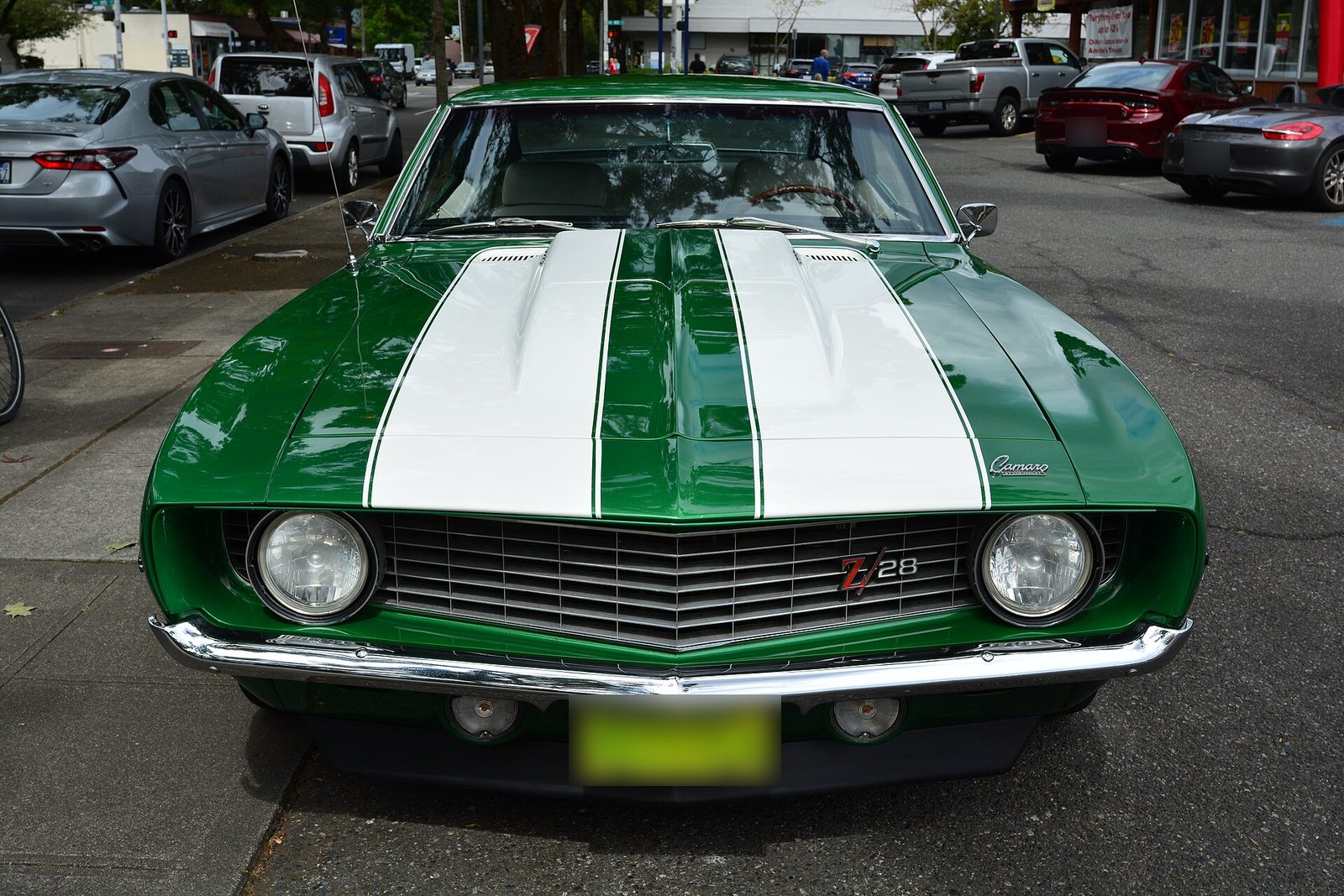
Original photographLicenseGreen 1969 Camaro Z/28 coupe with Z/28 grille badge, white hood stripe and raised cowl hood, front view, parked on a street Photo: Joe Mabel, CC BY-SA 4.0, via Wikimedia Commons; licence plates blurred
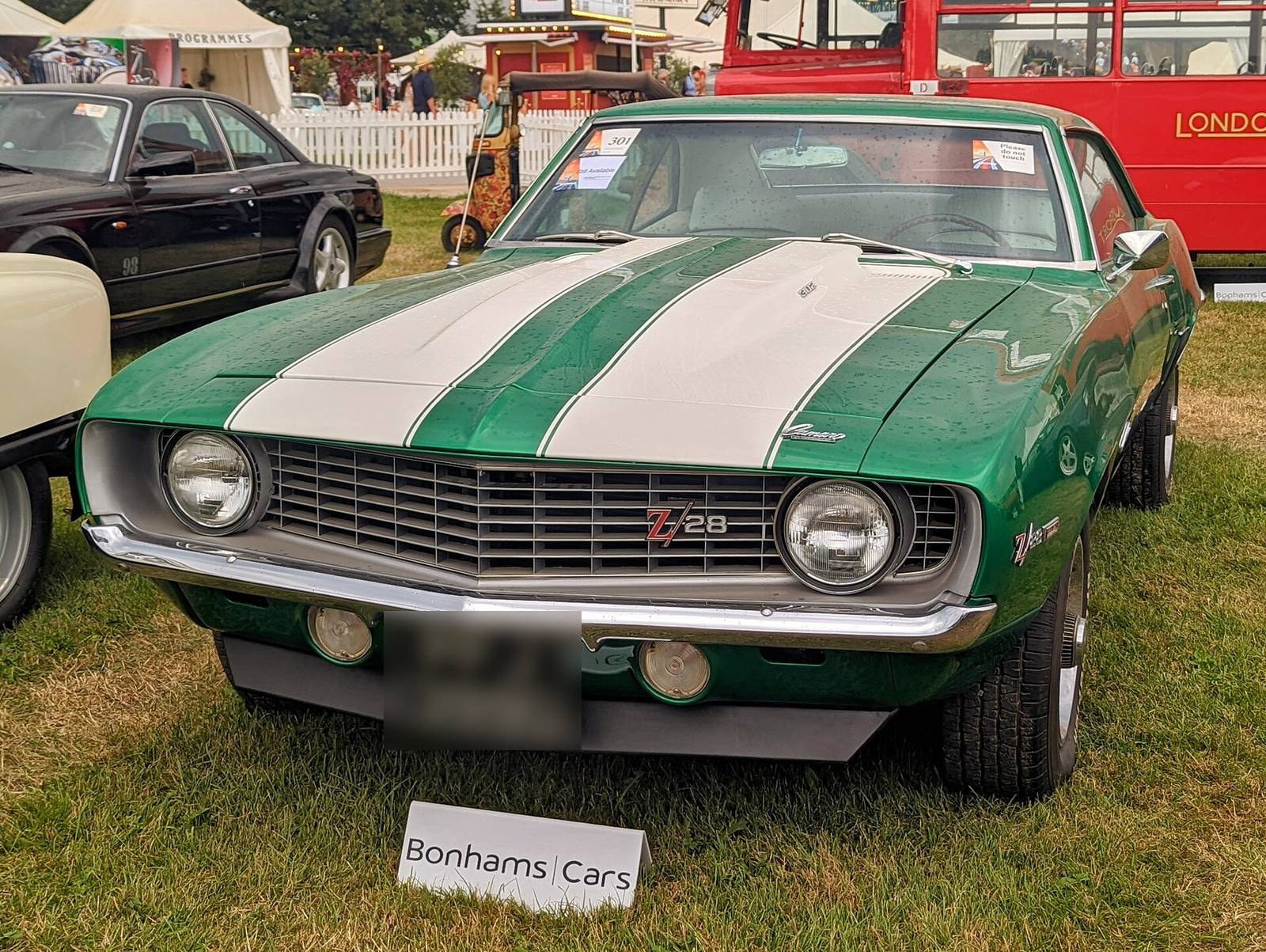
Original photographLicenseGreen 1969 Camaro Z/28 coupe with white hood stripes, front view, on grass at an auction display Photo: Calreyn88, CC BY 4.0, via Wikimedia Commons; licence plates blurred
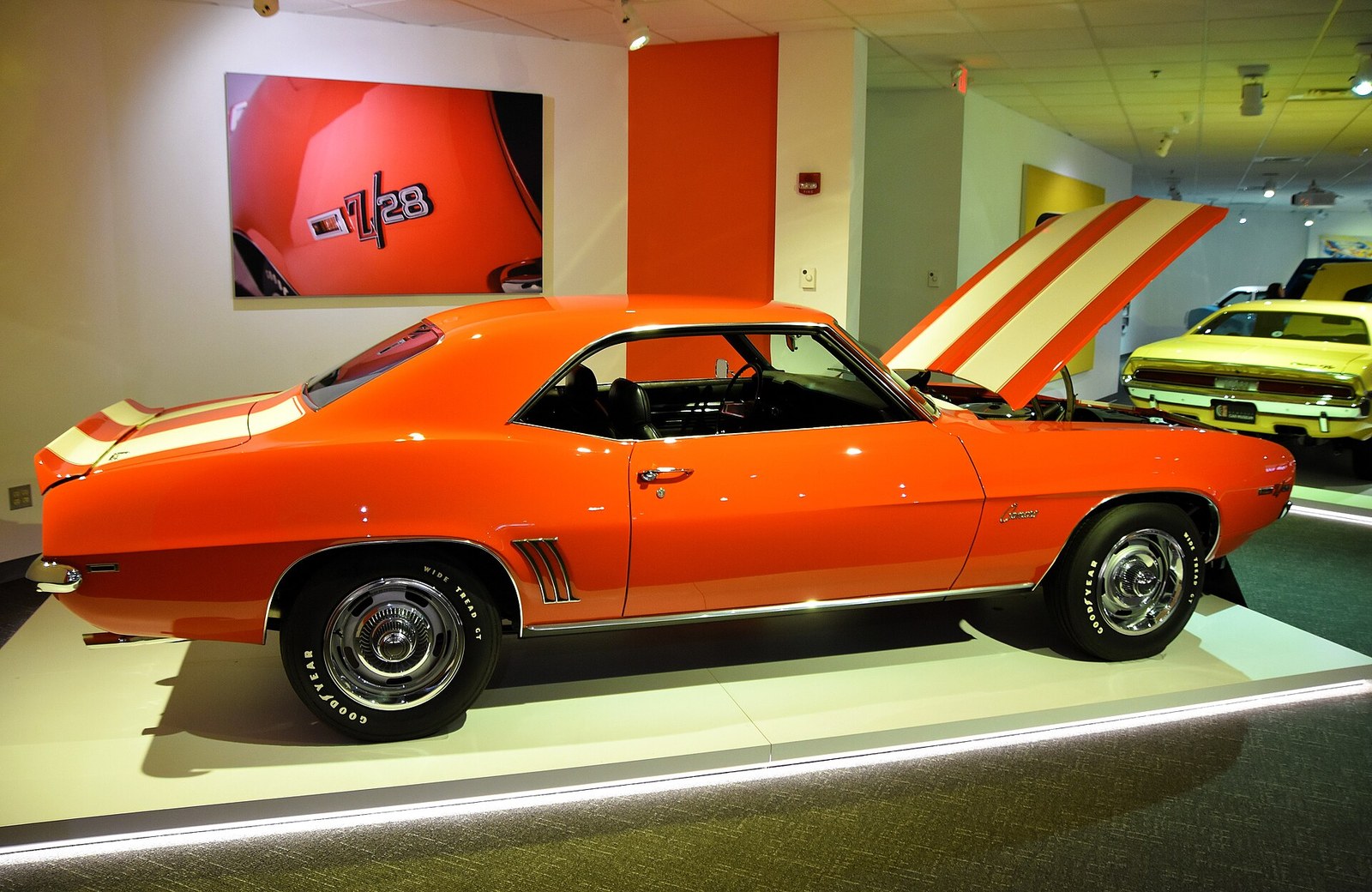
Original photographLicenseOrange 1969 Camaro Z/28 coupe with white twin hood and deck-lid stripes and rear spoiler on rally wheels, hood raised, right side profile, in a museum gallery Photo: Charles, CC0, via Wikimedia Commons
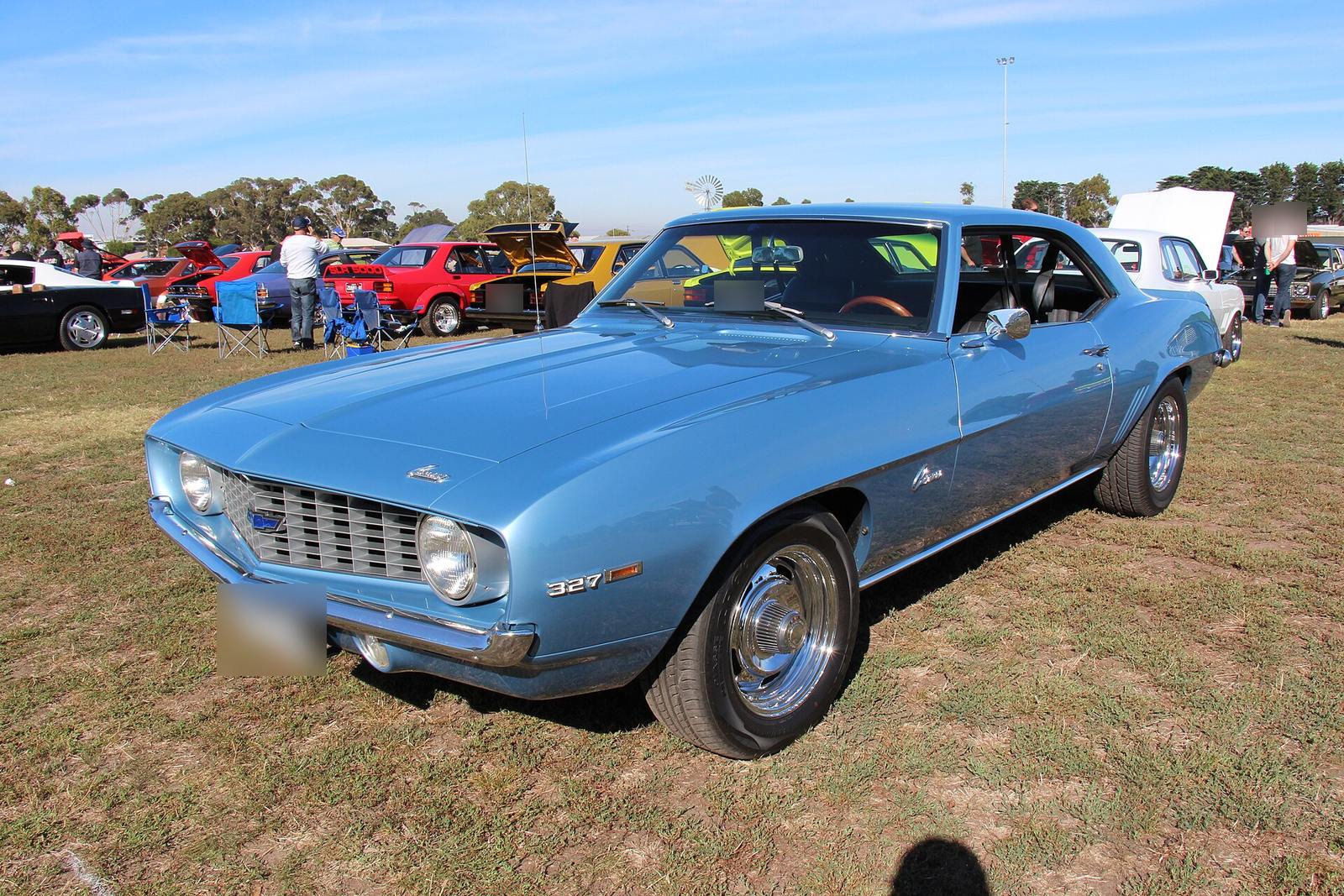
Original photographLicenseLight blue 1969 Camaro coupe with 327 fender badge, left front three-quarter view, at an outdoor car show on grass Photo: Sicnag, CC BY 2.0, via Wikimedia Commons; licence plates and faces blurred
Original photographLicenseBlack 1969 Camaro Z/28 RS coupe with hidden headlamps, white hood stripes and Z/28 grille badge, front three-quarter view, at an outdoor car show Photo: Shane K, CC BY-SA 2.0, via Wikimedia Commons; licence plates and faces blurred
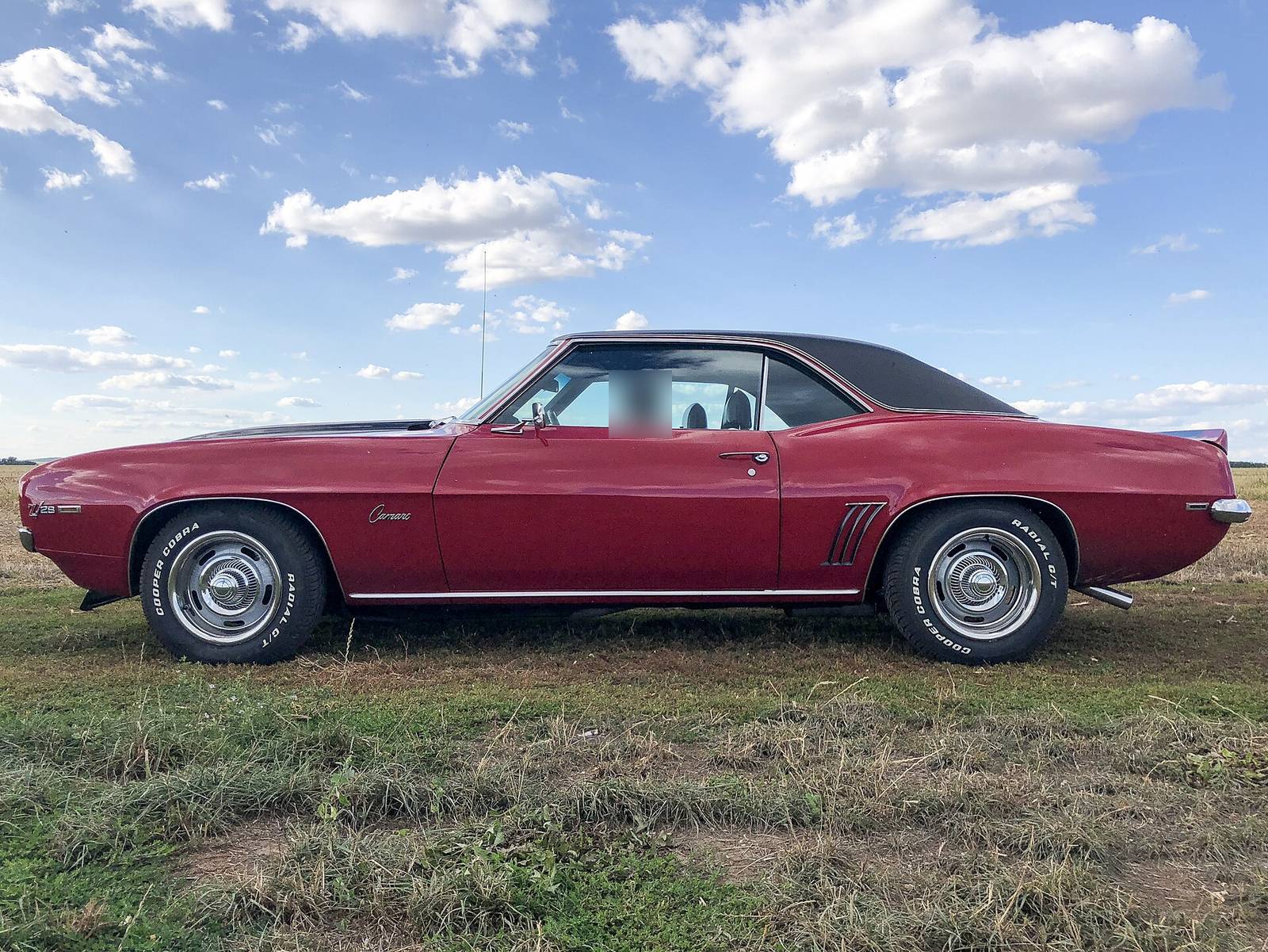
Original photographLicenseRed 1969 Camaro Z/28 coupe with black vinyl roof, Z/28 fender badge and rally wheels, side profile, parked in an open field Photo: MerlinS.69, CC BY-SA 4.0, via Wikimedia Commons; faces blurred
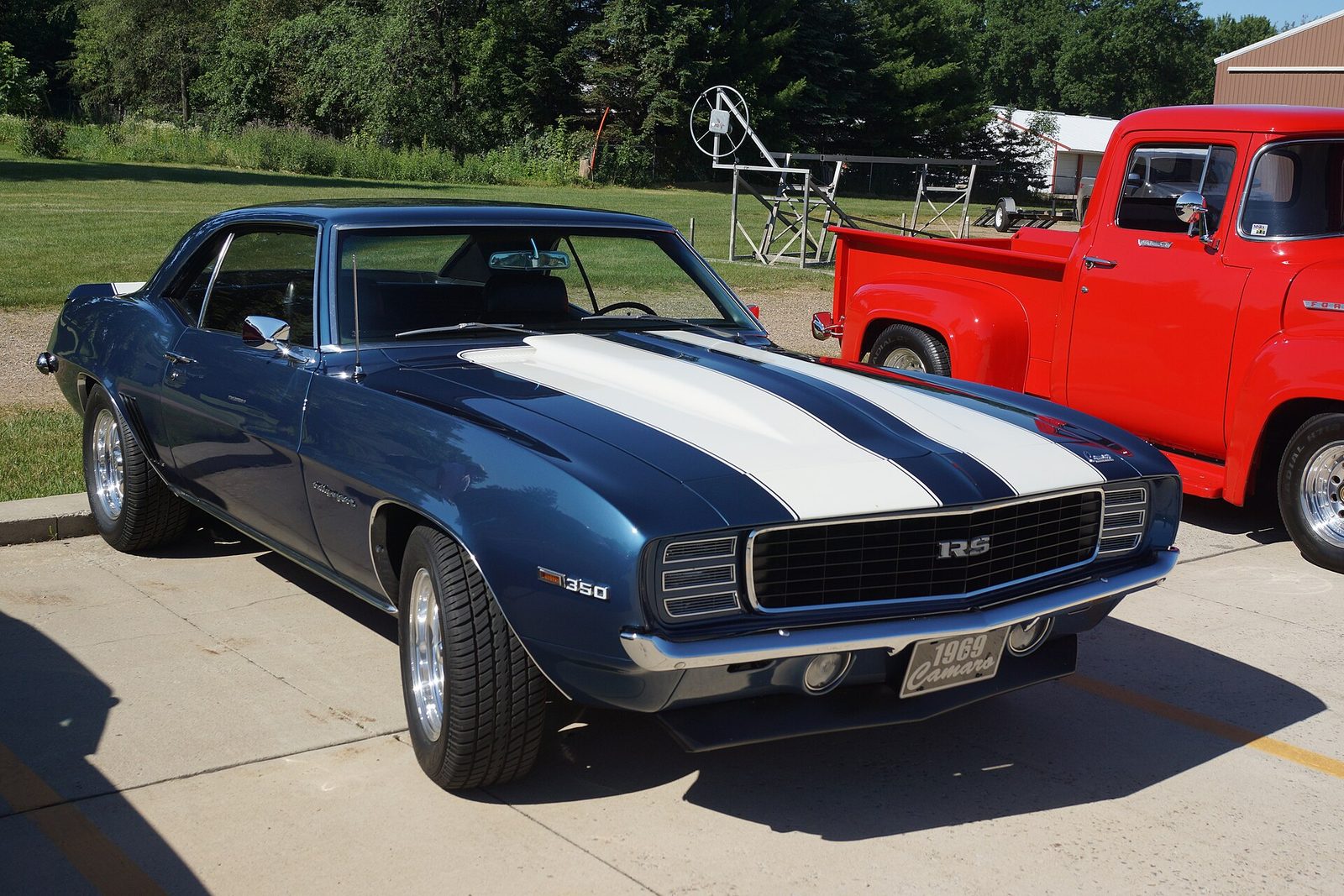
Original photographLicenseDark blue 1969 Camaro RS coupe with RS grille badge and hidden headlamps, twin white hood stripes and 350 fender badge, front three-quarter view, on a concrete apron at a rural car show Photo: Greg Gjerdingen, CC BY 2.0, via Wikimedia Commons
Original photographLicense
Identification
What to check on a 1969 Camaro: VIN, cowl tag, engine pad, year cues, X-codes and COPO cars.
Item
What to look for
Note
VIN
123/437/67 9N/L 100001-up
Characters: 1 Chevrolet, 2 Camaro, 3 six-cylinder or 4 V8, body 37 coupe or 67 convertible, year, plant N Norwood or L Van Nuys, sequence
Cowl tag
Fisher Body plate on the firewall beside the brake booster
Build date, body style, trim and paint codes
Engine pad
Stamped ahead of the passenger-side cylinder head
Plant, assembly date and application suffix (see engine table)
Year cues
All-new sheet metal; numeric paint codes on the cowl tag
Paint numeric, top codes alphabetic — the reverse of 1967–68
X-codes
X11–X77 on mid-year Norwood cowl tags; X33 and X77 indicate Z/28
Van Nuys cars never carried X-codes
COPO cars
No external badging; confirmed by cowl tag, engine stamping and build documents
A big-block SS looks the same at a glance
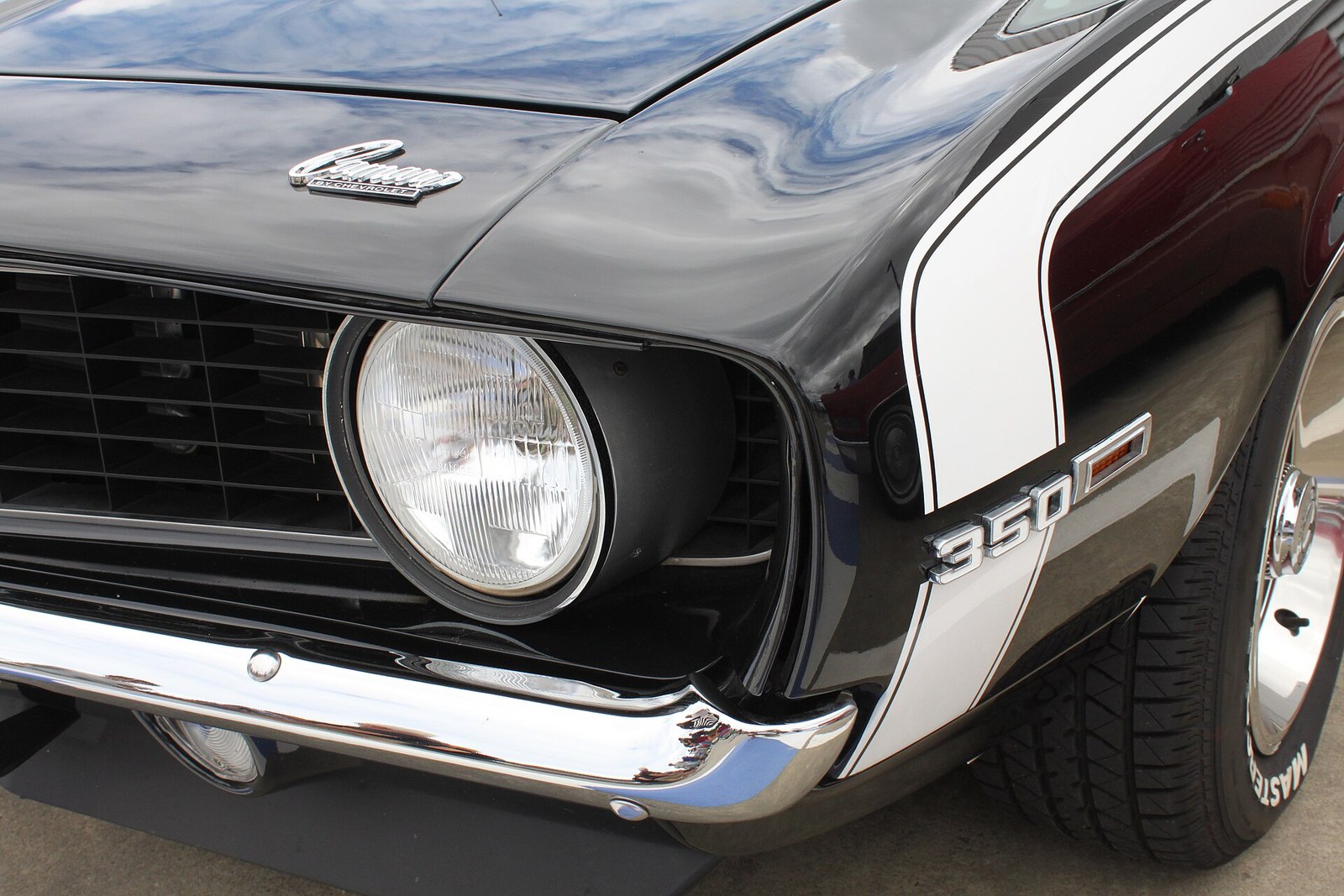
Black 1969 Camaro with white fender stripe, close-up of headlamp, grille, nose badge and 350 fender badge, at an outdoor car show Photo: Jeremy, CC BY 2.0, via Wikimedia Commons
Original photographLicenseBlack 1969 Camaro with white front fender stripe, 350 badge and side marker, low-angle front fender and side detail, in a parking area Photo: Jeremy, CC BY 2.0, via Wikimedia Commons
Original photographLicense
No year did more for the first generation's collector reputation, and its sheet metal lasted a single season.
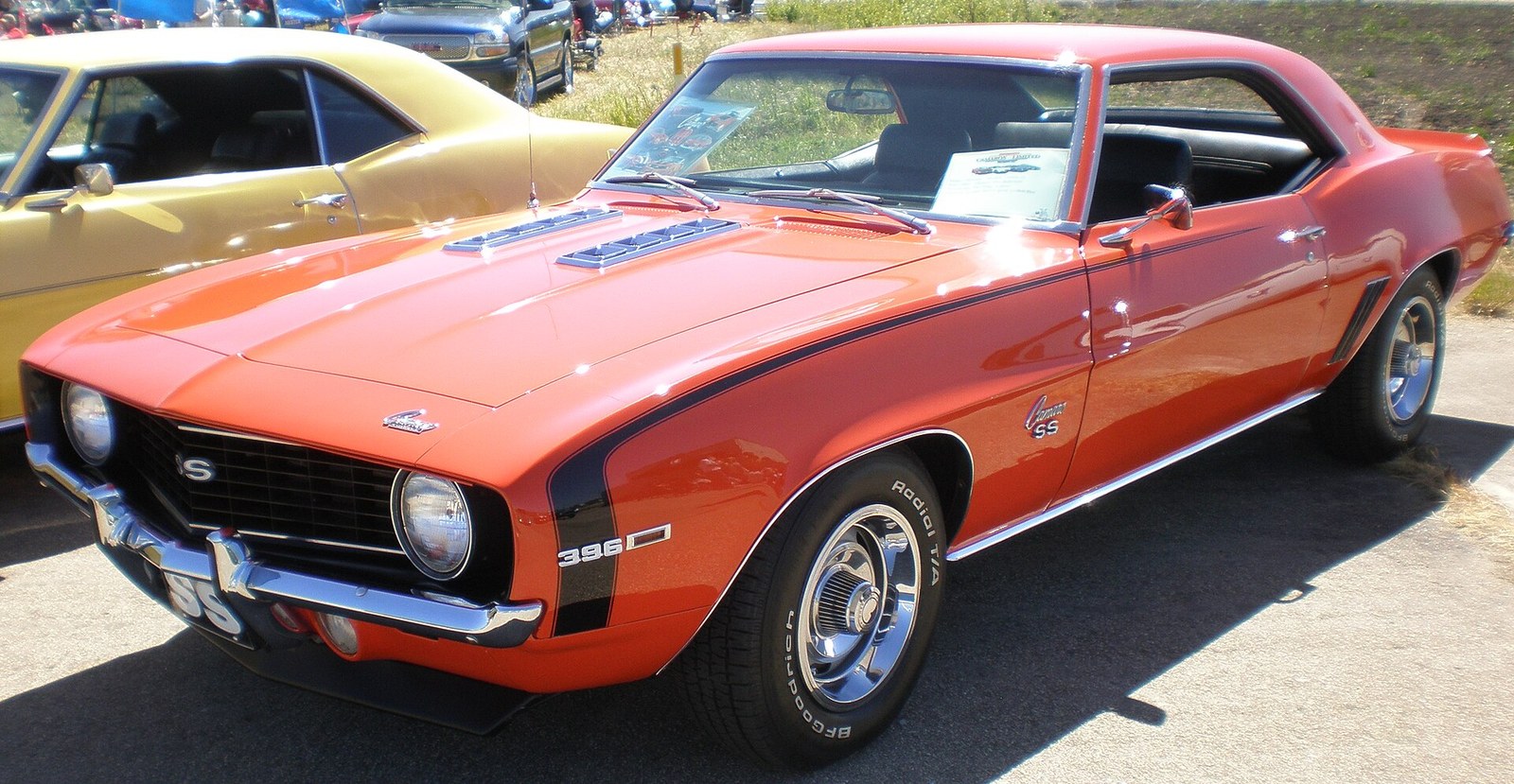
Orange 1969 Camaro SS 396 coupe with front fender stripe and hood inserts, front three-quarter and side view, at an outdoor car show Photo: BrokenSphere, CC BY-SA 3.0, via Wikimedia Commons
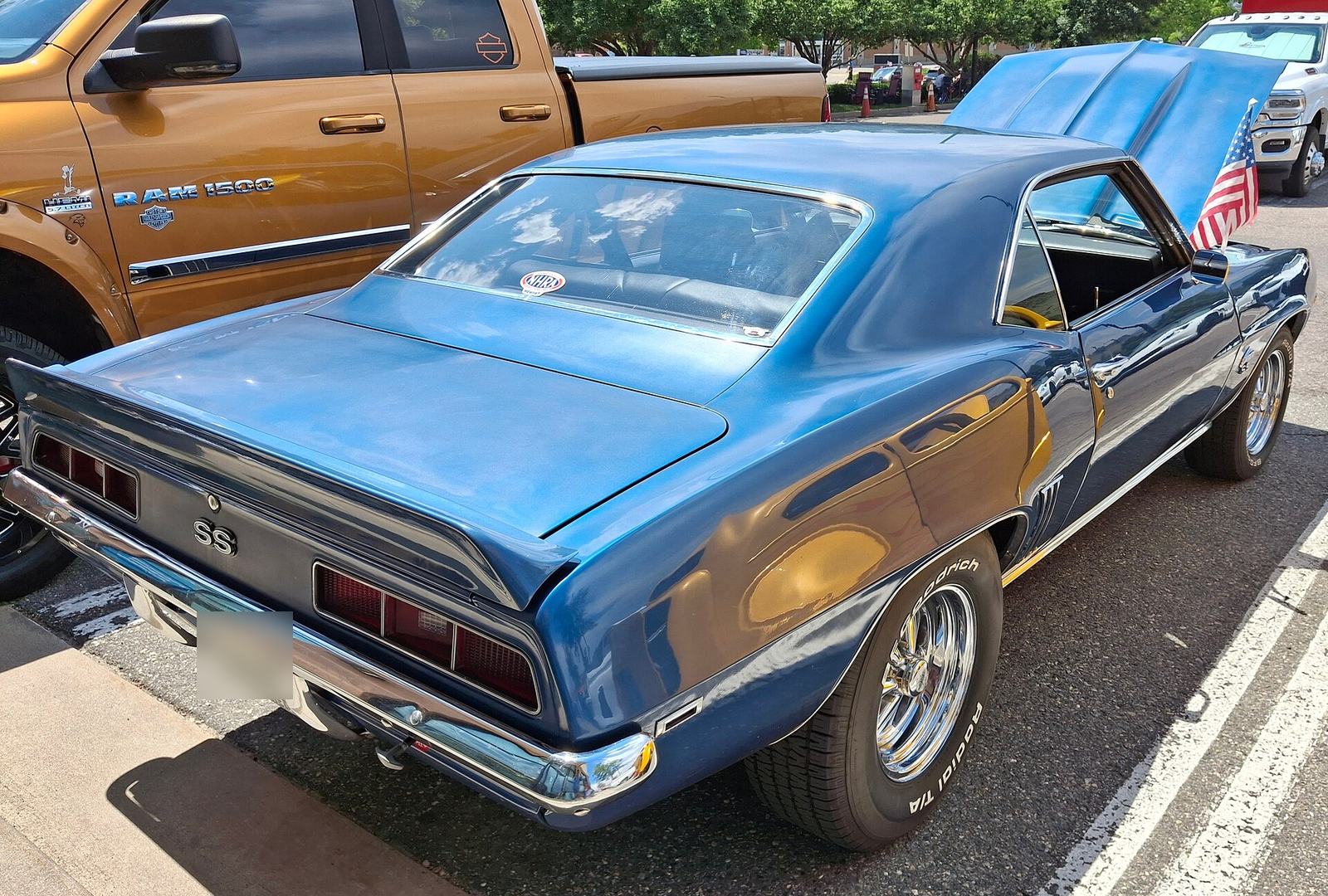
Original photographLicenseBlue 1969 Camaro SS coupe with SS rear badge and rear spoiler, hood raised with a small US flag, rear three-quarter view, in a parking lot at a cruise Photo: Xnatedawgx, CC BY-SA 4.0, via Wikimedia Commons; licence plates blurred
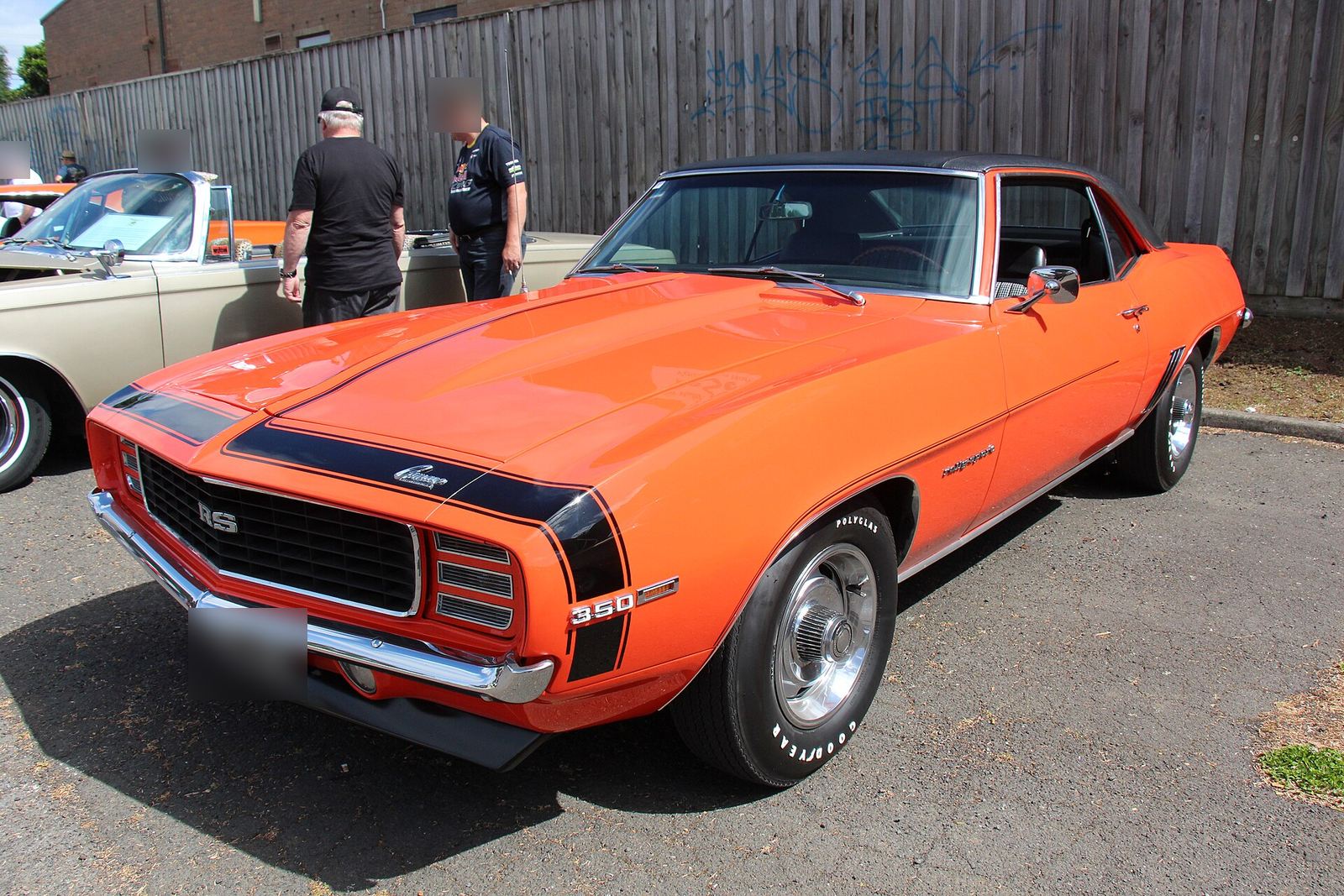
Original photographLicenseOrange 1969 Camaro RS coupe with RS grille badge and hidden headlamps, black nose and fender stripe, 350 badge and black vinyl roof, front three-quarter view, at an outdoor car show Photo: Sicnag, CC BY 2.0, via Wikimedia Commons; licence plates and faces blurred
Original photographLicenseWhite 1969 Camaro SS coupe with orange nose and hood stripes and 350 badge, front three-quarter view, parked on a street Photo: MercurySable99, CC BY-SA 4.0, via Wikimedia Commons; licence plates and faces and street numbers blurred
Original photographLicenseYellow 1969 Camaro RS coupe with hidden headlamps, black vinyl roof, RS grille badge and rally-sport fender script on body-colour steel wheels with small hubcaps, left front three-quarter view, in an open parking lot Photo: MercurySable99, CC BY-SA 4.0, via Wikimedia Commons
Original photographLicense
Pace Car
Camaro paced the Indy 500 for the second time. The two genuine pace and backup cars were RS/SS convertibles with the 375-hp SS 396. Buyers could get the look through the Z11 replica package, essentially a striping and appearance option for convertibles only; its 3,675 total includes the courtesy and track cars used at the race. The racing history lists every Camaro pace car across the generations. One detail from it: A.J. Foyt, who snubbed the 1967 Camaro pace car, drove a Camaro pace car himself in 2011.
Racing
Roger Penske and Mark Donohue's Sunoco-liveried Z/28 won the 1969 SCCA Trans-Am manufacturers' championship for Chevrolet, the second in a row after 1968. The racing history has the full "Team Unfair Advantage" story.
The Trans-Am partnership
The Camaro team won Chevrolet the 1968 and 1969 manufacturers’ championships. The roles belonged to different people, rather than one designer-driver. Original CamaroFacts diagram. History and sources.
The Two Big Special Programs
COPO 9560 (ZL1): the all-aluminum 427, born from Fred Gibb Chevrolet's (La Harpe, Illinois) request to Vince Piggins for a purpose-built NHRA drag package. Sixty-nine were built. See the rare and significant cars and the people behind the car for the Gibb, Piggins and Harrell story.
These are initial orders, not final retail sales. Many of Gibb’s cars were redistributed to other dealers. Original CamaroFacts diagram. Camaro Research Group reference.
COPO 9561 (L72): the iron-block 427, driven by Don Yenko's push to get big-block power past GM's internal displacement policy. The Camaro Research Group's analysis of build documentation, 997 cars and about 1,015 engines, is the best-supported count. Yenko himself sold 198 to 201, depending on the source.
The design that defined the first generation
Asked in 2015 to pick one first-generation Camaro, GM design chief Ed Welburn, who owned a 1969, chose this one: "It was original and distinctive. It didn't borrow from any other design." Every line was drawn to look wider and more muscular. Speed lines trailed back from the wheel openings, the rear fenders were pulled out, and the dual-plane grille became a Camaro trademark. Wide taillamps with body-color metal between them stretched the tail, simulated grilles sat ahead of the rear wheels, and the cowl-induction hood advertised the engine underneath.
1969 Camaro Indy 500 Pace Car edition Photo: MercurySable99, CC BY-SA 4.0, via Wikimedia Commons
Original photographLicense
The option groups dressed the shape in different ways. Rally Sport added concealed headlamps and bright moldings. The SS brought a hood with simulated intakes, engine numerals, SS emblems, 14 x 7 wheels on white-letter wide-oval tires and, with the 396, a black rear panel. The Custom Interior added wood-grain trim, bright pedal pads, extra insulation and a molded trunk mat. Late-production SS396 cars could carry a larger-bore engine. GM's November 15, 1969 service bulletin calls it a 400-cubic-inch Mark engine; CRG identifies the actual displacement as 402. Its suffix adds C to the earlier application code: JH becomes CJH for an L78 manual, for example. The L89 aluminum-head versions use JJ/JM or CJJ/CJM. Read the suffix against the build date and other records; SS396 lettering alone does not identify the displacement.
A C prefix distinguishes the larger-bore L78
1969 manual L78 example. GM’s November 15 bulletin calls the replacement the 400 Mark engine; its suffix adds C. SS396 branding continued. An application code is one identification clue, not proof that an engine is original to the car. Original CamaroFacts diagram. GM of Canada Product Service Bulletin 69-00-32 (I), November 15, 1969.
A period production table reprinted in GM's kit shows how buyers equipped them: 178,087 with V8s, 120,572 with automatics and 37,878 with air conditioning. Convertibles for 1969 and the carryover months of 1970 totaled 17,573.
1969 Camaro Yenko/SC (COPO) Photo: Sicnag, CC BY 2.0, via Wikimedia Commons; plates and faces blurred
Original photographLicense