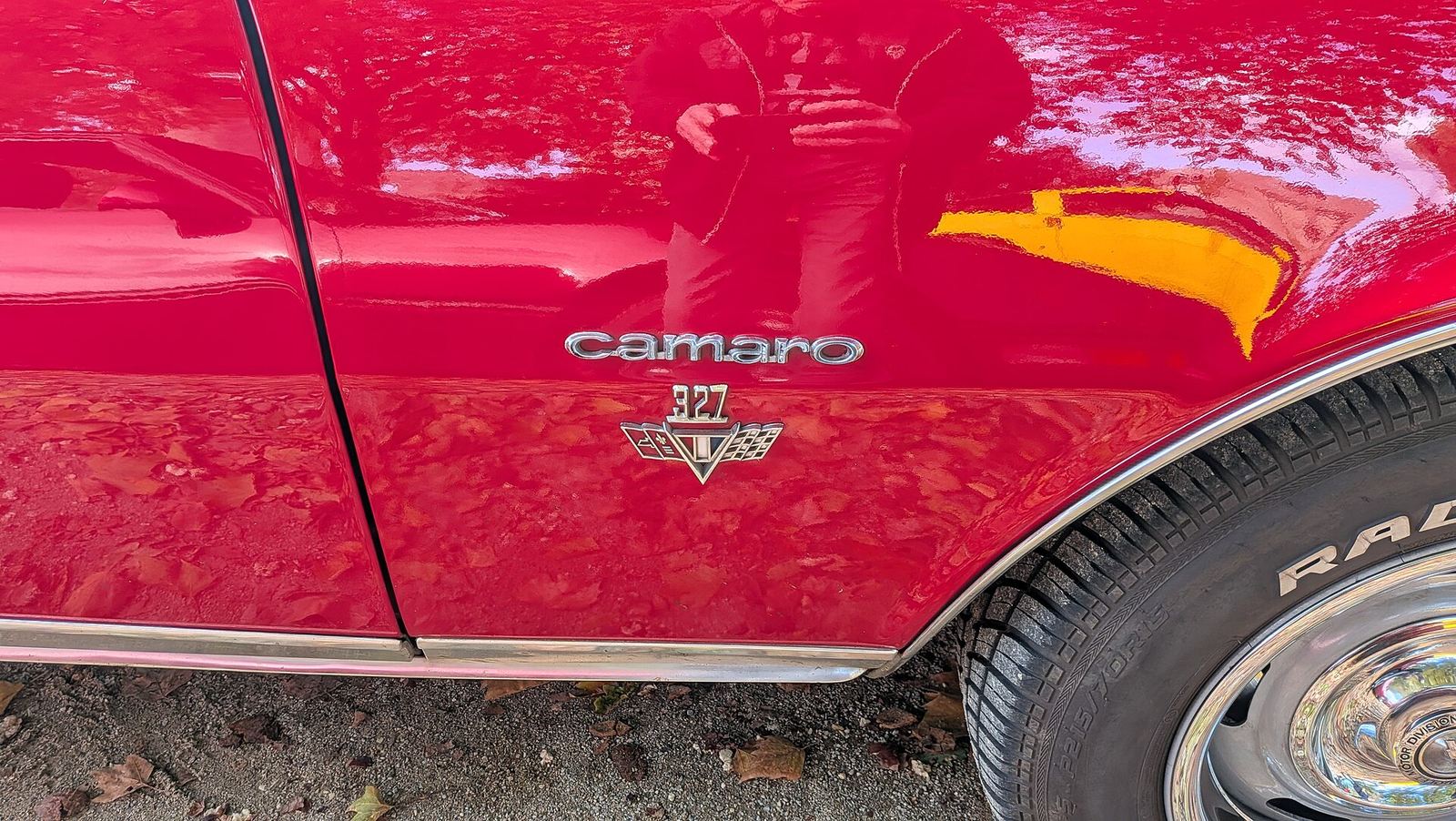
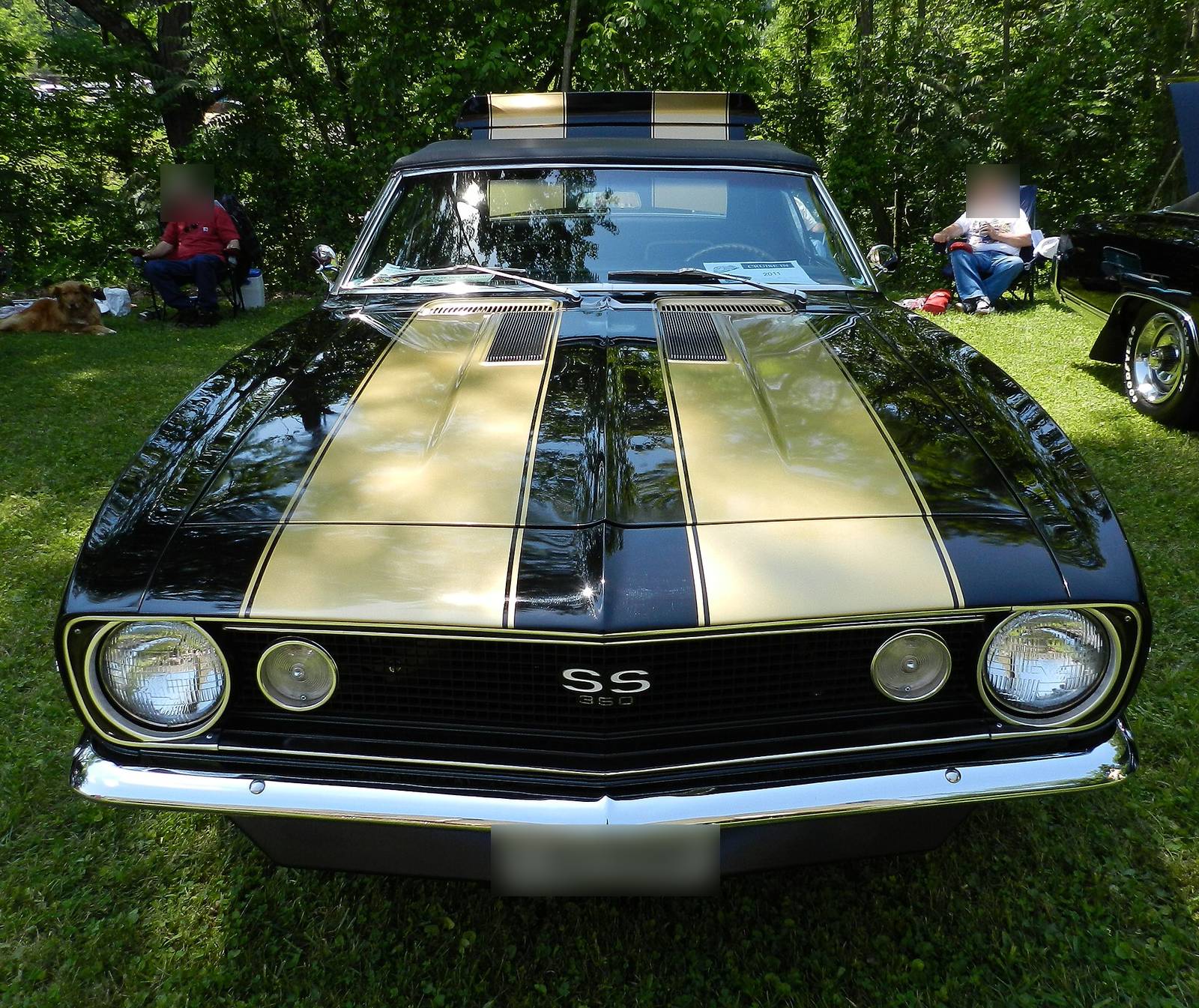
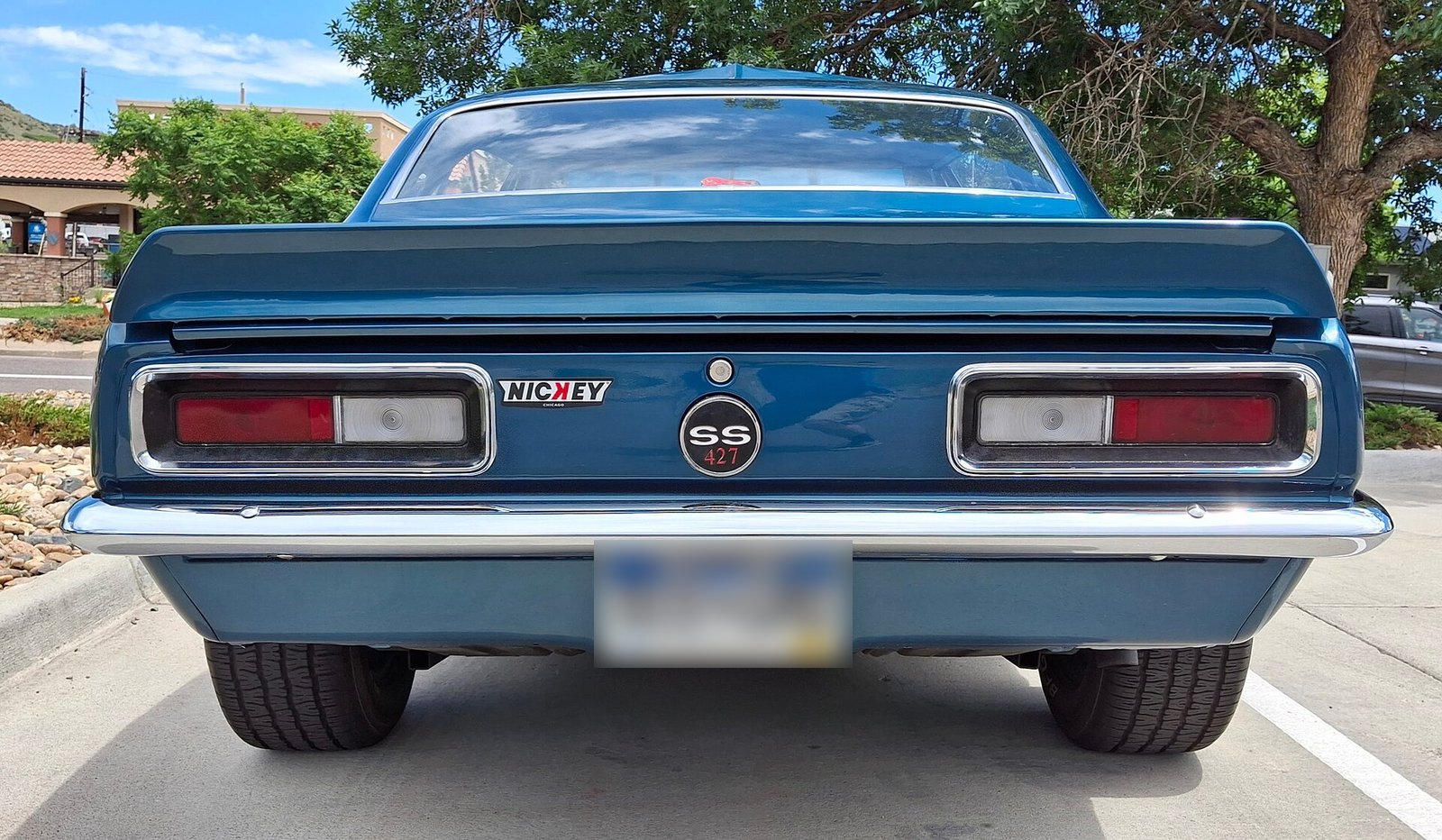
The one that started it all
First Generation
"A small, vicious animal that eats Mustangs."

Chevrolet's answer to the Ford Mustang was developed under the code name "Panther" on GM's new rear-drive F-body, shared with the Pontiac Firebird. After a crash program of roughly two years, it reached showrooms in late September 1966 as a 1967 model.
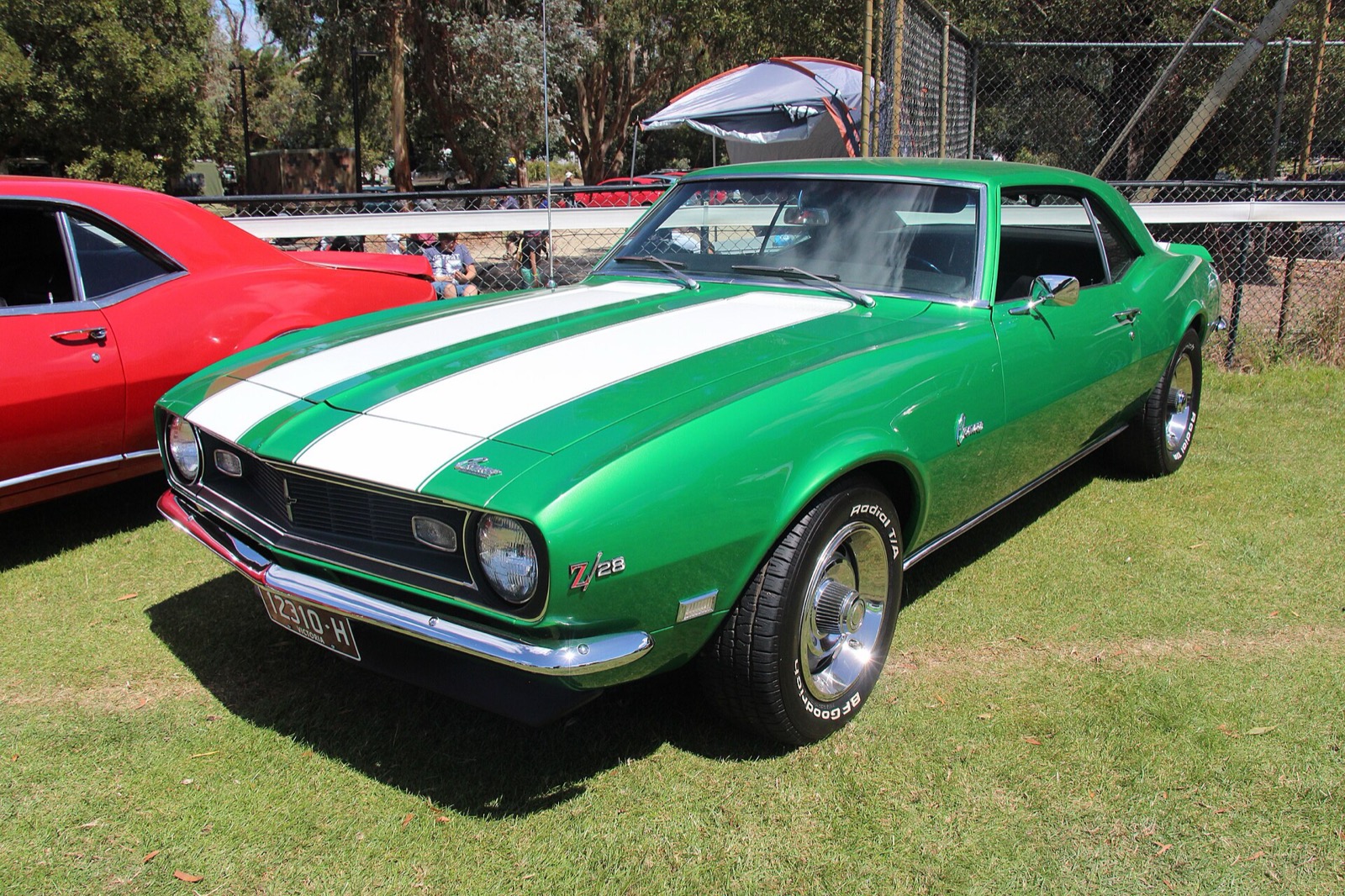
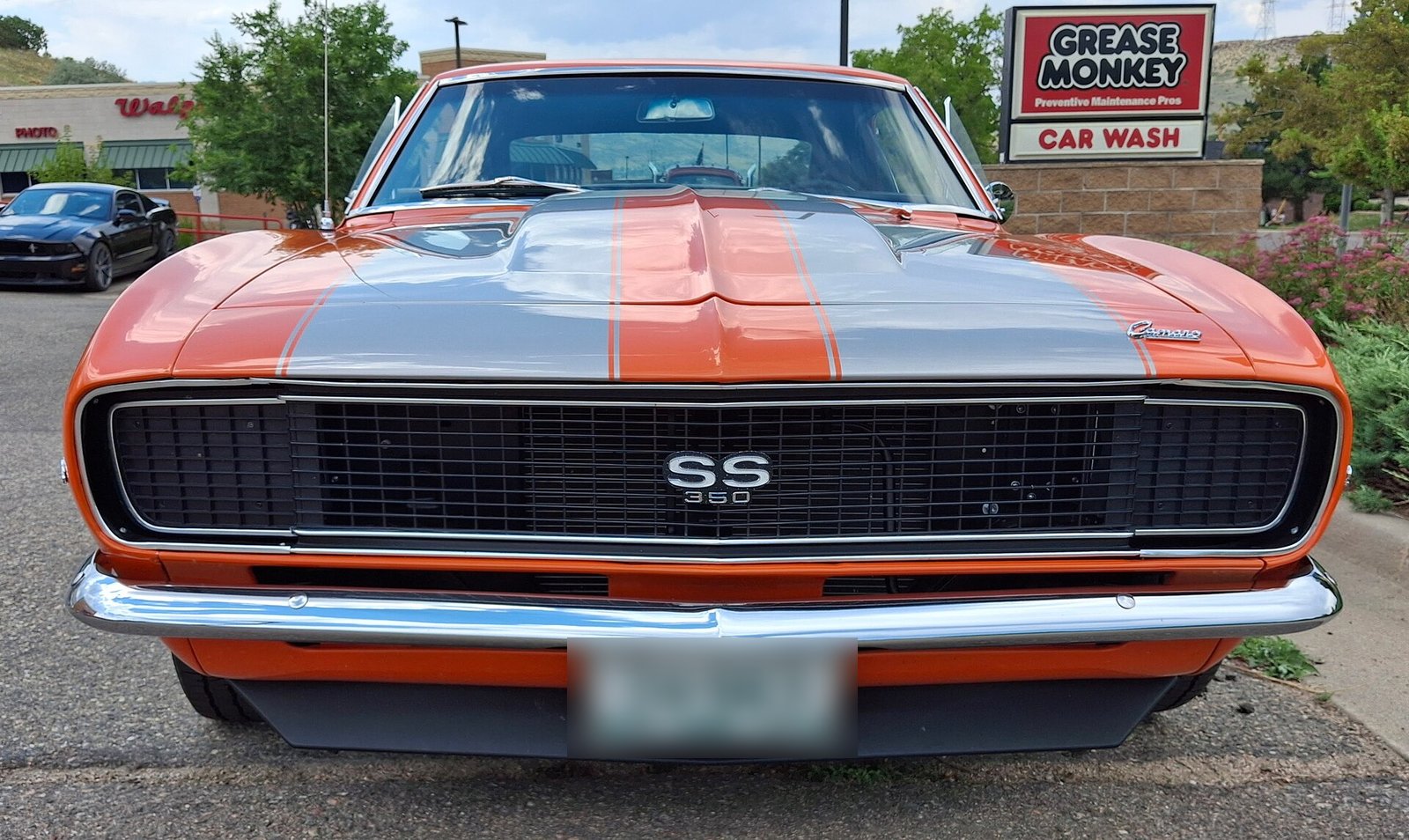
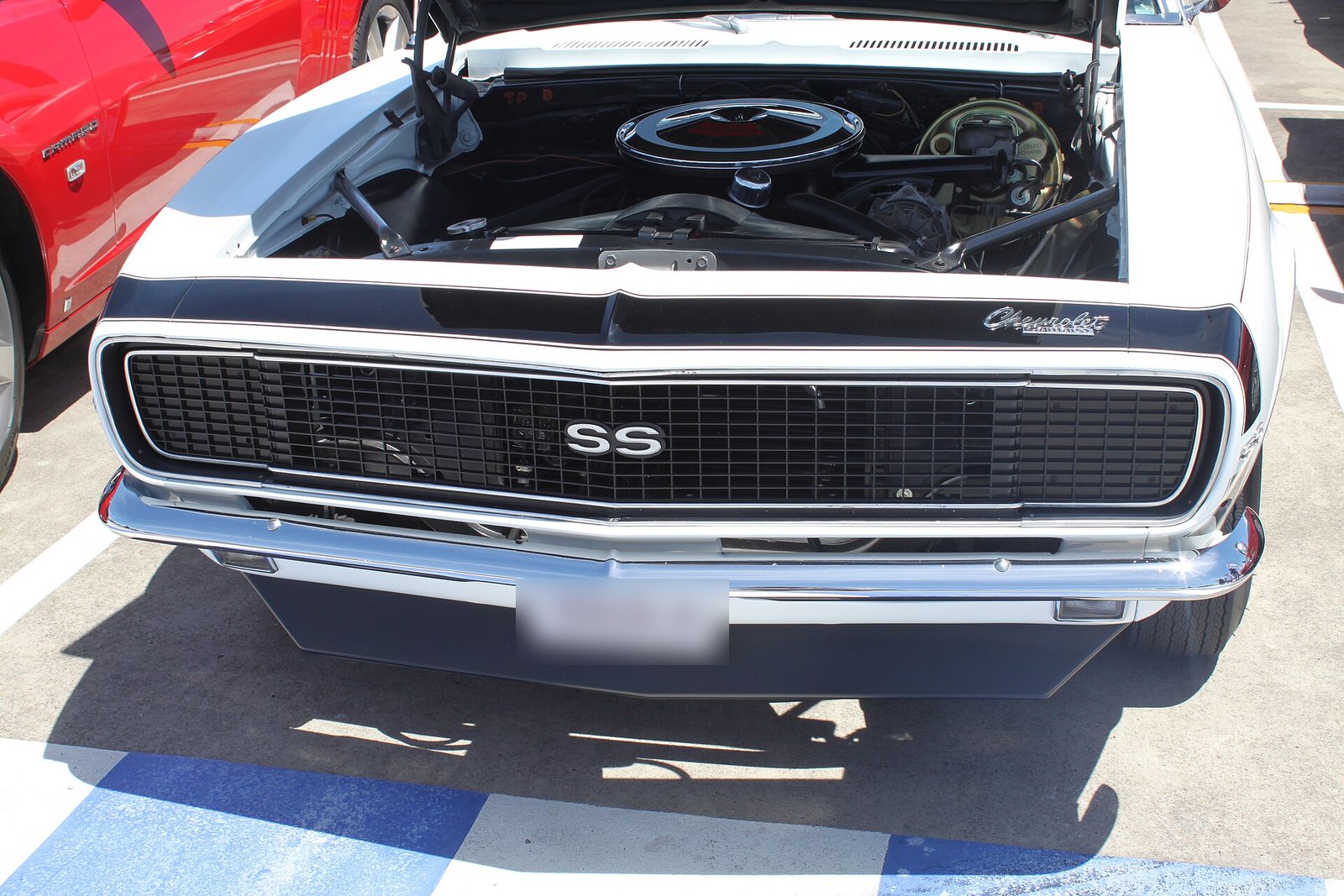
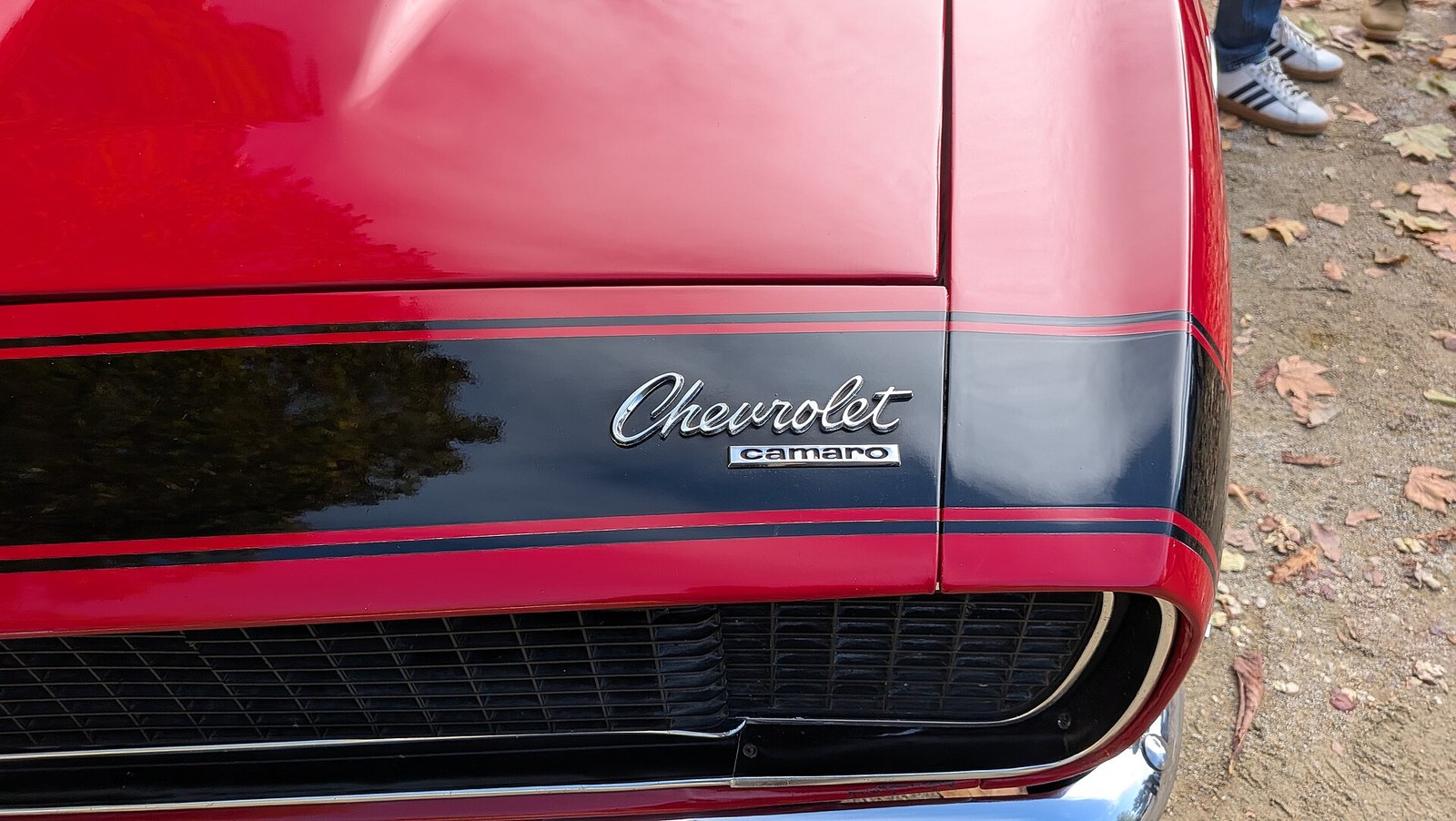
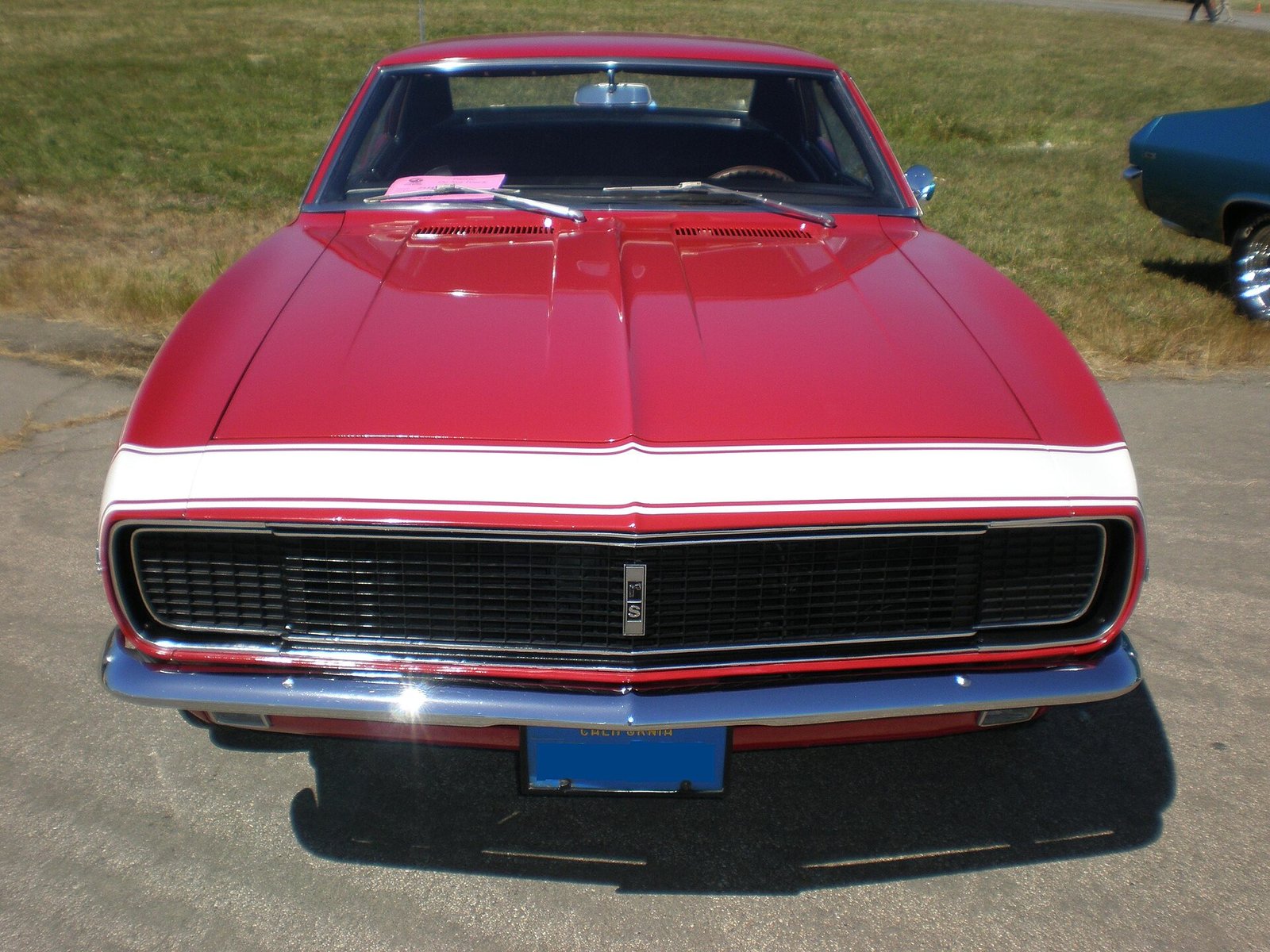
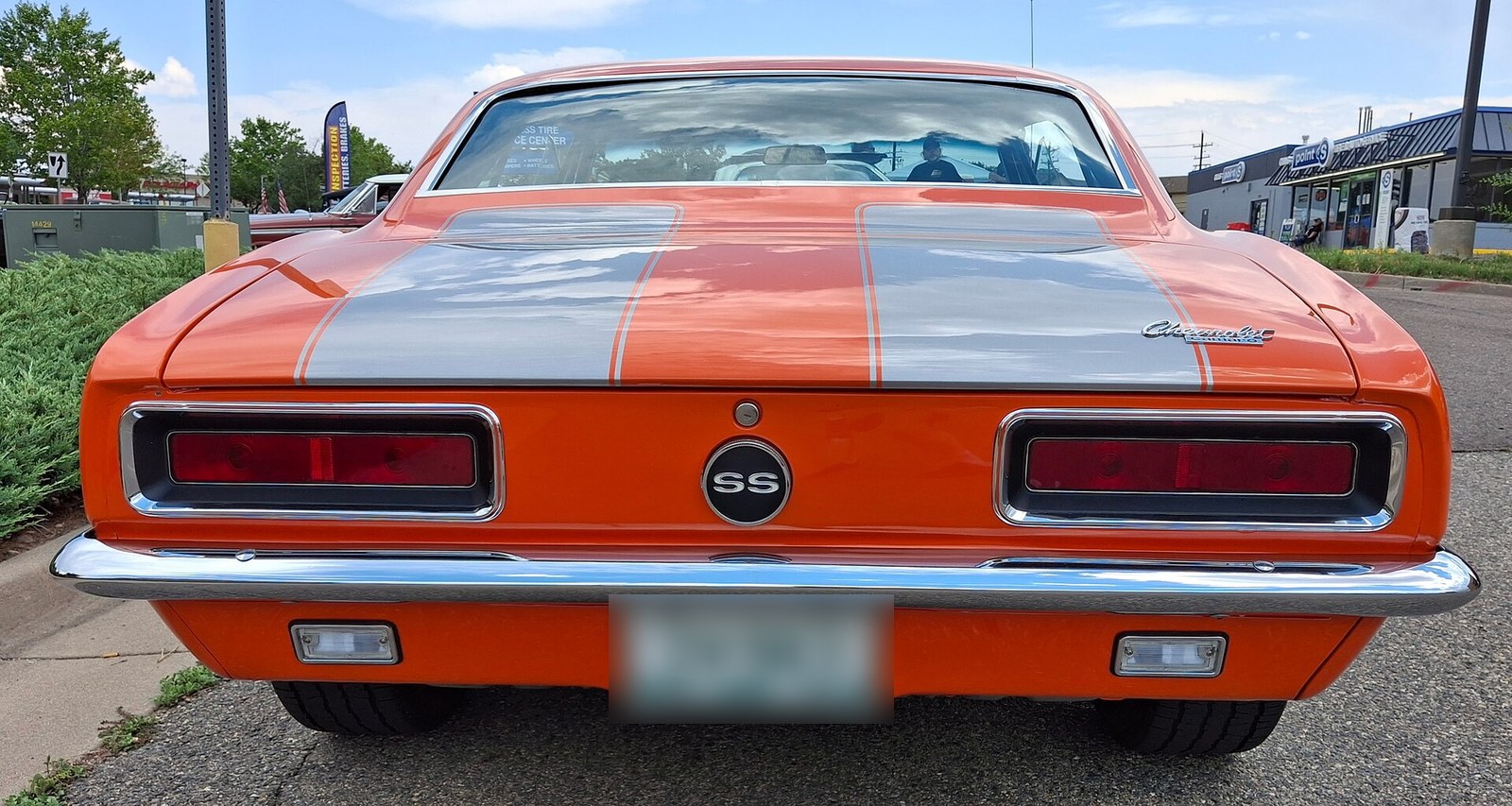
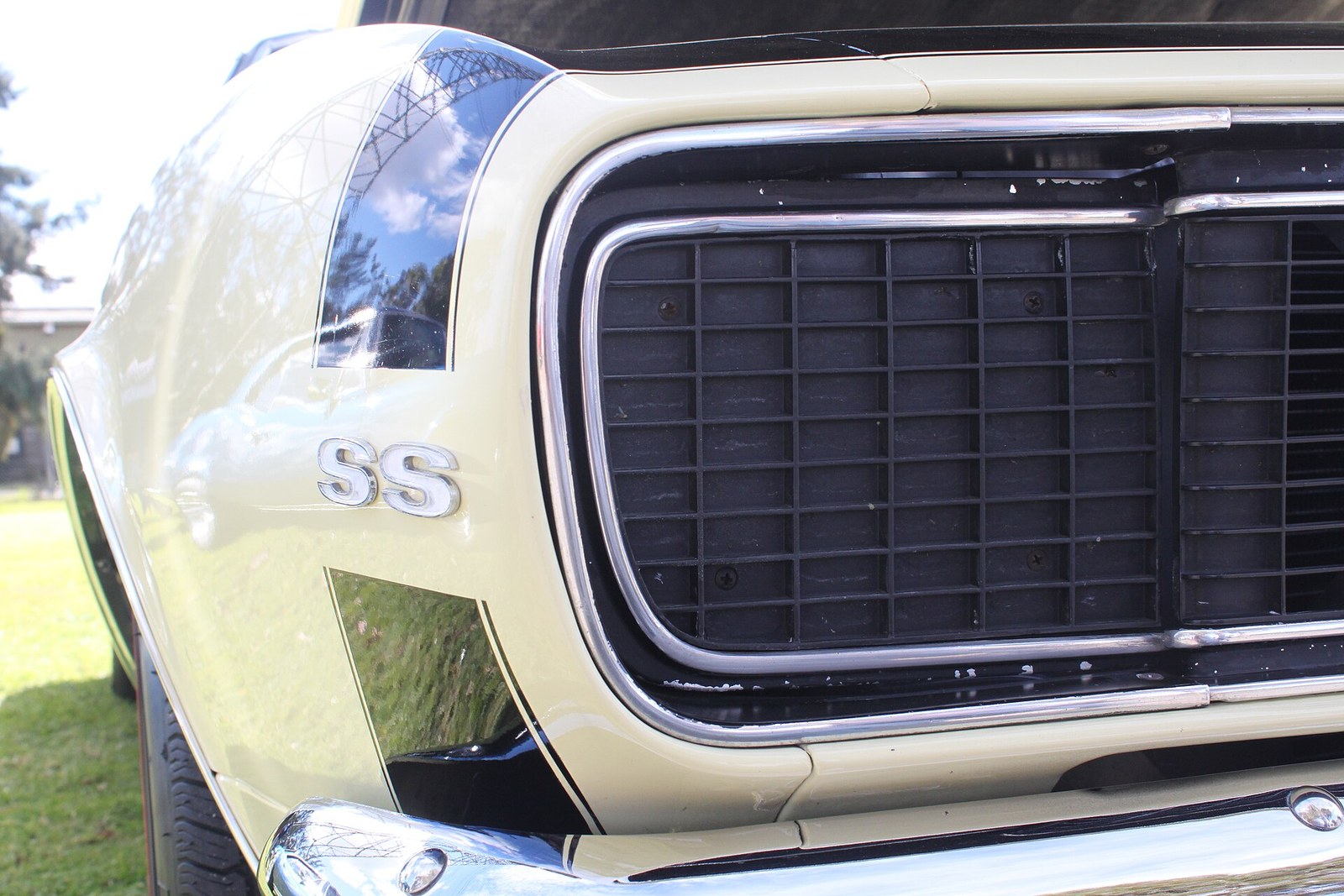
Buyers chose a Sport Coupe or a convertible and built it up from there with the Rally Sport appearance package, the SS performance package, or both. The three years also produced the Z/28, built to get Chevrolet into SCCA Trans-Am racing; the COPO big-block cars, ordered through a back channel to get 427s past GM's own rules; and two Indianapolis 500 pace cars.

Original CamaroFacts figure. Sources:
1967 reference table
1968 reference table
1969 reference table
Where the Name Came From
Chevrolet said merchandising manager Bob Lund and vice president Ed Rollert found "camaro" in a French-English dictionary as slang for "friend" or "comrade," picked to suggest the companionship of a good personal car. The press pushed back at once. Ford researchers and Motor Trend both reported that no such French usage could be found, and less flattering "definitions" went around, including a shrimp-like creature.
When reporters asked what a Camaro was, Chevrolet product managers said it was "a small, vicious animal that eats Mustangs," and that line, not the dictionary story, became the car's motto. The dictionary account is still Chevrolet's official origin story, and the entry is real. Car Life reproduced the dictionary column in October 1966, and its neighboring entries match Heath's Standard French and English Dictionary, the American edition of Harrap's Standard, where "camaro" is marked as popular speech.
Engines
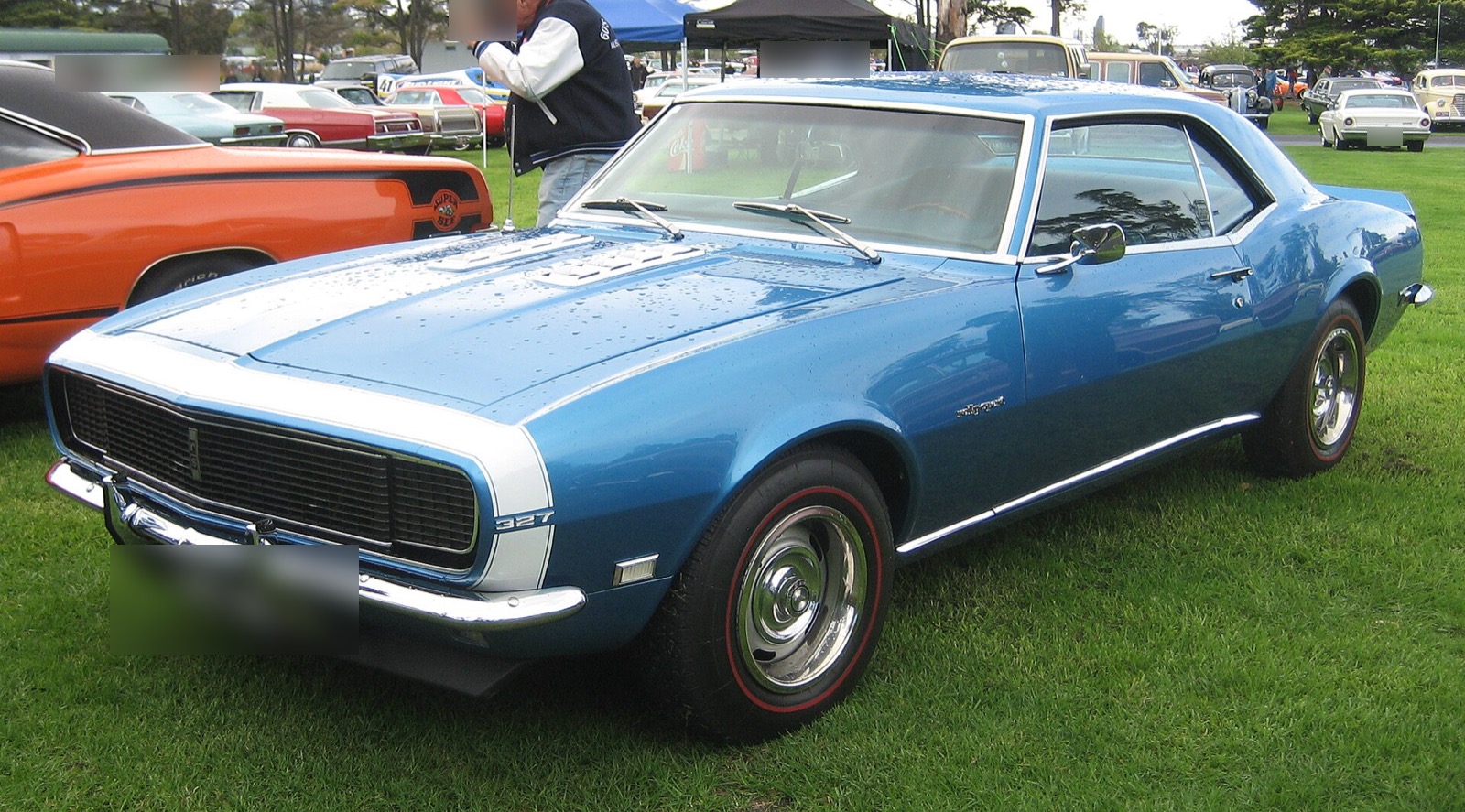
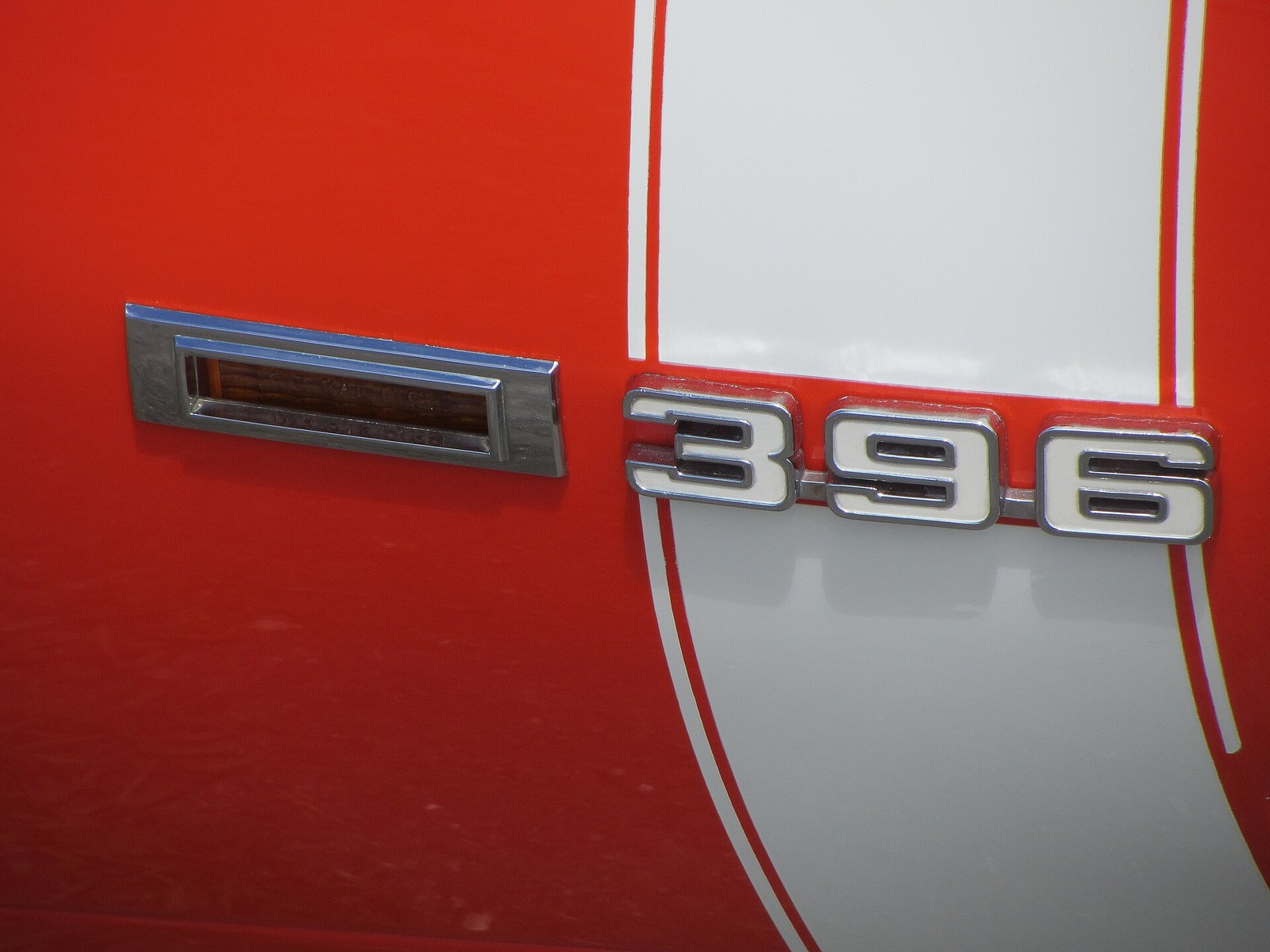
The 1967 range opened with the 230 cu in six at 140 hp (a 155 hp 250 six came later) and climbed through 327 and 350 V8s to the big-block 396. Chevrolet's December 1966 AMA supplement already documents a 375-hp gross L78 for the 1967 Camaro.
The Z/28's 302 was built to fit SCCA Trans-Am's five-liter limit by pairing the 327's 4.00-inch bore with the 283's 3.00-inch stroke. Chevrolet rated it at 290 hp, a figure widely regarded as conservative. The 1969 engine-pad suffix was "DZ," hence the enthusiast name "DZ 302."

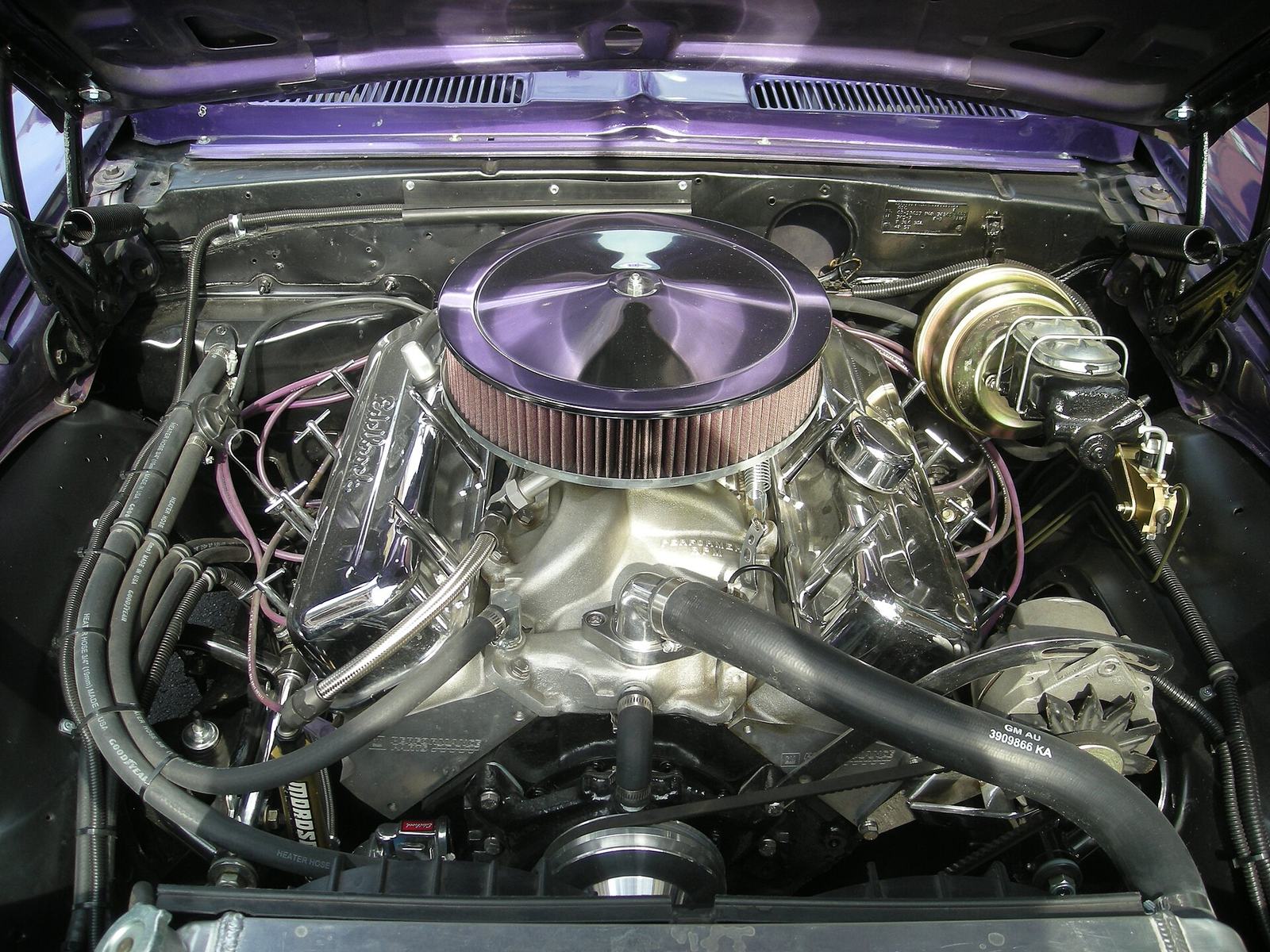
The engine assembly stamp records the plant, assembly date and application suffix. On a V8 its pad is ahead of the passenger-side cylinder head; on an inline-six it is near the distributor. The suffix identifies an engine application, not the individual car. Compare the casting number and any partial VIN with the vehicle's records before accepting a matching-numbers claim. The engine and drivetrain decoder reads the different records separately.
Three records, three questions
Rare Factory Equipment, 1969
Several 1969 options make a car far rarer than its badges suggest.

JL8 four-wheel disc brakes were offered only from January to July 1969, and 206 were built. They brought larger rotors and four-piston calipers at every corner, came with 15×7 Rally wheels, and cost $500.30 on SS and Z/28 cars or $623.50 on others. Most went on Z/28s; the Camaro Research Group documents 27 on other cars.
The cross-ram intake, two Holley carburetors on an aluminum dual-quad manifold, was homologated for Trans-Am and sold over the counter for the Z/28 at about $500. With no chokes and no manifold heat it was hard to live with on the street. Documented cross-ram cars now reach six figures.
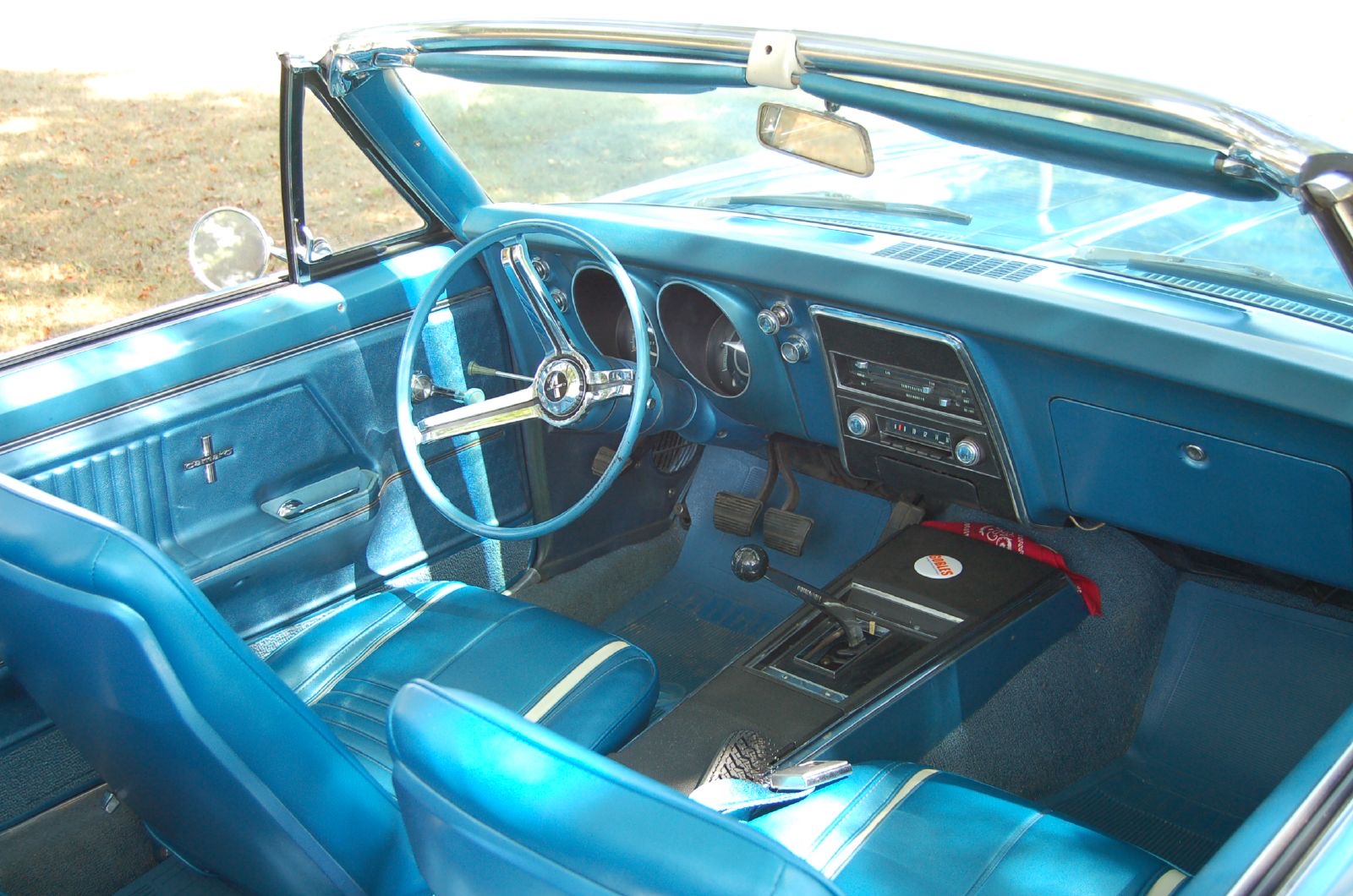
ZL2 cowl induction, the "Super Scoop" hood, was a $79 option from mid-December 1968. It drew high-pressure air from the base of the windshield, and the name and idea came back on later Camaros.
The COPO Cars
Central Office Production Orders were GM's channel for fleet and special orders outside the catalog. In 1969 performance dealers used it to obtain factory-installed 427 engines outside the ordinary Camaro ordering range. SS396 branding was a separate matter: late-1969 C-prefixed applications could actually displace 402 cubic inches, so the badge is not a literal displacement limit.

Late-1969 SS396: sales name and actual displacement
COPO 9561 carried the iron-block L72 427, rated at 425 hp. Don Yenko pushed for it, with Dick Harrell involved. The Camaro Research Group counts 997 finished cars: 1,066 COPO big-block Camaros less the 69 ZL1s. The 1,015 figure often repeated elsewhere counts L72 engines, spares included, not cars. Yenko himself sold 198; Berger Chevrolet and other dealers sold the rest.
COPO 9560 carried the all-aluminum ZL1 427. In the summer of 1968 Fred Gibb of Fred Gibb Chevrolet in La Harpe, Illinois, asked Vince Piggins for an NHRA drag package. NHRA required 50 cars, and 69 were built: 50 for Gibb (four automatics and six four-speeds in each of five colors) and 19 for other dealers. The ZL1 added about $4,160, nearly doubling the price, and Gibb sold only 13 before sending the rest back for redistribution. The first two, in Dusk Blue, arrived on December 31, 1968; one went straight to Dick Harrell's Kansas City shop for the AHRA Winternationals. Documented ZL1s have sold for well over $1 million.
Pace Cars
The Camaro paced the Indianapolis 500 twice in its first three years.
In 1967 the official pace cars were two white RS/SS convertibles with a blue "bumblebee" nose stripe and blue interior, and about 43 festival-committee replicas and 10 track cars were built for the event. Winner A.J. Foyt reportedly turned down the customary prize car, officially because it had no air conditioning.
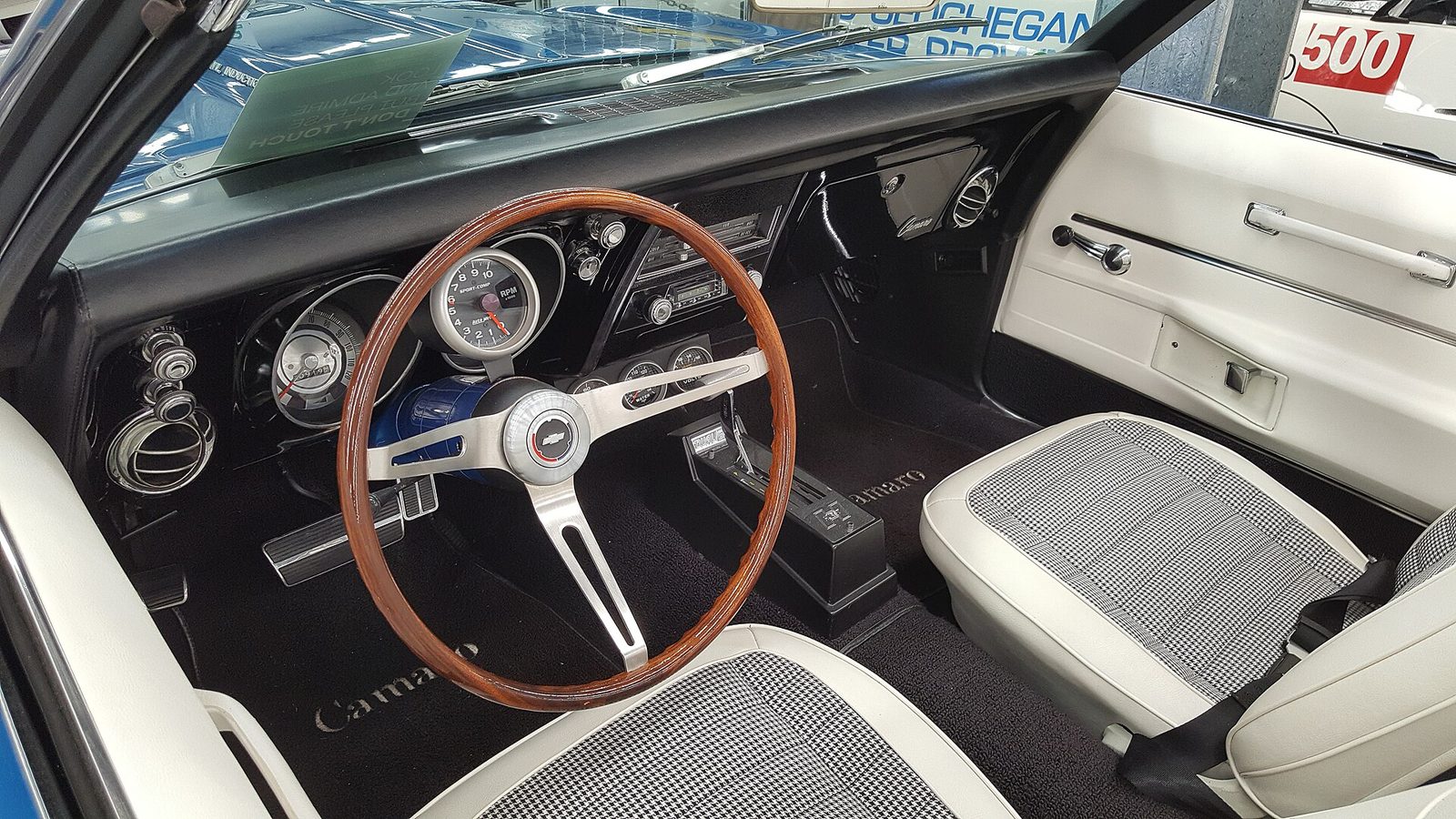
In 1969 two SS 396 RS convertibles in Dover White with Hugger Orange stripes, houndstooth interiors and cowl-induction hoods did the pacing. Chevrolet then sold the look as the Z11 package, essentially a $37 striping and appearance option on the convertible, and built 3,675.
Identifying a First-Generation Car
The Fisher Body cowl tag sits on the firewall beside the brake booster on all three years. Its body-style number looks like the start of the VIN but belongs to a separate code system. In the VIN the third digit means engine type; on a 1967 tag it means standard or custom interior, and on every 1968–69 tag it is always 4.

The third digit answers different questions
Paint codes on the tag were letters in 1967–68 and numbers in 1969; top codes went the other way. In 1967 only, RPO option codes were stamped on the tag too. From build week 12B of 1969, Norwood cars carry an X-code (X33 and X77 identify a Z/28). Van Nuys cars never did. The cowl tag decoder reads all three years.
Original CamaroFacts figure. Sources:
1967 reference table
1969 reference table
Racing
The Z/28 exists because of SCCA Trans-Am, not showroom demand. Chevrolet built only 602 in 1967, short of the nominal 1,000-car homologation minimum, and SCCA accepted the car anyway. Roger Penske's team, with Mark Donohue driving, ran factory-supported Z/28s and won the Trans-Am manufacturers' championship in 1968 and 1969. The full story is in the racing history.
Did you know
- GM's own model-year production table, bound into the 1969 information kit, lists 19,014 Z/28s for 1969 and notes that the 1969 row includes carryover production of the 1969 design into 1970. The Camaro Research Group's Z28 report gives 20,302 for a model year that ran into November 1969. For 1967 and 1968 the two agree.
- GM's model-year production table counts 27,844 Super Sports for 1968, while the five SS engine counts in the 1968 kit add up to 30,695, the figure in the table below. The 1967 and 1969 SS counts match the standard figures, and so does the 1968 Rally Sport count.
- By GM's own count the typical 1967 Camaro was a V-8 (73.4% of cars) with an automatic (56.2%), power steering on 41.7% and air conditioning on just 12.8%. By 1969 V-8s were still 73.3%, power steering had reached 49.4% and air conditioning 15.6%. About one Camaro in eighteen (39,181 of the 699,163 in GM's production table for 1967-69) was built for export. The yearly totals printed on this page add up to 699,148; the note under the body-style table explains the difference.
- The first Camaro used a unitized body with a separate, rubber-isolated front partial frame that carried the engine, transmission, front suspension and steering. That frame bolted to the body at six points, and the rear was a single-leaf Hotchkiss axle.
- On GM's spec sheets the 1967 Sport Coupe rode a 108.0-inch wheelbase, measured 184.7 inches long and 72.5 wide, and weighed 2,910 lb with the six and 3,070 with a V-8. The 1969 restyle stretched it to 186.0 inches and 74.0 wide on the same wheelbase.
Sources for these details
- 1969 Chevrolet Camaro vehicle information kit (GM Heritage Center) GM Heritage factory archive
- 1967 Chevrolet Camaro vehicle information kit (GM Heritage Center) GM Heritage factory archive
- GM of Canada Product Service Bulletin 69-00-32 (I), November 15, 1969: C-prefixed larger Mark engine Factory service bulletin
- CRG drivetrain research: late-1969 402 displacement under 396 branding Original marque research
- CRG COPO 427 research: special orders and engine applications Original marque research
- Chevrolet 1967 Camaro L78 AMA supplement, issued December 22, 1966, p. 4 (PDF p. 192) Factory specification
Year by year
| Year | The year in brief | Production / sales | Highest listed engine ratings |
|---|---|---|---|
| 1967 | The one that started it all | 220,906 Total production |
396 cu in V8, 375 hp (gross) at 5,600 rpm
(highest gross rating listed) Code: MQ/MR. L78
|
| 1968 | Side markers, Astro Ventilation and no more vent windows: the mid-generation refresh. | 235,147 Total production |
396 cu in V8, 375 hp (gross) at 5,600 rpm
(highest gross rating listed) Code: MQ. L78
396 cu in V8, 375 hp (gross) at 5,600 rpm
(highest gross rating listed) Code: MT. L89, aluminum heads
|
| 1969 | The icon | 243,095 Total production |
427 cu in V8, 430 hp (gross)
(highest gross rating listed) Code: MM/ML.
|
Packages and special editions
| Code | Package | 1967 | 1968 | 1969 |
|---|---|---|---|---|
| Z22 | Rally Sport (hidden headlamps) | 64,842 | 40,977 | 37,773 |
| Z27 | Super Sport (350 or 396 V8) | 34,411 | 30,695 | 33,980 |
| Z28 | Special Performance Package (302 V8) | 602 | 7,199 | 19,014 or 20,302 |
| Z11 | Indy 500 pace-car replica convertible | — | — | 3,675 |
| JL8 | Four-wheel disc brakes | — | — | 206 |
| COPO 9561 | L72 427 iron-block big block | — | — | 997 |
| COPO 9560 | ZL1 427 all-aluminum big block | — | — | 69 |
RS and SS could be combined on one car; exact RS/SS combination counts were not preserved. Sources split on the 1969 Z/28 total, and even the Camaro Research Group's figures narrow it only to a range.
Body styles
| Year | Sport Coupe | Convertible | Total |
|---|---|---|---|
| 1967 | 195,765 | 25,141 | 220,906 |
| 1968 | 214,707 | 20,440 | 235,147 |
| 1969 | 214,280 | 16,519 | 243,095 |
GM's own 1967–77 production table counts 220,917, 235,151 and 243,095 cars (699,163 together), so the 1967 and 1968 totals here, the figures most sources repeat, run 11 and 4 lower. That table splits 1969 into 230,779 domestic cars and 12,316 export cars; the coupe and convertible counts here come from other sources and add up to 230,799.