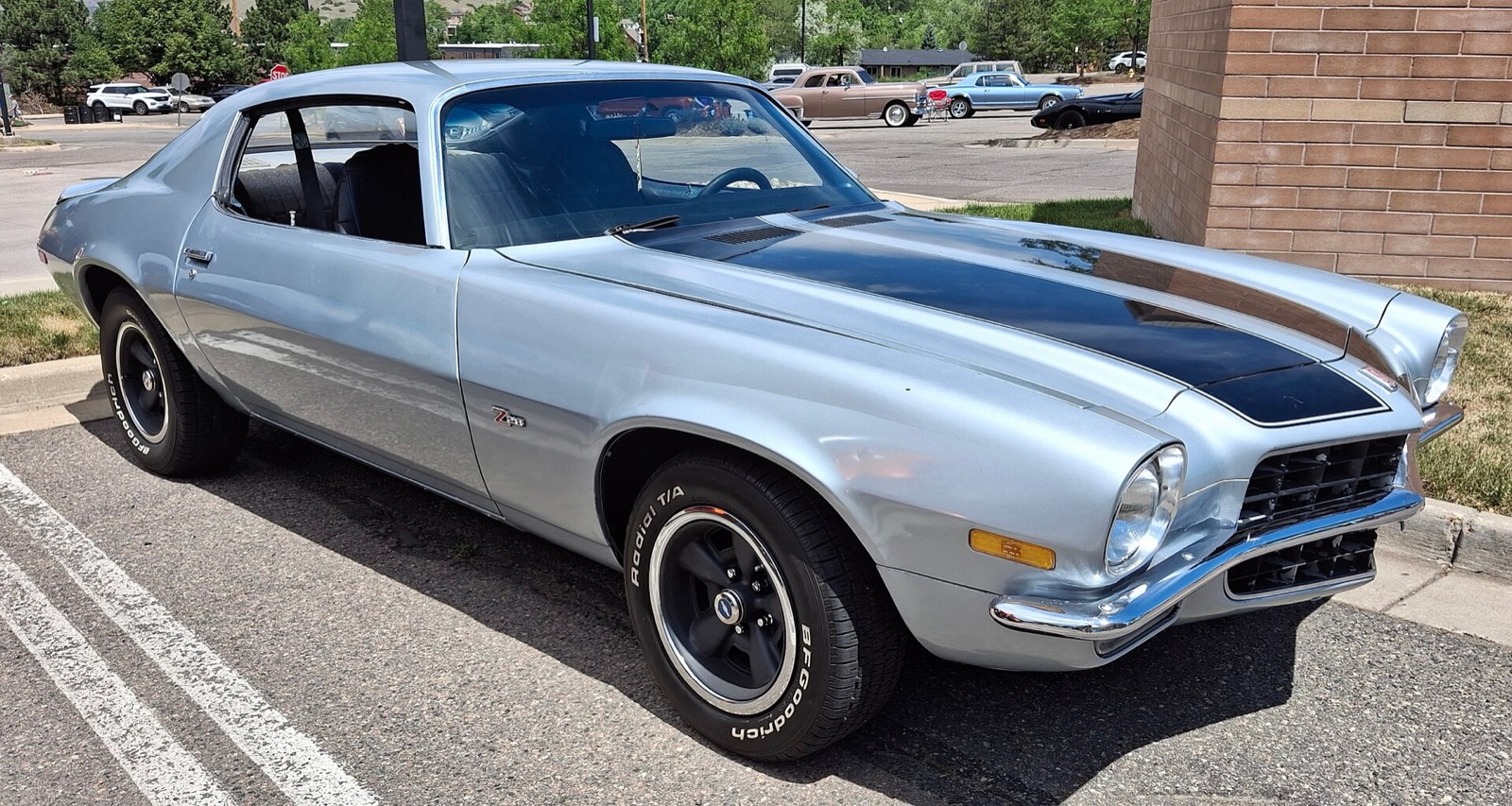
1972 Camaro Z28 with the Rally Sport split-bumper nose
Photo: Xnatedawgx, CC BY-SA 4.0, via Wikimedia Commons
The Camaro's near-death year. A 174-day UAW strike at Norwood, Ohio, stopped Camaro and Firebird production from April to September 1972. The commonly reported total is 68,656, while the White Book reprint gives 68,651; neither has been traced here to a factory production ledger. Both are lower than the other model-year totals retained for 1967–1989. The shortened 1990 model year was lower again.
It was also the last year for the SS and the big block, and the first year every engine was rated in SAE net horsepower, so horsepower fell across the board on paper. Rally Sport and Z28 carried on, and so did the split-bumper RS nose.
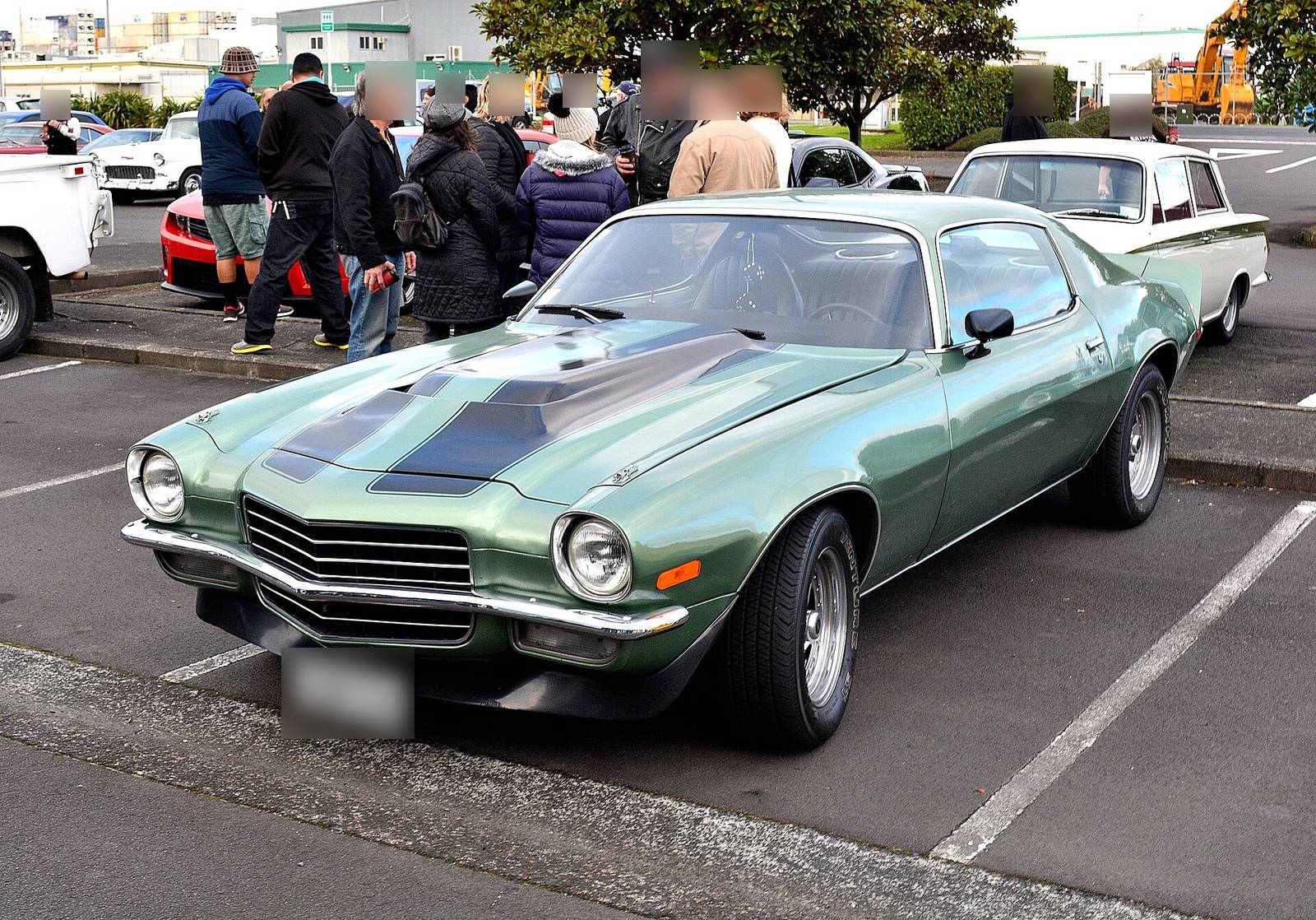
Green 1972 Camaro coupe with twin dark hood stripes, front three-quarter view at a car-club meet in a parking lot with onlookers Photo: GPS 56, CC BY 2.0, via Wikimedia Commons; licence plates and faces blurred
Original photographLicense
Did you know
You could order a 1972 Z28 with the Turbo Hydra-Matic, at $313.65 with the Z28 package on the December 1971 price schedule. Super Stock's April 1972 test of an automatic Z28 ran 14.74 seconds at 100.52 mph at best (most passes were 14.7 to 14.9 at about 100), saw an indicated 132 mph, and totaled $4,666.80 as equipped.
Only 2,575 Z28s were built in 1972, down from 4,862 in 1971 and about 3.8 percent of the year's 68,656 Camaros. The same period table counts 11,364 Rally Sports.
Between 1967 and 1972 the Camaro's typical order changed sharply. Air conditioning rose from about 13 percent of cars to 46 percent (31,737 of 68,656), power steering from 42 to 87 percent, automatics from 56 to 83 percent and V8s from 73 to 93 percent, while four-speeds fell from about 22 percent to under 9.
Z28 stripes on a 1972 Camaro came in black or white, with two exceptions: Antique White cars could only have black stripes and Midnight Bronze cars only white.
SS and Z28 Camaros sold in California cost $26 less than elsewhere in 1972, because the base 307 V8 wasn't available there and the $26 165-hp 350 (L65) was the minimum V8.
The same period reference disagrees with itself on the last factory big block: its production table gives 970 SS Camaros with the 402 (sold as the 396), while its narrative says 'just 930.' Either way, 5,592 of the 6,562 SS cars had the 350.
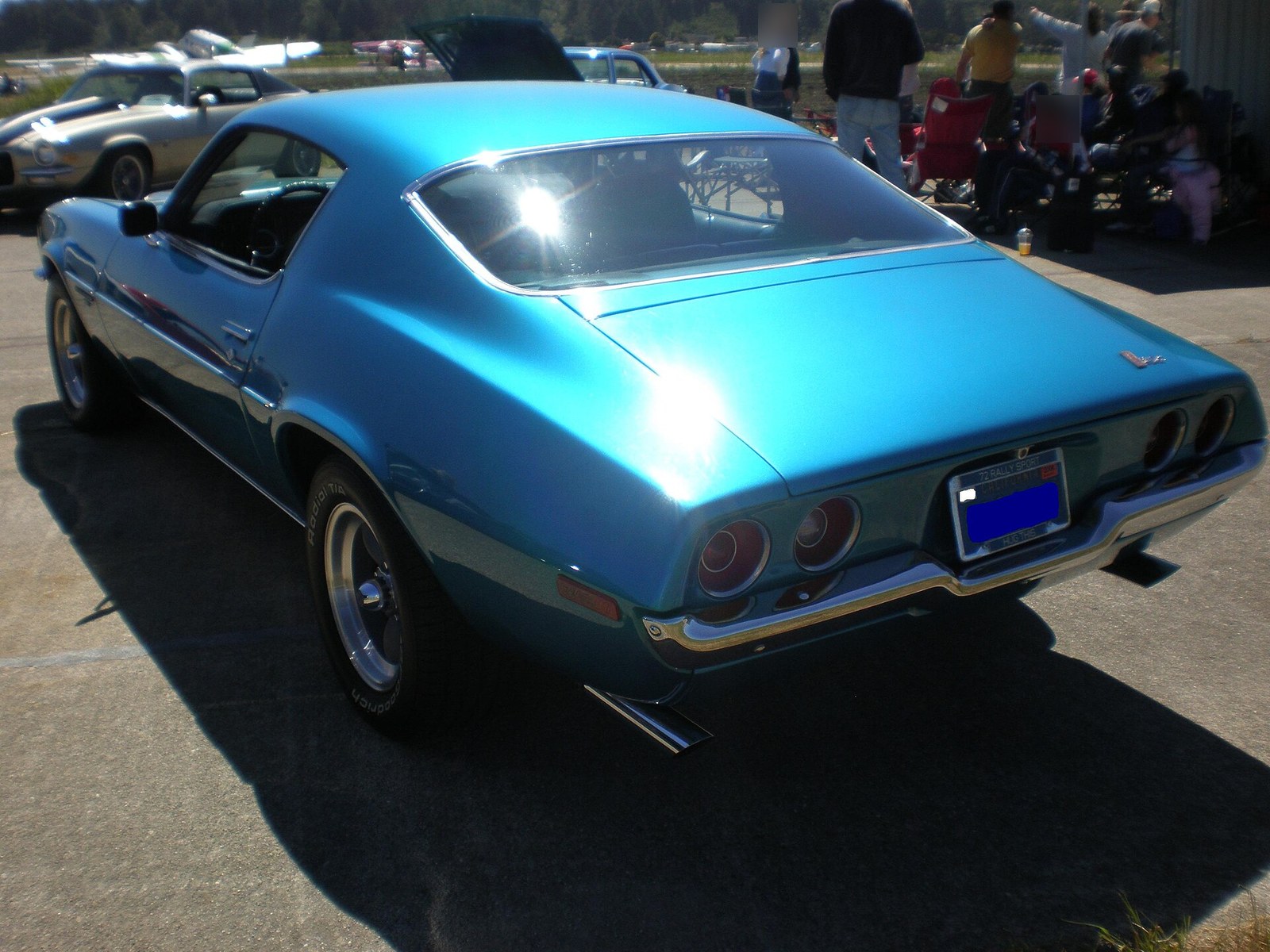
Blue 1972 Camaro coupe with slim chrome bumper, rear three-quarter view in harsh sunlight, at an airport vehicle show Photo: BrokenSphere, CC BY-SA 3.0, via Wikimedia Commons; faces blurred
Original photographLicense
Production
One production figure is listed for 1972: Total production, 68,656.
Record
Count
Note
Total production
68,656
Lowest annual output until the shortened 1990 model year; 174-day strike. The Camaro White Book, reprinted in GM's own information kits, gives 68,651 (4,821 six-cylinder, 63,830 V8); neither total has been traced to a GM production record
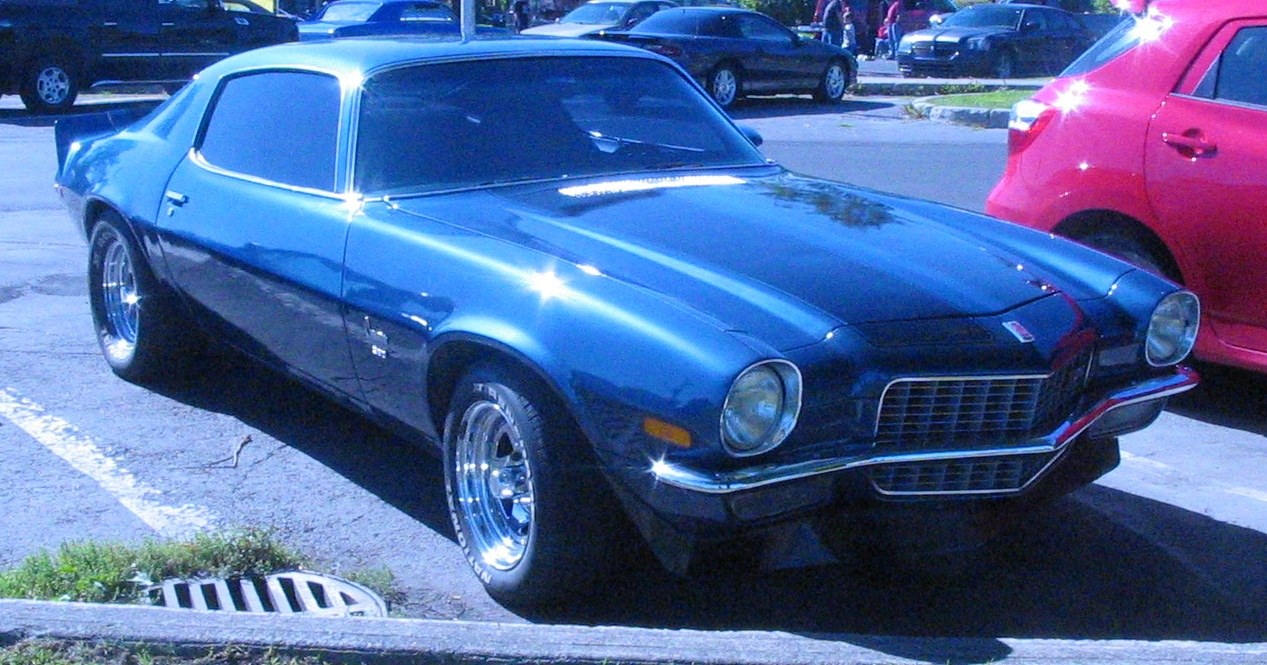
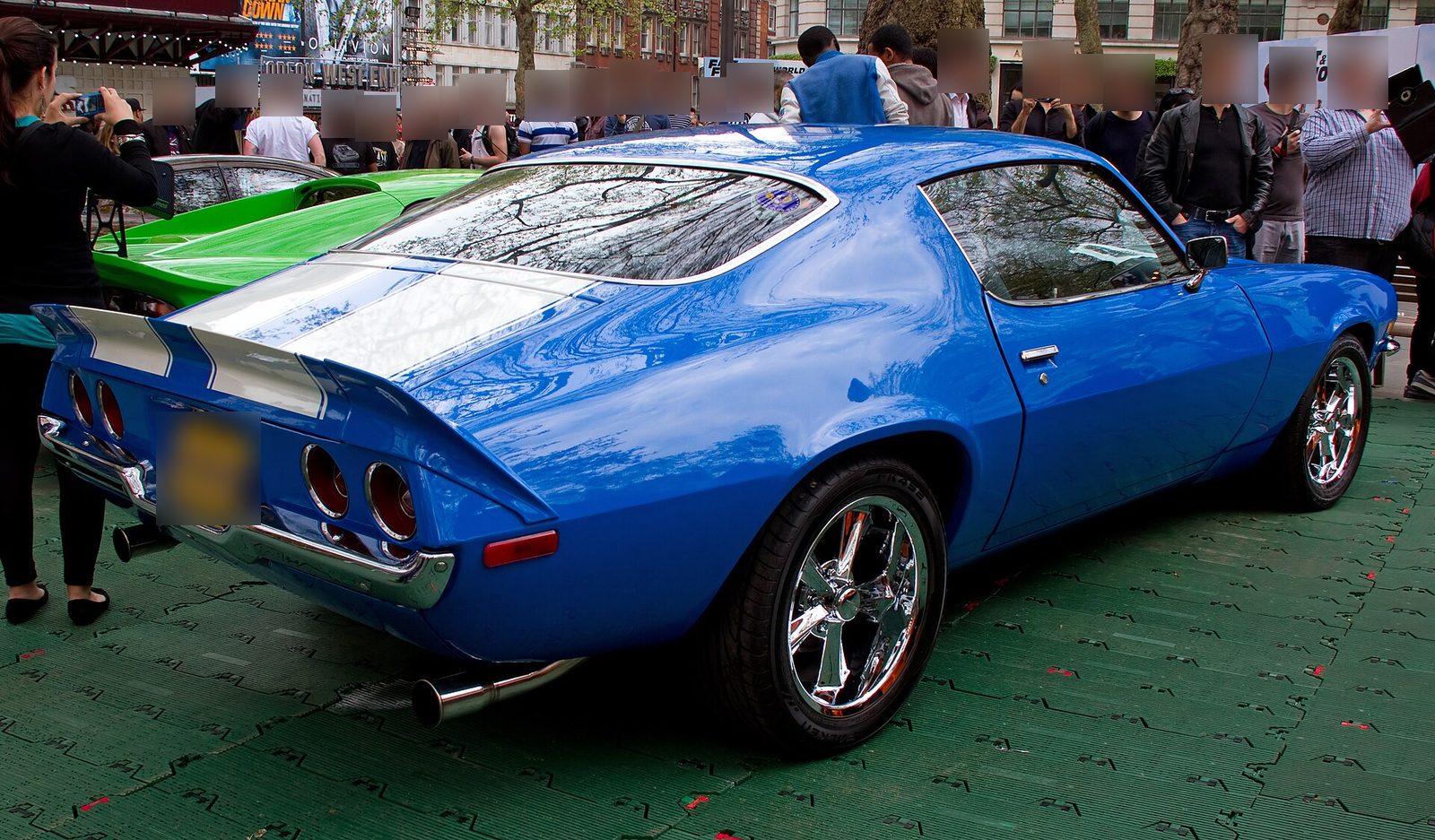
Blue 1972 Camaro coupe with rear spoiler and aftermarket chrome wheels, front three-quarter view in a car-show parking lot Public domain (Bull-Doser), via Wikimedia Commons
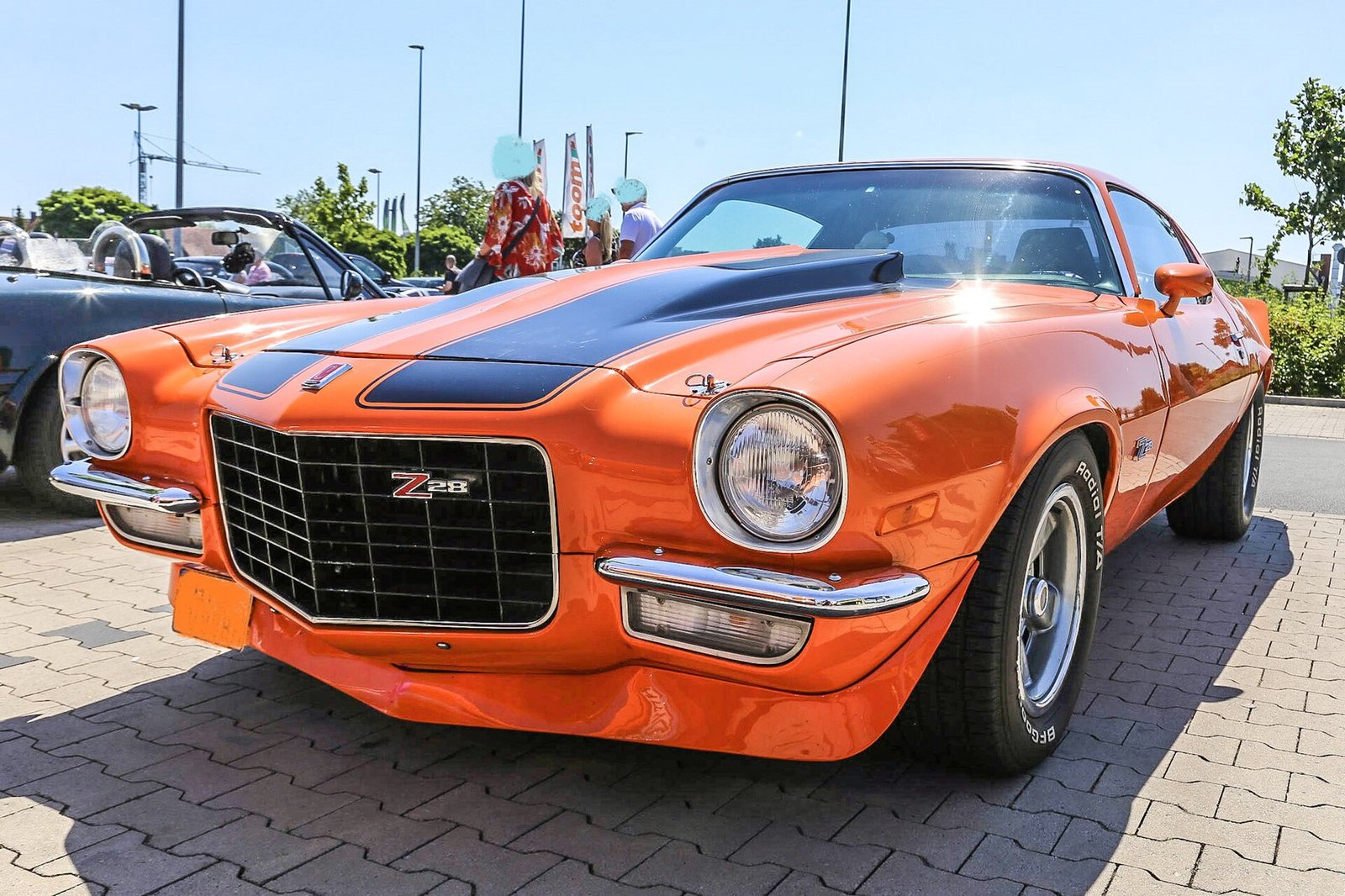
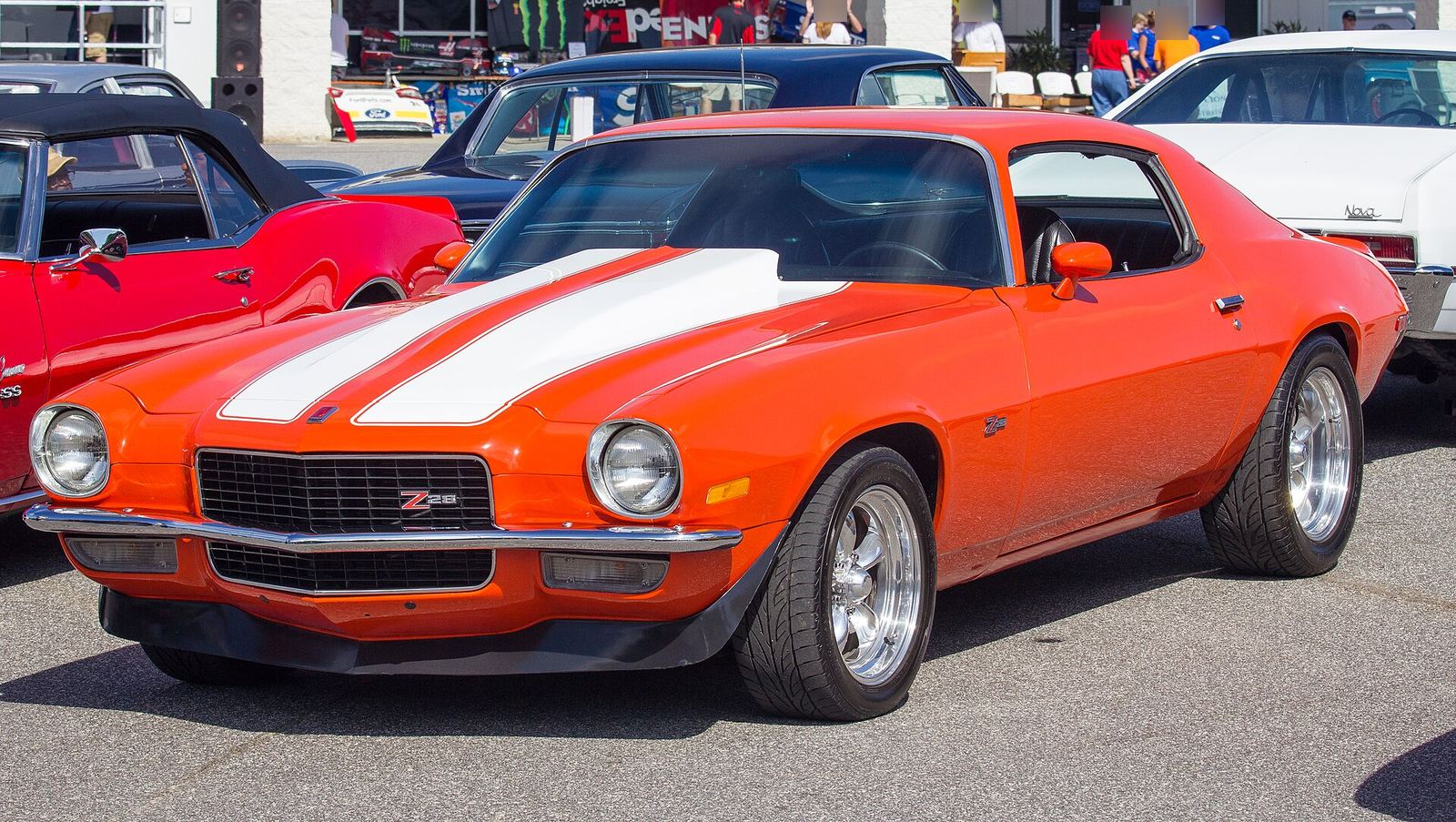
Original photographOrange 1972 Camaro Z/28 RS coupe with black twin hood stripes, Z28 grille badge and split front bumpers, front three-quarter view at an outdoor car meet Photo: MerlinS.69, CC BY-SA 4.0, via Wikimedia Commons
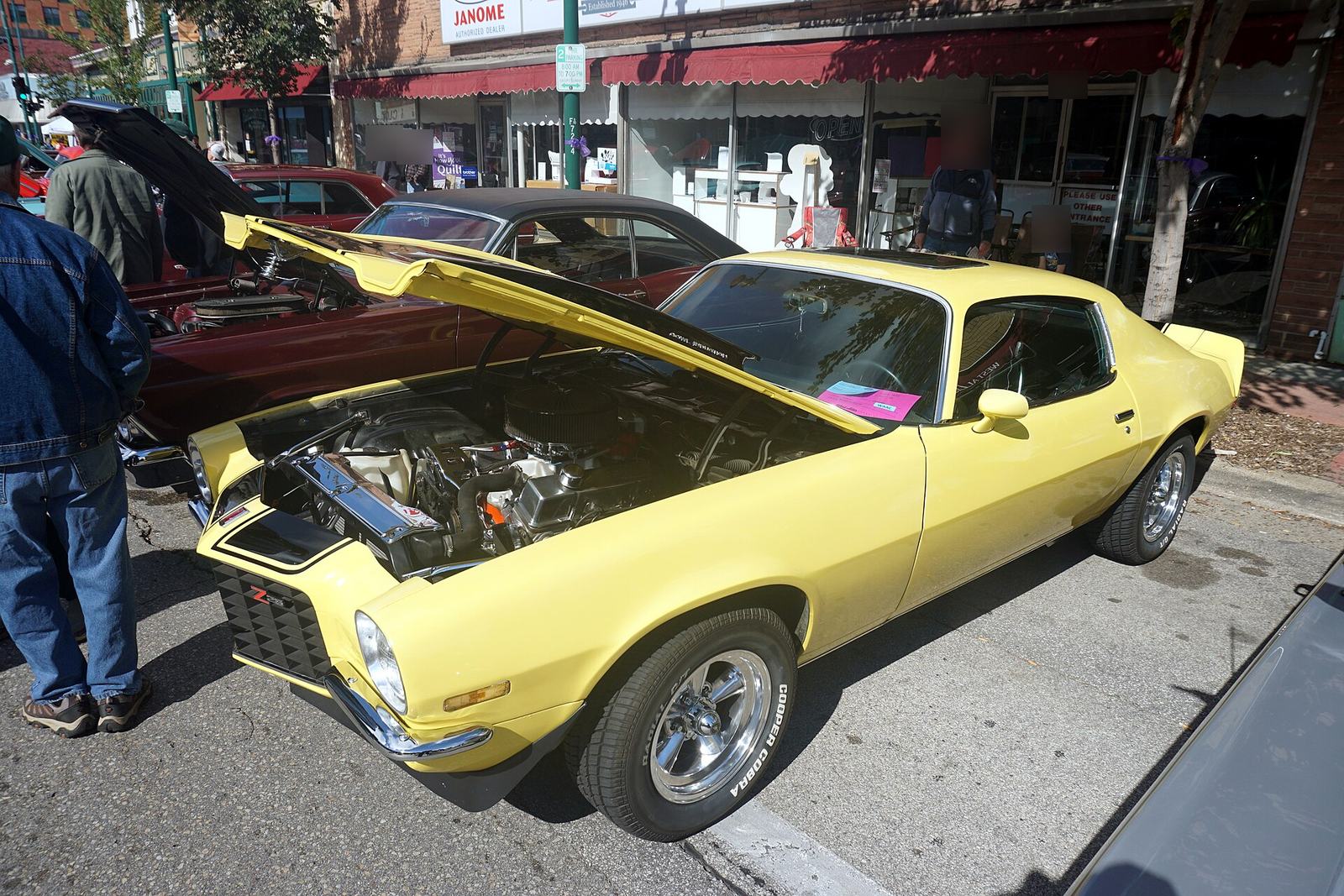
Original photographLicensePale yellow 1972 Camaro RS coupe with Z28 grille badge and sunroof, front three-quarter view with hood open, at a downtown street car show Photo: Michael Barera, CC BY-SA 4.0, via Wikimedia Commons; faces and street numbers blurred
Original photographLicense
Engines
The 1972 table lists seven engines: the 250 cu in inline-6, the 307 cu in V8, four versions of the 350 cu in V8 and the 396 (402) cu in V8. The highest power rating shown is 255 hp (net), for the 350 cu in V8.
Code
Engine
Power
Torque
Note
D
250 cu in inline-6
110 hp (net) at 3,800 rpm
185 lb-ft (net) at 1,600 rpm
F
307 cu in V8
130 hp (net) at 4,000 rpm
230 lb-ft (net) at 2,400 rpm
Standard V8 outside California; not available in California.
H
350 cu in V8
165 hp (net) at 4,000 rpm
280 lb-ft (net) at 2,400 rpm
L65 two-barrel; base V8 in California.
K
350 cu in V8
200 hp (net) at 4,400 rpm
300 lb-ft (net) at 2,800 rpm
SS
L
350 cu in V8
255 hp (net) at 5,600 rpm
280 lb-ft (net) at 4,000 rpm
Z28
U
396 (402) cu in V8
240 hp (net) at 4,400 rpm
345 lb-ft (net) at 3,200 rpm
SS LS3; not available in California.
T
350 cu in V8
255 hp (net) at 5,600 rpm
280 lb-ft (net) at 4,000 rpm
Z28; listed by the Camaro White Book; GM's own page prints L for this engine
Options, packages and special editions
The 1972 list has 26 options, packages and special editions. Every entry shows a price, and 1 shows how many were built.
Code
Description
Price
Built
Note
12387
Sport Coupe, 6-cylinder (250, 110 hp)
$2,852.00
—
Base price
12487
Sport Coupe, V8 (307, 130 hp)
$2,947.00
—
Base price
Z22
Rally Sport
$124.30
—
Z27
Camaro SS — 200 hp 350, power brakes, F70-14 white-letter tires
$321.25
—
LS3
SS engine upgrade, 240 hp 396 (402)
+$101.15
970
Last factory big block; not for California
Z28
Special Performance Package — 255 hp 350, 3.73 Positraction
$806.80
—
Not available with air conditioning
Z87
Custom interior
$119.05
—
Z23
Interior Accent Group
$22.15
—
Z21
Style trim
$59.00
—
L65
Engine, 165 hp 350
$27.40
—
M35
Powerglide
$183.75 six / $193.40 V8
—
M40
Turbo Hydra-Matic
$221.80 to $313.65
—
By engine
M20 / M21
4-speed wide- or close-ratio
$211.20
—
M22
Special 4-speed close-ratio (Z28)
$243.95
—
G80
Positraction rear axle
$47.40
—
C60
Four-Season air conditioning, V8
$418.15
—
N40
Power steering
$119.05
—
J50
Power brakes
$48.45
—
D55
Console
$60.05
—
U14
Special instrumentation
$86.40
—
D80
Front and rear spoilers
$81.10
—
—
Vinyl roof cover (five colors)
$91.65
—
F41
Sport suspension
$31.60
—
ZJ7
Rally wheels
$46.35
—
U69
AM/FM radio
$142.20
—
YF5
California assembly-line emission test
$15.80
—
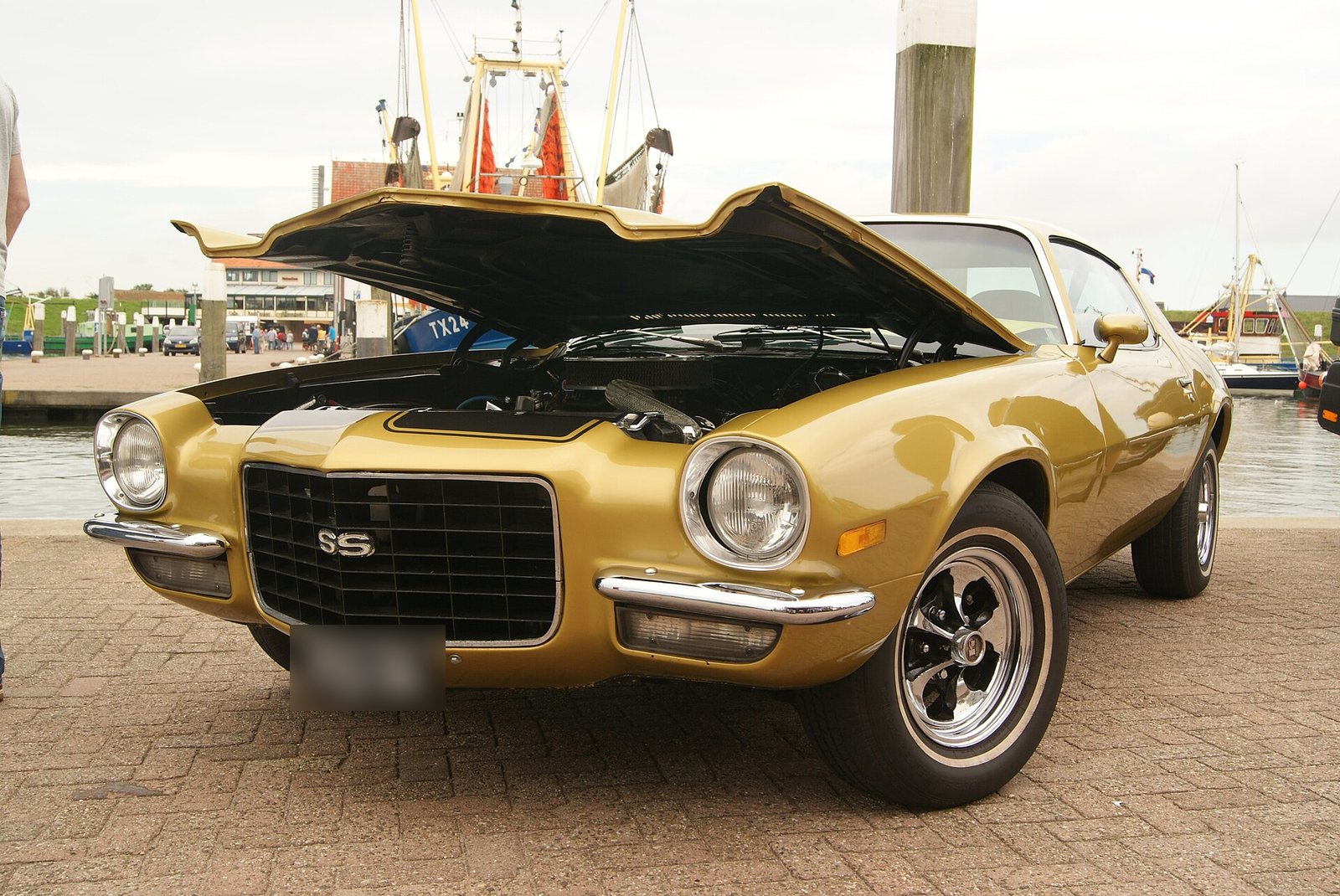
Gold 1972 Camaro SS coupe with RS-style split front bumpers and SS grille badge, close front view with the hood open, at a harbourside car meet Photo: Niels de Wit, CC BY 2.0, via Wikimedia Commons; licence plates blurred
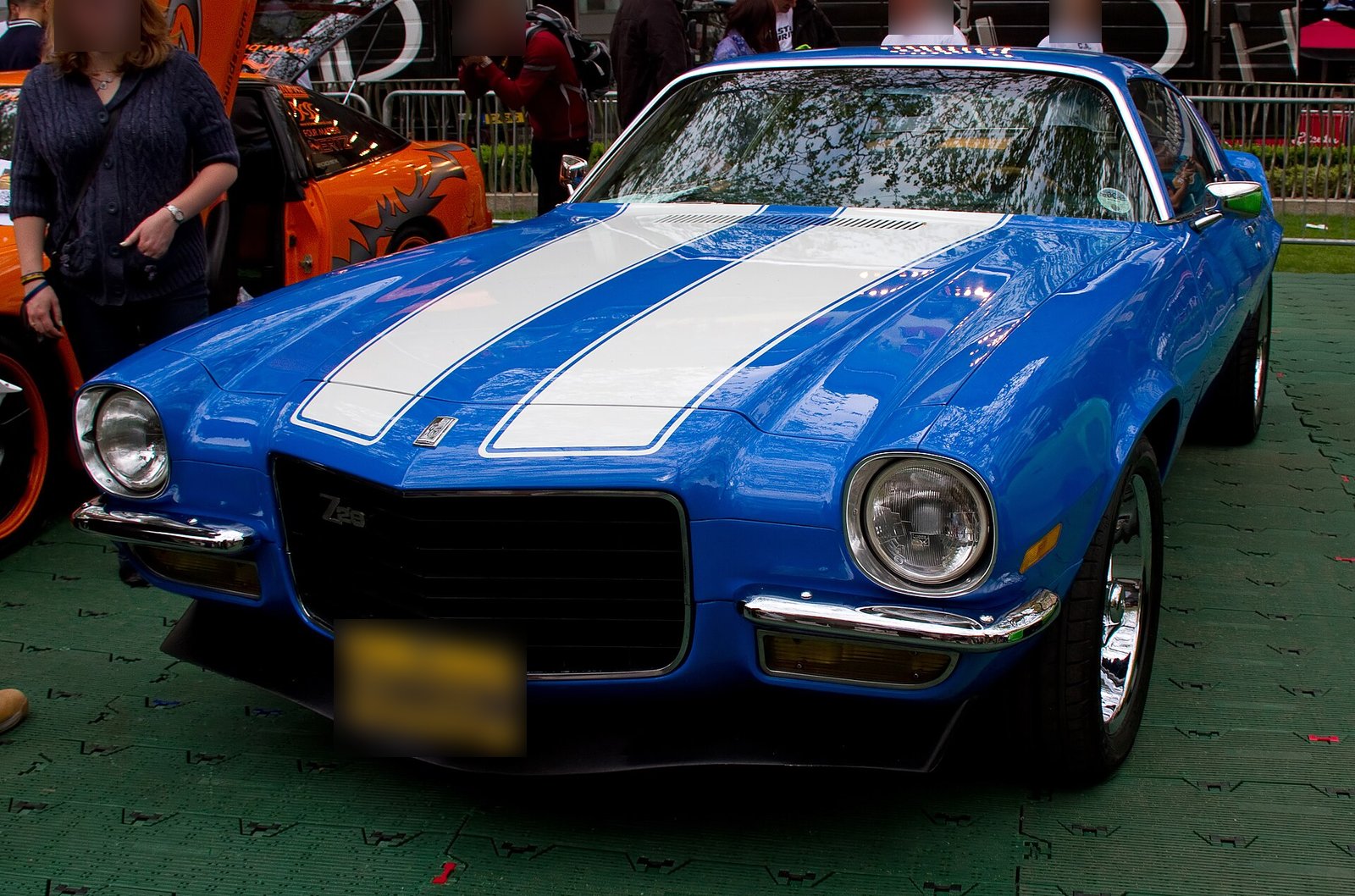
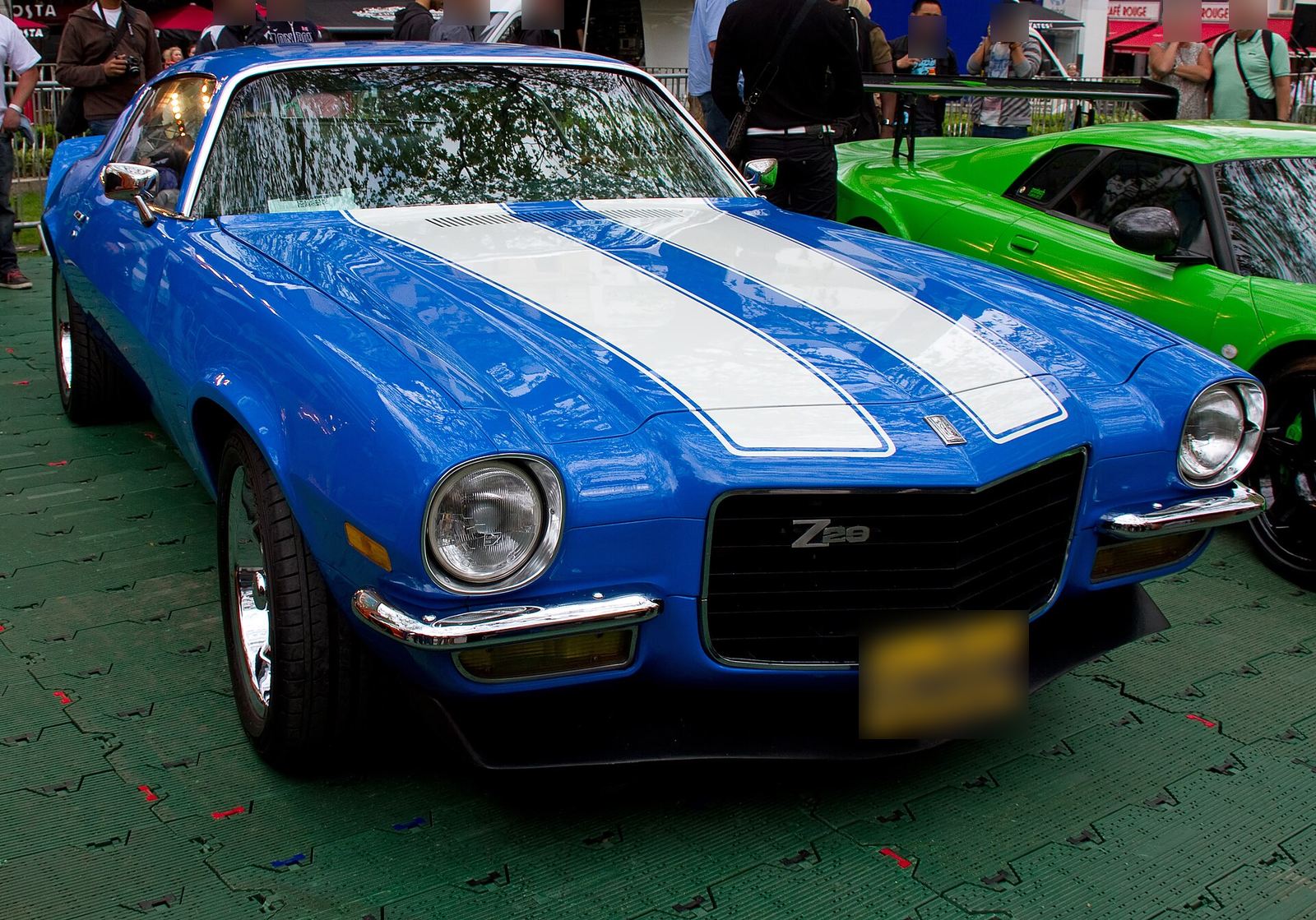
Original photographLicenseBlue 1972 Camaro Z/28 coupe with white twin hood stripes, Z28 grille badge and split front bumpers, front view at a crowded film-premiere display Photo: Tony Hisgett, CC BY 2.0, via Wikimedia Commons; licence plates and faces blurred
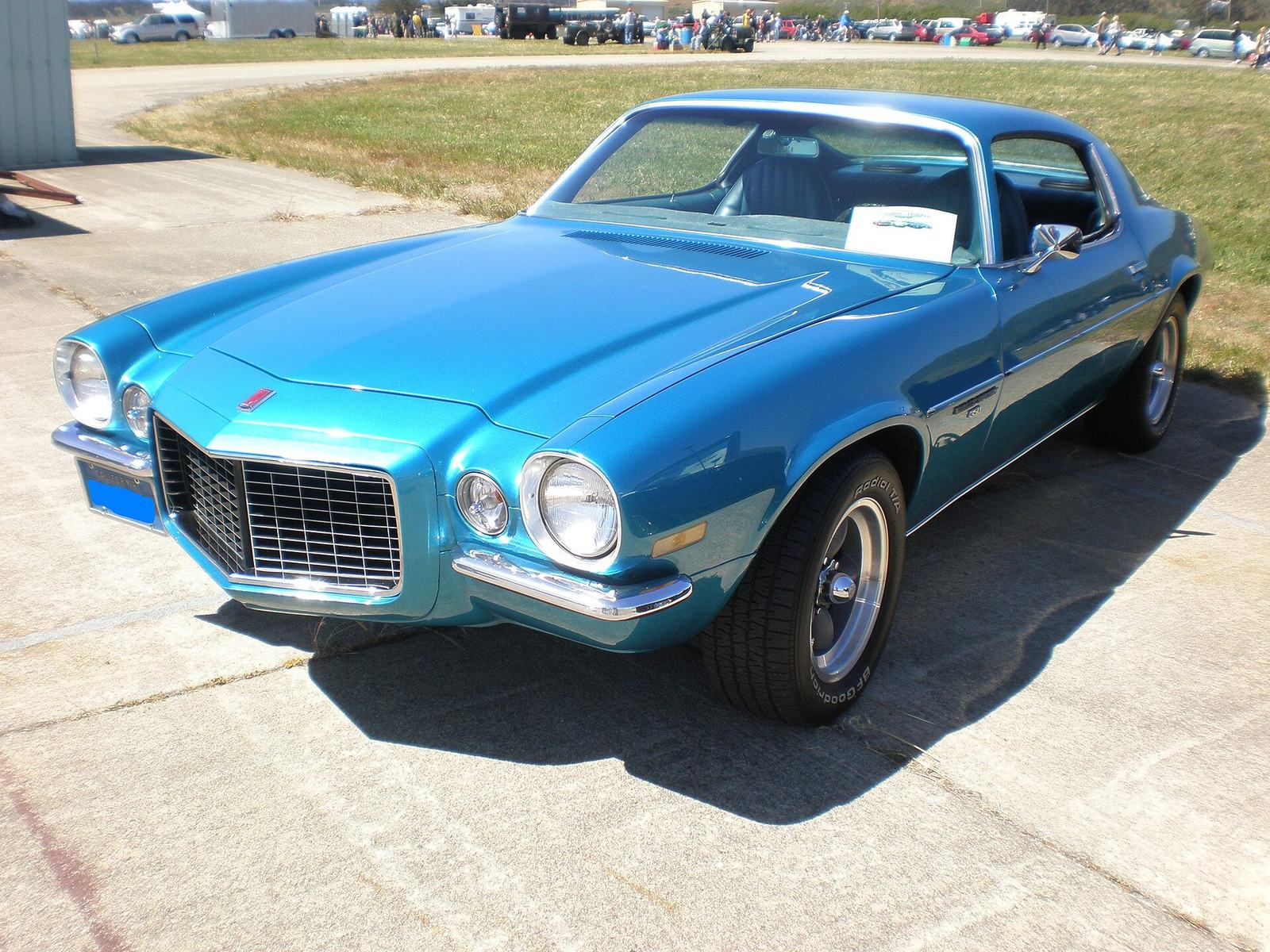
Original photographLicenseBlue 1972 Camaro RS coupe with split front bumpers and round parking lamps, front three-quarter view at an airfield car show Photo: BrokenSphere, CC BY-SA 3.0, via Wikimedia Commons
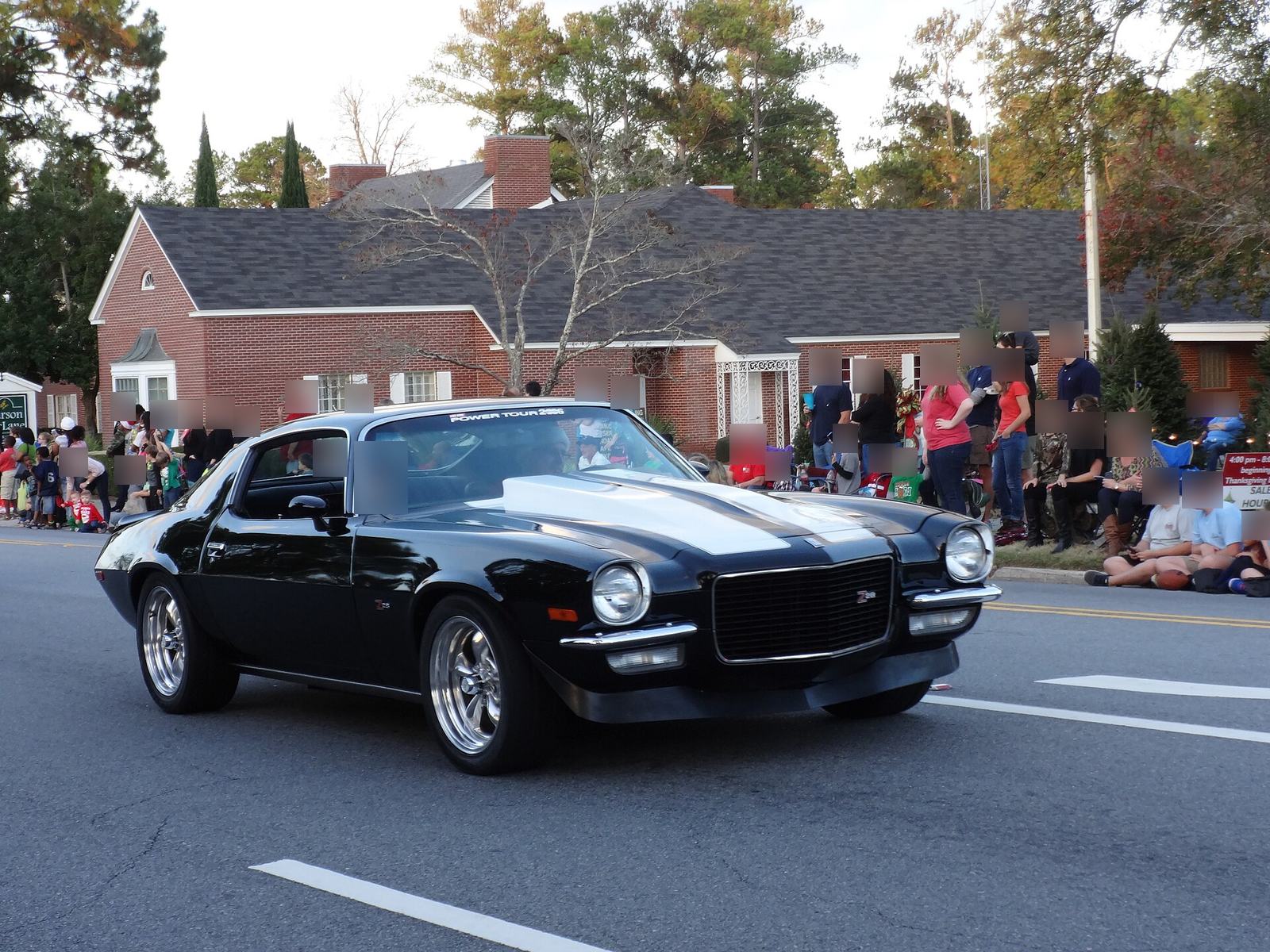
Original photographLicenseBlack 1972 Camaro Z/28 coupe with white hood stripes and Z28 badges on aftermarket wheels, front three-quarter view driving in a street parade with spectators Photo: Michael Rivera, CC BY-SA 4.0, via Wikimedia Commons; faces blurred
Original photographLicenseBlue 1972 Camaro Z/28 coupe with white twin hood stripes, Z28 grille badge and split front bumpers, front three-quarter view from the opposite side at a crowded film-premiere display Photo: Tony Hisgett, CC BY 2.0, via Wikimedia Commons; licence plates and faces blurred
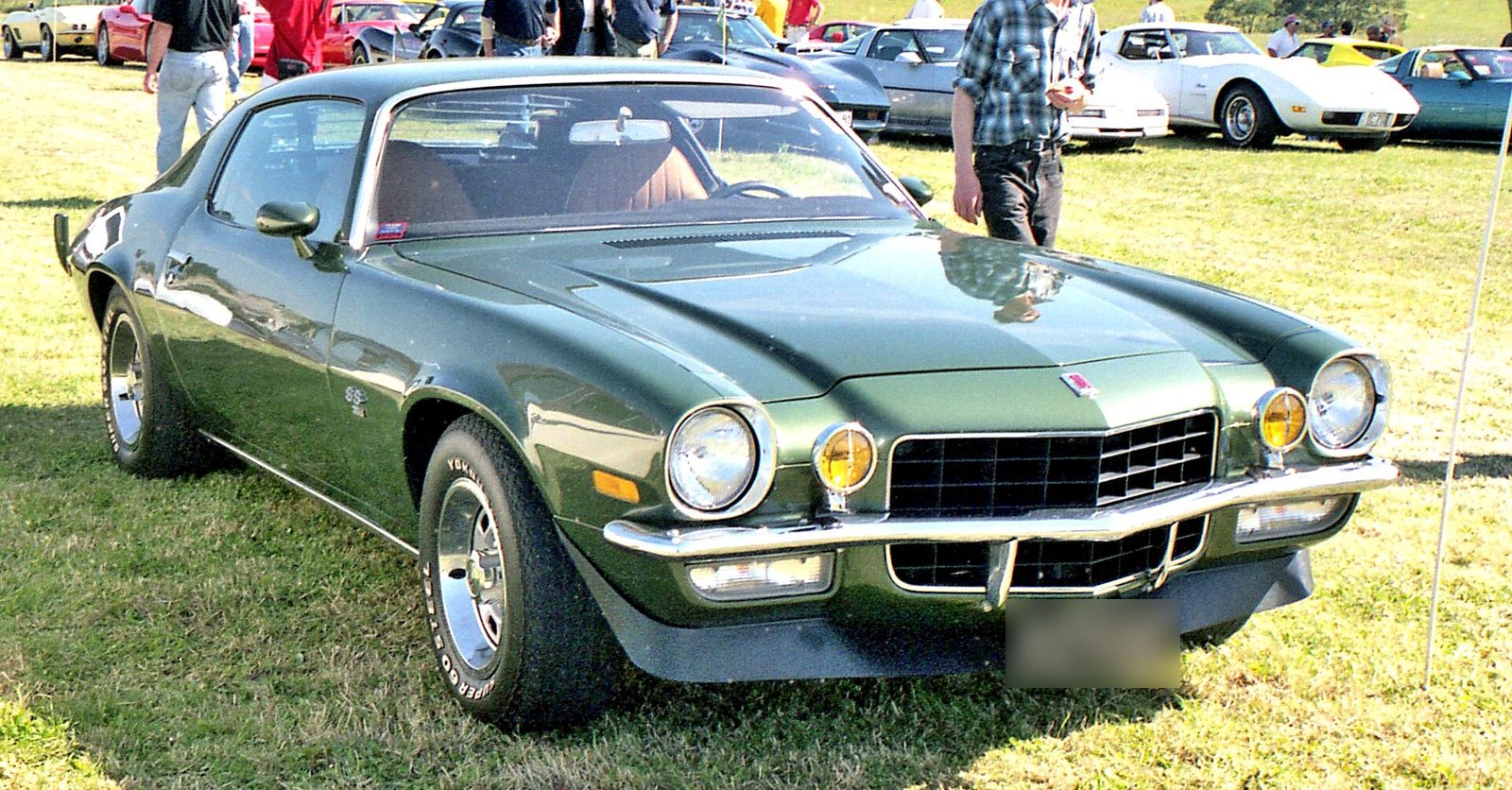
Original photographLicenseDark green 1972 Camaro SS coupe with SS badges and round grille-mounted lamps, front three-quarter view at an outdoor car show on grass Photo: GPS 56, CC BY 2.0, via Wikimedia Commons; licence plates blurred
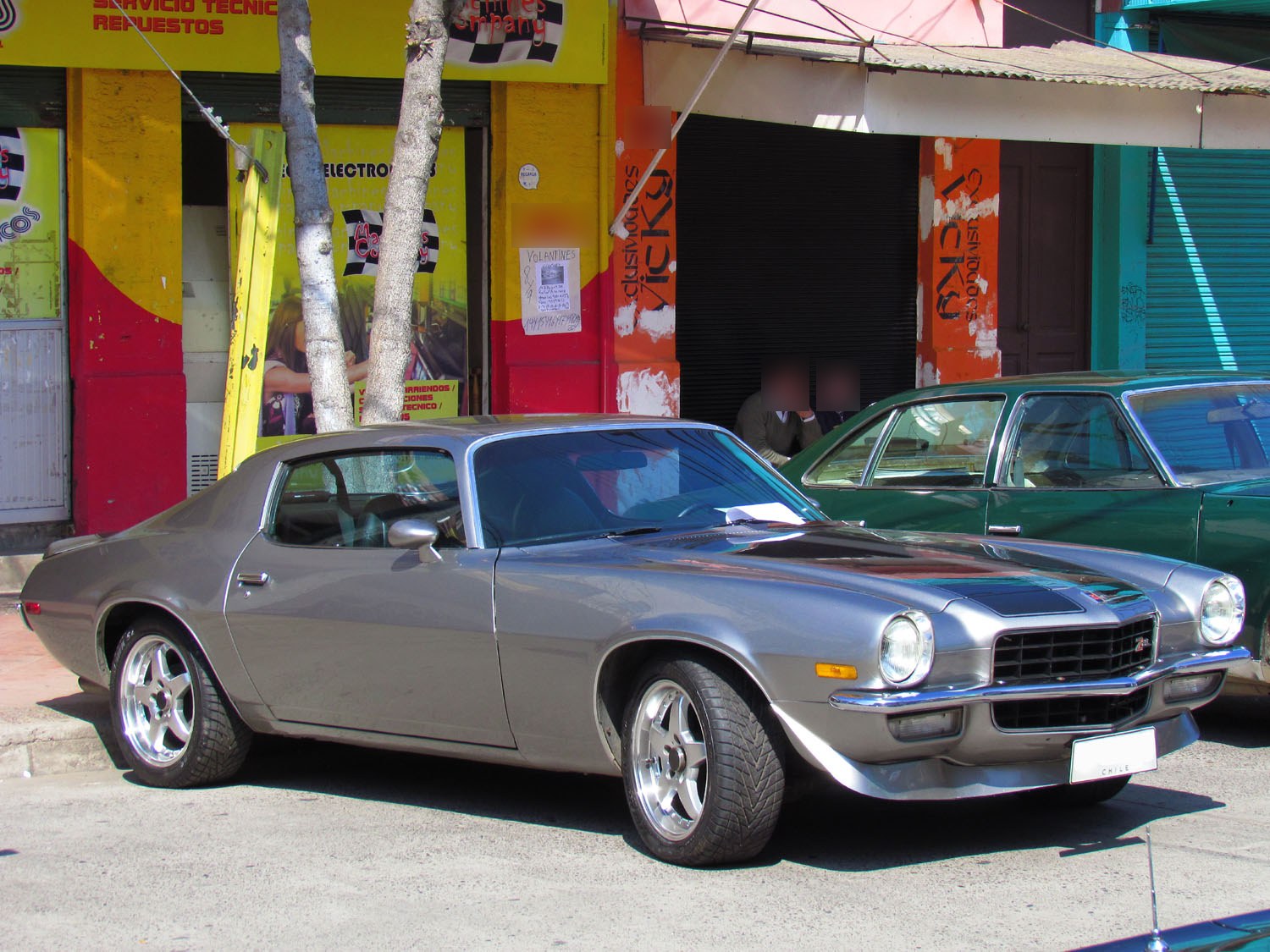
Original photographLicenseSilver-grey 1972 Camaro Z/28 coupe with Z28 grille badge, rear spoiler and aftermarket wheels, side and front three-quarter view parked on a shop-lined street Photo: order_242, CC BY-SA 2.0, via Wikimedia Commons; faces and street numbers blurred
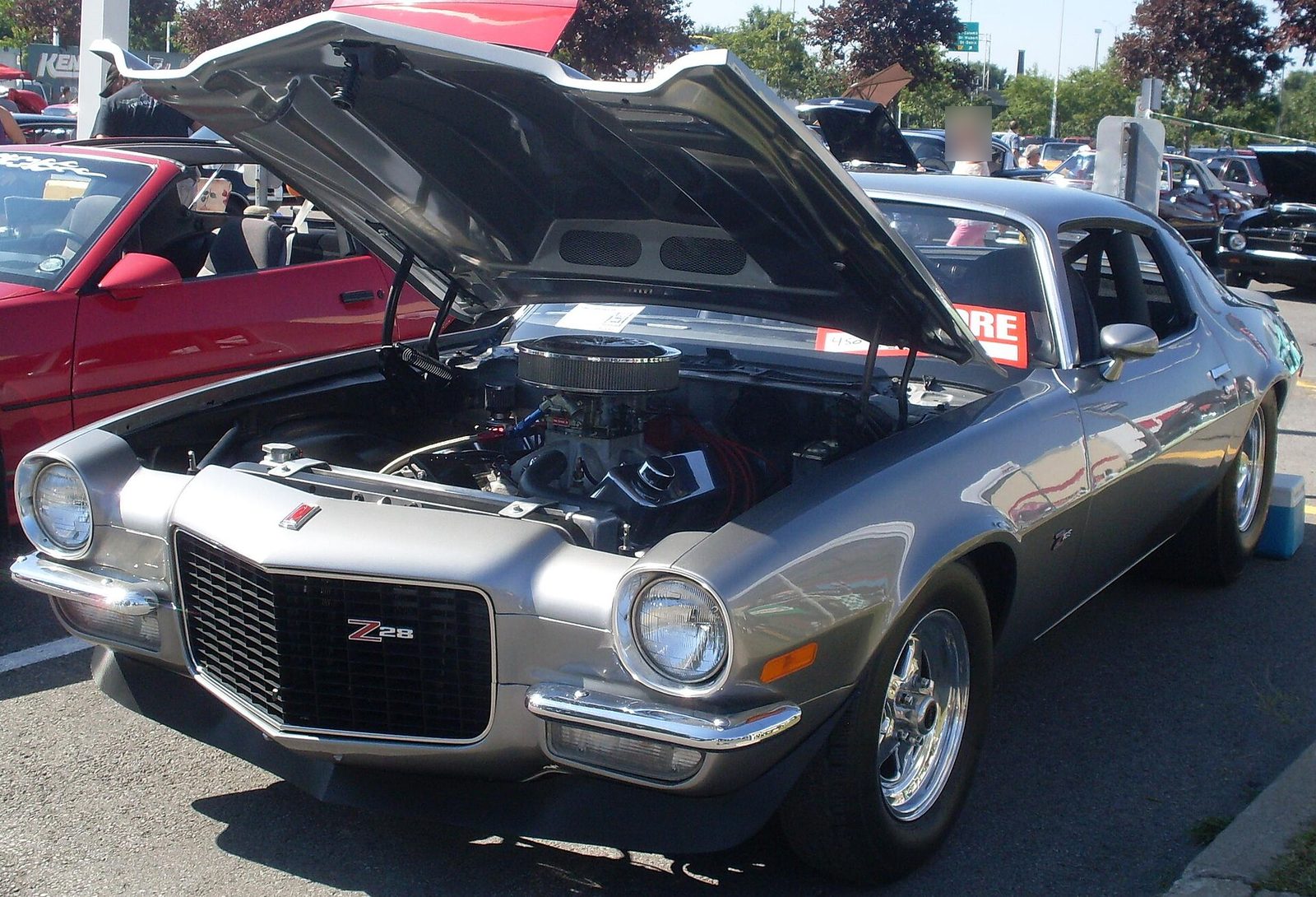
Original photographLicenseSilver 1972 Camaro Z/28 coupe with Z28 grille badge and split front bumpers, front three-quarter view with hood open showing a chrome air cleaner, at an outdoor car show Public domain (Bull-Doser), via Wikimedia Commons; faces blurred
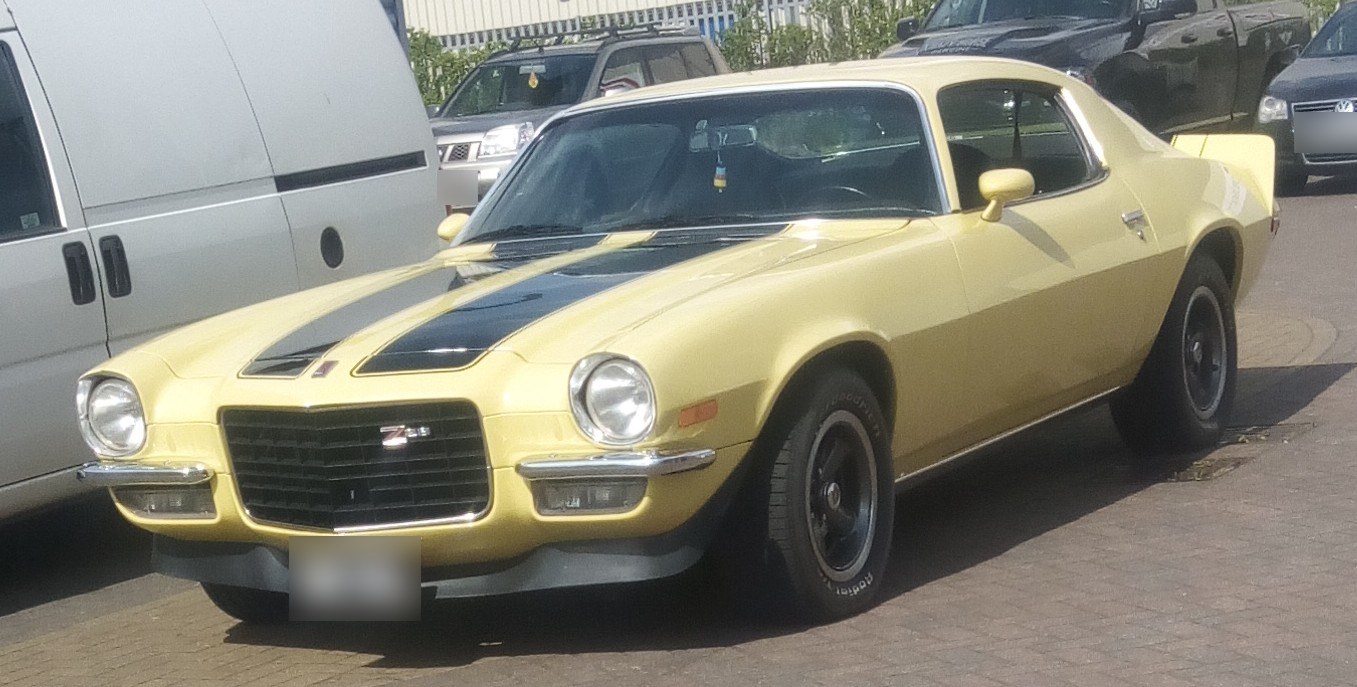
Original photographPale yellow 1972 Camaro Z/28 coupe with black twin hood stripes, Z28 grille badge, split front bumpers and rear spoiler, front three-quarter view parked on a brick lot Photo: Calreyn88, CC BY-SA 4.0, via Wikimedia Commons; licence plates blurred
Original photographLicenseYellow 1972 Camaro SS coupe with SS badges, side profile parked on a residential street, soft and over-sharpened Photo: Accord14, CC BY-SA 4.0, via Wikimedia Commons
Original photographLicenseBlue 1972 Camaro coupe with white racing stripes and aftermarket chrome wheels, rear three-quarter view, on display at a film premiere with a crowd Photo: Tony Hisgett, CC BY 2.0, via Wikimedia Commons; licence plates and faces blurred
Original photographLicense
Exterior colors
This table has 20 exterior colors for 1972, each with its paint code. They include Ascot Blue, Mulsanne Blue and Midnight Bronze.
Code
Color
Note
24
Ascot Blue
26
Mulsanne Blue
68
Midnight Bronze
57
Golden Brown
63
Mohave Gold
53
Placer Gold
43
Gulf Green
48
Sequoia Green
36
Spring Green
65
Orange Flame
75
Cranberry Red
14
Pewter Silver
50
Covert Tan
11
Antique White
56
Cream Yellow
AA
White vinyl roof
All exterior colors
BB
Black vinyl roof
All exterior colors
TT
Covert (light) vinyl roof
Bronze, Brown, Gold, Sequoia Green, Orange, Tan, White or Yellow only
GG
Green (medium) vinyl roof
Gulf or Sequoia Green, Silver or White only
FF
Tan (medium) vinyl roof
Bronze, Mohave Gold or White only
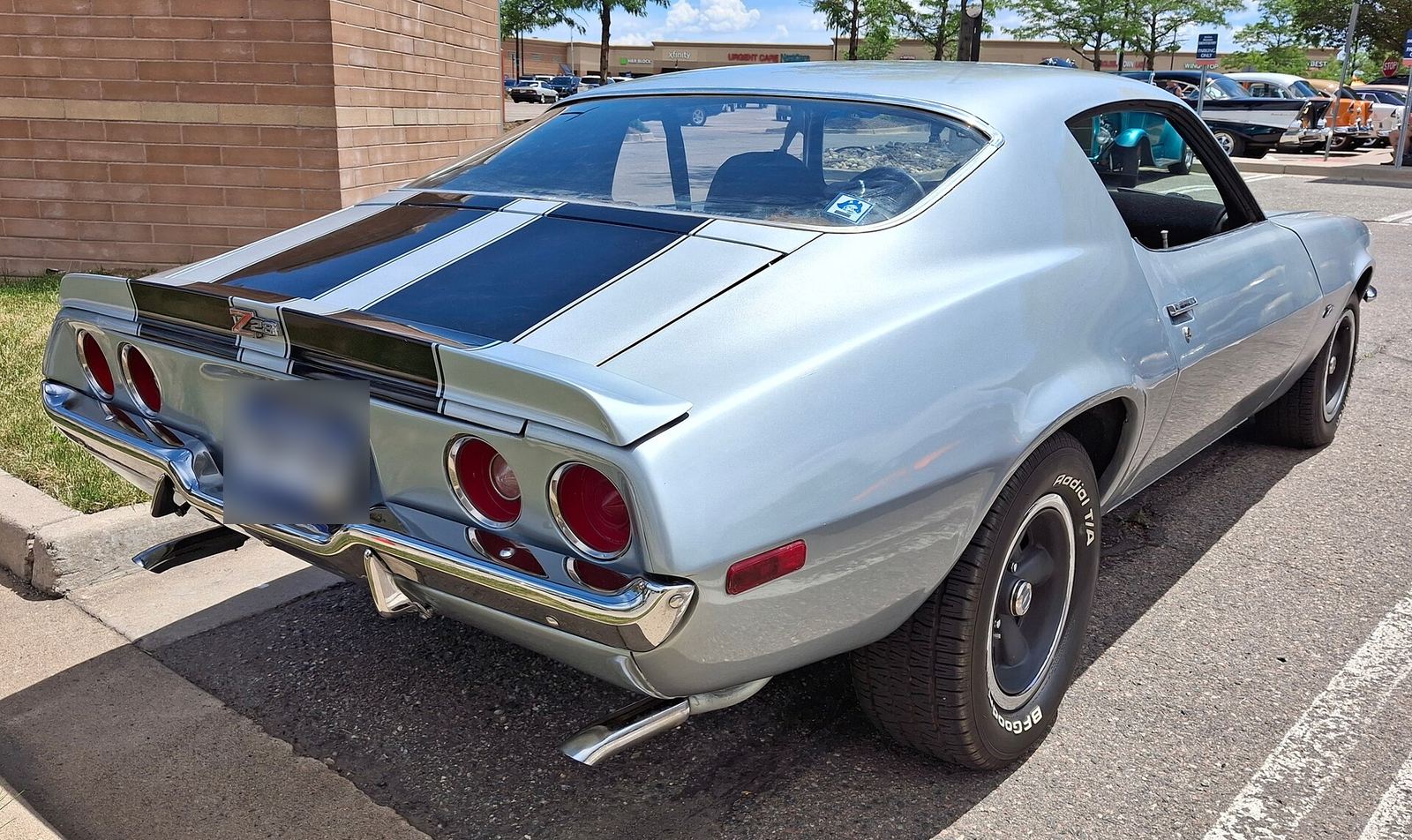
Silver 1972 Camaro Z/28 coupe with dark twin deck stripes, rear spoiler and Z28 badge, rear three-quarter view in a shopping-centre parking lot Photo: Xnatedawgx, CC BY-SA 4.0, via Wikimedia Commons; licence plates blurred
Original photographLicense
Interior trim
This table has 10 interior trims for 1972, each with its trim code.
The Chevrolet selection chart dated December 1, 1971, Section III p. 37 (GM kit PDF p. 7), independently lists the ten retained Sport Coupe Strato-bucket codes: six standard vinyl and four Z87 cloth Custom Interior choices. Medium Tan and White have vinyl cells only; the colored custom cloth entries specify Black accents. The chart permits non-recommended solid-paint/interior orders when the dealer initials the appropriate order-form box to verify customer desire. That procedure explicitly does not apply to vinyl-roof orders: only the printed roof/paint combinations are approved. No D60 or later override identifier is supplied by this page, and none is invented. The chart date is not a build-date cutoff. These are ordering-literature statements, not a physical-tag/VIN crosswalk, proof of individual originality or a neighboring-year rule.
Code
Trim
Note
775
Black vinyl, standard Strato-bucket
Printed in the December 1, 1971 Sport Coupe selection chart for the 1972 model year. This is a standard-vinyl Strato-bucket code; no cloth cell is listed for Medium Tan or White.
776
Dark Blue vinyl, standard
Printed in the December 1, 1971 Sport Coupe selection chart for the 1972 model year. This is a standard-vinyl Strato-bucket code; no cloth cell is listed for Medium Tan or White.
779
Light Covert vinyl, standard
Printed in the December 1, 1971 Sport Coupe selection chart for the 1972 model year. This is a standard-vinyl Strato-bucket code; no cloth cell is listed for Medium Tan or White.
777
Dark Green vinyl, standard
Printed in the December 1, 1971 Sport Coupe selection chart for the 1972 model year. This is a standard-vinyl Strato-bucket code; no cloth cell is listed for Medium Tan or White.
778
Medium Tan vinyl, standard
Printed in the December 1, 1971 Sport Coupe selection chart for the 1972 model year. This is a standard-vinyl Strato-bucket code; no cloth cell is listed for Medium Tan or White.
780
White vinyl, standard
Printed in the December 1, 1971 Sport Coupe selection chart for the 1972 model year. This is a standard-vinyl Strato-bucket code; no cloth cell is listed for Medium Tan or White.
785
Black cloth, custom interior (option Z87)
Printed in the December 1, 1971 Sport Coupe selection chart for the 1972 model year. This is a cloth Custom Interior Strato-bucket code under option Z87; Dark Blue, Light Covert and Dark Green cloth retain Black accents.
786
Dark Blue cloth with black accents, custom
Printed in the December 1, 1971 Sport Coupe selection chart for the 1972 model year. This is a cloth Custom Interior Strato-bucket code under option Z87; Dark Blue, Light Covert and Dark Green cloth retain Black accents.
788
Light Covert cloth with black accents, custom
Printed in the December 1, 1971 Sport Coupe selection chart for the 1972 model year. This is a cloth Custom Interior Strato-bucket code under option Z87; Dark Blue, Light Covert and Dark Green cloth retain Black accents.
787
Dark Green cloth with black accents, custom
Printed in the December 1, 1971 Sport Coupe selection chart for the 1972 model year. This is a cloth Custom Interior Strato-bucket code under option Z87; Dark Blue, Light Covert and Dark Green cloth retain Black accents.
Specifications
This table gives five specifications for 1972, among them wheelbase (108.0 in) and overall length (188.0 in).
Item
Value
Wheelbase
108.0 in
Overall length
188.0 in
Overall width
74.4 in
Overall height
49.1 in
Track, front / rear
61.3 / 60.0 in
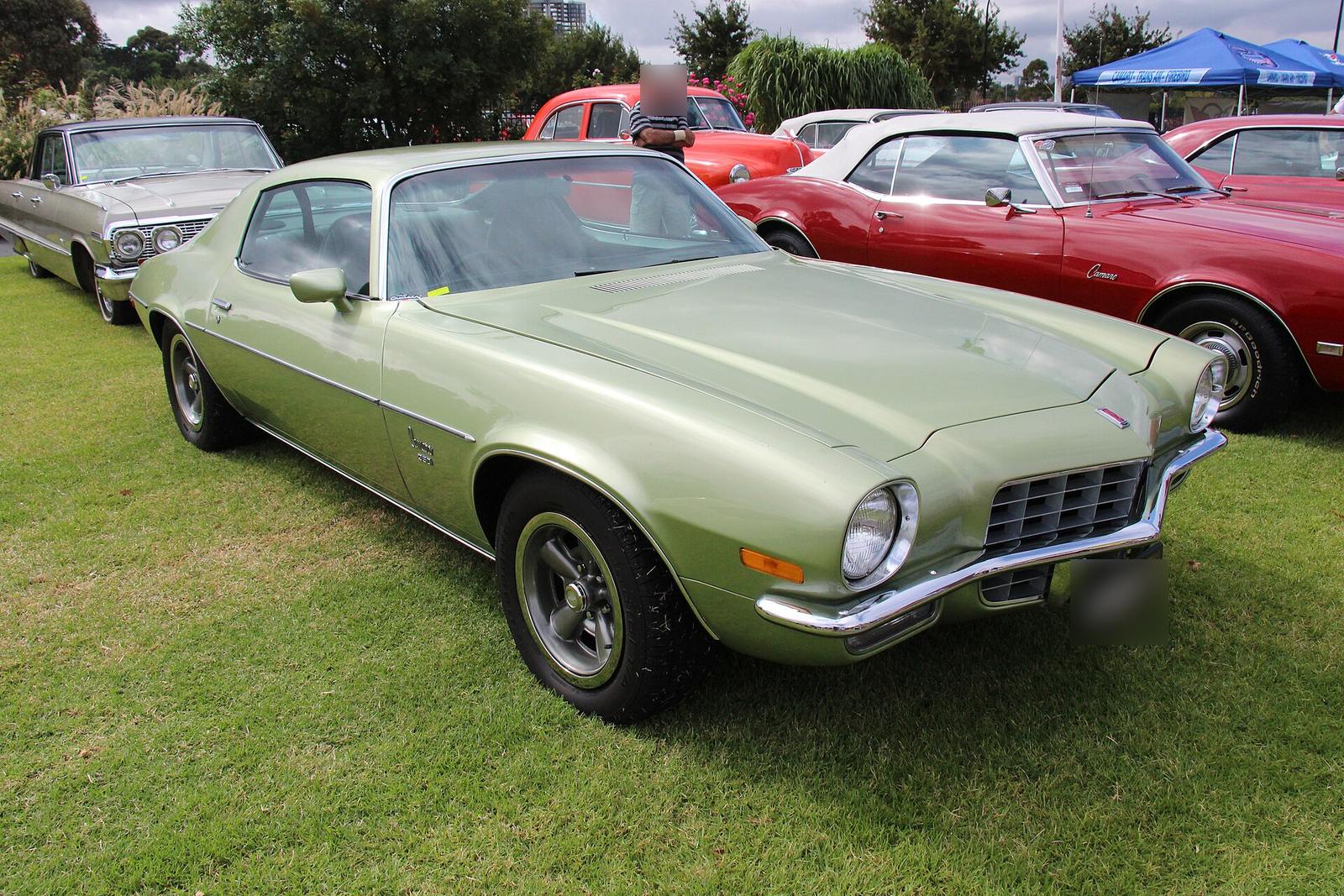
Light green 1972 Camaro coupe with Camaro 350 fender badge, front three-quarter view at an outdoor car show on grass Photo: Sicnag, CC BY 2.0, via Wikimedia Commons; licence plates and faces blurred
Original photographLicense
Identification
What to check on a 1972 Camaro: VIN and year cues.
Item
What to look for
Note
VIN
13 characters; model-year digit 2, plant code N (Norwood)
Norwood was the only Camaro assembly plant for this model year
Year cues
Larger grille rectangles than 1970–71 (shared with 1973)
The Camaro nearly didn't survive 1972, and no Camaro could be factory-ordered with a big block again.
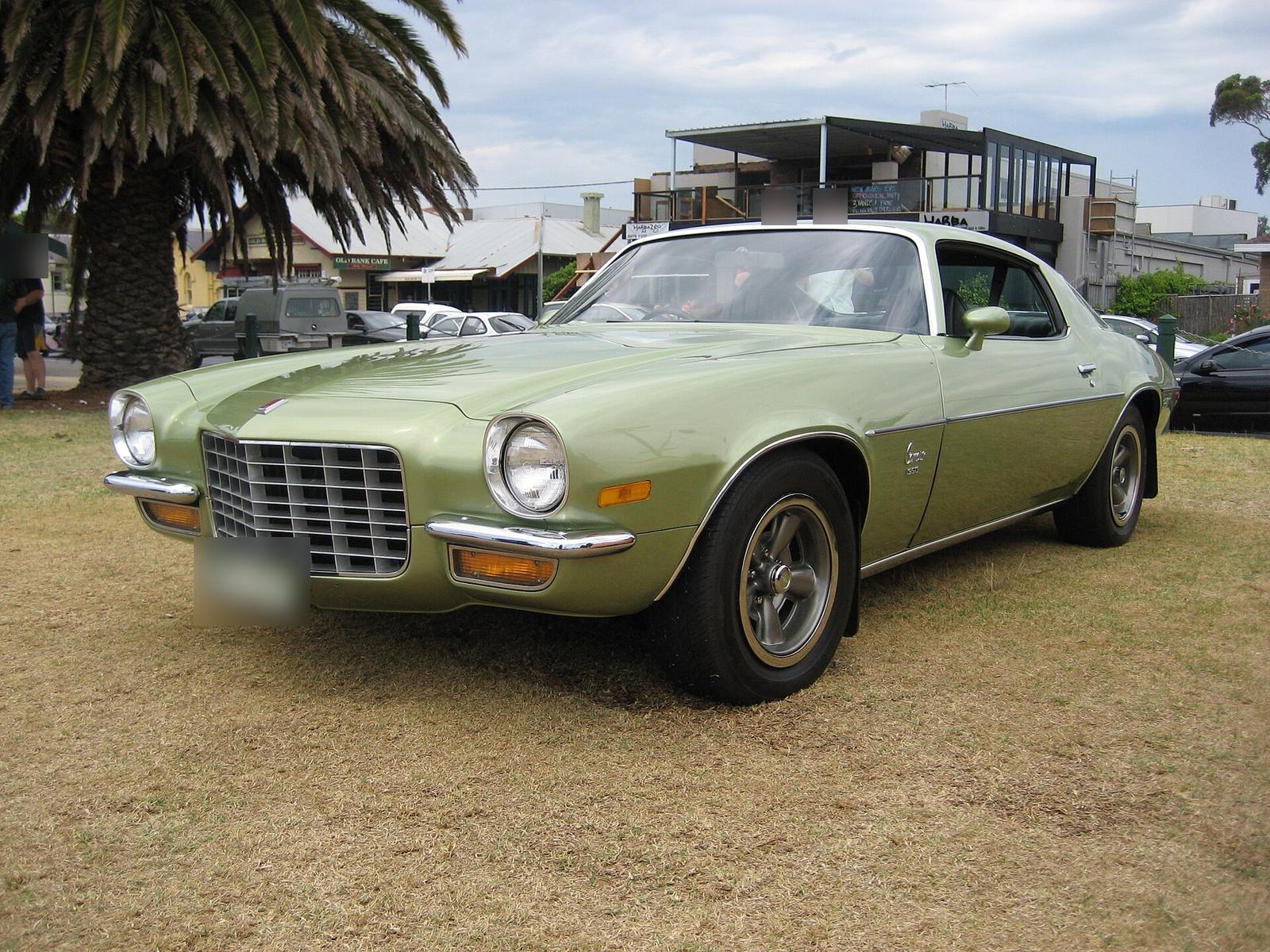
Light green 1972 Camaro RS coupe with split front bumpers and Camaro 350 fender badge, front three-quarter view parked on grass in a town Photo: Sicnag, CC BY 2.0, via Wikimedia Commons; licence plates and faces blurred
Original photographLicense
The Strike and the Near-Cancellation
Following the September settlement, model changeover limited the initial worker recall. The Camaro White Book reprint in GM's archive attributes the scrapping of roughly 1,100 partially assembled cars to the cost of meeting 1973 bumper and emission requirements. Other accounts differ on their condition and fate; this is not a traced factory disposal record. GM reportedly considered dropping both the Camaro and the Firebird to simplify compliance, and backed off after pushback from dealers and owners.
The "GM almost killed it" story is consistent across independent retrospectives and fits the documented collapse, but no GM planning document confirming a serious cancellation decision has turned up. More on the second generation.
Orange 1972 Camaro Z/28 coupe with white twin hood stripes and Z28 badges on aftermarket wheels, front three-quarter view at an outdoor car show Photo: Trailers of the East Coast, CC BY 2.0, via Wikimedia Commons; faces blurred
Original photographLicense
The Last Big Block, and the Horsepower Illusion
Chevrolet's September 1971 rating sheet for the 1972 Camaro calls the LS3 engine a "396" while listing its displacement as 402 cubic inches. That distinction was already present in the 1970 factory sheet. The familiar explanation that "nobody would buy an SS402" is not established as Chevrolet's motive by the factory pages. 1972 was the final year for it and for the SS 350, and for 1973 the SS package was gone entirely.
Chevrolet's revised January 1971 table lists the Z28 at both 330 hp gross and 275 hp net, each at 5,600 rpm. The September 1971 sheet for the 1972 car lists 255 hp net at the same speed. Comparing 330 gross with 255 net mixes rating methods; the net-to-net difference in those published figures is 20 hp, not 75. These are advertised ratings, not measurements of an individual surviving car. See the second generation.
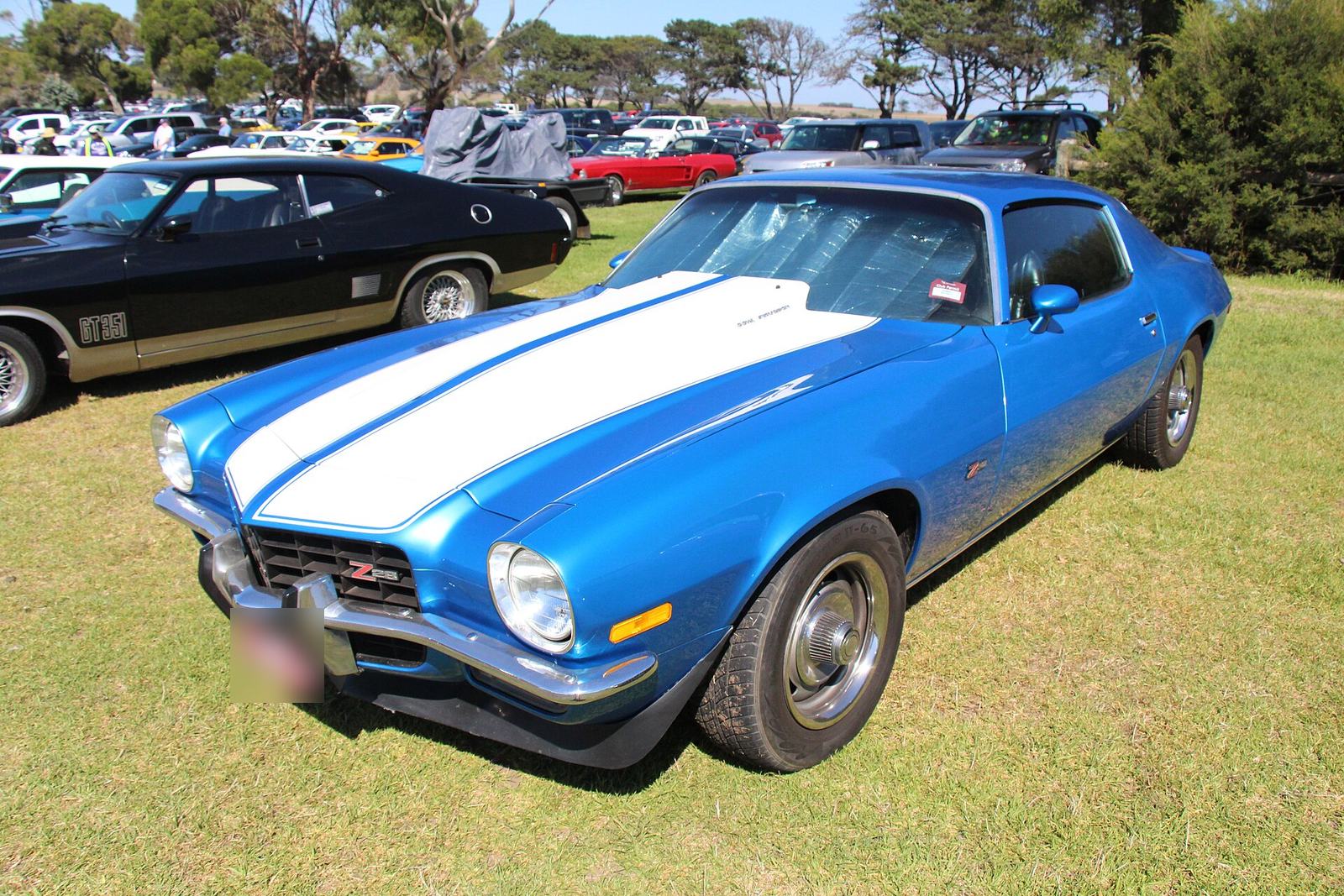
Blue 1972 Camaro Z/28 coupe with white twin hood stripes, Z28 badges and front bumper guards, front three-quarter view at an outdoor car show on grass Photo: Sicnag, CC BY 2.0, via Wikimedia Commons; licence plates blurred
Original photographLicense
The car that was built
For the few customers who got one, the 1972 Camaro looked much like a 1971. Standard models had a coarser grille mesh, vinyl tops took on a "wet" look, and the inner door panels were restyled with map pockets and a coin tray. A new four-speed shifter had a push-down reverse lockout, and three-point combined lap and shoulder belts were phased in during the year. Prices actually fell in December 1971, when the federal 7 percent excise tax on cars was repealed.
Every engine was now rated in SAE net horsepower. The SS could have a 200-hp four-barrel 350 or the 240-hp "396," which Chevrolet did not certify for sale in California. The Camaro White Book lists that engine option at $96, while the December 1, 1971 price schedule shows $101.15, a delivered price. The Z28 came with a four-speed or the Turbo Hydra-Matic, and air conditioning could not be ordered with it. Spoilers stopped being standard Z28 equipment. The larger three-piece rear spoiler, with a front valance spoiler, became a separate $81 option any Camaro could have.
The December price schedule shows how buyers built their cars. Variable-ratio power steering cost $119, the Four-Season air conditioner $418 and a console $60. The special instrumentation group, with a tachometer, ammeter, temperature gauge and clock, cost $86, and a Comfortilt steering wheel $46.