The dealer who out-engineered Chevrolet
A small-town Pennsylvania Chevy dealer talked the factory into building his cars for him, and a prototype from that deal just became the most expensive Camaro ever sold.

Don Yenko wasn't a random hot-rodder with a parts catalog. He won SCCA national championships in B Production in 1962 and 1963 and raced Corvettes at Sebring and Daytona. Born in 1927 in Bentleyville, Pennsylvania, he ran the performance side of the family's Yenko Chevrolet dealership in Canonsburg, and he already knew exactly what a car needed to win.
Corvairs first
He made his first name modifying Corvairs. The Yenko Stinger, sold from 1966, took Chevrolet's rear-engined compact and gave it up to 240 hp along with suspension, steering, transmission and limited-slip upgrades; counts run from 115 built through 1969 (Hagerty) to about 185, enough either way to race in SCCA production classes. It taught Yenko the lesson that shaped everything after: a dealer could create a car Chevrolet would not, as long as he could get the parts and the paperwork to line up.
The Super Camaros
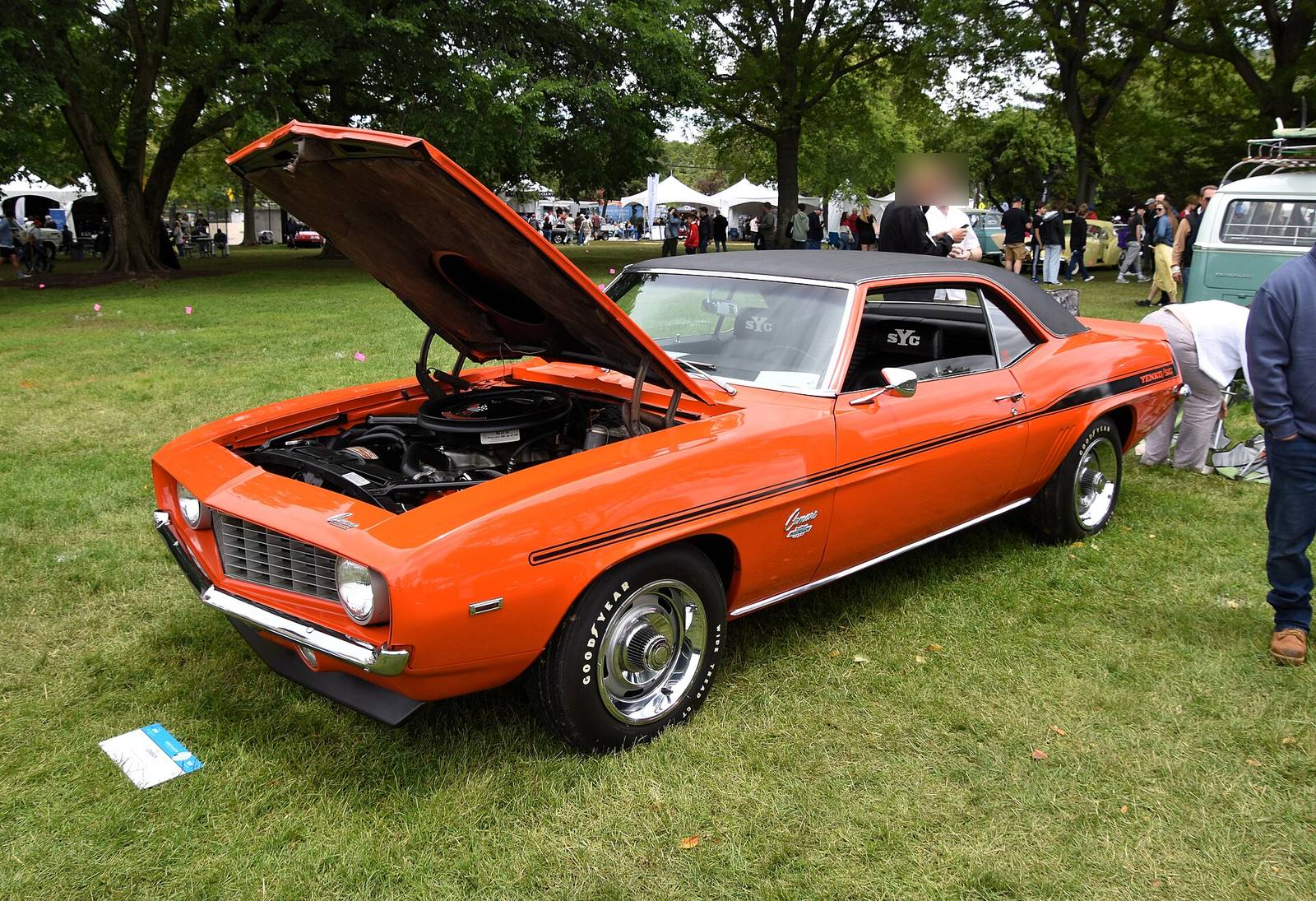
In 1967 he turned to the new Camaro. The regular Camaro engine catalog did not include a 427; the SS396 gave dealers a big-block starting point for a conversion. Yenko bought SS 396 cars, pulled the engines, and fitted the Corvette's 425-hp L72 427 in his own shop, along with a stronger rear axle and suspension. The cars became “Yenko Super Cars,” and the “sYc” lettering on their hoods gave them their nickname. It was expensive, slow, one-car-at-a-time work, and every conversion was a dealer modification rather than a factory car.
Yenko did not do it alone, and he was not the only one. Chicago's Nickey Chevrolet, working with Bill Thomas, is often credited with building the first 427 Camaro in 1967, though the claim rests on retellings rather than records, and Long Island's Baldwin Chevrolet and Joel Rosen's Motion Performance were selling their own. Dick Harrell, the drag racer the press called “Mr. Chevrolet,” engineered conversions for several of these dealers, Yenko among them. What set Yenko apart was his next move. Instead of competing to install engines faster, he set out to make Chevrolet install them for him. The dealer rivals are covered in Chicago's 427 shop and Mr. Chevrolet.
Getting Chevrolet to do it
For 1969 Yenko stopped doing it the hard way. He worked directly with Chevrolet's Vince Piggins to get the 427 installed on the actual factory line, ordered through the Central Office Production Order system dealers used for fleet trucks and taxi packages. The order was COPO 9561. It brought the iron-block L72, a special ducted hood, heavy-duty cooling, mandatory power front disc brakes and a 4.10 axle (the same one used in the all-aluminum ZL1), with the buyer choosing the transmission. By the Camaro Research Group's reckoning it cost $489.75, which made a 427 COPO Camaro about $50 cheaper than a 375-hp SS 396 with Positraction. Yenko paired it with a second order, COPO 9737, the “Sports Car Conversion,” which added a thicker front stabilizer bar, 15 x 7 Rally wheels on E70 x 15 tires and a 140-mph speedometer.
Nobody signing off on COPO forms in Detroit particularly cared that a small Pennsylvania dealer was using them to build the fastest Camaro Chevrolet never officially sold. Sources put the count at 198 to 201 genuine 1969 Yenko/SC Camaros, a small enough gap that it's likely a counting-method difference (ordered vs. built vs. sold) rather than a real dispute. The door he opened was wider than his own cars: the Camaro Research Group counts 997 COPO 427 Camaros in all, with Berger Chevrolet in Grand Rapids taking about 50 and other dealers the rest (see the rare and significant cars).
After the Camaros
The specific prototype Yenko used to prove the whole concept to Chevrolet sold at Mecum's Kissimmee auction on January 17, 2026 for $1.65 million hammer, or $1,815,000 with the buyer's premium. It was reported as the highest price ever paid for a Camaro at auction. Yenko himself never saw a fraction of that. As emissions rules and insurance costs closed in, he moved to the 1970 Yenko Deuce, a Nova with the Camaro Z28's 360-hp LT-1 small block, then to the Vega and its Stinger II. By 1972 he had stopped selling modified cars and turned to a performance-parts catalog, returning one last time with a turbocharged 1981 Camaro, the “Turbo Z.” He died on March 5, 1987, when the Cessna 210 he was flying crashed while landing near Charleston, West Virginia.
The name outlived him
Starting in 2015, SVE, descended from SLP Engineering (the same shop behind the fourth-generation Camaro SS), began building officially licensed “Yenko/SC” Camaros through Chevrolet dealerships under a rights agreement with the Yenko name. They are distinct from the flood of unlicensed cosmetic “Yenko tribute” clones that have circulated since the 1990s at a fraction of the price. More than half a century after the first sYc Camaro, the dealer's name still sells the car.

Did you know
- Yenko meant the Vega Stinger II to be turbocharged, with engine work made to handle a Schwitzer turbocharger he planned to install at the dealership. He dropped the plan when the EPA required a 50,000-mile durability test for intake or exhaust modifications, and listed the turbo instead as a $575 option the customer had to install. Hagerty says he had 200 Vegas built in each of 1971 and 1972, his most prolific model, and that only 11 are accounted for.
- Yenko is often called a four-time SCCA national champion, but SCCA's own list of national champions shows him winning B Production in 1962 and 1963. The Stinger's title in 1967 went to Jerry Thompson in D Production. In July 1961 SCCA had suspended Yenko for six months after his Gulf Oil Corvette was found at Meadowdale with an aluminum flywheel.
- Yenko was a serious jazz pianist. His daughter says he learned to play at 12, tried to make it in New York after college, and got a one-way ticket home from his parents when the money ran out. She also says he once sat in with Duke Ellington's band for a night, and that Gulf Oil's Grady Davis flew a piano into the Daytona paddock for him.
- The 100-car Stinger order was big for a small-town store. His daughter told a local paper the Corvair COPO order arrived in December 1965, when the dealership usually sold about 150 cars a year. SCCA had told him a new class needed 100 identical modified cars.
- Yenko flew before he could drive. His daughter says he washed planes at the local airport at 14 to pay for lessons, and on his third lesson a substitute instructor asked if he was ready to solo. He said yes. Wikipedia instead says he learned to fly at 16.
- Nobody agrees how many Yenko Stingers there were. Hagerty says 115 were built from 1966 to 1969, and Wikipedia's dealership table adds up the same way: 100, 14 and 1. Other counts reach about 185 by including 60 cars tagged after February 1967.
Sources for these details
- Hagerty Media, "Viva Lost Vegas: The strange tale of the Yenko Stinger" Reference
- Wikipedia, "Yenko Chevrolet" (citing Holder & Kunz, Extreme Muscle Cars, p. 37) Reference
- SCCA 2021 Club Racing Media Guide, "Former National Champions" (B Production and D Production lists) Club/registry
- Corvette Action Center, 1961 Gulf Race Car provenance (Bloomington Gold Great Hall car) Club/registry
- "Yenko put the pedal to the metal on life," Observer-Reporter (Washington, Pa.), July 31, 2022 Newspaper
- Wikipedia, "Don Yenko" Reference
- Chevy Hardcore, "The Greats of Chevrolet Before They Were Famous: Don Yenko" Reference