Homologation
The rule that killed one car and created another
A thousand cars was an impossible number. Chevrolet's answer was to build 602 and see what happened.
In 1963 Bill Thomas was building a car to beat the Cobra. The Cheetah came out of a small shop in Anaheim, California, and it had a quiet friend inside General Motors: Vince Piggins, head of the performance product group, was covertly supporting the project. Chevrolet had officially withdrawn from racing. Piggins spent the next decade finding ways for it to race anyway.
Then the arithmetic changed. In 1964 the homologation requirement — the number of road cars a manufacturer had to build before a racing version counted as a production model — went from 100 to 1,000. For a shop the size of Thomas's, a hundred was ambitious and a thousand was fantasy. Chevrolet stopped supporting the Cheetah. On 9 September 1965 the factory burned down, and that was effectively that. Nobody even agrees how many were built: one count says as many as 23 in varying states of completion, another says 19 chassis and 33 bodies.
Two years later Piggins did it the other way round.
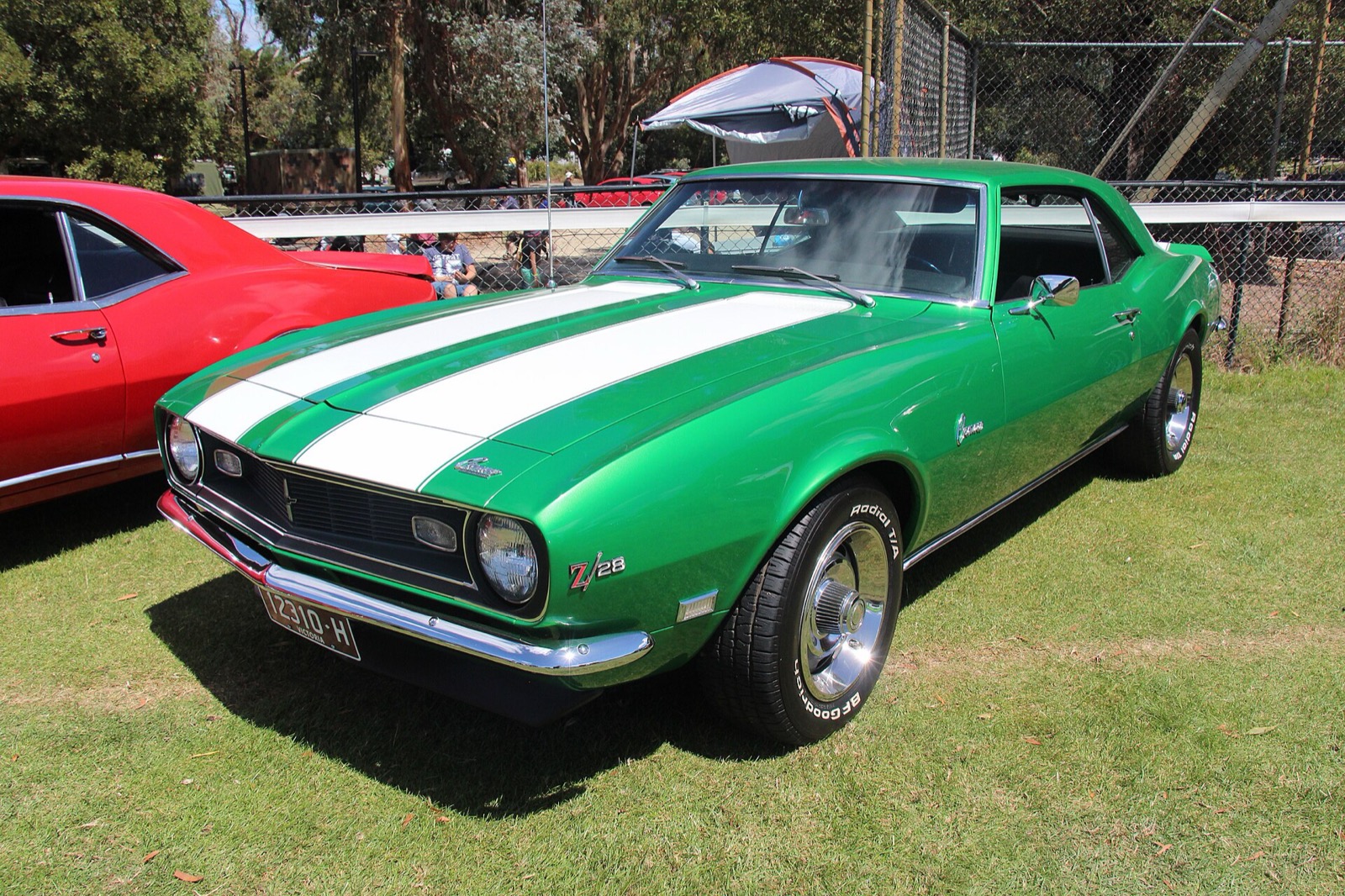
The Z/28 was not a car with a racing version bolted on afterwards. It was designed from the start around a rule: SCCA's Trans-Am class capped displacement at 305 cubic inches, so Chevrolet put a 327 crank in a 283 block and got 302. The whole package existed to make the car legal. It was not even advertised as a Z/28 at first — the name was an order code, buried in a book.
And the homologation number? SCCA nominally wanted a thousand of those too. Chevrolet built 602 and SCCA accepted it anyway.
That is the difference between the two cars, and it has nothing to do with engineering. The Cheetah was a good car that met a rule it could not satisfy. The Z/28 was a car built backwards from the rule, by someone who had already learned what happens when you do it the other way. Thomas went on to build 427 Camaros with Nickey Chevrolet — the dealer-tuner trade is partly what his shop did next.
Read more about Bill Thomas, Vince Piggins, and the first generation.