Vince Piggins
Chevrolet product performance chief, “father of the Z/28”
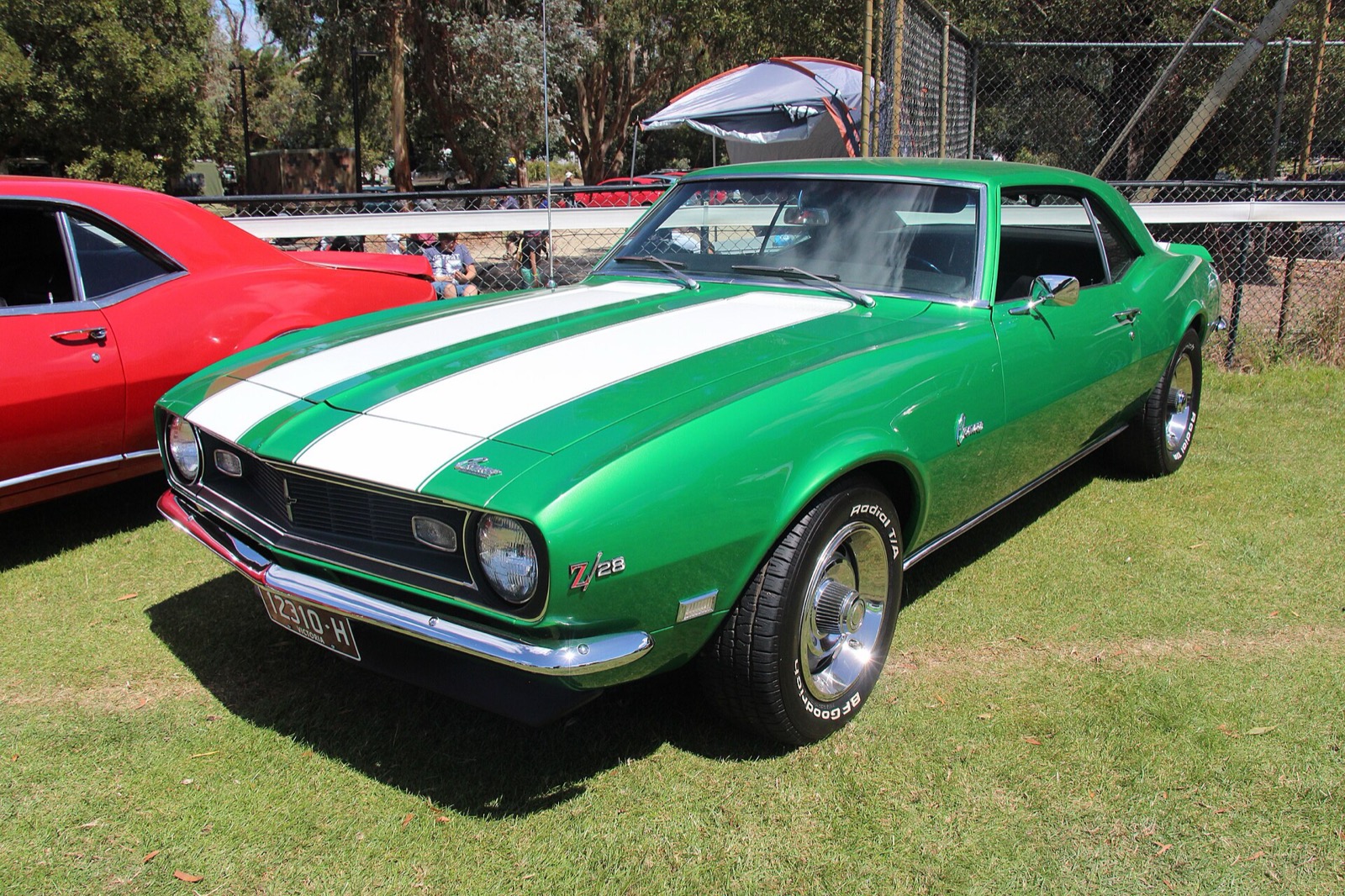

Vince Piggins spent roughly 30 years in Chevrolet performance engineering without a formal engineering degree and rose to head of product performance. That made him the man with final sign-off on what could be built through the Central Office Production Order (COPO) system.
In August 1966 he sent management the memo proposing a Trans-Am-eligible Camaro package. It became the Z/28, and enthusiast historians have called him its father ever since.
Piggins had been doing Chevrolet's racing off the books long before the Z/28. In 1957 he ran SEDCO, the company's stock-car shop in Atlanta, which closed before the year was out, and he backed Bill Thomas's Cheetah.
His signature is on the most famous Camaros of the era. When Fred Gibb asked for an NHRA drag car in 1968, Piggins found the paperwork that became the 69 COPO ZL1s; see the rare and significant Camaros.
Chevrolet framed its modern COPO program, which began with 69 cars for 2012, as a tribute to Piggins, Don Yenko and Fred Gibb.
Did you know
- Chevrolet officially wasn't racing, so Piggins built a covert development team inside his own department: Herb Fishel, Bill Howell, Paul Prior, John Pierce and Ron Sperry. They kept developing competition parts and labeled them "heavy-duty" or "off-highway" so nobody would read them as racing hardware.
- The 302 was pitched to the boss in person. Piggins gave Pete Estes a demonstration ride in a 283-powered development mule, then proposed pairing the 327/350 bore with the 283 stroke to land just under the Trans-Am's 305-cubic-inch limit. Estes, who had already OK'd the GTO at Pontiac, gave him the go-ahead.
- Only 602 Z/28s sold in 1967, short of the 1,000 cars SCCA wanted, so Piggins got the regular SS 350 Camaro (over 30,000 sold) homologated for SCCA's Group I racing and persuaded officials to judge the Z/28's eligibility on the two cars' combined sales.
- The Z/28 has no name behind it. After a lot of argument over what to call the homologation model, Chevrolet settled the question by using the option code itself: Z28.
- Before Chevrolet he was a Hudson engineer, assigned to help driver Marshall Teague tune the Hornets. Together they developed the "Severe Duty" racing parts, including the Twin H-Power dual-carburetor setup, for the cars that dominated early-1950s stock-car racing.
- SEDCO stood for the Southern Engineering Development Company, and on paper it was a division of Nalley Chevrolet in Atlanta. It prepared six fuel-injected black-and-white 150 sedans (the "Black Widows"), and Piggins wrote the 1957 Stock Car Competition Guide for other teams.
- Piggins stayed at Chevrolet until the early 1980s and died in October 1985. SEMA inducted him into its Hall of Fame in 1991, crediting his work building ties between carmakers and the specialty aftermarket and his role in the Z/28 package.
Sources for these details
- Ate Up With Motor - First, Foremost: The First-Generation Chevrolet Camaro Z/28 Reference
- Ate Up With Motor - Step-Down: The 1948-1954 Hudsons Reference
- Audrain Auto Museum - 1957 Chevrolet 150 Black Widow Reference
- Chevy Hardcore - The 1957 Chevrolet Black Widow Reference
- SEMA Hall of Fame - Vince Piggins (1991) Hall of fame
Key beats
- Covert racing team; SEDCO stock-car shop (1957)
- August 1966 Z/28 proposal memo
- Final approval over COPO orders