The car that almost wasn't approved
GM said no before the Mustang made it say yes.

Bunkie Knudsen had earlier seen an early Chevy II-based sporty-car clay and turned it down: “the one thing we don't need right now is another car.” GM was cautious about proliferating models beyond what it thought the market could absorb.
The project came back only after the April 1964 Ford Mustang proved a huge, immediate market GM had no answer for. Ed Cole pushed a competitor through on a crash schedule, and the “Panther” program became the Camaro.
A crash program on a borrowed chassis
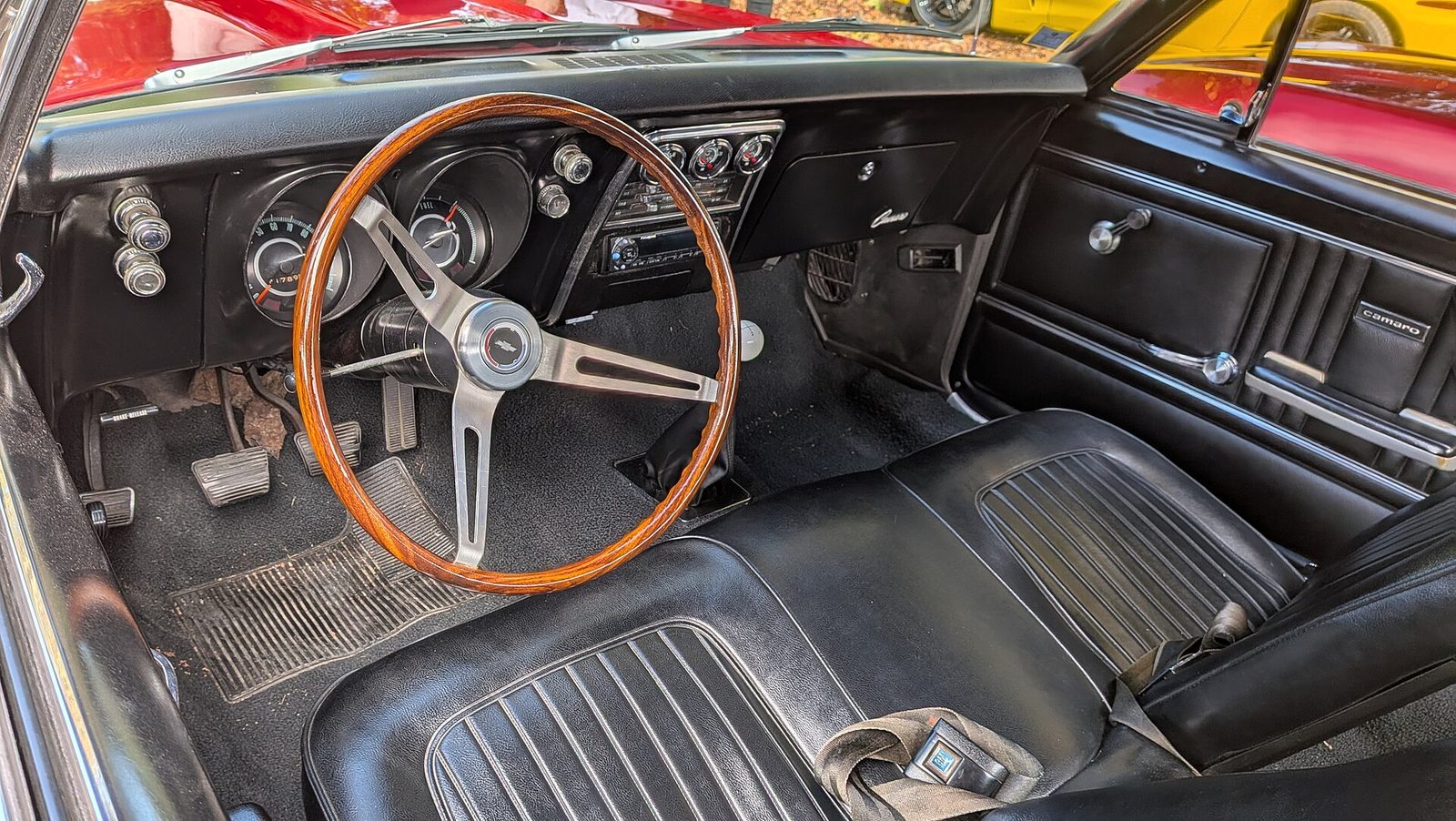
Internally it was project XP-836, built in Chevrolet Studio 2 at the GM Technical Center in Warren, Michigan. It was nicknamed the “F Car” before it even had a name and, by one account, wore the name “Chaparral” on early mock-ups. Bill Mitchell, GM's overall design chief, oversaw styling. Day-to-day design fell to Chevrolet studio stylist Henry Haga, reporting to Dave Holls, with Chuck Jordan and Irv Rybicki also contributing. Interior design is credited to Suzanne Vanderbilt and Cathy Kascur, two of the very few women with visible design credits at GM in this era.
Time was the constraint, and engineering saved it by sharing. The Camaro's structure (a unitized body with a separate, rubber-mounted front subframe carrying the engine and front suspension) was the same basic design GM was preparing for the 1968 Chevy II Nova. Chevrolet's own 1967 data book describes it plainly: deep-sectioned, double-channel front rails joined by three cross members, bolt-on front sheet metal, coil springs and short and long control arms up front, and single-leaf springs on a Hotchkiss-drive rear axle. It was conventional, proven hardware, and it let a car conceived after the Mustang's debut reach showrooms roughly two and a half years later.


Pontiac got its own version of the same program almost by accident. John DeLorean had been pushing hard for a two-seat Pontiac sports car, the project now known as the Banshee. Ed Cole said no to that, but offered DeLorean a Pontiac-badged version of the same F-body instead. Pontiac's engineers gave their car, the Firebird, its own suspension tuning and styling, and Chevrolet deliberately staggered the launches: Firebird reached showrooms February 23, 1967, five months after Camaro, so the two GM siblings wouldn't collide in the same news cycle.
Killing the Panther
The code name had leaked. For two years the press had written about Chevrolet's coming “Panther,” so when Chevrolet revealed the real name on June 28, 1966, it did so by burying the old one. General manager Pete Estes told the reporters, gathered in Detroit and, in a first for the industry, linked by telephone with reporters in 14 cities, that they were all charter members of the Society for the Elimination of Panthers from the Automotive World, and that this was its first and last meeting. Then he gave them “Camaro,” a name he said “suggests the comradeship of good friends as a personal car should be to its owner.” To Chevrolet, he added, it meant just what the car would do: “Go!” When reporters kept asking what a camaro actually was, Chevrolet managers reportedly answered that it was a small, vicious animal that eats Mustangs. Chevrolet's own 50th-anniversary release still repeated the line in 2016.
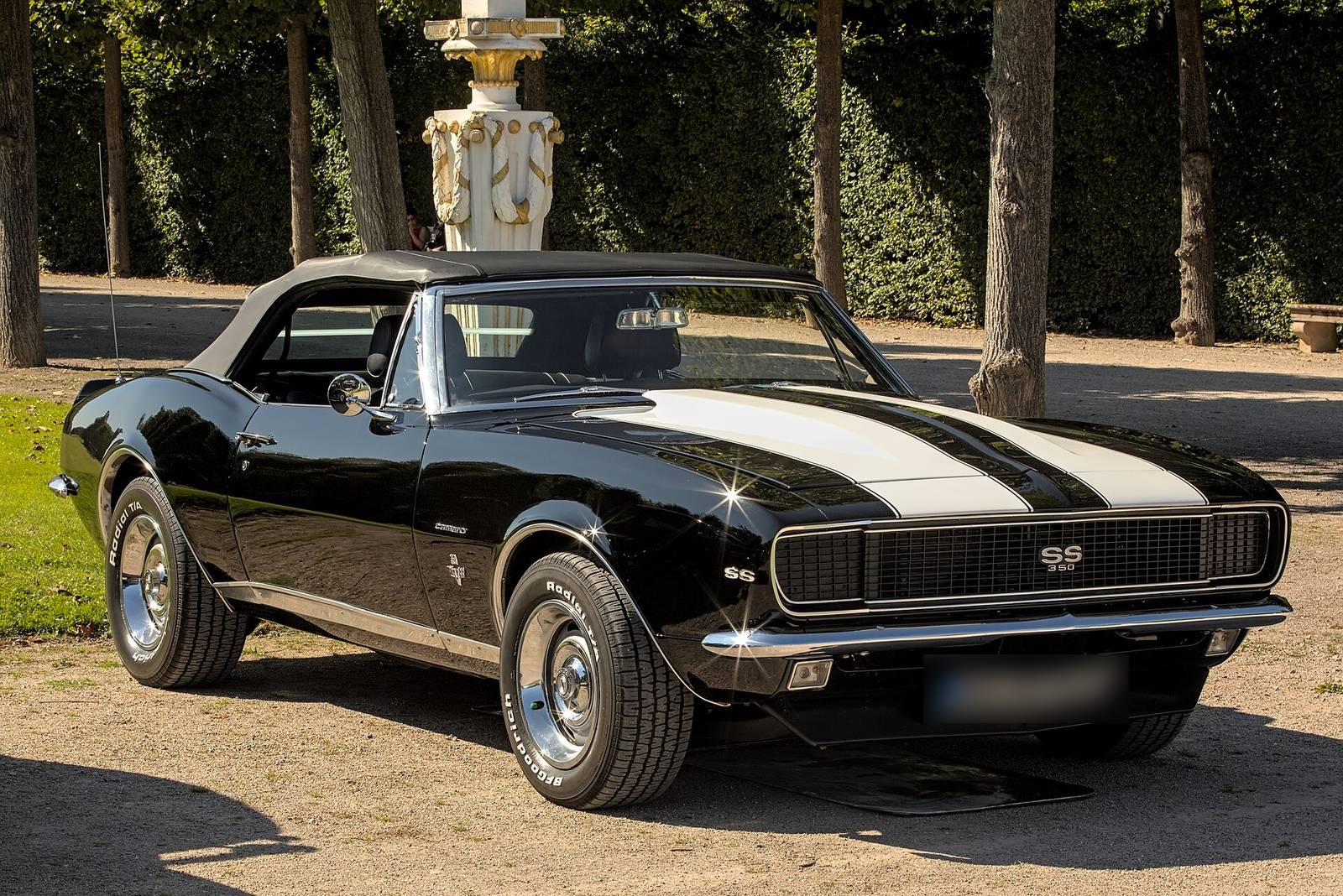
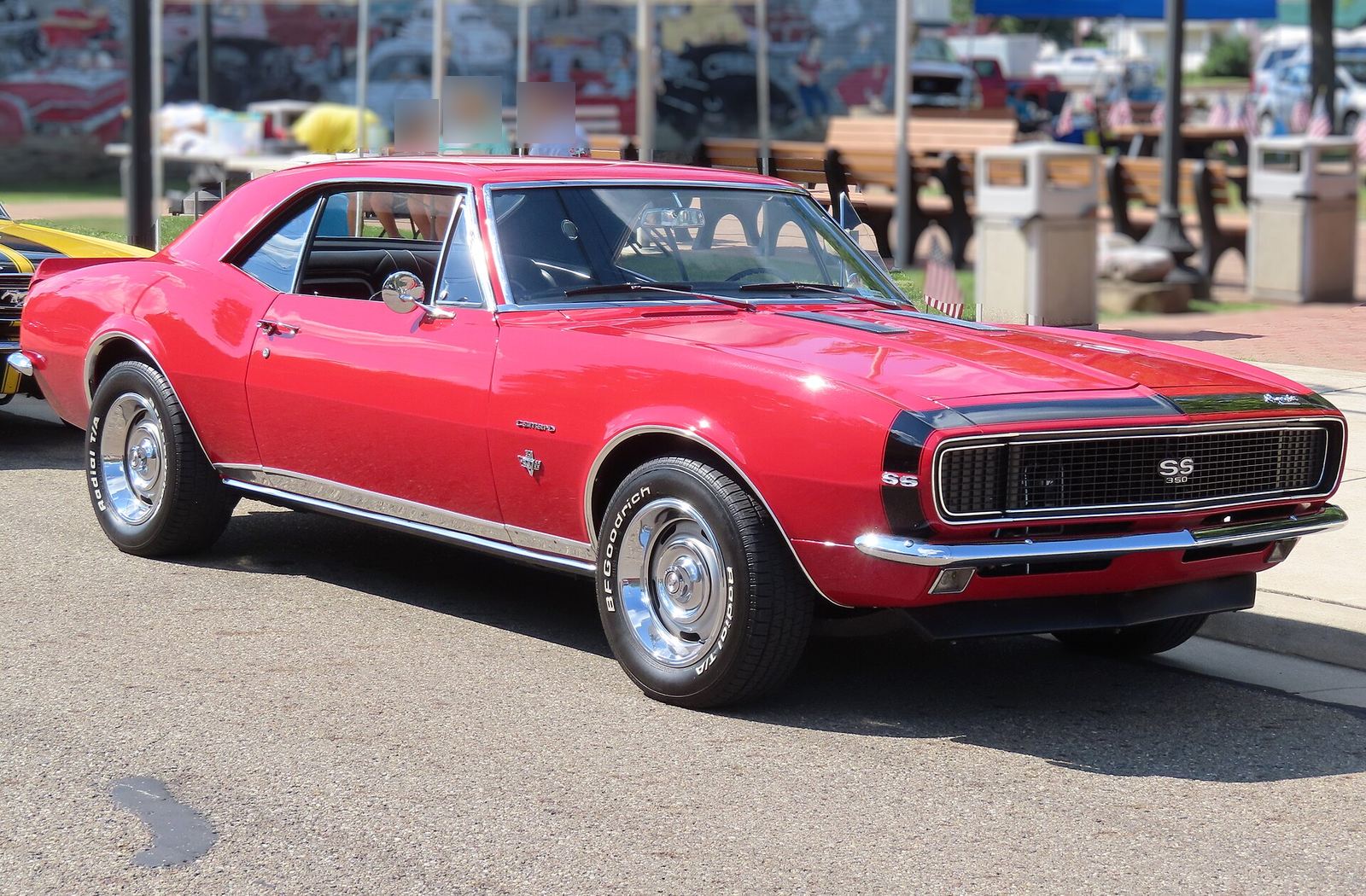
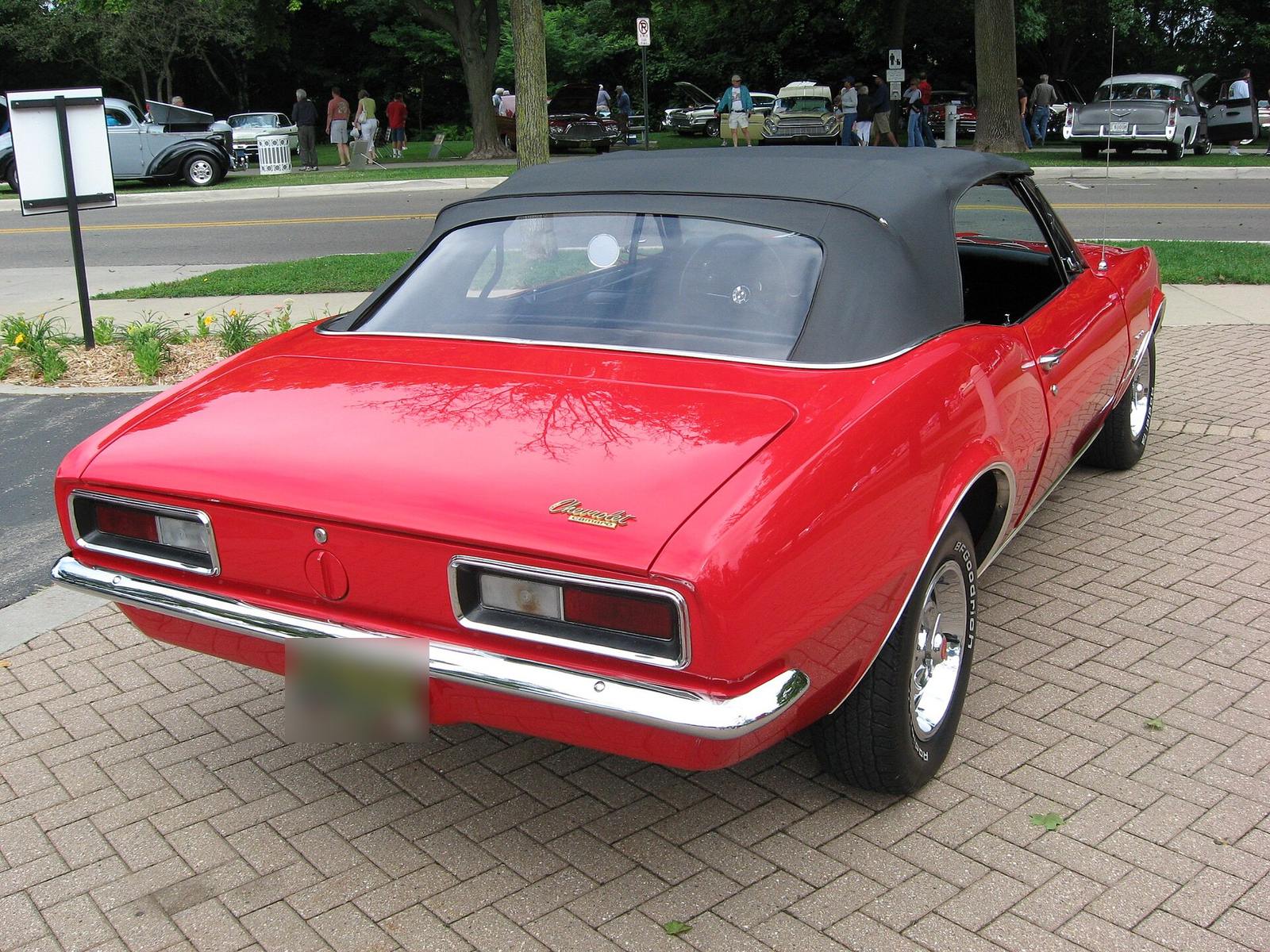
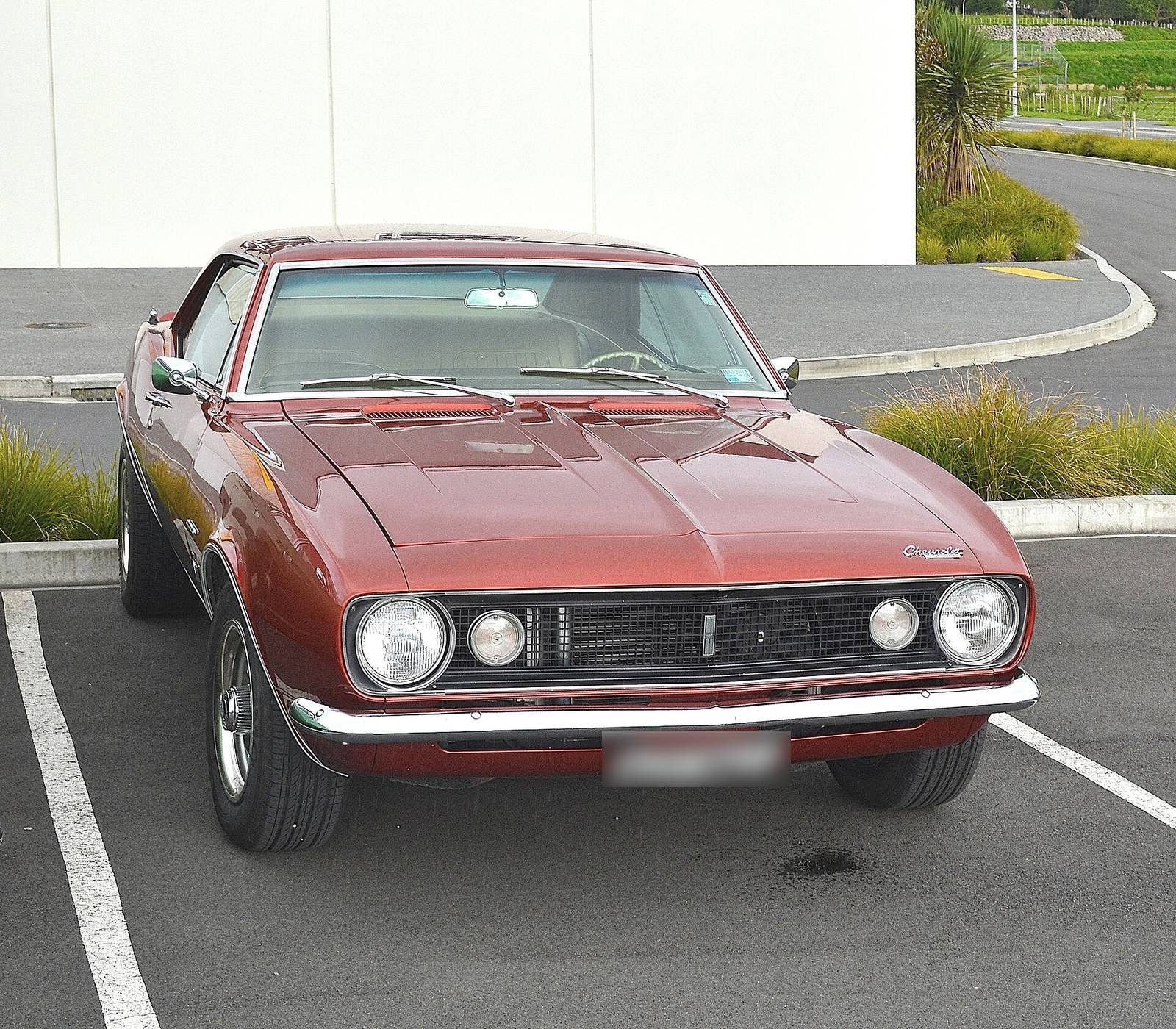
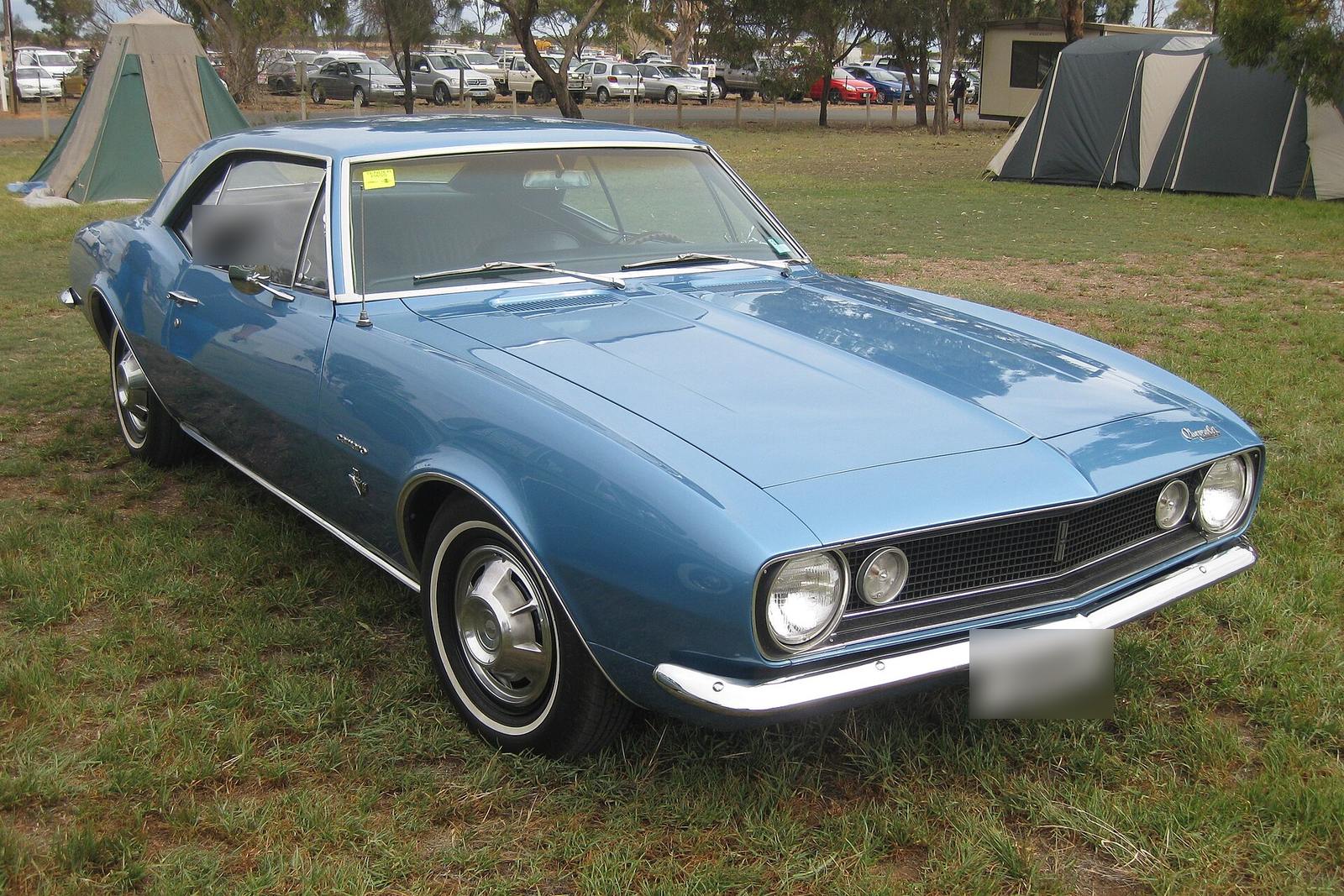
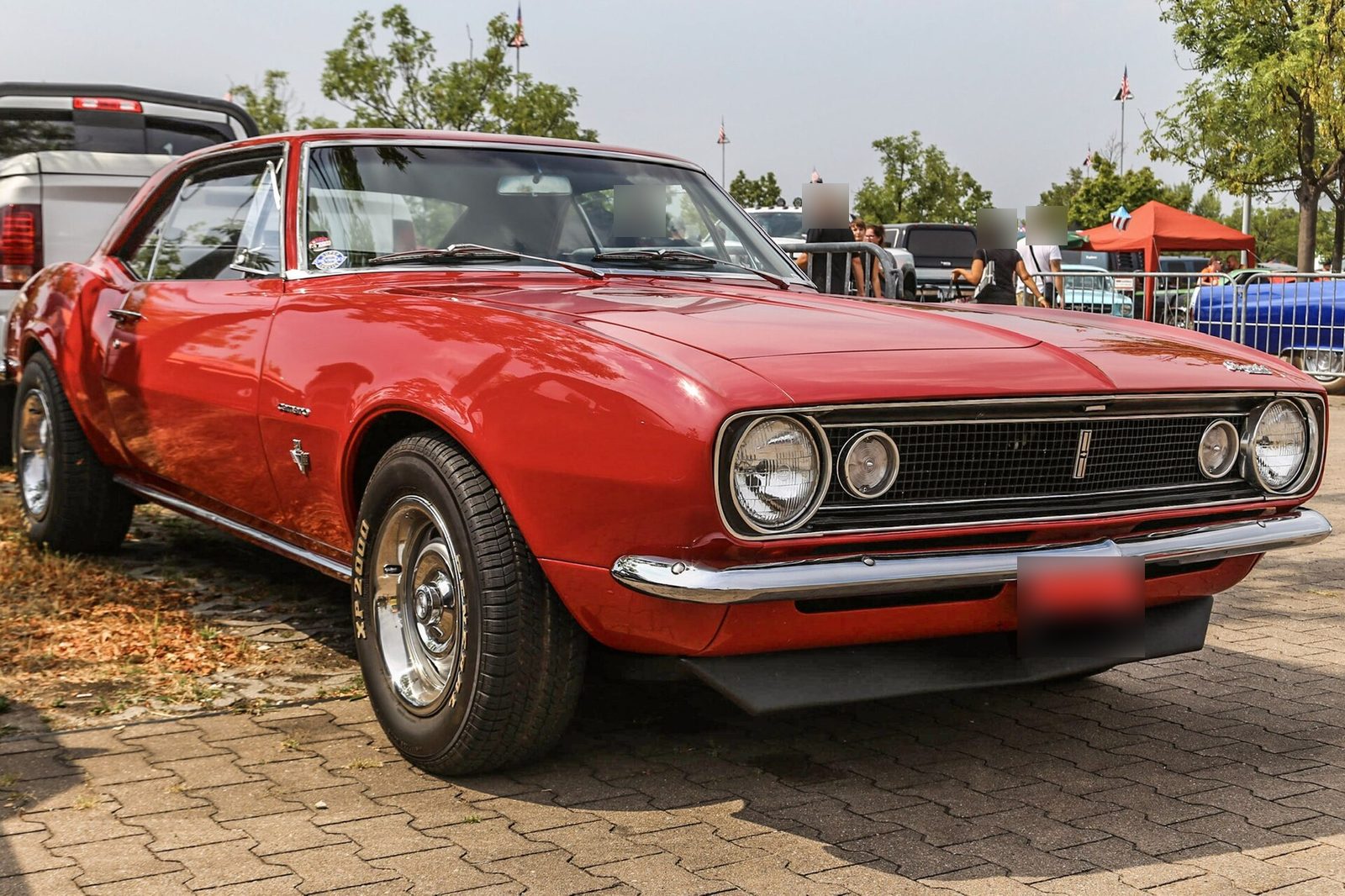
The car itself followed in stages. The press saw it at GM's Milford Proving Ground on September 12, 1966, and in Los Angeles a week later. GM's 2001 Camaro Restoration Kit dates the introduction to September 26, 1966, as a 1967 model. Chevrolet's fiftieth-birthday account, reproduced in MyAutoWorld's archive, dates the first sale to September 29, 1966. The cars were built at Norwood, Ohio, and Van Nuys, California. By the end of the model year Chevrolet had built 220,906, including 64,842 with the Rally Sport package, 34,411 SS models and 25,141 convertibles, plus just 602 of an unadvertised option called the Z/28. A Camaro paced the Indianapolis 500 that May, eight months after the car went on sale.
What the designers thought
Decades later, the designers themselves weren't sentimental about it. Mitchell and Rybicki, by then both GM Styling vice presidents, called the finished car a compromised “committee car” in retrospective interviews. Mitchell reportedly said, “I can't remember what the hell they look like.” History disagrees with him: the first-generation Camaro is treated as a design classic almost everywhere else. Ed Welburn, GM's own design chief in 2015, put it more generously: the Camaro “should not have been a design success, as it was based on an existing architecture and admittedly hurried to market,” yet it delivered “a pure, classic proportion that will forever be regarded as one of the best-looking cars of its time.” The full argument is in the designers who disowned it.
For the 2024 model year, the send-off “Collector's Edition” deliberately reached back to the original Panther code name, down to a panther worked into the “R” of its fender script. Chevrolet announced the package on June 5, 2023 for LT/RS, LT1, SS and ZL1 trims in North America (see the 2024 model year).







Did you know
- Knudsen's "no" was delivered in a warehouse. Irv Rybicki told GM's oral historians in 1985 that his studio was jammed, so he took a few designers, including Phil Garcia, to a warehouse across 12 Mile Road and clayed a sporty Chevy. Mitchell said to get Bunkie over; Knudsen called it "damned exciting," then said the last thing Chevrolet needed was another car. The clay wasn't kept; the armature was reused.
- Chevrolet modeled the Camaro's handling on an analog computer with GM Research Laboratories before any hard design lines were drawn. The team set roll at six degrees per g; when the first pretest car was built it matched the model at low cornering loads but understeered more near the limit.
- The Camaro's press preview on September 12, 1966 wasn't in a Detroit hotel. Reporters were taken to GM's Milford Proving Ground and drove the cars there. A Detroit Free Press writer recalled a colleague, riding in a top-down convertible at 60 mph, suddenly standing on the brakes to see how they worked.
- GM didn't have to buy a Mustang to study it. Old Cars Weekly reports Ford and GM had a reciprocity arrangement to hand each other new products two to four weeks before release, and GM got its first Mustang about two weeks early. Pete Estes remembered the first one arriving at the design staff garage to a chorus of "disaster."
- Chevrolet's Super Nova show car appeared at the New York Auto Show on April 4, 1964, two weeks before the Mustang's debut, and Ford people asked Knudsen whether GM would build it. He said yes if they let him, but GM president Jack Gordon said no, and Knudsen said it left Chevrolet with nothing but the Corvair.
- Chevrolet's designers hated the tall cowl the Camaro inherited from the 1968 Chevy II. Rather than change the shared structure, they hid the height with a steeper windshield rake and thinner pillars. Hagerty adds that the cowl and short dash-to-axle distance kept the car from ever being as long and low as they wanted.
Sources for these details
- The Reminiscences of Irvin W. Rybicki, Automotive Design Oral History (Benson Ford Research Center; interview June 27, 1985) Reference
- Gary Witzenburg, "How Chevrolet created the Camaro to take on Ford's Mustang," Hagerty Media, Oct. 23, 2019 Reference
- 1967 Chevrolet Camaro Vehicle Information Kit, PDF pp. 106-116 (handling paper) GM Heritage factory archive
- David C. Smith, "Looking Back on Half-Century of Camaro Camaraderie," WardsAuto, Sept. 21, 2016 Reference
- David W. Temple, "Developing the Camaro," Old Cars Weekly, updated Sept. 2, 2026 Reference
- Hagerty Media, "How GM, Chrysler, and AMC Reacted to the Original Ford Mustang" Reference
- John Roe, "First-Gen Camaro (1967-69): The one that picked a fight," Hagerty Media Reference
- Chevrolet, "Chevrolet unveils Camaro final Collector’s Edition," June 5, 2023; 2024 model year, North American trim and paint scope Chevrolet manufacturer announcement
- GM, 2001 Chevrolet Camaro Restoration Kit, printed/PDF p. 10, Camaro History; retrospective introduction date GM manufacturer retrospective in factory archive; not a 1966 event notice
- Chevrolet fiftieth-birthday account, reproduced in MyAutoWorld Archives; September 29, 1966 first-sale statement Manufacturer retrospective reproduced by a third-party archive; distinct from a contemporary sales record