Corvette and Camaro were never really separate
The same people, and the same engines, moved between them for sixty years.

The Camaro was built to fight the Mustang, but its closest relationship was always with another Chevrolet. For six decades the same designers, engineers, racers and engines moved back and forth between the Camaro and the Corvette, and the traffic ran both ways.
The people
Bill Mitchell oversaw both cars' styling. Larry Shinoda shaped the Corvette Sting Ray and Mako Shark before his later move to Ford connected that design lineage to the Boss Mustang. Tom Peters, who led the exterior design of the fifth-generation Camaro (his brochure quote was that the car had “the magic… the look… the soul”), was also Chief of Design for the C6 Corvette and the C7 Stingray, and he is in the Corvette Hall of Fame (2019). John Heinricy co-developed the third-generation 1LE track package and, later as a GM performance-division executive, helped push the Cadillac ATS's Alpha platform toward being viable as the sixth-generation Camaro's underpinnings. He is far better known as a longtime Corvette engineer and multiple-time SCCA national champion racer.
The racers crossed over too. Roger Penske's team won its very first race, the 1966 Daytona 24 Hours GT class, by 27 laps in a Sunoco Corvette; two years later the same Penske, with Mark Donohue driving, was winning Trans-Am championships in Camaros (see the racing history). Don Yenko raced Corvettes before his name meant the wildest Camaros money could buy. VetteFacts tells those Corvette chapters.
The engines
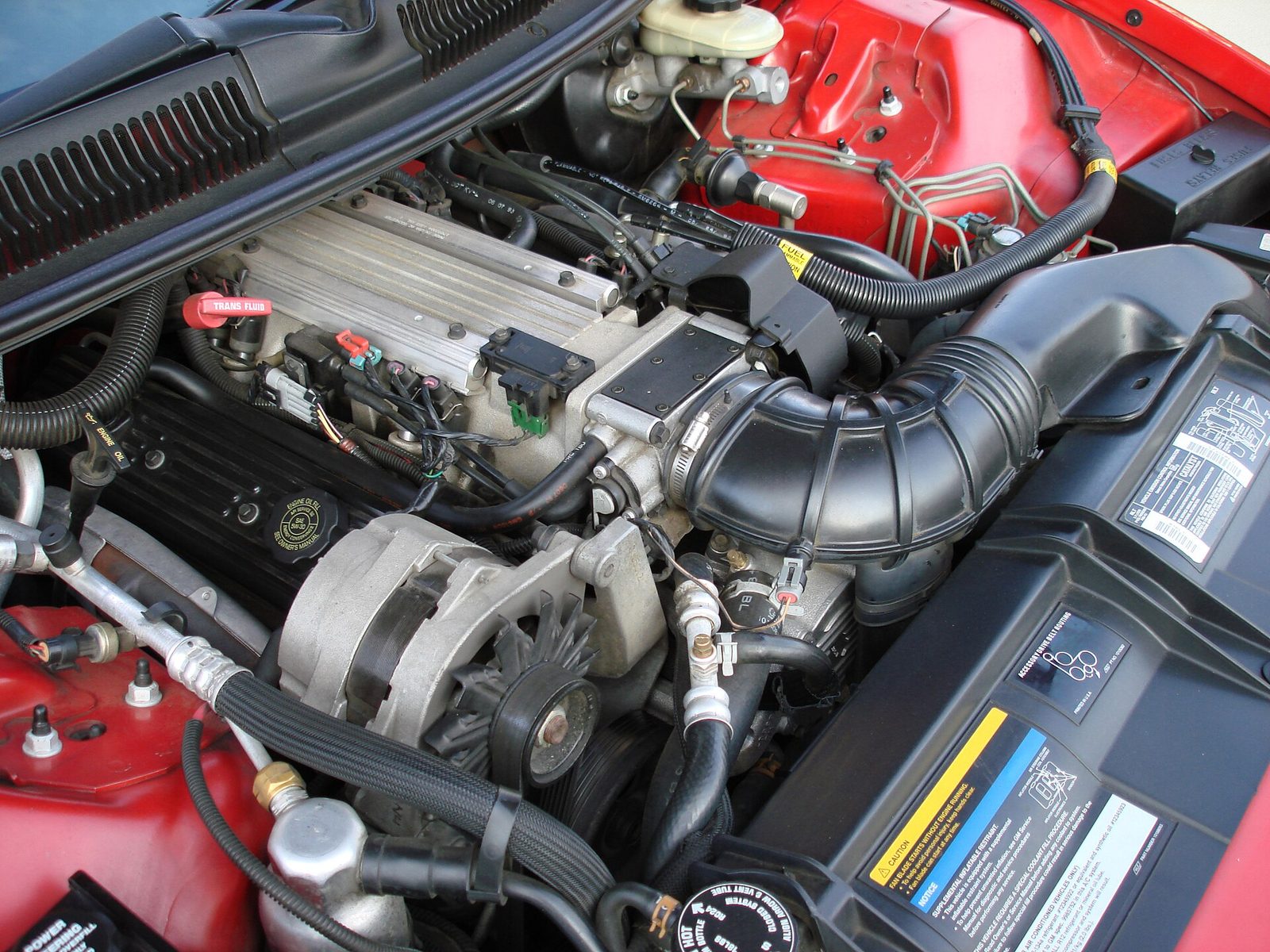
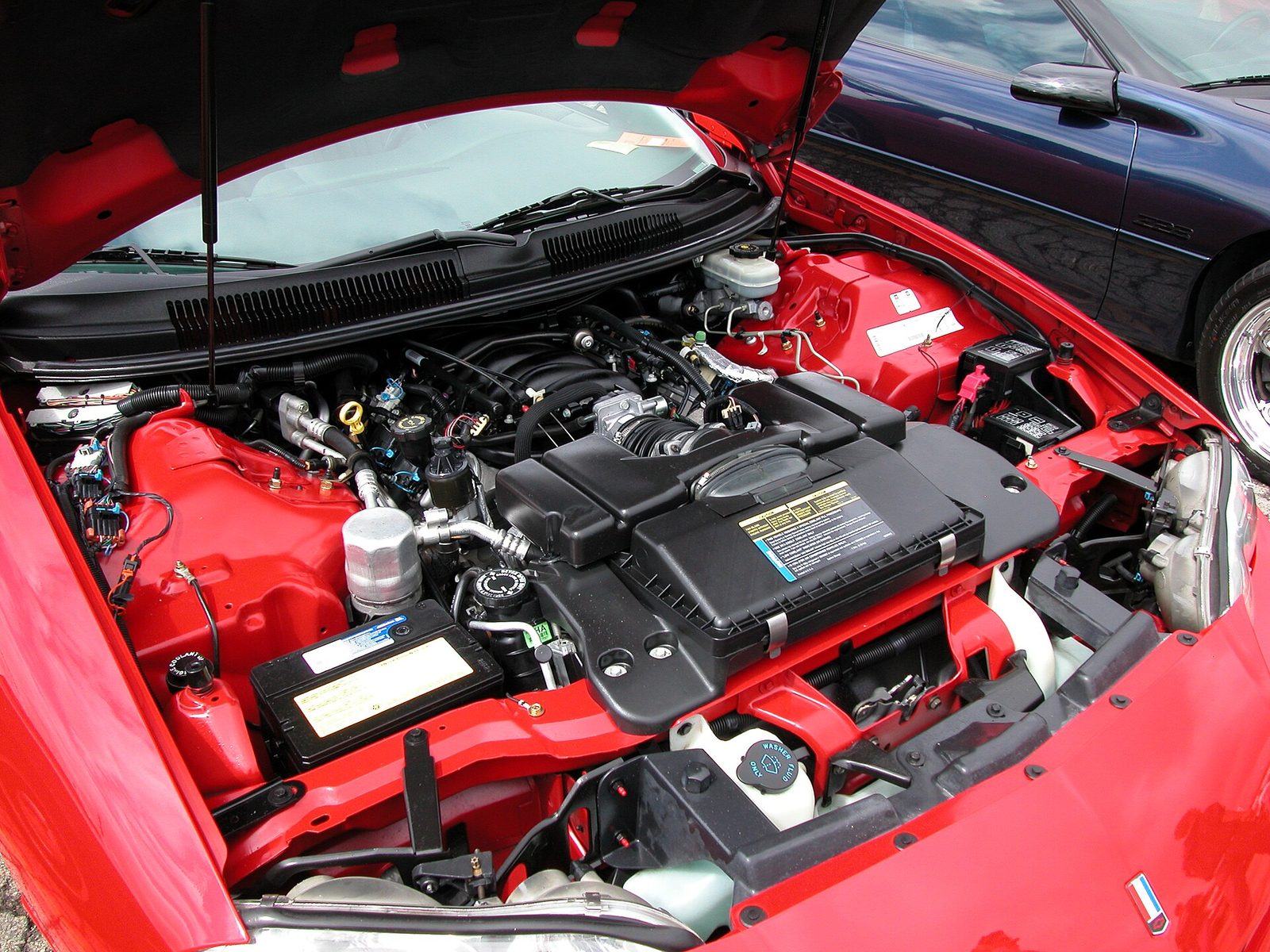
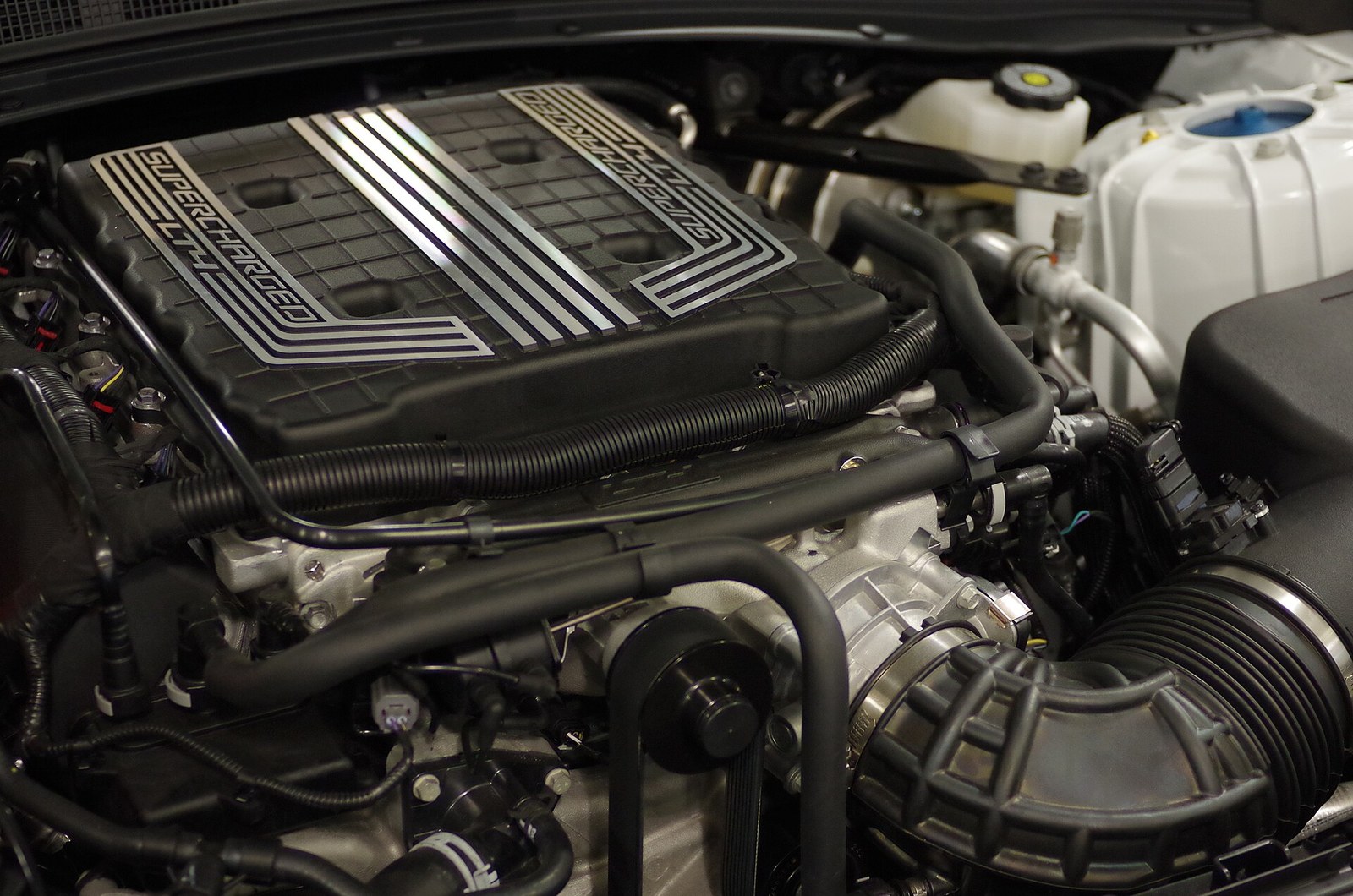
The engines tell the same story. The Z28's 1970 LT-1 350 was the Corvette's new engine, moved over when SCCA's 1970 rules let teams de-stroke a larger engine to meet the unchanged 305-cubic-inch limit; Chevrolet rated the Camaro version at 360 hp to the Corvette's 370, largely for exhaust reasons. The fourth generation's LT1 and, later, LS1 both came straight off the Corvette line. Chevrolet's own 1999 press kit described the LS1 as “a modified version of the Corvette powerplant,” with only its accessory drive, air induction and exhaust manifolds changed to fit the smaller car. The 2014 Z/28's 7.0-liter LS7 was the Corvette Z06 unit, hand-assembled and co-developed with Corvette Racing. The sixth-generation SS's LT1 is the C7 Stingray's engine, and the ZL1's supercharged LT4 is the C7 Z06's. Even the first 1LE of 1988 stopped with Corvette brake calipers.


Smaller parts crossed as well. In January 1968 Chevrolet added three colors straight from the Corvette catalog to the Camaro's paint chart (Corvette Bronze, LeMans Blue and British Green), so a 1968 Camaro could leave the plant in the same paint as the sports car parked beside it in the showroom. Over the years the pattern repeated in brakes, wheels, electronics and test procedures: whatever the Corvette proved first, the Camaro usually received next, at a lower price.
The methods, and the limits
The hardware was only part of it. When Chevrolet developed the 2014 Z/28, it validated the car with a 24-hour test that GM had first used in the early 1990s for the fourth-generation Corvette: flat-out track laps totaling a full day, with only brakes and tires allowed to be changed. The Camaro inherited the Corvette's definition of what “track capable” meant.
The Corvette also defined what the Camaro would not be. When engineers stripped the Z/28 for lap times, chief engineer Al Oppenheiser explained why they kept the rear seat when Ford had not on its Boss 302: “Chevrolet already has a world-class two-seat sports car in the Corvette.” And in 2017 the relationship turned competitive in the other direction, when the ZL1 1LE lapped the Nürburgring in 7:16.04, faster than the 2012 Corvette ZR1's 7:19.63, and the fastest time GM had then officially published for any of its cars (see the 2018 model year).
The revival
The clearest example of how tangled the two programs are came at the lowest point in Camaro's history. After the 2002 cancellation, it was GM design vice president Ed Welburn, by Tom Peters' own account, who stood up at a European GM meeting not long after Camaro's “obituaries” had run and said it was time to bring it back. That internal push from GM's own design leadership, more than outside fan pressure, is what set the 2006 concept and the 2010 revival in motion. Welburn later owned a 1969 Camaro himself and called it “the iconic Camaro to me.”
The dealers
The blood runs on the dealer-tuner side too. Los Angeles's Dana Chevrolet built 427-powered Camaros before the factory's own COPO program even existed, with Dick Guldstrand as lead engineer. Guldstrand later became one of the most famous names in Corvette racing and tuning. In the same year, the same dealership and the same engineer took an L88 Corvette to Le Mans. VetteFacts tells that story from the Corvette side; it's the same man, the same era, the same 427.



Did you know
- John Heinricy is known as a Corvette man, but SCCA's own list of national champions shows six of his 15 titles came in Camaros and Firebirds: American Sedan in 2003 (Camaro), 2004, 2005, 2006 and 2013 (Firebirds), and 2018 (Camaro).
- The same SCCA list gives Heinricy a GT-1 title in 1993 and Touring 1 titles in five straight years, 2001 through 2005, all in Corvettes. He is listed with six different models in all: Corvette, Camaro, Firebird, Cobalt, Sonic and Toyota 86.
- The Camaro's ZL1 engine began in racing, not on a Camaro line. The Camaro Research Group says Chevrolet developed the aluminum 427 for Jim Hall's Chaparral in 1967, opened it to McLaren for 1968 Can-Am, and then began to think it could be a Corvette option (RPO ZL1). Fred Gibb's 1968 COPO order is what put it in 69 Camaros.
- The Camaro's customer race cars come from the shop that builds the Corvette's. In January 2018 Pratt Miller, builder of Corvette Racing's cars, listed the Camaro GT4.R at $259,000, with a modified ZL1 body, carbon-fiber doors and a 3,131-pound minimum weight.
Sources for these details
- SCCA 2021 Club Racing Media Guide, "Former National Champions" and multiple-champion lists Club/registry
- Wikipedia, "John Heinricy" (Runoffs record) Reference
- Camaro Research Group, "COPO 427: The Relentless Pursuit of Acceleration" (the ZL-1 Engine) Club/registry
- Pratt Miller, "You Can Buy Your Own Chevy Camaro GT4.R Race Car for $259,000," Jan. 23, 2018 (quoting The Drive) Reference