Mark Donohue
Driver of the Penske Trans-Am Camaros
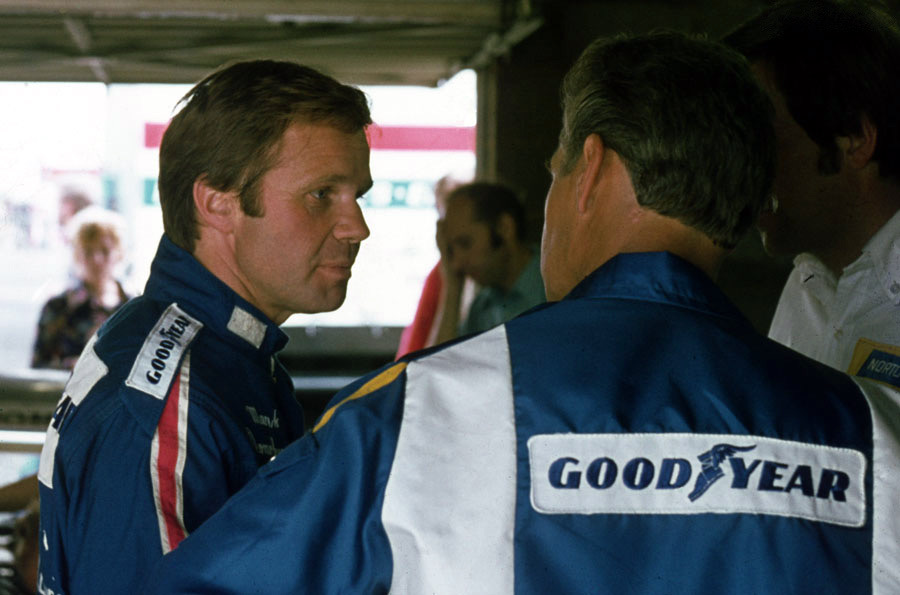
Mark Donohue drove the Penske/Sunoco Z/28s to Chevrolet's 1968–69 Trans-Am manufacturers' titles, winning 10 of 13 races in 1968. His book The Unfair Advantage is the primary source for the team's “Team Unfair Advantage” nickname and its meticulous, rules-bending preparation.
After 1969 he and Penske moved to AMC, then to Porsche's Can-Am and F1 programs.
Donohue was the driver half of the partnership that made the Z/28 a winning Trans-Am car. He was also an engineer by training, and his value to Penske was as much in what he could describe about a car's behavior as in what he could extract from it on track. His Camaro results contributed to Chevrolet's 1968 and 1969 manufacturers' titles. The three driver crowns recognized in the series' modern history include 1971 in a Javelin, with the earlier seasons reconstructed after the fact rather than awarded to drivers at the time.
His own phrase for what that methodical setup work was after, "the unfair advantage", ended up as the title of his memoir and stuck to the team.
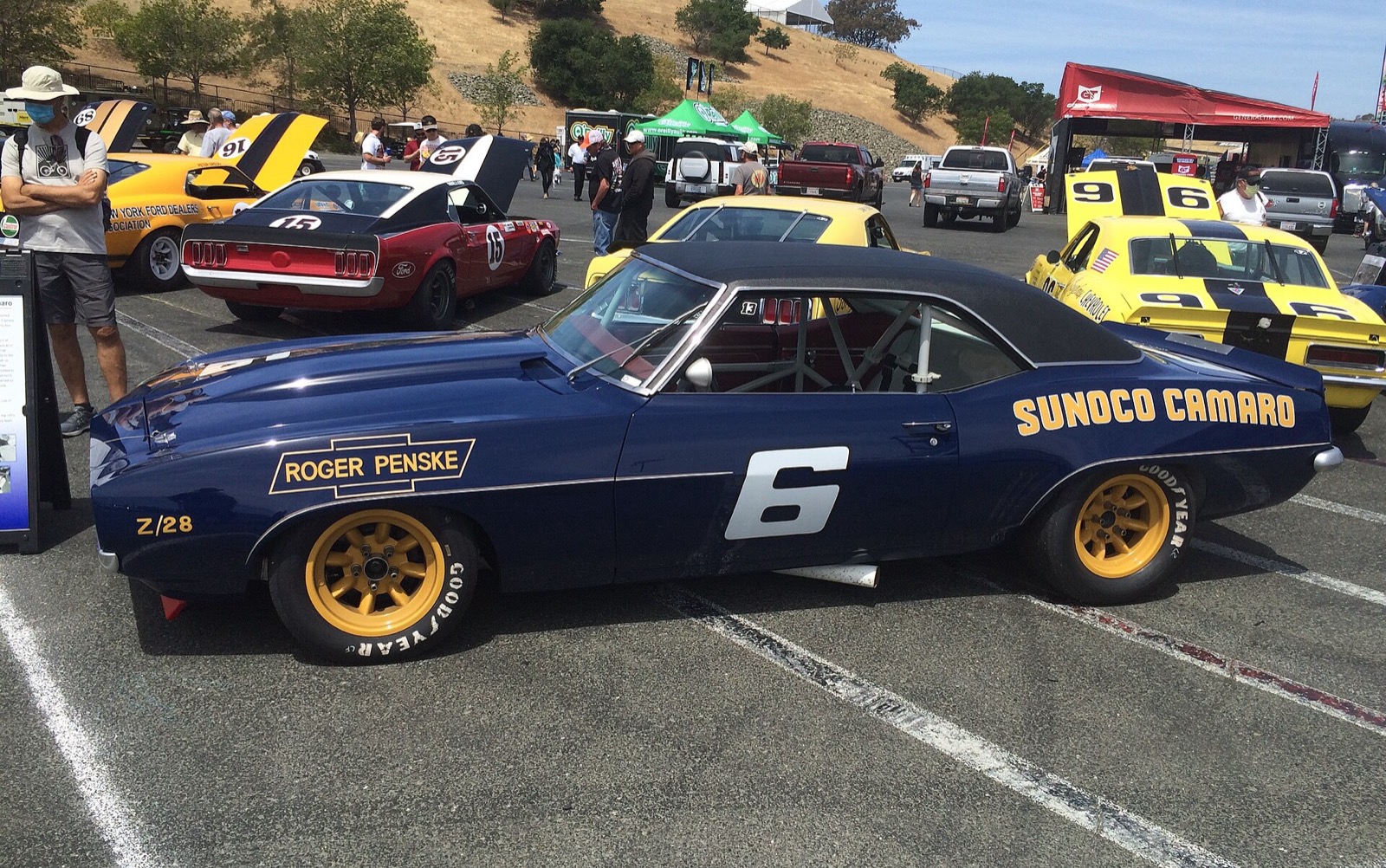

The Trans-Am seasons themselves are covered in the racing history; the homologation rules that created the Z/28 in the first place are in the first generation.
Did you know
- The 1968 run included an unprecedented eight wins in a row (rounds two through nine). Nobody beat his 10-win total until Tommy Kendall took 11 of 13 in 1997.
- The series' retrospective history lists Donohue's three drivers' crowns as 1968, 1969 and 1971, with Jerry Titus ahead of him in 1967. It describes the 1966–71 points as reconstructed after 1980 and the early winners as later recognized. That modern recognition should be distinguished from the manufacturers-only awards made before the 1972 drivers' championship.
- The famous "Lightweight" 1967 Z/28 was acid-dipped and drilled to about 2,600 pounds, roughly 400 less than a production Z/28. When SCCA got suspicious and considered banning it, Donohue pointed out that Ford was doing the same thing, and for 1968 the car's door numbers were reportedly swapped with a full-weight Penske car to get through tech inspection.
- His Indianapolis 500 win came on the same team in 1972: a McLaren-Offy at an average of 163.465 mph, having led only 13 laps. It was the first of Team Penske's Indy 500 victories, and a 1969 Rookie of the Year finish (seventh) and a 1970 second place had led up to it.
- He also won the 1969 24 Hours of Daytona outright, with Chuck Parsons in Penske's Sunoco Lola T70 Mk.3B-Chevrolet, in the same season he clinched Chevrolet's second Trans-Am title.
- He was an engineer first: a 1959 Brown University mechanical engineering graduate whose first race was a hill climb in Belknap County, New Hampshire, as a senior in a 1957 Corvette. He won SCCA national and divisional championships in 1961 and 1965 before Penske hired him in 1966.
- He was the first International Race of Champions winner, taking the title in Porsche Carrera RSRs in the series' first season, 1973-74. He also won the 1973 Can-Am title in a Porsche 917/30 and set a closed-course world record at Alabama International Motor Speedway in August 1975.
Sources for these details
- Wikipedia - 1968 Trans-American Championship (race results table) Reference
- International Motorsports Hall of Fame - Mark Donohue Jr. Hall of fame
- Speed Sport - Versatile, Fast & Talented: Mark Donohue Period reporting
- Wikipedia - 1969 Trans-American Sedan Championship Reference
- Motor Sport - The career of Mark Donohue Period reporting
- Team Penske - Time Capsule Tuesday: Mark Donohue Club/registry
- Classic Industries - Sunoco Camaro: The Ultra-Lightweight Z28 That Bent the Rules Reference
- Wikipedia - 24 Hours of Daytona (1969 race summary) Reference
- Wikipedia - Mark Donohue Reference
- IROC - History Club/registry
- Trans Am, The Champions Who Never Were, April 21, 2020; retrospective driver points and later recognition Series retrospective; not a period points bulletin
Key beats
- 10 of 13 Trans-Am wins in 1968
- IROC's very first champion (1974)
- Author of The Unfair Advantage