The Z/28 convertible that wasn't supposed to exist
Chevrolet never offered a Z/28 convertible in 1968. It built one anyway, for the man it needed to convince.
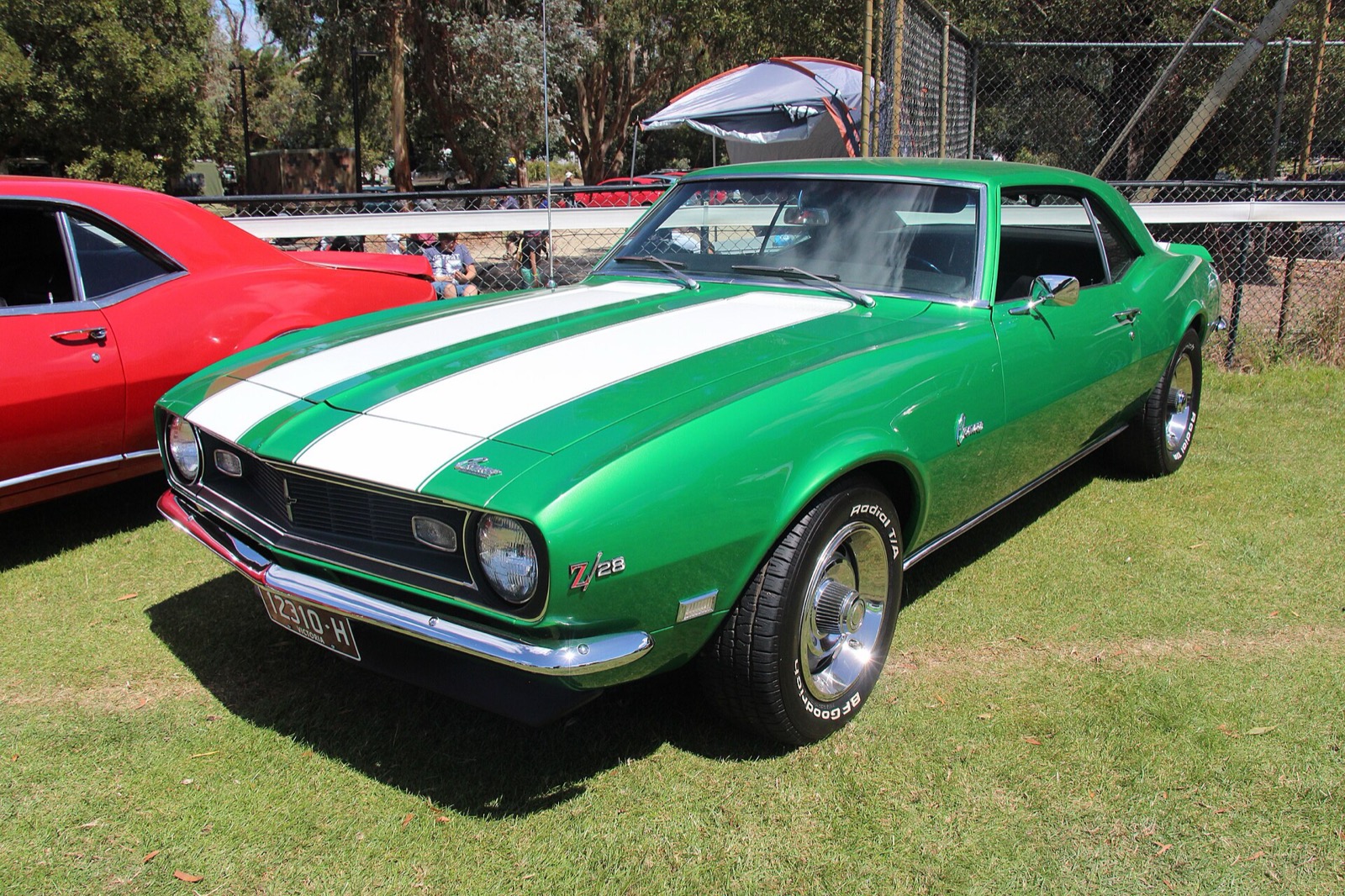
Every catalog record of the 1968 Camaro agrees on one thing: the Z/28 package came on the hardtop Sport Coupe only. Chevrolet built 7,199 of them that year, most in the last third of the model year, and every one of them required the aluminum-case Muncie four-speed and power front disc brakes. There was one exception, and unlike most Camaro legends it left a paper trail. It started life as a sales pitch.
Why it was built
The car was Vince Piggins' idea. As Chevrolet's manager of product performance, Piggins needed special racing parts approved as production equipment so they could be homologated for SCCA racing, where Roger Penske's Camaros were about to dominate the Trans-Am series. Approval ran through Chevrolet's general manager, E.M. “Pete” Estes, the man who had introduced the Camaro in 1966. Estes, by every account, loved convertibles. So Piggins' plan was simple: build Estes a Z/28 he would enjoy driving, fit it with the very parts Piggins wanted approved, and let the car make the argument.
How it was built
The Camaro Research Group, the most rigorous authority on first-generation production, lists the car in its Z28 research report as the only convertible Z/28 of the first generation, “a 1-of-1 Camaro ordered by Vince Piggins to give to Chevrolet's General Manager E. M. 'Pete' Estes because Estes loved convertibles.” It was assembled at Norwood, Ohio, on July 15, 1968, under dealer code 00-500, and painted Fathom Green.
It left the line as a well-equipped convertible: a folding rear seat, the console-mounted auxiliary gauges, auxiliary lighting, power windows, a remote outside mirror, custom seat belts, a blue-light AM/FM stereo, a rear-window defroster, a Comfortilt steering wheel and Positraction. The racing hardware came afterward, fitted by GM engineers at the GM Technical Center: four-wheel disc brakes, a performance suspension with Koni shocks, a fiberglass cowl-plenum hood that was a prototype of the 1969 design, a cross-ram intake and factory-built tube headers. In effect it was a rolling preview of the parts that would make the 1969 Z/28 what it was.
How Estes used it
Estes drove it often. Camaro historian Jim Mattison, who has researched the car, has said that Estes “loved the car” but that it was not his everyday transportation; a general manager had had every Chevrolet in the building to choose from. How much the car itself changed Estes' mind cannot be measured, but the parts it carried did reach customers. The dual-four-barrel cross-ram was sold for the Z/28 as a homologation option, shipped for dealer or owner installation, and the cowl-induction hood arrived as RPO ZL2, the “Special Ducted Hood,” announced to dealers in a letter dated November 25, 1968, for about $79. The earliest documented production installations came in late December. Its rearward-facing duct drew cool, high-pressure air from the base of the windshield, the same idea the prototype on Estes' convertible had tested on the road months earlier.
Where it went
GM did not keep executive cars for long. On December 17, 1968, the convertible was sold through a dealer to a GM employee, T.H. Standen. In 1970 it passed to another GM employee, Vern Nye, who kept it for nearly twenty years. Around 1990 the auctioneer Dana Mecum tracked the car down and arranged its restoration, and at one of Mecum's own auctions in 1991 it sold for $172,000 to Milt Robson of Georgia. That was reported at the time as a record for a muscle car.


It changed hands again, to the Rock 'n Roll Toy Store of Highland Park, Illinois, and then to Al Maynard, who sourced correct replacement parts and had Scott Tiemann of Supercar Specialties in Portland, Michigan, do further restoration. Maynard offered it at the Auburn auction in 2004 with a $1 million target. It did not sell, and during the sale the car's keys, title and original bill of sale were stolen. Maynard eventually sold it back to Dana Mecum, who wanted it back for his own collection.
Why it matters
Most “factory one-off” Camaro stories rest on a single retelling and a hopeful seller. This one has a build date, a plant, a paint color, a dealer code, a chain of owners and the Camaro Research Group's own confirmation. It also sits in an odd corner of Camaro history. The only first-generation Z/28 convertible was built not for a customer but for a boardroom, as a tool of persuasion, and what it was persuading Chevrolet to do was build faster Camaros.
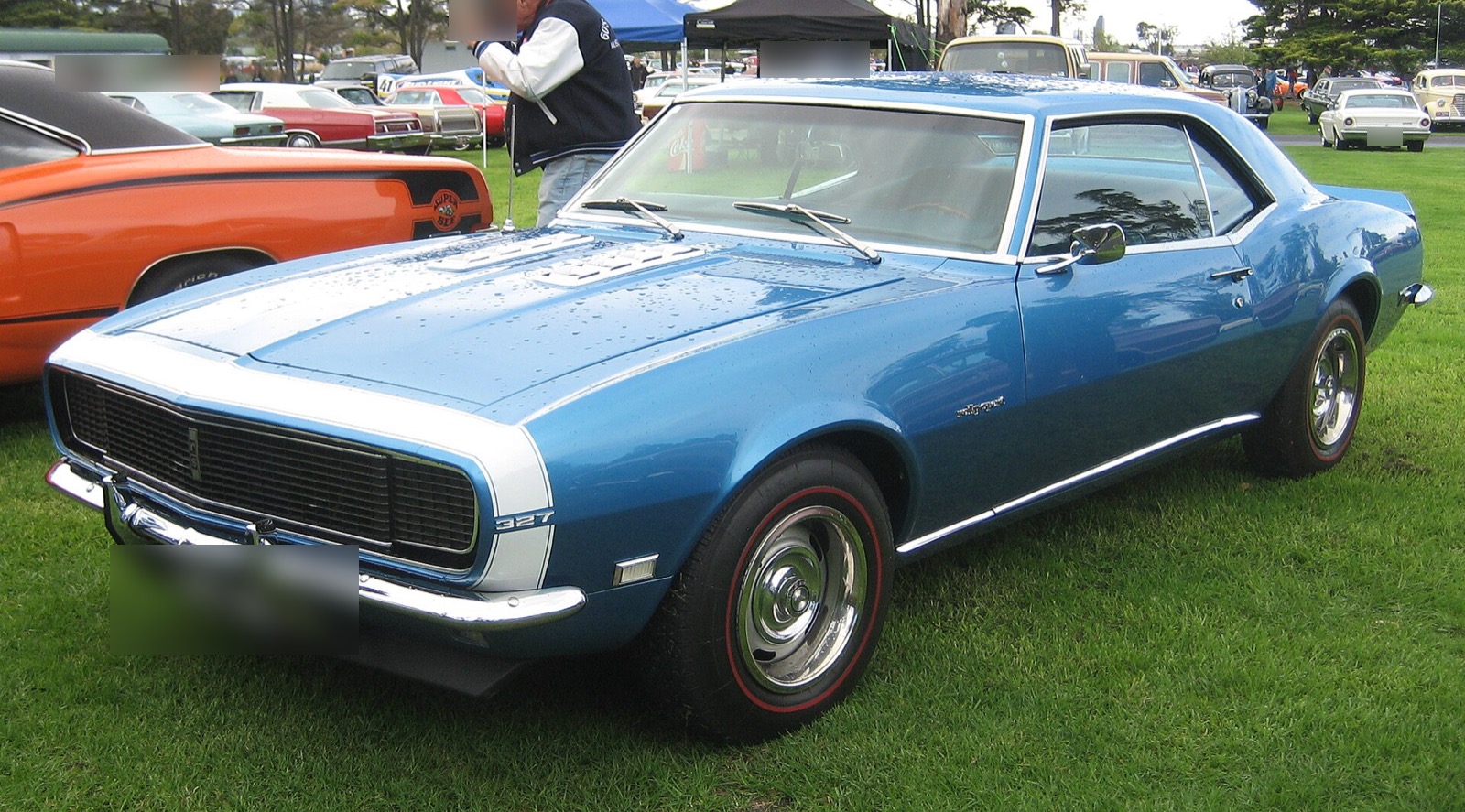

No convertible Z28 was offered to the public until 1987, when the ASC-built convertible returned and could be ordered as a Z28 or IROC-Z; the second generation had no convertible at all (see the 1987 model year). The Piggins-Estes car itself is covered with the rare and significant cars.
Did you know
- The Estes convertible came out of Chevrolet's Fleet Special Order Department, the office fans call COPO. Jim Mattison, then its youngest member, got the hot-rod jobs and ordered the ragtop with a special release for the Z/28 package. The racing parts weren't on his order.
- After Norwood, the car went to the GM Executive Garage in the GM Building, then to the Tech Center for the racing parts, then back to the garage for Estes. It officially belonged to GM, and executive cars had to be sold through a dealer, so it went through Bill Markley, whose Chevrolet store was nearly across the street.
- According to a Camaro Research Group forum post and Mecum's catalog copy, the Estes convertible paced round one of the 1968 Can-Am at Road America on September 1, 1968, the race Denny Hulme won in a McLaren-Chevrolet, with Stirling Moss driving the pace laps.
- Muscle-car historian Colin Comer wrote that many one-of-one Camaros are rare because of a color or an axle-and-transmission combination, while the Estes convertible is a prototype for a car never considered for production. He credits it and Pete Estes for the parts that helped the 1969 Camaros in SCCA racing.
Sources for these details
- John Gunnell, "The one and only '68 Camaro Z/28 Convertible," Muscle Car Plus (via rpmcanada.ca), quoting Jim Mattison Reference
- Camaro Research Group forum, "Road America: 1 of 1 1968 Z28 Convertible Pace Car for 1968 Can Am" (Nov. 2019 post with period photos) Club/registry
- Racing Sports Cars, "Can-Am Road America 1968" (date and winner) Reference
- autoevolution, Sept. 7, 2026 (via Mecum) Reference